Why Is Saffron So Expensive?
Saffron is the world's most expensive spice because every thread is a hand-picked stigma: about 150,000 crocus flowers and hundreds of hours of work go into a single kilogram. Here is why Kashmir's GI-tagged kesar costs even more, and why prices jumped in 2025 and 2026.
 By Kirti Kaliraman· 10 min read
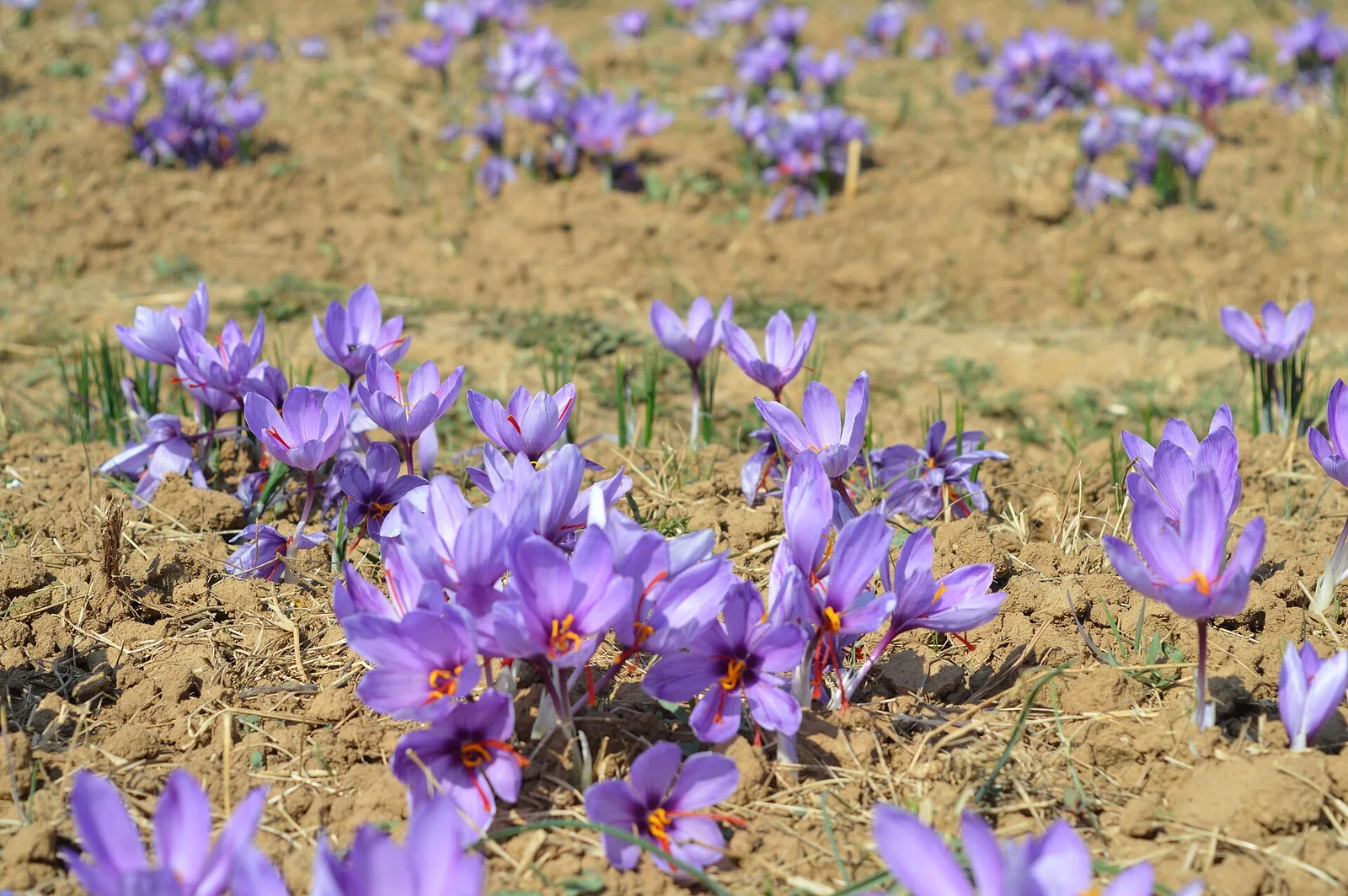
Saffron is expensive because every thread is a hand-picked flower part: each saffron crocus gives just three red stigmas, so it takes roughly 150,000 flowers and several hundred hours of manual work to make one kilogram of the dried spice. On top of that, the plant is sterile and can only be multiplied from bulbs, it flowers for barely three weeks a year, and most of the world's supply comes from one country, so a bad season or a blocked trade route sends prices soaring.
In India that adds up to some of the highest food prices anywhere. Kashmir's growers realised an average of roughly Rs 2.7 lakh a kilogram in 2024-25, and GI-certified Kashmiri kesar sells for more than imported saffron. Here is where the money goes, from the field to the jar.
What saffron actually is
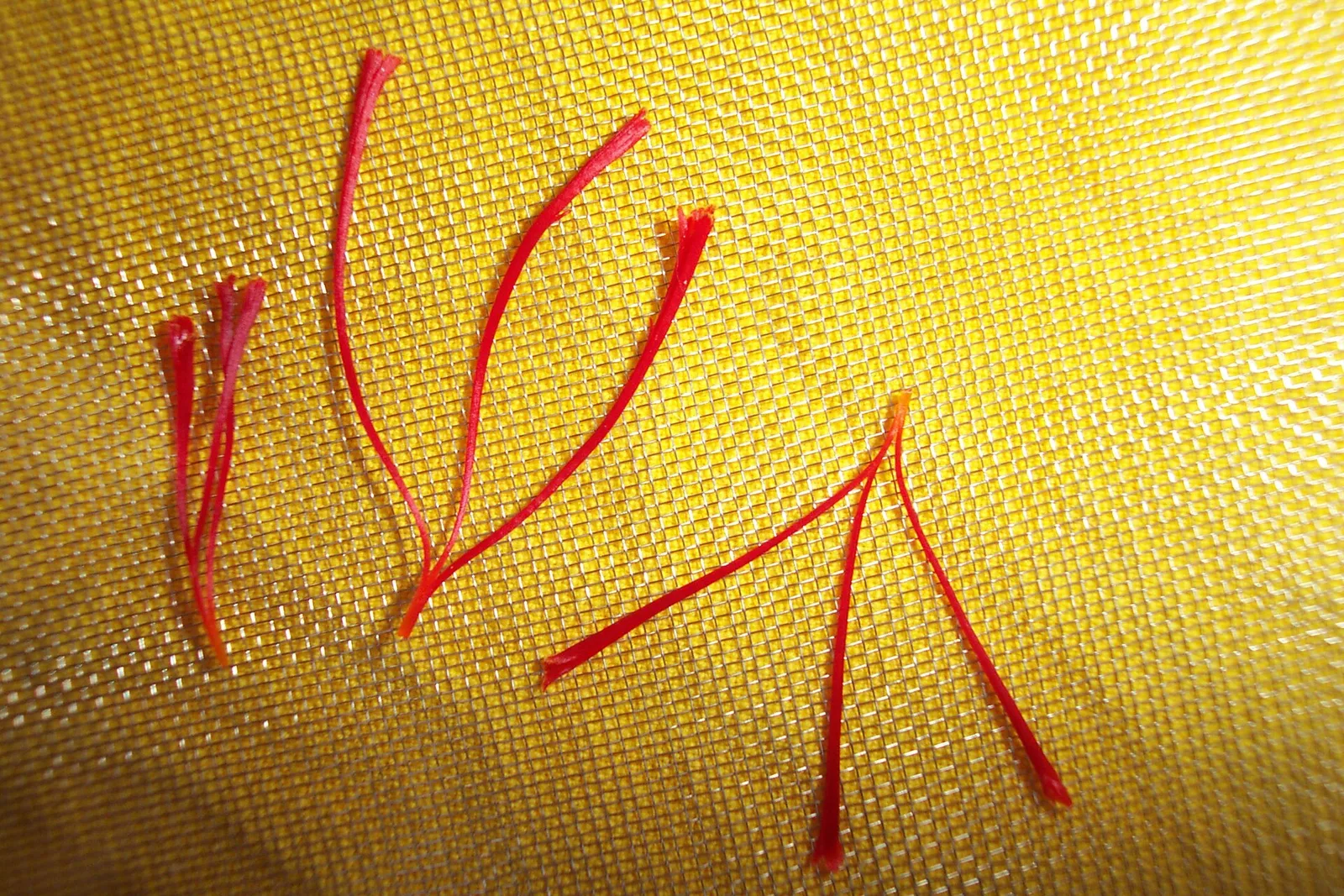
Saffron is the dried stigma of Crocus sativus, an autumn-flowering crocus. Each lilac flower has six petals, three yellow stamens and a single style that splits into three deep-red threads. Those threads, the part of the flower that catches pollen, are the spice. Everything else is discarded or, at best, sold cheaply as a by-product.
The plant has a strange biology. A 2019 study in Molecular Phylogenetics and Evolution by Nemati and colleagues showed that saffron is an autotriploid that arose in Attica, Greece, from the wild Crocus cartwrightianus. Having three sets of chromosomes makes it sterile: it cannot set viable seed, so every saffron crocus in the world is effectively a clone, multiplied by digging up its underground corms (bulb-like stems) and replanting the daughters. Breeders cannot simply cross it to produce a higher-yielding variety, and farmers cannot scatter seed to expand a field. New land needs new corms, and corms take years to multiply.
The arithmetic of 150,000 flowers
The numbers explain most of the price. A 2025 review of saffron cultivation by Lachguer and colleagues in the International Journal of Horticultural Science and Technology sets out the chain:
- One kilogram of fresh flowers yields about 72 g of fresh stigmas, which dry down to roughly 12 g of saffron.
- One kilogram of dried saffron therefore needs about 150,000 to 200,000 flowers, and leaves behind around 350 kg of petals.
- Picking 1,000 flowers by hand takes 45 to 55 minutes, and separating their stigmas another 100 to 130 minutes.
- In total, a kilogram of saffron demands 370 to 470 hours of labour.
Harvesting Red Gold, an article in the agricultural research centre ICARDA's Caravan magazine about a saffron programme in Afghanistan funded by the UK's Department for International Development, gives a similar figure: 150,000 flowers and more than 400 hours of work per kilogram.
None of this can easily be automated. The flowers grow only a few centimetres above the soil among the leaves, they open overnight and wilt within a day, and they must be picked early in the morning before sun and heat damage the colour and aroma. The whole flowering season lasts only two to three weeks in October and November. So the harvest is a race in which whole families, often mostly women, bend over the fields at dawn and then spend the rest of the day pinching out stigmas one flower at a time.
Why a few threads go a long way
If saffron were needed by the handful, nobody could afford it. It survives as a kitchen staple because a pinch is enough, thanks to three compounds the review describes:
- Crocin, a water-soluble carotenoid, gives the golden colour. It is why a few threads soaked in warm milk can tint a whole pot of rice.
- Picrocrocin gives the bitter, hay-like taste.
- Safranal, the main aroma compound, forms from picrocrocin as the stigmas dry and age. It makes up only 0.001% to 0.006% of the dry matter, yet dominates the smell.
Those compounds are also how saffron is graded. The international standard ISO 3632, revised in 2025, measures colouring strength (crocin), flavour strength (picrocrocin), aroma strength (safranal) and moisture. As a 2025 study of Italian saffron quality in Scientific Reports summarises, Category I saffron needs a colouring strength of at least 200, a flavour strength of at least 70 and moisture of no more than 12%, with lower thresholds for Categories II and III. India's Bureau of Indian Standards uses the same laboratory methods in IS 5453 (Part 2):2016, which is identical to ISO 3632-2. A higher grade means more colour and flavour per gram, and a higher price.
This is also why saffron sits in so many celebration dishes in India. A few strands perfume a whole pot of Awadhi or Hyderabadi biryani, colour kesar kulfi, phirni and shrikhand, and turn up in sweets such as kesar peda and in Kashmir's kahwa, the green tea brewed with cardamom, cinnamon and almonds that sits alongside the milky chai described in our story on how tea became India's drink.
Why Iran sets the world price
Saffron is grown in Iran, India, Greece, Morocco, Afghanistan, Spain and Italy, but the market is extraordinarily concentrated. According to the Lachguer review, Iran produces around 90% of the world's saffron, mostly in the Khorasan region, and top-quality saffron on world markets can fetch up to about US$10,000 a kilogram. Citing trade data from the Observatory of Economic Complexity, the same review lists Iran (42.1%), Spain (19%) and Afghanistan (16.2%) as the biggest exporters, and India (8.87%) among the four largest importers, alongside China, Spain and Saudi Arabia.
That concentration makes prices fragile. When Iranian exports are disrupted, there is no big alternative supplier to make up the gap. In a May 2026 report, Foreign Policy described Srinagar traders whose Iranian consignments were stuck in Dubai as conflict in the Gulf made the Strait of Hormuz a dangerous chokepoint. The same report said traders could buy Iranian saffron for about Rs 200 a gram wholesale while Kashmiri saffron commanded Rs 400 or more, a gap that tempts some shops to pass off imported threads as local.
India's own supply chain was already under strain a year earlier. After the April 2025 Pahalgam attack and the closure of the Attari border cut imports from Afghanistan, CNBC-TV18 reported in May 2025 that the average price of Kashmiri saffron had more than doubled within a month, from about Rs 1.2 lakh to Rs 2.38 lakh a kilogram, with some premium sellers quoting up to Rs 5 lakh. A trader quoted in the report put India's annual demand at around 70 tonnes, far more than Kashmir grows in a typical year.
Kashmir's saffron: smaller crop, higher price
India's saffron comes overwhelmingly from the karewas, the raised plateaus of the Kashmir Valley around Pampore in Pulwama district, with a small area in Kishtwar. The name is legally protected: the Intellectual Property India register shows that Kashmir Saffron (GI application no. 635), filed by the Directorate of Agriculture Kashmir in December 2018, was registered as a Geographical Indication on 1 May 2020. It is the same kind of protection that, as we explained in our story on what makes basmati rice basmati, ties a food's name to its place of origin.
Kashmiri saffron is prized for long, thick, deep-red threads and strong colour. The Foreign Policy report cites a crocin content of 8.72% for Kashmiri saffron against 6.82% for the Iranian variety, and the dark maroon Mongra grade, made only from the red tops of the stigmas, is the most sought after.
The trouble is quantity. When the GI certificate was issued in 2020, The Hindu reported that the area under saffron had shrunk from 5,707 hectares in 1996 to 3,715 hectares by 2009-10, and that yields had fallen from 3.13 kg to 2.5 kg a hectare. Compare that with the 2 to 28 kg a hectare reported from saffron regions worldwide in the Lachguer review, and the cost of each Kashmiri gram becomes clear.
To halt the slide, the Centre sanctioned the National Saffron Mission in 2010-11, with an outlay of Rs 400.11 crore, to replant fields, sink irrigation borewells and build a processing and trading centre at Dussu, Pampore. In a February 2026 reply to the Jammu and Kashmir Assembly, reported by Greater Kashmir, the Agriculture Minister gave these production figures:
| Season | Production (tonnes) |
|---|---|
| 2020-21 | 17.33 |
| 2021-22 | 14.87 |
| 2022-23 | 14.94 |
| 2023-24 | 23.53 |
| 2024-25 | 19.58 |
The value of the 2024-25 crop was put at Rs 534.53 crore, which works out to about Rs 2.73 lakh a kilogram, and exports at Rs 486.43 crore. The minister said the area has stayed stable at 3,715 hectares since the mission began, 85 of the planned 124 community borewells have been handed over, and 2,598.73 hectares have been rejuvenated. According to Kashmir Life, the same replies credited scientific drying at the India International Kashmir Saffron Trading Centre with raising colour strength from about 9% to 16% and lifting the price farmers realised from around Rs 80,000 a kilogram to about Rs 2.20 lakh in 2021-22.
Official numbers do not always agree, though. In a December 2024 Lok Sabha reply, the Union agriculture ministry quoted estimates from the Union Territory's Financial Commissioner (Revenue) showing production falling from 8.0 tonnes in 2010-11 to 2.7 tonnes in 2023-24. Whichever series is closer to the truth, Kashmir supplies only a fraction of what India consumes.
Then came the weather. In November 2025, growers in Pampore told Kashmir News Observer that the season's crop was only 5% to 10% of a normal yield after prolonged dry spells, and that prices had already risen about 20% in a few weeks. The Foreign Policy report put the shortfall at barely a fifth of normal output, after a 29% rainfall deficit and an unusually warm October. Because the plant cannot be rushed or reseeded, one dry autumn can wipe out a year's income and push prices up across the country.
The price of fakes
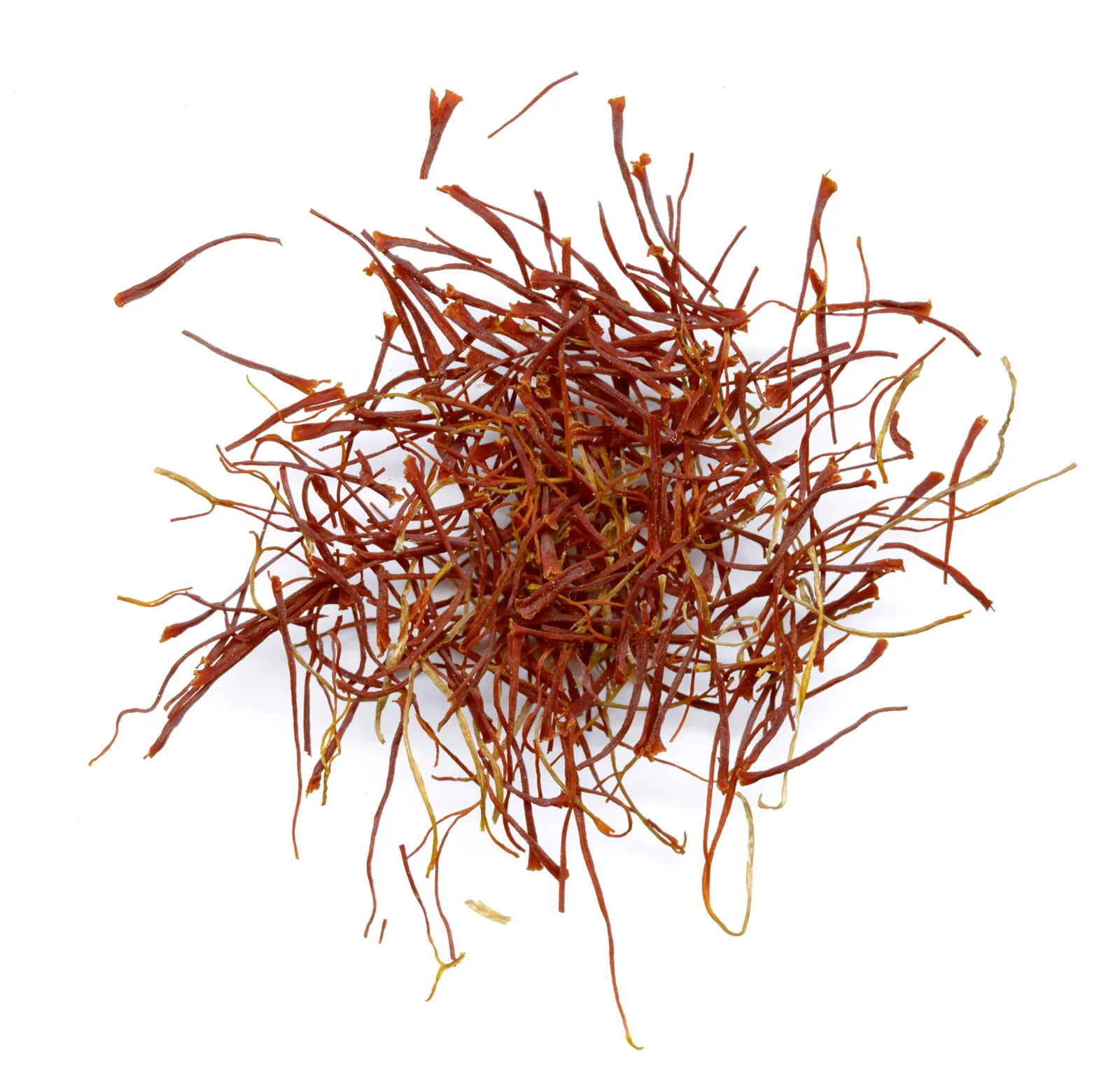
High value invites cheating, and saffron has been adulterated for as long as it has been traded. Common tricks include mixing in the cheap yellow styles, dyeing other plant fibres red, adding weight with oil or sugar syrup, and selling ground "saffron" that is mostly safflower or turmeric. Powder is the easiest to fake, which is why careful cooks buy whole threads.
The Food Safety and Standards Authority of India's manual of quick adulteration tests includes a simple home check for one common fake, dried tendrils of maize cob: drop a few strands into hot water at 70-80 °C and watch. Genuine saffron releases its colour slowly and steadily for as long as it lasts, and the threads do not break easily; artificial saffron bleeds colour at once and falls apart. Real saffron also smells of honey and hay, tastes slightly bitter rather than sweet, and turns water yellow, not red.
The GI tag is meant to help. Saffron graded and packed at the Pampore trading centre carries a GI label and a test certificate, so buyers can pay for verified Kashmiri origin instead of trusting a shop sign. But the Foreign Policy report found that only about 87 kg of GI-certified saffron moved through the facility in a year, a tiny share of the crop, so most saffron in Indian markets still sells on reputation alone.
Is saffron worth the price?
So why is saffron so expensive? Because it combines almost every factor that drives up the cost of food: a crop that cannot be mechanised, a plant that cannot be bred or seeded, a harvest squeezed into a few autumn weeks, a world supply dominated by one country, and a premium origin, Kashmir, that grows far less than India wants. Gram for gram, as the Foreign Policy report put it, the threads are worth more than their weight in silver, just as black pepper once earned the name black gold in Roman markets.
Per dish, though, it is more modest than it looks. A gram holds roughly 150 flowers' worth of threads, and a pinch of 15 to 20 strands is enough to colour and scent a pot of biryani or a tray of kulfi. That small pinch carries a dawn harvest, hours of careful hands and, for Kashmiri saffron, a karewa field that may or may not bloom next October.