Why Was Black Pepper Called Black Gold?
Pepper from the Western Ghats was so prized that Romans paid for it in gold, Alaric demanded it as ransom and Vasco da Gama sailed to Kerala for it. Here is why it was black gold.
 By Kirti Kaliraman· 8 min read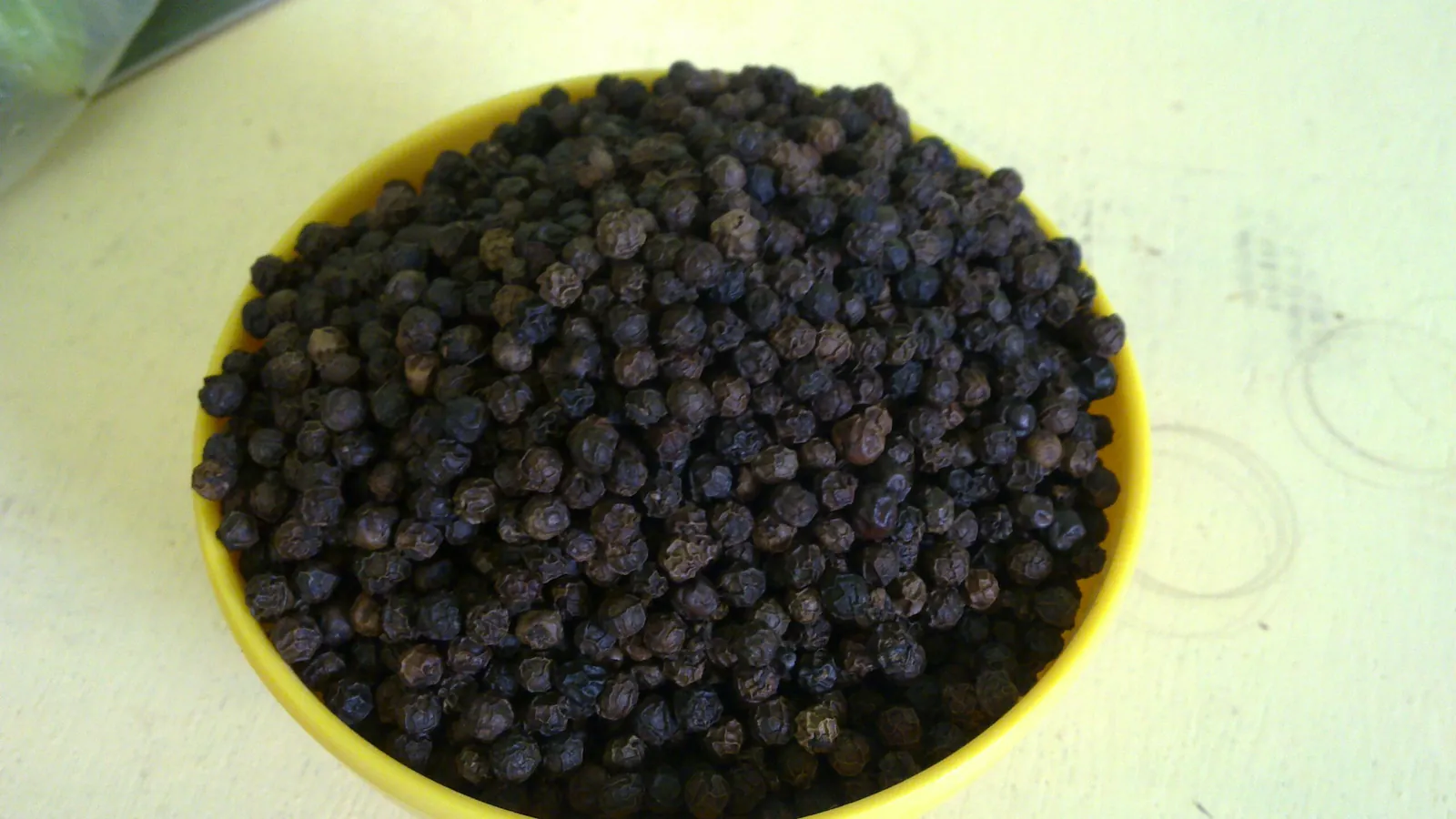
Black pepper was called black gold because, for well over a thousand years, it was one of the most valuable goods in world trade: Romans paid for it with gold coin, medieval Europeans used it as rent, dowry and ransom, and the hunt for it sent Portuguese ships around Africa to India. Nearly all of it came from a single region, the hills and coast of Malabar in today's Kerala and Karnataka, where the Piper nigrum vine grows wild in the Western Ghats.
The nickname is still in use: Vietnam, now the largest grower, calls its pepper crop "black gold" in trade reports today. To see why a small wrinkled berry earned it, you have to follow pepper from the forest to the Roman table, through Venice and Lisbon, and back to the Indian farms that grow it now.
What black pepper actually is
Pepper is the fruit of Piper nigrum, a woody climbing vine that winds up trees in the humid forests of south-west India. It flowers on dangling spikes, each carrying dozens of small berries (botanically, drupes). How those berries are handled decides what ends up in your grinder:
- Black pepper is picked while green and nearly ripe, then dried in the sun for several days. Enzymes in the skin brown and wrinkle it, giving the familiar black corn.
- White pepper comes from riper berries that are soaked so the outer skin can be rubbed off, leaving the pale seed.
- Green pepper is the unripe berry preserved in brine or freeze-dried before it can darken.
The bite comes mainly from piperine, an alkaloid concentrated in the fruit, while the aroma comes from volatile oils in the skin. That is why freshly cracked black pepper smells so much brighter than pre-ground powder.
Even the word points to India. English pepper comes from Latin piper and Greek peperi, which most linguists trace to Sanskrit pippali, the name for long pepper (Piper longum), a close cousin that India also exported. In Tamil the berry is milagu, and in Malayalam kurumulaku.
Ancient demand, from Egypt to Rome
Pepper left India very early. When the mummy of the pharaoh Ramesses II, who died in 1213 BCE, was examined in the 1970s, researchers found peppercorns placed in his nostrils as part of the embalming. That pepper had travelled thousands of kilometres from the Malabar coast.
The real boom came with Rome. Once Greek and Roman sailors learned to ride the monsoon winds directly across the Arabian Sea, around the first century BCE, ships could leave Egyptian Red Sea ports in summer and reach the Indian coast in weeks. The Periplus of the Erythraean Sea, a Greek merchant's guide from the first century CE, names Muziris and Nelcynda on the Malabar coast as the ports where large ships called because of the sheer quantity of pepper on offer.
Tamil Sangam poetry tells the same story from the Indian side. A poem in the Akananuru describes the busy port of Muciri (Muziris), where the fine ships of the Yavanas (Greeks and Romans) arrived bringing gold and sailed home laden with pepper. Sanskrit writers even gave pepper the nickname yavanapriya, "beloved of the Yavanas."
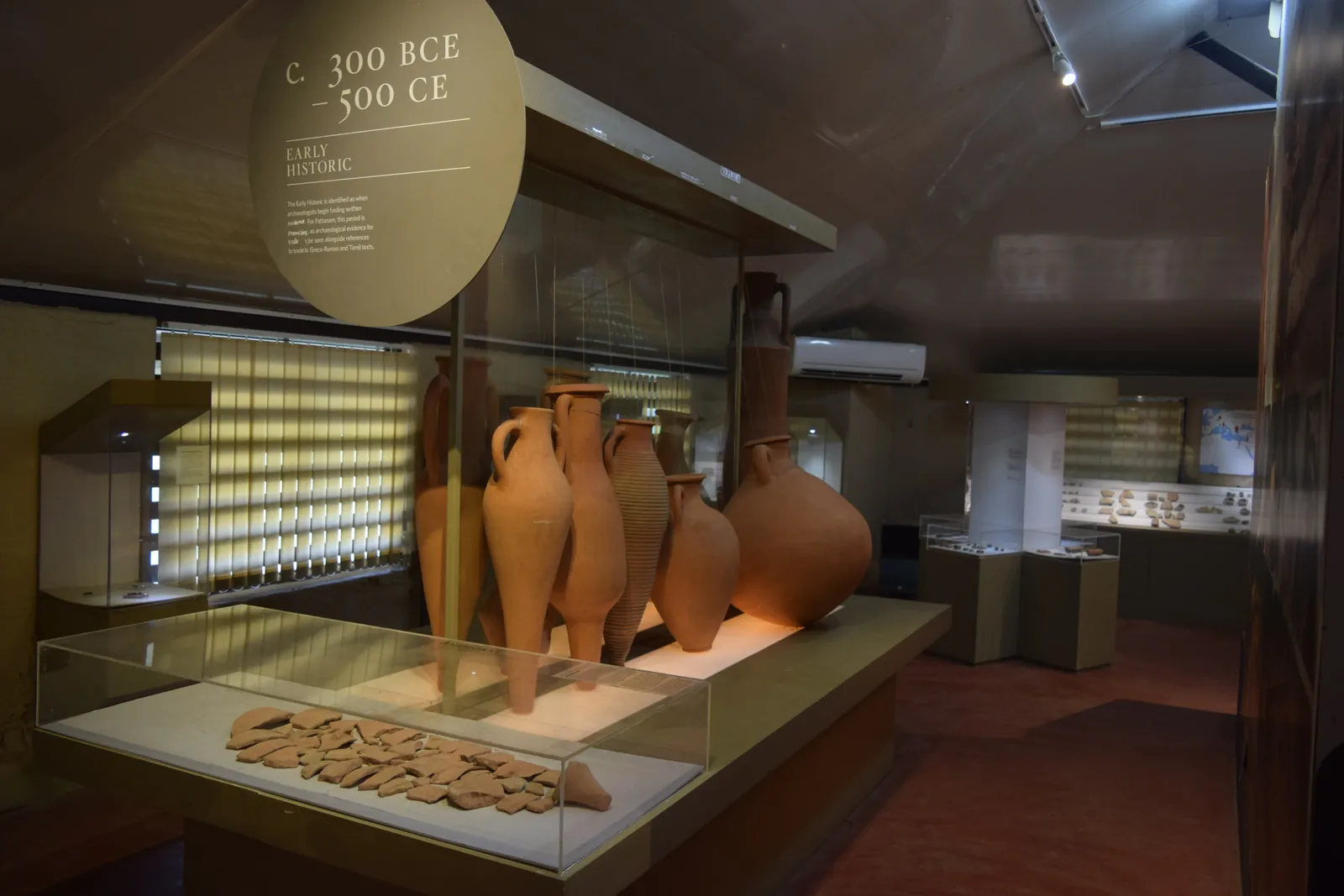
Archaeology backs up the poetry. Excavations at Pattanam, near Kodungallur in Kerala, have turned up Mediterranean wine and oil amphorae, fine Roman tableware and other imports, and many scholars now identify the site with Muziris. Roman gold and silver coins have been found in hoards across south India.
The most striking document is the Muziris papyrus, a second-century CE loan contract now in Vienna. Its reverse side values three quarters of the cargo of a single ship, the Hermapollon, at about 1,154 talents of silver, close to seven million drachmas. Reconstructions by papyrologists show that pepper made up the largest share of that load. By any measure, a single returning voyage moved a fortune.
Why Romans complained about the gold drain
Pepper became so ordinary on Roman tables that the empire built dedicated spice warehouses, the Horrea Piperataria, near the Forum under the emperor Domitian. The cookbook attributed to Apicius calls for pepper in the large majority of its recipes, savoury and sweet alike.
Not everyone approved. Pliny the Elder, writing in the 70s CE, was baffled that people craved a spice whose only virtue was pungency, and that it was imported "all the way from India." He recorded prices per Roman pound: 15 denarii for long pepper, 7 for white and 4 for black, at a time when a legionary earned well under a denarius a day. Pliny also grumbled that India, China and Arabia drew 100 million sesterces a year out of the empire in exchange for luxuries. That flow of coin east is the literal root of the "black gold" idea: gold went to India, and pepper came back.
The most famous proof of pepper's value came at the very end of the Western empire. In 408 CE, the Gothic king Alaric besieged Rome and, according to the historian Zosimus, lifted the siege only after the city paid 5,000 pounds of gold, 30,000 pounds of silver, 4,000 silk tunics, 3,000 scarlet hides and 3,000 pounds of pepper. A spice sat on the same ransom list as bullion.
Medieval pepper: rent, dowry and a Venetian fortune
After Rome fell, pepper kept moving. It travelled by sea to the Persian Gulf and Red Sea, then overland, along the same overlapping routes described in our story on why the Silk Road was never really a road. Arab, Gujarati, Jewish and Chinese merchants all traded on the Malabar coast, and Alexandria became the great handover point where Venetian galleys loaded spices for Europe.
In Europe, pepper behaved like money. Landlords accepted it as rent and families listed it in dowries. The English legal phrase "peppercorn rent", now meaning a token payment, comes from a time when a pound of pepper was anything but trivial. German merchants grown rich in the trade were mocked as Pfeffersäcke, "pepper sacks."
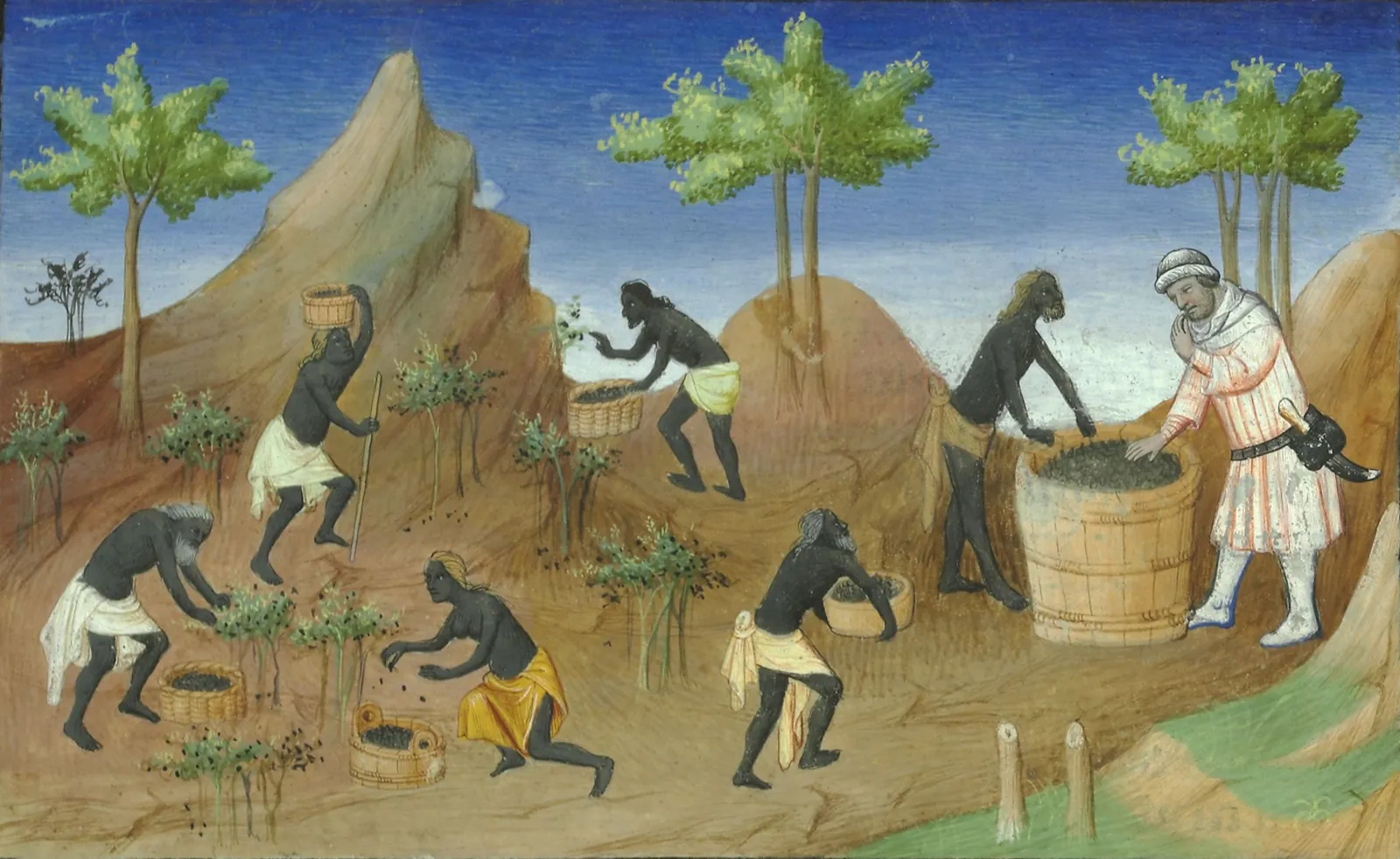
Marco Polo, returning from China in the 1290s, described pepper growing around Coilum, today's Kollam. By then the price paid in Europe had been multiplied many times by tolls, middlemen and the Venetian and Mamluk grip on the eastern Mediterranean. Anyone who could reach Malabar directly by sea stood to make an extraordinary profit.
Vasco da Gama and the race to Kerala
That is exactly what Portugal set out to do. In May 1498, Vasco da Gama anchored near Calicut (Kozhikode), the port ruled by the Zamorin. When two North African merchants in Calicut asked one of his men what the Portuguese wanted, the reply recorded in the voyage account was "Christians and spices." Within a few years Portuguese fleets had set up a fortified trading post at Cochin (Kochi) and were trying to force a royal monopoly on the pepper trade through the Casa da Índia in Lisbon.
The monopoly never fully held. Malabar rulers, Arab traders and smugglers kept other channels open. In 1663 the Dutch East India Company captured Cochin, and the English East India Company built its own pepper base at Tellicherry (Thalassery). The name survives as a premium grade: "Tellicherry" pepper still means large, fully developed Malabar berries.
As pepper growing expanded across Sumatra, Java and the Malay world, and Dutch and English companies shipped it to Europe in bulk, supply surged and prices fell. By the 1700s pepper had become an everyday seasoning for ordinary households, and the luxury trade moved on to nutmeg, coffee, tea and sugar. In a sense, black gold lost its value by succeeding too well.
Pepper and the chilli in Indian kitchens
For most of Indian history, pepper was also the main source of heat at home. That changed only after the 1500s, when the same Portuguese ships that came for pepper brought a rival from the Americas. Our story on how chillies reached Indian cooking traces how Capsicum spread from Goa across the subcontinent within a few generations.
The language still remembers the order of arrival. In Tamil, pepper is milagu, and the newcomer was named milagai, widely explained as "pepper fruit." Pepper did not disappear, though. It anchors south Indian rasam, Chettinad pepper chicken, Kerala kurumulaku roasts, Ayurvedic preparations and the peppery kadha many families brew at the first sign of a cold. It also turns up in spiced chai, the cup whose story we told in how tea became India's everyday drink.
Who grows black gold today
The centre of production has moved. According to the Vietnam Pepper and Spice Association, world output in 2025 was about 537,000 tonnes, with Vietnam supplying roughly 36 percent, India about 16 percent and Brazil about 15 percent. Vietnam exported more than 247,000 tonnes in 2025, earning a record of about US$1.66 billion.
India, the plant's homeland, is now a mid-sized producer. Karnataka has overtaken Kerala as the largest growing state, largely because pepper vines climb the shade trees of coffee estates in Kodagu, Chikkamagaluru and Hassan, while Kerala's crop comes mainly from Idukki and Wayanad. The Directorate of Arecanut and Spices Development put India's 2024–25 crop at about 78,800 tonnes in its second advance estimate, down from about 126,000 tonnes in 2023–24, after a dry spell during flowering followed by heavy rain. Imports climbed to a record of roughly 48,000 tonnes in 2024–25, including cargoes from Vietnam and Sri Lanka.
That reversal would have startled a Roman merchant. The coast that once drained gold from an empire now buys pepper from Vietnamese farms, a country whose crop only reached world-beating scale in the last few decades.
Why the name still fits
Black pepper earned the name black gold because it combined three things gold has: it was scarce, it came from far away and everybody wanted it. It moved coins out of Rome, filled a Gothic king's ransom, paid medieval rent and redrew the map of the world's sea routes. Today it costs a few rupees a pinch, but every grind still carries that history back to the forests of the Western Ghats.