How Does FASTag Work?
FASTag is a battery-free RFID sticker on your windscreen. A reader at the toll lane wakes it with radio waves, and NPCI's NETC switch debits your bank account before the barrier lifts. Here is the full path of a toll payment, the rules behind it and where barrier-free tolling goes next.
 By Sushant Kataria· 9 min read
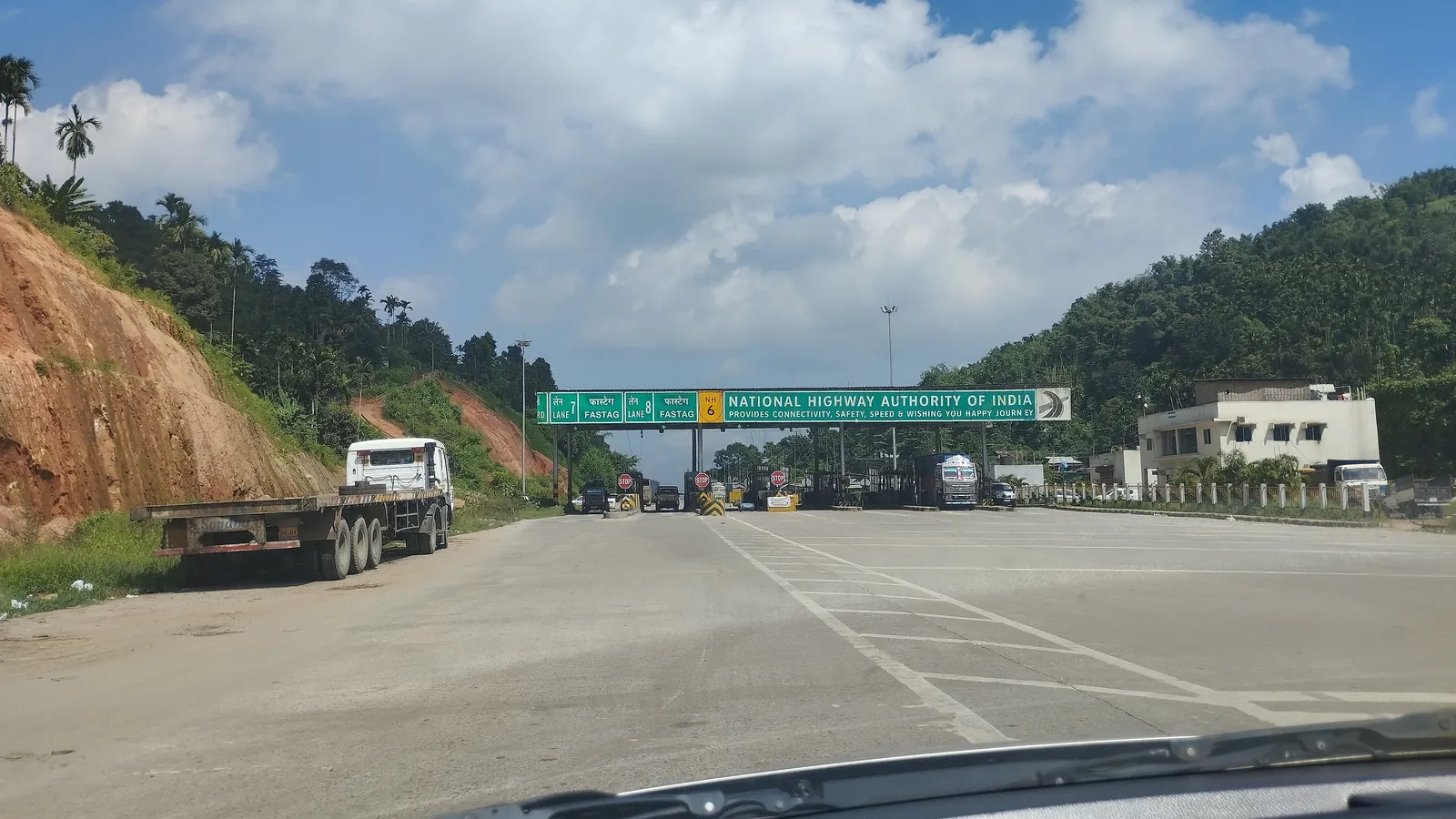
FASTag works by radio: it is a battery-free RFID (radio frequency identification) sticker on your windscreen that a reader in the toll lane wakes up and reads as you drive in, so the plaza knows exactly which tag, and which vehicle, has arrived. The plaza then sends a debit request through the National Electronic Toll Collection (NETC) switch run by the National Payments Corporation of India (NPCI), your bank deducts the toll from the linked account or wallet, and the barrier lifts, usually within seconds.
That short exchange now handles almost every toll on India's national highways. According to a Rajya Sabha reply published by PIB in July 2026, more than 98% of user fee collection at National Highway plazas now happens through FASTag. Here is what goes on inside the sticker, inside the lane and inside the banking network.
What is inside the sticker
A FASTag looks like a plain plastic label, but laminated inside it is a small chip and a flat metal antenna. It has no battery. The NETC procedural guidelines published by Indian Highways Management Company Limited (IHMCL), the NHAI-promoted company that runs the programme, describe it as a passive RFID tag working on the backscatter principle: the lane reader sends out radio waves, the tag's antenna turns some of that energy into enough voltage to power the chip, and the chip answers by reflecting a modulated signal back to the reader.
The air interface follows the global EPC UHF Gen2 protocol maintained by GS1 (published internationally as ISO 18000-6C), the same family of ultra-high-frequency RFID used to track parcels and clothing in warehouses. That choice was deliberate. When India studied toll technology, a government committee chaired by Nandan Nilekani, then head of UIDAI, weighed the options, and as a 2014 PIB note records, the government adopted passive RFID on the EPC Gen-2, ISO 18000-6C standard "considering user convenience, rate of acceptance and ease of implementation." A passive tag costs little, never needs charging and asks nothing of the driver.
Before a tag goes live, an NPCI-authorised manufacturer personalises it with a unique EPC ID, the vehicle class, a placeholder registration number and digital signatures, using keys supplied by the issuing bank. The tag is then fixed to the inside of the windscreen and registered on the central NETC mapper, a national database that links each tag to a vehicle registration number, a vehicle class and an issuer bank. The guidelines also require the tag to be destroyed as soon as it is peeled off, which is why you cannot move one from car to car.
What happens in the lane, step by step
The heavy lifting is in the plaza and the banking network, not the sticker. The NETC guidelines lay out the flow:
- The read. As the car enters the lane, the overhead RFID reader picks up the tag ID, the chip's transponder ID (TID) and its user memory. At the same time an automatic vehicle classifier (AVC) estimates the vehicle type, weigh-in-motion sensors can record weight, and a camera captures the vehicle.
- To the acquirer. The plaza server sends this bundle to the acquirer bank, the bank that has signed up to handle that plaza's toll collection.
- The lookup. The acquirer asks the NETC mapper for the tag's details: registration number, vehicle class and status. The class stored in the mapper overrides the lane's own classifier for working out the fare.
- The exception check. NETC checks whether the tag sits on an exception list. Issuers put tags on these lists when they are blacklisted (for example on a police request or for a stolen vehicle), on low balance, hotlisted for a negative balance or a violation, or closed and replaced.
- The debit. If the tag is clean, the NETC switch forwards the debit request to the issuer bank, the bank that sold you the tag. It deducts the toll from your linked account or FASTag wallet and sends you an SMS.
- The answer. The issuer's response travels back through NETC to the acquirer and the plaza, and the barrier opens. Banks then settle with each other through NPCI's clearing system, and the plaza operator is paid no later than the next settlement day.
If this sounds like a card payment, that is because it is built the same way. NPCI sits in the middle as a switch connecting many issuers to many acquirers, exactly as it does for UPI, where it routes payments between banks. The difference is that the "card" here is a radio tag and the "PIN" is the tag's cryptographic signature and the vehicle it is bound to.
Why a last-minute top-up sometimes fails
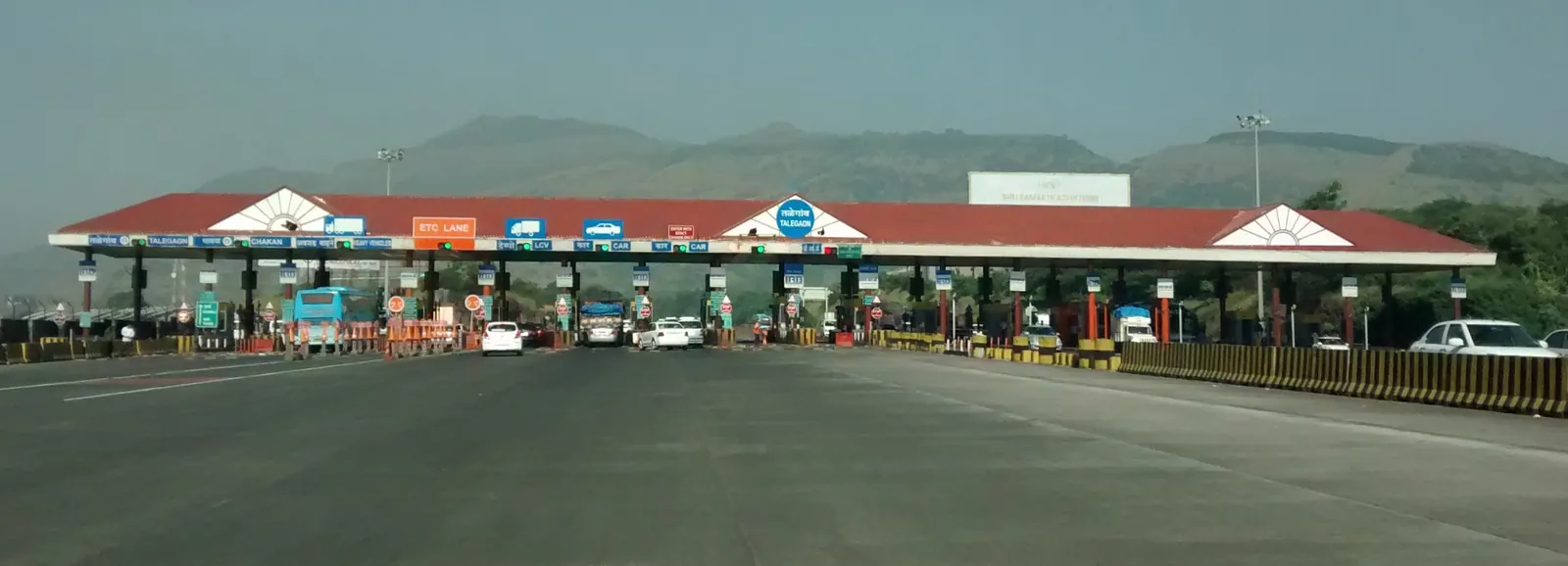
The exception lists explain the most common FASTag frustration. Plazas cannot query every bank in real time for every car, so acquirers keep a synchronised copy of the exception lists and refresh it at intervals set by IHMCL and NHAI. If your tag went onto the low-balance list an hour ago, recharging it while you sit in the queue may not reach the lane in time.
The NETC rules make this explicit. Since 17 January 2025, a transaction is declined at the NETC switch if the tag had been on an exception list for more than 60 minutes before the reader saw it and was still not cleared 10 minutes after the read. The rules also protect drivers: the issuer remains liable for transactions for 20 minutes after it adds a tag to an exception list. The practical advice is simple: top up well before you set out, not at the booth.
Two more rules shape everyday use. The guidelines allow only one active tag per vehicle, with older tags closed, and they require a re-KYV (Know Your Vehicle) check every three years, with photos showing the tag on the windscreen and the registration plate.
From a pilot near Dahanu to every lane in India
Electronic tolling did not arrive all at once. On 12 April 2013 the then road transport minister launched the first interoperable RFID-based toll system on the Mumbai-Vadodara section, at village Tawa near Dahanu. By October 2014, according to PIB, a 10-plaza pilot between Mumbai (Charoti) and Ahmedabad was running smoothly, ETC was installed at 55 plazas, and IHMCL had been set up to run the system.
Adoption stayed slow until the rules changed. A May 2020 amendment to the National Highways Fee Rules made vehicles without a valid, working tag pay double in FASTag lanes. FASTag became mandatory for four-wheeled passenger and goods vehicles from 1 January 2021, and from the midnight of 15/16 February 2021 every lane at a National Highway plaza was declared a FASTag lane.
The payoff showed in the queues. At a June 2023 press conference reported by PIB, road transport minister Nitin Gadkari said the average waiting time at toll plazas had fallen from 734 seconds in 2014 to 47 seconds in 2023, while annual toll revenue had risen from ₹4,770 crore in 2013–14 to ₹41,342 crore in 2022–23.
How big FASTag is in 2026
NPCI's NETC statistics show the scale. In September 2026, 40 banks were live on NETC and 13.03 crore FASTags had been issued in total. That month the system processed 337.34 million toll and parking transactions worth ₹7,096.35 crore, plus another 80.33 million Annual Pass crossings counted separately. That works out to more than 11 million toll and parking payments a day before the passes are added.
Each of those reads is a tiny version of the same idea behind Aadhaar authentication: a central registry vouching that an identifier is genuine, so the transaction at the edge can be fast.
The Annual Pass and the UPI fallback
The biggest recent change for private car owners is the FASTag Annual Pass, which came into effect on 15 August 2025. It rides on your existing tag: pay once and you get one year or 200 crossings at National Highway and National Expressway plazas, whichever comes first. NHAI revised the price from ₹3,000 to ₹3,075 from 1 April 2026 for 2026–27, and the pass is sold through the Rajmarg Yatra app and NHAI website for non-commercial cars, jeeps and vans at about 1,150 fee plazas. By June 2026 more than 77 lakh passes had been issued and around a third of all car, jeep and van electronic toll transactions were Annual Pass trips, according to the July 2026 PIB release.
If you arrive without a working tag, you still pay more, but less than before. Under the Third Amendment to the National Highways Fee Rules, in force from 15 November 2025, a vehicle without a valid, functional FASTag pays twice the toll in cash but only 1.25 times if it pays by UPI. On a ₹100 toll that is ₹200 in cash or ₹125 by UPI, typically by scanning a dynamic QR code shown at the booth. The same gazette notification adds a rule worth remembering: if your tag is valid and has enough balance but the plaza's own equipment fails to read it, you cross free and should receive a zero-transaction receipt.
Wrong deductions can be reported on the National Highways helpline 1033, through your issuer bank or in the Rajmarg Yatra app, as listed in the same PIB release.
What comes after the barrier
The next step removes the booth altogether. Multi-Lane Free Flow (MLFF) tolling uses overhead gantries that read FASTags with RFID and number plates with cameras and AI, so vehicles are charged at highway speed without stopping or keeping to a lane. India's first MLFF plaza went live at Choryasi on NH-48 near Surat in August 2025, as a PIB explainer notes, and by July 2026 the ministry reported MLFF contracts awarded at 17 plazas, five of them live, with bids invited for 104 more.
Satellite tolling, which would charge by distance using the same kind of positioning described in how GPS works, is further off. The July 2026 reply says expert committees recommended "further deliberations" on GPS-based barrier-free tolling over security, privacy and operational concerns. For now, the humble radio sticker remains the key to India's highways.
The short answer
FASTag is a passive UHF RFID tag that a toll-lane reader powers and reads by radio. The tag's ID is checked against NPCI's national mapper and exception lists, the NETC switch sends a debit to the bank that issued the tag, and the toll is settled between banks while you drive on. Keep the balance topped up well before a trip, keep one tag per vehicle and keep its KYV current, and the barrier should open before you have fully stopped.