How Did Tea Become India's Everyday Drink?
Tea was a British colonial cash crop before it became chai. Assam and Darjeeling plantations, railway vendors, CTC processing and milk-and-spice cups remade it into India's everyday drink.
 By Kirti Kaliraman· 9 min read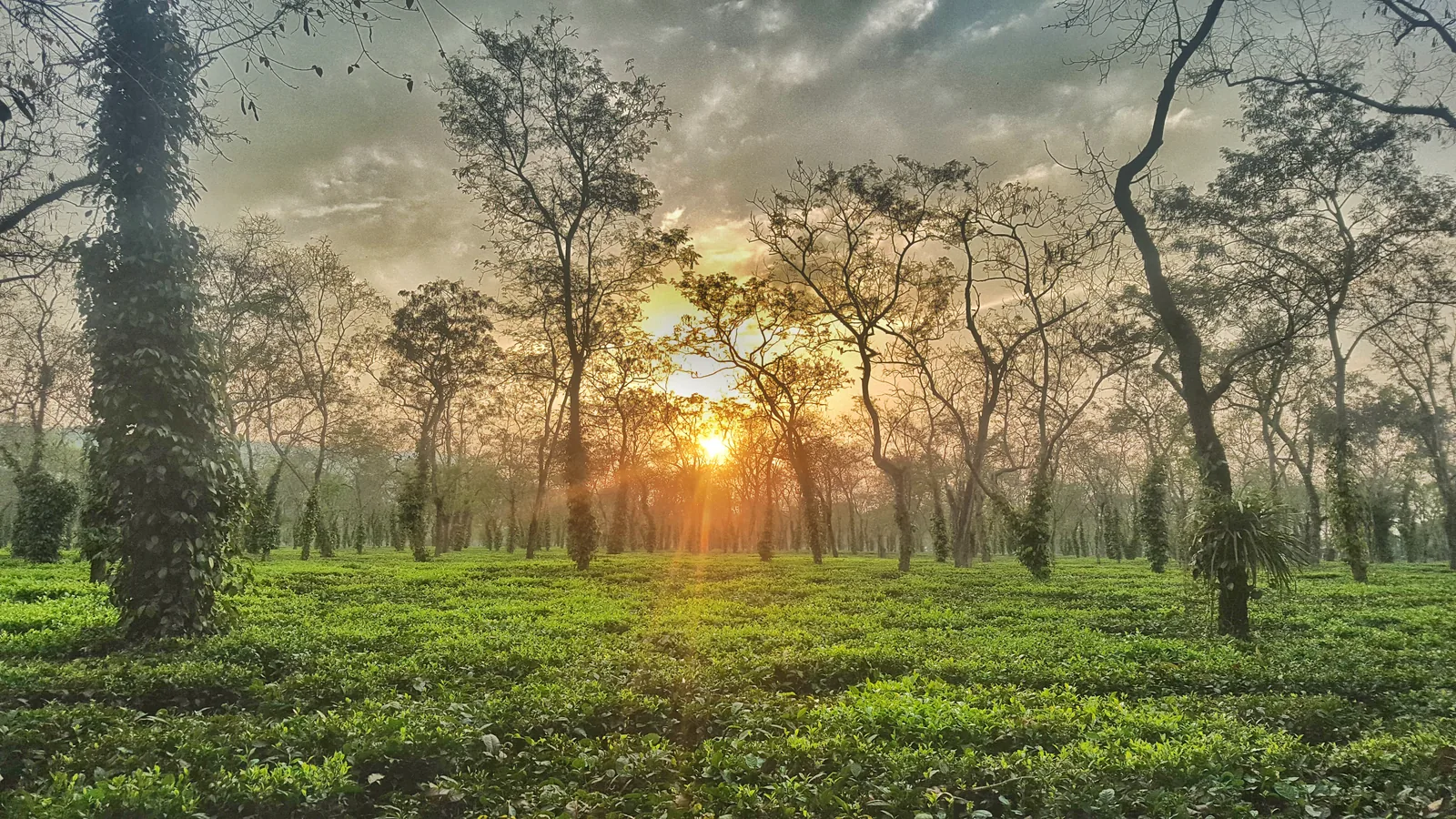
Tea became India's everyday drink through colonial plantations in Assam and Darjeeling, aggressive twentieth-century marketing, and an Indian remake of the cup: strong black tea boiled with milk, sugar and spices. The plant is native to East Asia, but India turned Camellia sinensis into chai, a street and household ritual that now drinks most of what the country grows.
That story is newer than it feels. A cup of milky, sweet, ginger-scented chai seems as Indian as monsoon rain. Historically, the commercial tea industry is roughly two centuries old, and the mass habit of drinking tea several times a day is largely a twentieth-century achievement. Understanding how that happened means separating three threads: where tea came from, how the British built an export crop in India, and how Indians reinvented the drink for themselves.
Tea did not begin in India
Wild and cultivated tea belongs to Camellia sinensis. The great centre of early tea culture was China, where leaves were processed, traded and drunk for centuries before European merchants arrived. From China the plant and the habit spread into neighbouring regions of East and Southeast Asia.
India did have its own botanical story. In the forests of what is now Assam, indigenous communities including the Singpho people knew a local tea plant and prepared leaves for drinking long before British planters arrived. That Assam variety (often called Camellia sinensis var. assamica) has larger leaves suited to strong black tea. It was not, however, a pan-Indian daily beverage. For most of the subcontinent before the nineteenth century, tea remained rare, medicinal or simply unknown, while drinks such as buttermilk, spiced milk, sugarcane juice and later coffee filled other niches.
So when people say India "discovered" tea, they are compressing a more awkward truth: Indians already knew a local plant in the north-east, but the everyday national drink was built later, on a colonial industrial model that borrowed Chinese processing knowledge, Assam genetics and British capital.
Assam: from forest plant to industrial crop
British interest in Indian tea rose as the East India Company looked for a way out of dependence on Chinese leaf. After the Company gained control of Assam following the Treaty of Yandabo (1826), explorers and officials paid new attention to the local plant. Robert Bruce and his brother Charles Alexander Bruce are the names most often attached to early British awareness of Assam tea in the 1820s and 1830s; chests of Singpho-prepared leaf reached Company hands, and experimental gardens followed.
In 1837 a British tea garden was established at Chabua in Upper Assam. In 1840 the Assam Company began commercial production. From the 1850s the industry expanded rapidly across the Brahmaputra valley, clearing huge tracts for monoculture estates and recruiting indentured labour under harsh conditions that writers such as Mulk Raj Anand later condemned. By the turn of the twentieth century Assam was among the world's leading tea regions, shipping strong black tea into a British market that preferred it to milder China teas (Wikipedia: History of tea in India).
The colonial model was export-first. Tea paid for empire logistics and British breakfast tables. It did not automatically put a kettle on every Indian hearth.
Darjeeling and the Chinese plant
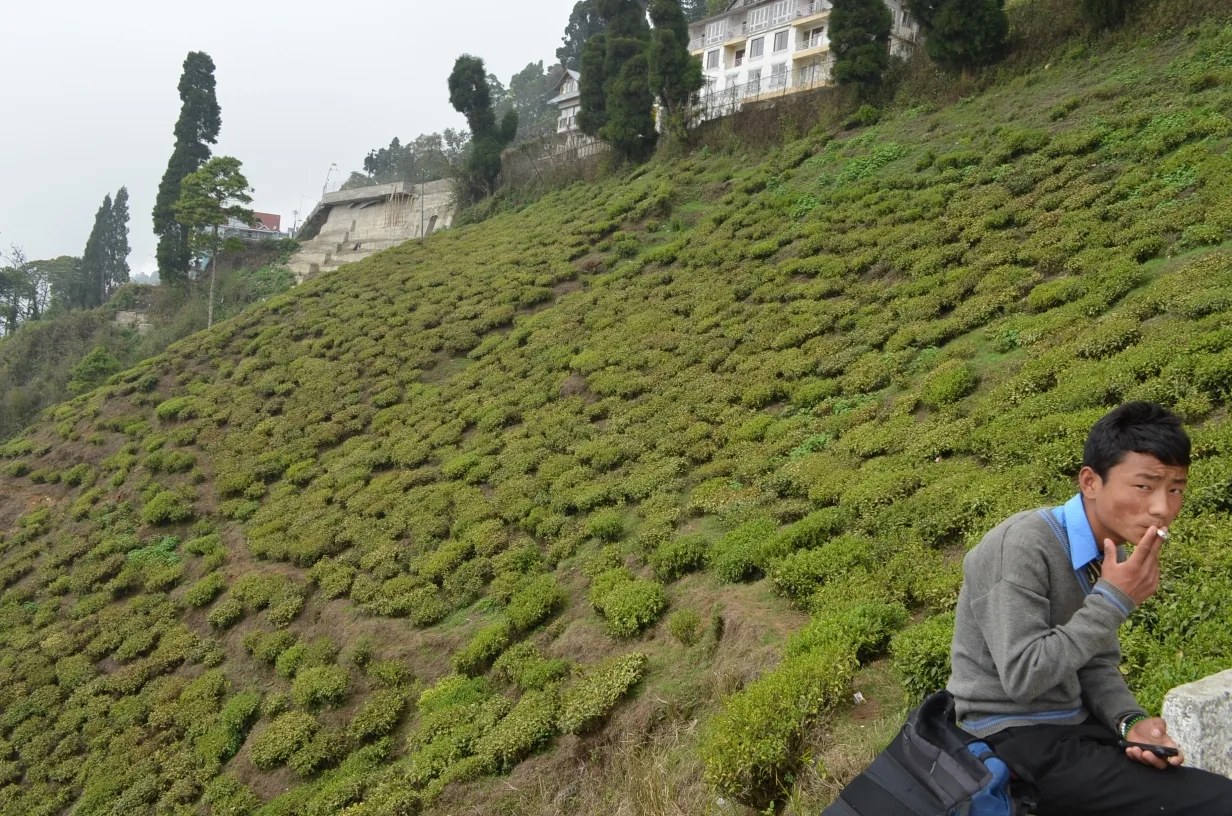
A parallel story unfolded in the Himalayan foothills. Darjeeling, in what is now West Bengal, offered cool slopes and acidic soils that suited Chinese-type tea bushes. In the mid-nineteenth century, Chinese plants and processing know-how (famously associated with the plant hunter Robert Fortune's missions of 1848–51) helped seed gardens there. Darjeeling tea developed a reputation for fragrance and delicacy that Assam's malty strength did not aim for.
Today Darjeeling tea holds Geographical Indication protection, and its name is guarded in export markets. Volume is tiny beside Assam and the Nilgiris, but the brand matters: it showed that India could grow premium orthodox leaf as well as bulk black tea. Happy Valley and other historic estates still draw visitors who walk between pruned bushes on misty ridges.
Why Indians did not drink much tea at first
Early Indian tea was expensive relative to wages, geared to export grades, and associated with British social ritual: teapot, strainer, milk jug, sugar bowl. For many households that kit was out of reach. Tea also competed with existing drinks and with the suspicion that a foreign habit need not be adopted wholesale.
Historians of chai, including Philip Lutgendorf, emphasise that mass Indian consumption is a twentieth-century story. The Indian Tea Association and commercial brands spent decades persuading Indians to drink tea at home, at work and on the move. Demonstrators boiled tea at festivals and railway stations. Packets got smaller and cheaper. Advertisements framed tea as modern, energising and eventually patriotic after independence, even though Gandhi had criticised plantation labour conditions and urged boycotts of British goods including tea.
The breakthrough was not merely persuasion. It was changing the form of the drink so that it fitted Indian kitchens, purses and tastes.
Railway chai and the street cup
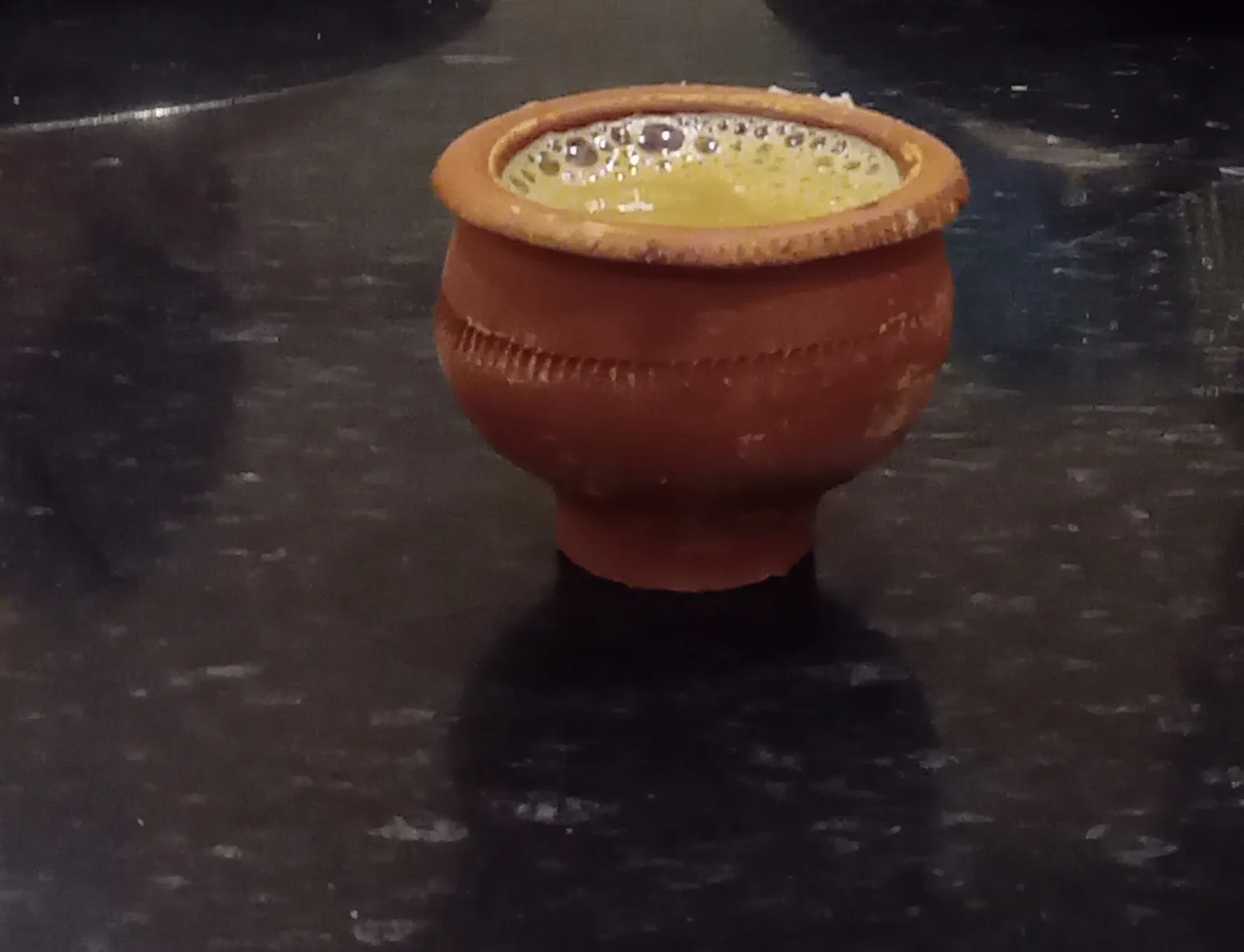
India's railways became a tea highway. Vendors walked train corridors with kettles; platform stalls sold hot cups to passengers who had minutes to spare. Tea moved from the drawing room into the crowd. The clay kulhad or Bengali bhar, the glass tumbler, the steel glass in a South Indian eatery: each vessel signalled that this was a public, repeatable, inexpensive pause, not a Victorian ceremony.
That street culture still defines the drink. Office breaks, college canteens, highway dhabas and neighbourhood tapris all orbit the same idea: a strong, sweet, milky brew made fresh and finished quickly. The social life of chai (gossip, politics, waiting for a train) is as important as the caffeine.
CTC: the machine that democratised the leaf
Processing technology mattered as much as marketing. CTC (crush, tear, curl) was developed in Assam in the 1930s by Sir William McKercher. Leaves are shredded into small granules with high surface area. The result brews fast and strong, yielding more cups per kilogram than many orthodox whole-leaf methods. Industry writers note that redesigned CTC machines in late-1950s Kolkata made the process cheaper and easier to copy; by the 1960s and after, CTC tea flooded the domestic market (STiR Tea & Coffee; Serious Eats).
For a roadside vendor or a hurried household, CTC is practical: it stands up to boiling with milk and sugar, and a little leaf goes a long way. Orthodox Darjeeling still has its devotees, but the cup that built national habit was mostly CTC black tea.
Masala chai: the Indian remake
Indians did not simply copy British tea service. They changed the recipe.
Instead of a brief steep of leaf in already-boiled water, many Indian methods boil leaf fragments directly in water or milk. Milk and sugar are generous, partly to balance the stronger, sometimes dustier grades used for economy. Spices enter the pot: fresh ginger, green cardamom, cloves, cinnamon, black pepper, sometimes fennel or bay. The result is masala chai, a category as varied as regional cooking itself. Mumbai cutting chai is reduced and intense; Kerala and Tamil Nadu have their own milk-tea styles; Kashmiri noon chai is a different tradition entirely, salted and pink with soda.
The spices connect tea to older South Asian flavour logic, the same world that absorbed New World chillies into Indian cooking and that folds fillings into momos and other dumplings from the Himalaya to the plains. Chai is not a museum of British breakfast. It is an Indian dish that happens to be a drink.
Producer and consumer at once
India today sits near the top of global tea production, typically second to China in total output and first among black-tea growers. Tea Board of India figures put calendar-year 2023 production at about 1,394 million kg, with roughly 1,186 million kg available for domestic consumption after trade flows (Tea Board of India; Tea Board global production table). A Board-commissioned consumption study estimated domestic use near 1,197 million kg in 2023, with the northern and western regions among the heaviest consumers. In other words, Indians drink the large majority of the tea they grow; exports matter, but the home market is the industry's centre of gravity.
Assam, West Bengal (including the Dooars and Darjeeling), Tamil Nadu (Nilgiris) and Kerala remain core producing zones, with smaller contributions from other states. Small tea growers have become a major share of output in recent decades, changing a landscape once dominated by large estates.
That dual identity (exporter brand and domestic staple) is unusual. Many commodity crops leave the country. Tea stayed, and stayed in volume.
Empire, labour and after
Honest history cannot skip the plantations' human cost. Colonial tea relied on indentured and recruited labour, often under coercive contracts, with women forming a large share of pluckers while receiving lower pay. Debates over wages, housing and chemical exposure continue on some estates into the present. Independence transferred ownership patterns over time, and Indian companies now dominate much of the industry, but the geography of tea still carries the imprint of nineteenth-century clearance and labour recruitment.
After 1947, tea was nationalised in symbolism if not always in ownership: a drink of offices, factories, farms and political meetings. Brands such as Brooke Bond (now under Hindustan Unilever lineages in India), Tata Tea and regional packers fought for shelf space. The clay cup and the branded packet learned to coexist.
Older trade, newer empire
Tea's Indian career also sits inside longer exchange histories. Chinese leaf and knowledge moved along Asian circuits long before steamships; British firms later forced a colonial shortcut around China's monopoly. Overland and monsoon routes that people romanticise as the Silk Road had already shown how plants, techniques and tastes travel in stages. Tea in India is both a chapter of that older Eurasian story and a product of industrial empire: railways, joint-stock companies, auction houses in Kolkata and Guwahati, and advertising that taught a nation to want a second cup.
What "everyday" really means
Call tea India's national drink and you are describing practice, not a government decree. Surveys and industry studies show deep regional variation in how much people drink and how they prepare it. Coffee holds strong ground in parts of the south. Soft drinks and packaged juices compete for younger consumers. Yet the density of chai stalls, the default offer to a guest, and the phrase "chai-paani" as shorthand for a small bribe or courtesy all point the same way: tea is the default hot drink of public India.
It became so because three things aligned. Planters and the state built supply. CTC and cheap packets made the leaf affordable. Indian cooks and vendors rewrote the recipe until the cup tasted local. The plant may have deep roots in China and Assam's forests, but the everyday drink is a modern Indian invention built on top of that biology.
The takeaway
Next time steam rises from a roadside kettle, you are looking at Assam genetics, Chinese processing ancestry, British plantation capitalism, railway logistics, CTC engineering and a cook's instinct to add milk, sugar and ginger. That is how tea became India's everyday drink: not by destiny, but by industry, adaptation and relentless cups.