What Makes Basmati Rice Basmati?
Basmati is not just any long-grain rice. It is an aromatic variety from the Indo-Gangetic plains at the Himalayan foothills, defined by slender grains that stretch on cooking, a signature perfume and a protected geographical origin in India.
 By Kirti Kaliraman· 6 min read
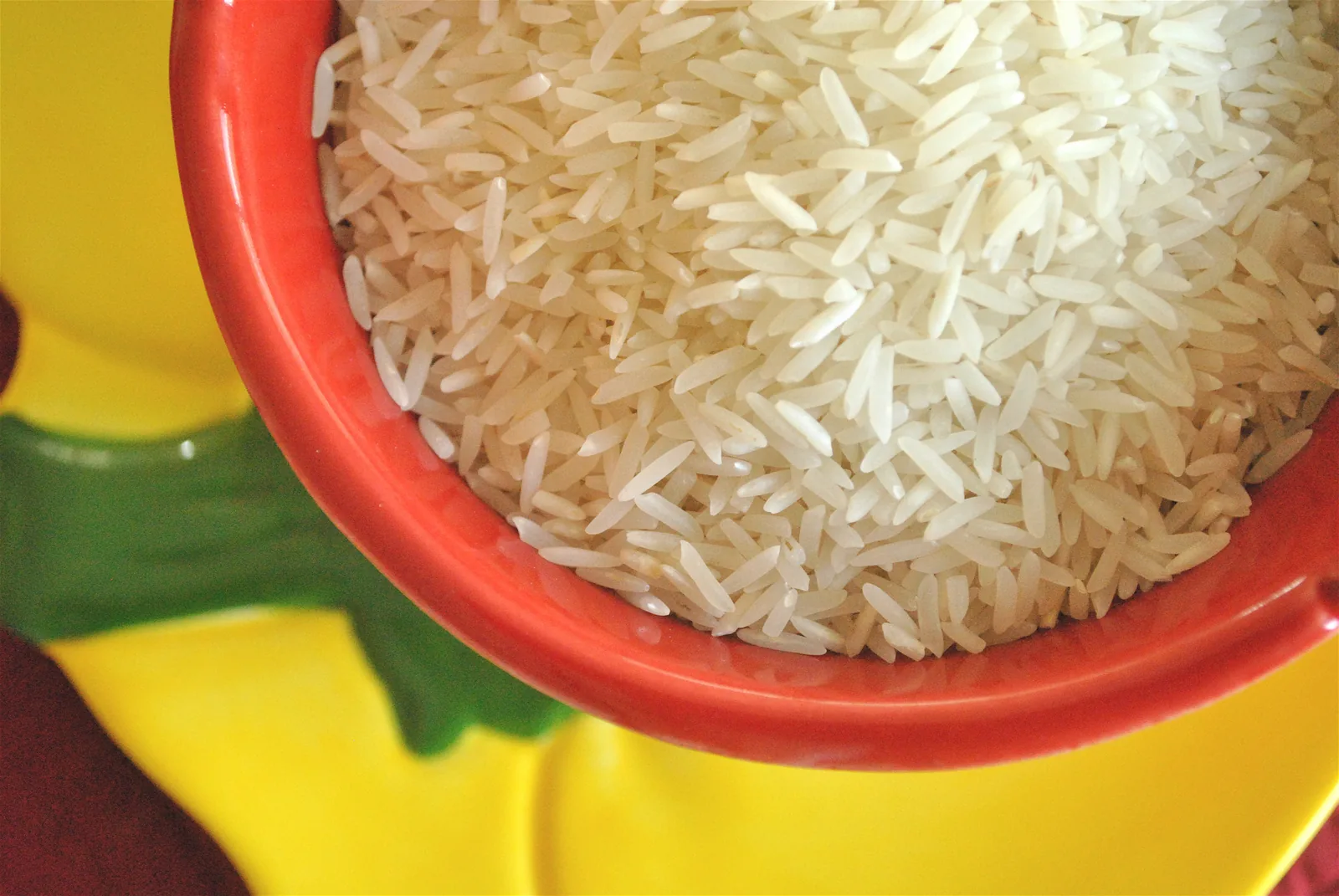
Basmati is a long-grain aromatic rice grown in specific areas of the Indo-Gangetic plains at the foot of the Himalayas, defined by its slender grain that elongates sharply on cooking, its aroma (mainly the compound 2-acetyl-1-pyrroline) and its protected geographical origin. In India that origin is locked into a Geographical Indication covering seven states and Union Territories, and since 2023 a Food Safety and Standards Authority of India (FSSAI) identity standard that spells out minimum grain length, elongation and other quality limits.
That is why a sack labelled "basmati" is not interchangeable with ordinary long-grain rice from elsewhere. The name points to place, chemistry and a legal definition, not merely to a shape on the plate.
Aroma: the 2-AP signature
Open a fresh packet of aged basmati and the first cue is smell: a warm, popcorn-like perfume that intensifies as the rice cooks. In 1983, Ron G. Buttery and colleagues identified 2-acetyl-1-pyrroline (often shortened to 2-AP) as a principal contributor to cooked rice aroma in scented varieties, in a study published in the Journal of Agricultural and Food Chemistry. Basmati is famous for that compound, though 2-AP also appears in other aromatic rices and even in some foods outside the grain world.
Genetics and growing conditions both matter. Traditional and modern basmati lines raise 2-AP; the Himalayan-foothill climate is part of why the aroma is trusted there. FSSAI's standard insists that basmati possess that natural fragrance in raw and cooked form, and be free of artificial colouring, polishing agents and artificial fragrances. Perfume sprayed on ordinary rice is adulteration, not basmati.
Length, breadth and the stretch on cooking
Basmati's second signature is geometry. The milled grain is long and slender, and when cooked it stretches lengthways rather than swelling into a sticky mass. That behaviour is why Awadhi and Hyderabadi biryani can keep separate, perfume-carrying strands after a sealed dum cook.
India now writes those expectations into law. The FSSAI identity standards for basmati, notified in the Gazette in January 2023 as the Food Safety and Standards (Food Products Standards and Food Additives) First Amendment Regulations, 2023, took effect from 1 August 2023, as the Authority's own press release and the compiled cereals chapter both record. Key parameters include:
- Average grain length: at least 7.0 mm for brown (de-husked) basmati and 6.61 mm for milled basmati
- Average length-to-breadth ratio: 3.5 or more
- Average cooked rice length: 12.0 mm or more
- Elongation ratio after cooking: not less than 1.7 for brown and milled basmati (1.5 for the parboiled types)
- Moisture: not more than 14% by mass
- Other non-basmati rice: not more than 15% by mass
Elongation ratio means cooked length divided by uncooked length. A grain that looks long before boiling but barely stretches fails the test. Volume expansion (more than 3.5 on average) and a maximum milled breadth of 2.0 mm before cooking sit alongside those rules, with limits on broken, chalky and extraneous matter so the label means more than marketing copy.
A Geographical Indication across seven states
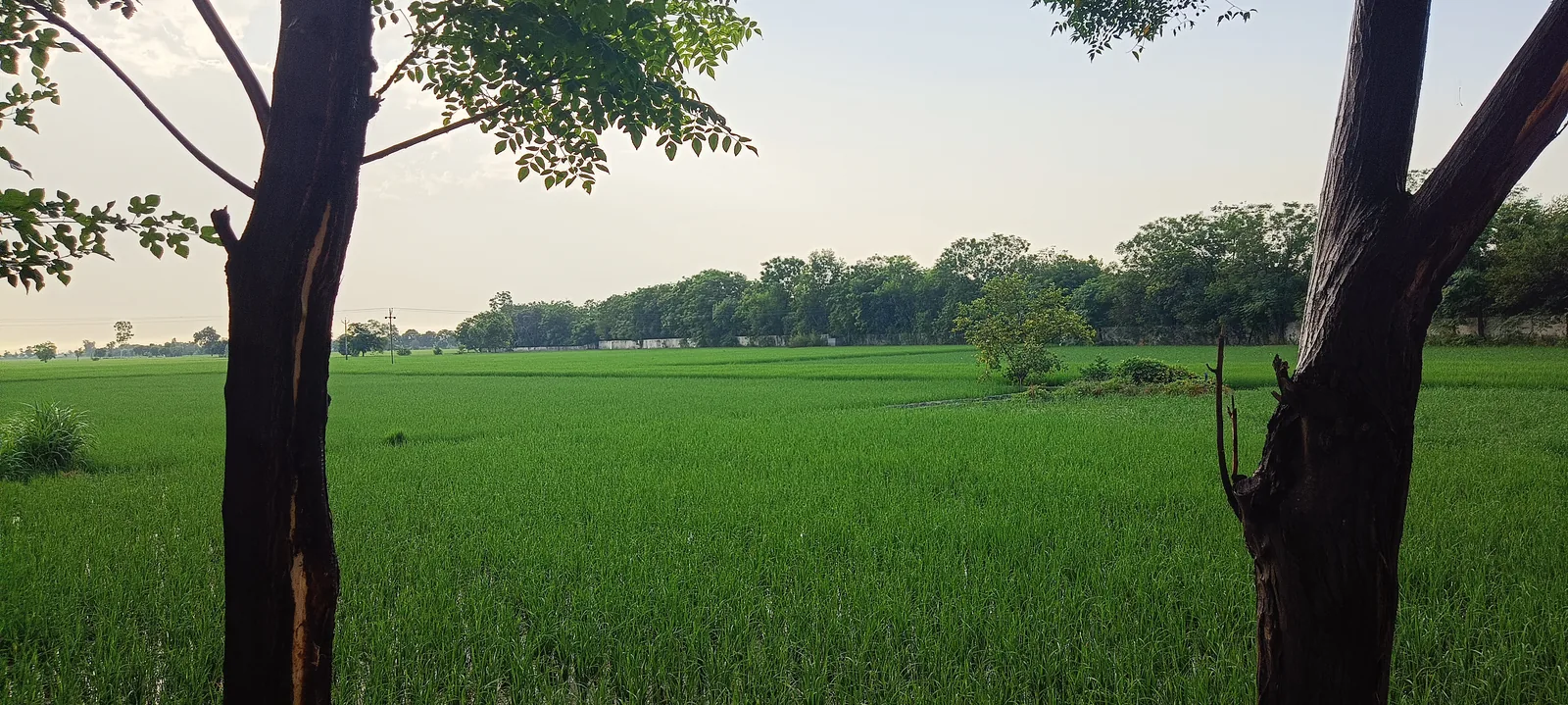
Place is not decorative. Under India's Geographical Indications of Goods (Registration and Protection) Act, 1999, Basmati is a registered GI. The Intellectual Property India public record for Application No. 145 lists the Agricultural and Processed Food Products Export Development Authority (APEDA) as applicant and registered proprietor, with filing on 26 November 2008 and certificate date 15 February 2016. The area named there is Punjab, Haryana, Himachal Pradesh, Delhi, Uttarakhand, Uttar Pradesh and Jammu and Kashmir. Business Standard reported the Intellectual Property Appellate Board's direction that registration proceed for those seven basmati-growing states and territories. Outside that belt, aromatic long-grain rice may be excellent eating. It is not Indian GI basmati.
Europe's PGI fight with Pakistan
India also sought to protect the name in the European Union. The Commission published India's application for "basmati" as a proposed protected geographical indication, opening a three-month opposition window. In October 2020 The Guardian reported that Pakistan vowed to "vehemently" oppose sole EU recognition for Indian regions, noting that both countries already ship authenticated basmati into the bloc under a zero-tariff arrangement dating from 2006. By mid-2023, officials told a Civil Dialogue Group on rice markets that India's PGI application was still under scrutiny. Hindu BusinessLine later reported that India opposed Pakistan's own EU PGI filing (2024), arguing that Pakistani growers were using Indian varieties such as Pusa Basmati 1121 and 1509 and that the claimed area overlapped Indian territory. The name remains a live trade argument, not a settled European label.
Pusa Basmati 1121 and 1509
Much of the grain in those export bags is not a medieval landrace alone. Breeders at the Indian Agricultural Research Institute (IARI) rebuilt basmati quality into higher-yielding, semi-dwarf plants. Pusa Basmati 1121, reviewed in a 2018 open-access paper in Physiology and Molecular Biology of Plants, was released for commercial cultivation in 2003 (and later notified nationally). It carries extra-long milled grains (about 9.0 mm), strong aroma and exceptional cooked elongation: kernel length around 21 to 21.5 mm, an elongation ratio as high as about 2.5 to 2.7, and volume expansion more than fourfold. By the late 2010s it occupied roughly 70% of India's basmati area.
Pusa Basmati 1509, listed among IARI's rice technologies, is an early-maturing semi-dwarf (about 95 to 100 cm) with non-lodging habit. It matures in roughly 115 to 120 days, weeks earlier than 1121's 140 to 145 days, which saves irrigations in a water-stressed north-west. ICAR still flags the Pusa series among India's highest foreign-exchange earners in the crop. When a Middle Eastern importer asks for "1121," they are naming a breeding success as much as a geography.
What India ships
The GI belt feeds a global market. According to Hindu BusinessLine, citing commerce and APEDA-linked data, India exported 6.52 million tonnes of basmati in fiscal year 2025-26, worth about US$5.67 billion. Times of India put the previous year, 2024-25, at 60.65 lakh tonnes valued at ₹50,312 crore, with Saudi Arabia, Iraq and Iran among the largest buyers. FSSAI's 2023 press note said India supplies about two-thirds of world basmati. Like Malabar pepper in an earlier age, and like tea as a national drink, the grain is an Indian staple that also travels as a premium export.
Ageing before the pot
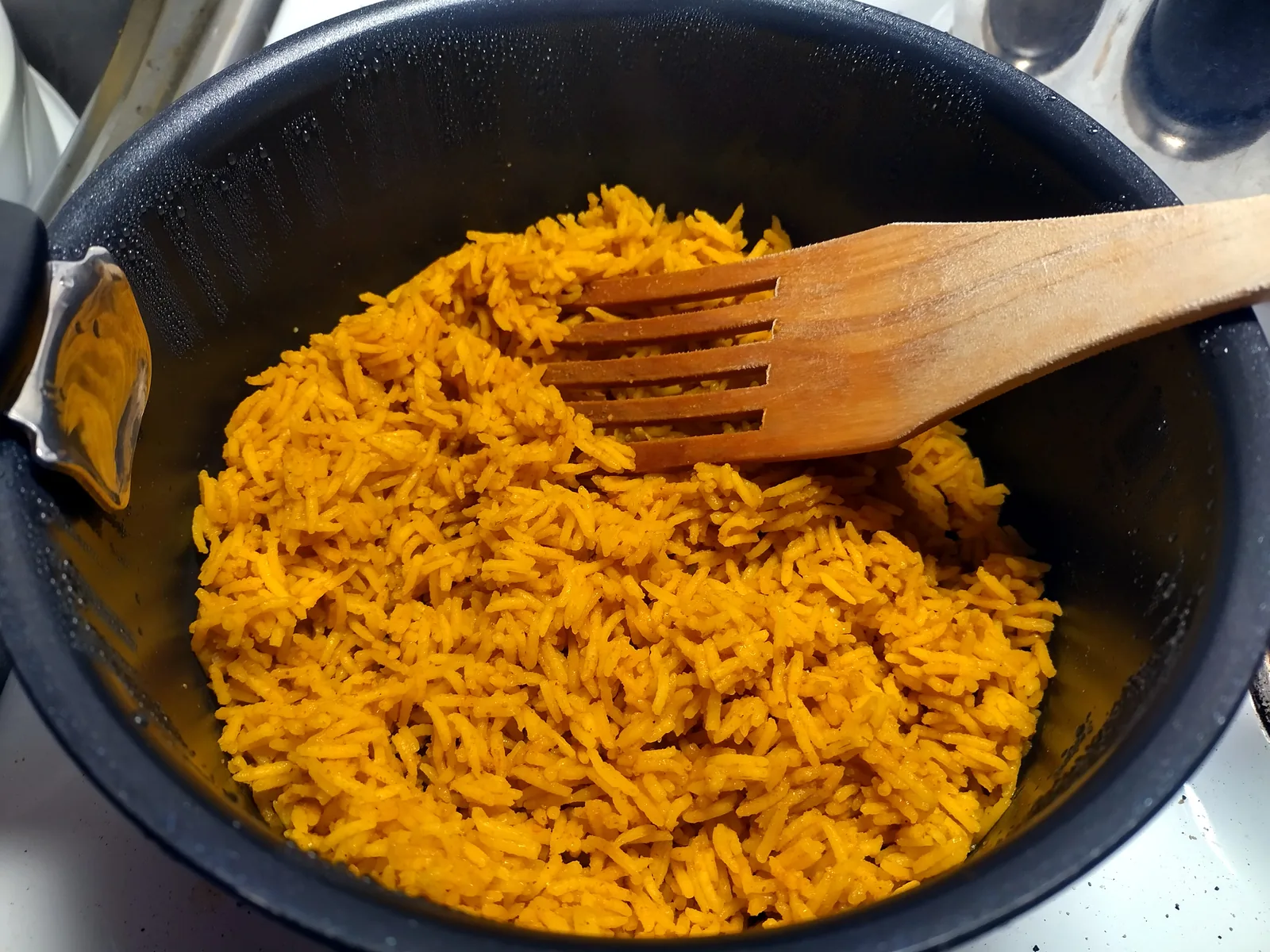
FSSAI's press release lists harvesting, processing and ageing among the factors that give basmati its character. A 2023 study in the Journal of Cereal Science tracked Pusa Basmati 1121 and 1509 for up to 24 months and recommended 12 to 18 months of ageing when the goal is fluffiness and grain length. Freshly milled grain can cook softer and stickier; aged grain tends to expand more cleanly. Many home cooks also soak milled basmati in water for 20 to 30 minutes before a gentle boil or absorption cook so the slender kernels hydrate evenly and show the elongation the standards describe.
The short answer, again
What makes basmati basmati is a bundle: Himalayan-foothill origin, a 2-AP-led aroma, extra-long slender kernels that stretch on cooking, FSSAI's numeric identity rules, India's GI across seven states and UTs, and modern IARI varieties such as Pusa Basmati 1121 and 1509 that carry that quality into millions of tonnes of exports. Call ordinary long-grain "basmati" and you ignore chemistry, geography and the law. Call the real thing by its name, and you name one of India's most carefully defined foods, the quiet foundation under countless dum pots and weeknight pulaos.