Where Did Biryani Come From?
Biryani grew from Persian rice cookery remade in Indian kitchens. Here is how the name, dum cooking and regional styles, from Lucknow to Hyderabad and Kolkata, shaped the dish India still orders most.
 By Kirti Kaliraman· 6 min read
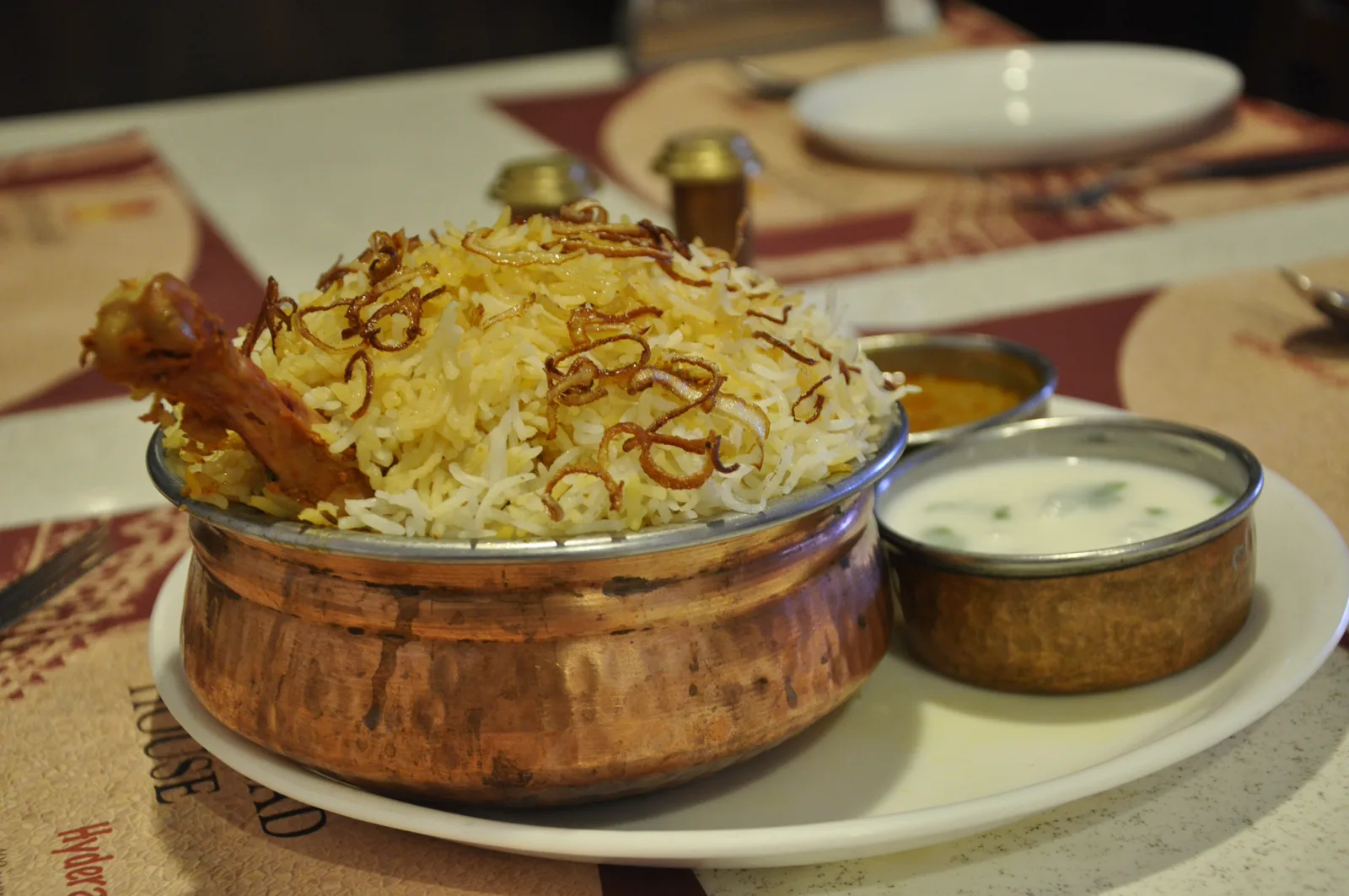
Biryani came from the meeting of Persian rice cookery and Indian spice kitchens: the name goes back to Persian biryan or beriyan (to fry or roast) and the phrase birinj biryan (fried rice), and the layered, sealed dum technique took durable form in the courts and cities of medieval and early modern India. Whether you credit Mughal kitchens, older Deccan contact, or both, the dish that fills Indian dinner tables and delivery apps today was remade here, not imported whole.
That remaking never stopped. Awadhi cooks refined a subtle layered style; Hyderabad turned kacchi dum into a city brand; Kolkata added potato under an exiled nawab; Malabar, Ambur and Dindigul built their own rice-and-meat grammars. The result is less one recipe than a family of regional arguments about what "proper" biryani means.
A Persian name for an Indian obsession
English biryani comes through Hindustani from Persian. The standard etymology on the biryani page traces the word to biryan or beriyan, "to fry" or "to roast," and to the phrase birinj biryan: rice fried or browned before it cooks through. Persian birinj is simply rice. The name encodes a method, not just a shopping list.
That method sits beside another Persian and Central Asian tradition: pilaf / pulao, where grain and flavourings cook together in stock until the rice is separate and aromatic. Cooks still argue over the border. A common distinction is that biryani is built in layers (part-cooked rice over a spiced base, or raw marinated meat under rice in the kacchi style) and finished sealed on low heat, while pulao is closer to a one-pot absorption dish. In practice the line is porous. What matters historically is the contact: delicate Persian-style rice meeting a hotter Indian spice kit.
The same pattern shows up elsewhere in Indian food. The samosa also arrived with a Persian name, then became thoroughly Indian. Biryani followed a parallel path: Persian vocabulary, Indian heat, and endless local reinvention.
Mughal and Awadhi kitchens
Biryani was present in Mughal-era India, though scholars still debate whether the classic layered form was invented in the imperial kitchens or adapted from earlier coastal and Deccan exchanges. Clearer is the logic of Mughlai cuisine: yoghurt marinades, browned onions, aromatic whole spices, saffron or kewra, and slow cooking that keeps meat tender without turning rice to mush.
North India's celebrated courtly expression is Lucknow, or Awadhi, biryani. Long-grain basmati is often cooked in ghee with warm spices, then layered with a meat curry or marinade, sealed, and finished on low heat. The aim is perfume more than chilli fire: cardamom, mace, cinnamon, clove, and fried onion. That seal belongs to dum pukht: cooking in a dough-sealed pot over a low flame so steam and aroma stay inside. Traditions often link dum's popularity in Awadh to Nawab Asaf-ud-Daulah in the late eighteenth century, though sealing a pot is older than any one court.
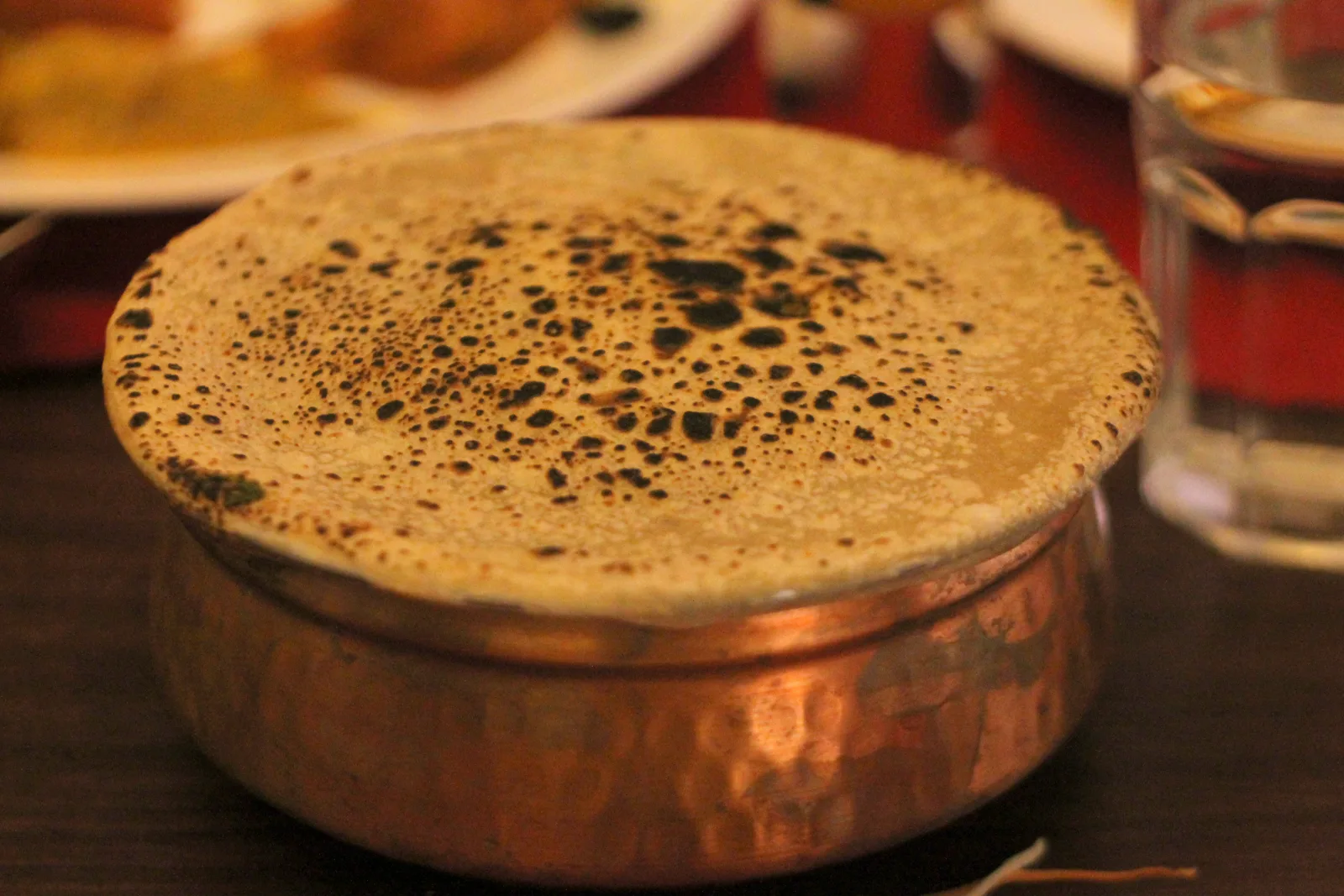
Basmati matters for more than prestige. The long aromatic grain from the Indo-Gangetic plains and adjoining regions of India and Pakistan stays separate after dum cooking and carries saffron and spice without collapsing. India still dominates world basmati trade; the variety and the dish rose together as court food became banquet and restaurant fare.
The Deccan and Hyderabad
If Lucknow perfected restraint, Hyderabad made biryani a public identity. Hyderabadi biryani grew in the Nizam's kitchens as a blend of Mughlai technique and Deccan taste. The famous kacchi (or kachay gosht ki) dum style layers raw, yoghurt-marinated meat under partially prepared basmati, then seals the pot so meat and rice finish together. Pakki versions use cooked meat. Either way, the Hyderabad plate (spice-stained rice, falling-apart meat, mirchi ka salan or raita) is what much of India pictures when it hears the word.
The Deccan also muddies simple "Mughal invention" timelines. Persian and Central Asian rice dishes could have reached southern courts before or beside Mughal expansion, then intensified as Mughal power pushed south. Hyderabad's fame is later and very public, but it rests on that longer conversation between rice, meat and chilli-forward spice.
Those chillies are a New World arrival Portuguese networks carried into India in the 1500s, as we explain in how chillies reached Indian cooking. Without them, modern biryani masalas would sit closer to an older pepper-and-aromatic profile, the world of Malabar black pepper.
Kolkata's potato, and the south's many biryanis
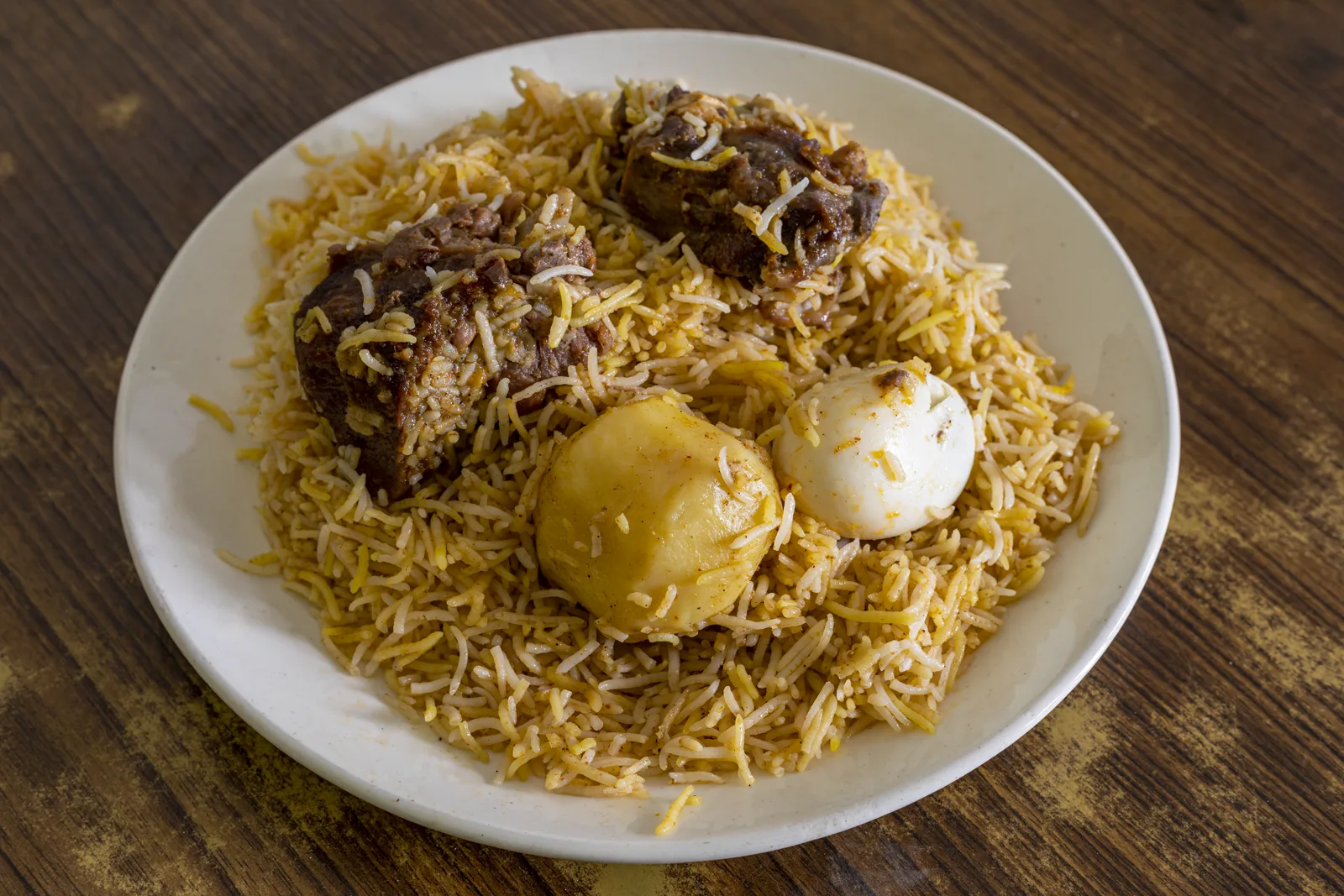
Exile rewrote the dish again. When Wajid Ali Shah, the last Nawab of Awadh, was deposed by the East India Company in 1856 and settled at Metiabruz near Calcutta, his cooks brought Lucknowi technique with them. As summarised under Kolkata biryani, constrained means led to lighter spice, less meat relative to rice, and large potato chunks. The potato was cheap and satisfying; the nawab and then the city kept it. Today Kolkata biryani is defined by that soft, spice-stained potato and a milder perfume than Hyderabad's punch.
Further south the map keeps branching. Thalassery (Malabar) biryani in northern Kerala often uses short-grain khyma or jeerakasala rice rather than basmati, shaped by the coast's Arab and Persian trading past. Tamil Nadu's Ambur and Vaniyambadi style, linked to the Nawabs of Arcot's cooks, typically uses seeraga samba rice with a chilli-forward gravy. Dindigul biryani leans on curd and lemon for tang. Donne, Bohri, Sindhi, Memoni and dozens of community variants fill the rest of the map. The varieties list is long because biryani travelled with courts, traders and wedding caterers, then settled into city brands.
Still the king of the order
History would matter less if the dish had become a museum piece. It has not. Swiggy's annual How India Swiggy'd report for 2025 put biryani at 93 million orders on the platform, about 194 a minute, with chicken biryani alone at 57.7 million. The year before, Swiggy's How India Swiggy'd 2024 report logged 83 million biryani orders between 1 January and 22 November 2024, calling it India's top dish for a ninth straight year. Those figures are one company's delivery data, not a census of every handi, but they measure appetite at national scale: the Persian-named, dum-sealed rice dish is still what India reaches for when it wants dinner without debate.
What the handi still holds
Ask where biryani came from and you get a layered answer that matches the pot. The name is Persian. The slow seal is Indo-Persian. The chilli heat, regional rices, Kolkata potato, Hyderabad salan and Thalassery jeerakasala are Indian decisions made over centuries. Like the samosa, biryani did not begin as "Indian food" in the modern branding sense. Indian cooks made it so completely their own that the world now orders it as India's signature feast, one sealed pot and one app tap at a time.