What Is a Tatkal Ticket?
A Tatkal ticket is a last-minute Indian Railways reservation: a reserved quota of berths that opens one day before the train leaves, at a premium. Here is how the quota works, what it costs, why Aadhaar OTP is now compulsory and what happens if you cancel.
 By Kirti Kaliraman· 9 min read
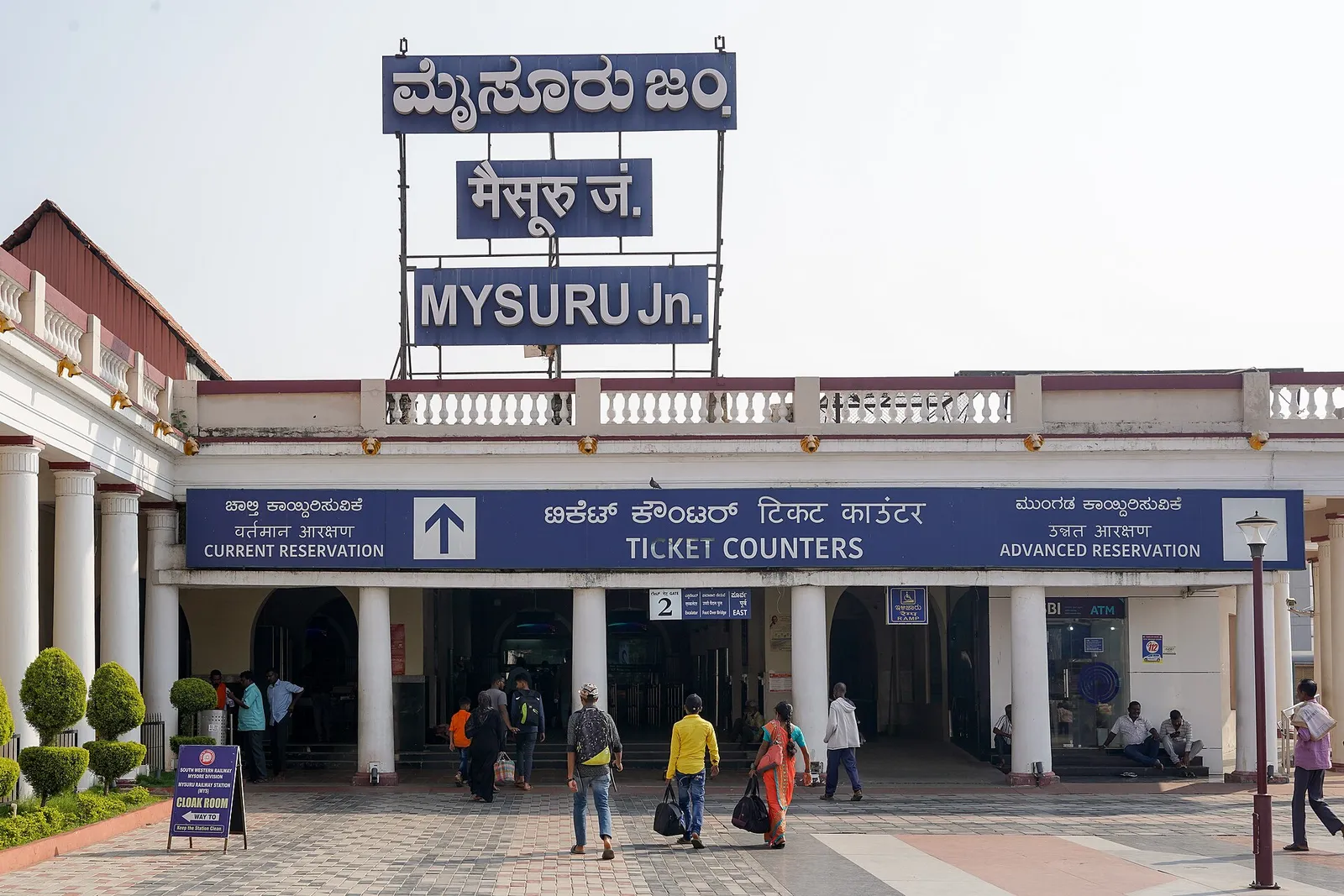
A Tatkal ticket is a last-minute Indian Railways reservation: a set-aside quota of berths and seats that goes on sale only one day before the train leaves its starting station, at 10 am for AC classes and 11 am for non-AC classes. You pay the normal fare plus a Tatkal charge of 10% of the basic fare in second sitting and 30% in other classes, within fixed minimums and maximums, and a confirmed Tatkal ticket earns no refund if you cancel.
Tatkal (तत्काल) simply means "immediately" in Hindi, and that is the promise: a confirmed berth for people who did not know two months ahead that they would need one. Here is how the quota works, what it costs and why, since July 2025, it has become one of the most tightly guarded products Indian Railways sells.
Why Indian Railways created a last-minute quota
Ordinary reservations open long before the journey. Since 1 November 2024 the Advance Reservation Period has been 60 days, excluding the day of travel, after the Ministry of Railways cut it from 120 days to reduce cancellations and no-shows. On popular routes most berths are gone within hours of opening, which leaves people with a sudden funeral, job interview or hospital appointment staring at a long waiting list.
The Railway Board's own note on the scheme, preserved by the Wayback Machine, says the Tatkal Reservation Scheme was introduced in December 1997 "to provide reservation to those passengers who have to undertake journey at short notice and to save such passengers from the clutches of unscrupulous elements/touts." At first it covered only around 110 trains, mainly in Sleeper class, and an extra coach was attached to carry Tatkal passengers. The scheme was thoroughly revised in August 2004, and most of its present features date from that overhaul, with further changes in 2009, 2011, 2012 and 2013.
Instead of adding coaches, Indian Railways now earmarks part of the existing accommodation on each train. Zonal railways decide how much, based on how full each class ran the previous year, within ceilings set by the Railway Board. The same 2014 note lists the maximum Tatkal share as 10 berths per coach in AC 2-tier, 16 in AC 3-tier and AC Chair Car, 5 seats per coach in Executive class, 30% of Sleeper accommodation and 10% of reserved second sitting. In 2013-14, about 2.24 lakh of the roughly 12.95 lakh berths and seats available each day, or 17.32%, were Tatkal accommodation.
When Tatkal booking opens
The timing is the part most people know. According to the Indian Railways Tatkal page and IRCTC's Tatkal FAQ, booking opens one day before the date of journey from the train's originating station:
- 10:00 am for AC classes (2A, 3A, 3E, CC and EC)
- 11:00 am for non-AC classes (Sleeper, First Class and second sitting)
So for a train that leaves its originating station on 6 November, AC Tatkal opens at 10 am on 5 November and Sleeper Tatkal at 11 am the same day. The date that counts is the train's start date, not the day it reaches your station, which catches out people boarding an overnight train midway.
Tatkal is not offered in First AC, and the quota cannot be combined with ladies' or general quota. A single Tatkal PNR can carry a maximum of four passengers, no concessions apply (senior citizens and students pay the full fare), and you cannot change a passenger's name after booking. Tickets are issued for the actual distance you travel, subject to minimum distances for the Tatkal charge.
What a Tatkal ticket costs
The extra charge is a percentage of the basic fare, not the total ticket price, with a floor and a ceiling for each class. These are the rates on the Indian Railways Tatkal page, in force for journeys since 24 December 2015:
| Class | Tatkal charge | Minimum | Maximum |
|---|---|---|---|
| Reserved second sitting (2S) | 10% of basic fare | ₹10 | ₹15 |
| Sleeper | 30% of basic fare | ₹100 | ₹200 |
| AC Chair Car | 30% of basic fare | ₹125 | ₹225 |
| AC 3-tier | 30% of basic fare | ₹300 | ₹400 |
| AC 2-tier | 30% of basic fare | ₹400 | ₹500 |
| Executive | 30% of basic fare | ₹400 | ₹500 |
In practice, a Sleeper ticket with a basic fare of ₹500 carries a Tatkal charge of ₹150 (30%). A long AC 3-tier journey with a basic fare of ₹2,000 would work out to ₹600 at 30%, but the cap holds it to ₹400. On short trips the minimum applies instead, so a Tatkal charge never drops below ₹100 in Sleeper.
Premium Tatkal is a separate, pricier layer. It arrived on 1 October 2014, when the railways put half the Tatkal quota on 80 popular trains under a demand-based fare, as The Hindu reported at the time: the more seats sold, the higher the price, and the quota is sold online only. Both layers are lucrative. An RTI reply reported by Mint showed the railways earned ₹21,530 crore from Tatkal tickets and ₹3,862 crore from Premium Tatkal between 2016 and 2019.
Why Aadhaar OTP is now compulsory
For most of its history the Tatkal window was a race, and touts with scripts and dozens of accounts often won it in seconds. The government's answer, announced in a June 2025 PIB release, was identity:
- From 1 July 2025, Tatkal tickets on the IRCTC website and app can be booked only by Aadhaar-authenticated users.
- From 15 July 2025, online Tatkal bookings also need an Aadhaar-based OTP, and bookings at computerised reservation (PRS) counters and through authorised agents need an OTP sent to the mobile number given at booking.
- Authorised agents cannot book opening-day Tatkal tickets in the first 30 minutes: 10:00 to 10:30 am for AC and 11:00 to 11:30 am for non-AC.
Authenticating your account is a one-time step. IRCTC's user guide explains that you enter your Aadhaar number or Virtual ID in the app, receive an OTP from the Unique Identification Authority of India on your Aadhaar-linked mobile, and your profile gets a green tick. Your IRCTC name, date of birth and gender must match your latest e-Aadhaar, and they can no longer be edited once the account is verified. The OTP exchange is the same live check we explain in how Aadhaar authentication works: it proves that one real person stands behind one account.
Has it worked? The government says yes. A December 2025 Lok Sabha reply said Aadhaar OTP was running on 322 trains for online Tatkal and 211 trains at counters as of 4 December 2025, and that the time confirmed Tatkal tickets stayed available had increased in about 95% of 96 popular trains. A February 2026 reply showed the scale of the fight: in October 2025 alone, 17 billion of 24 billion requests to the e-ticketing system were bots, and 60.43 billion bot requests were blocked in the six months to December 2025. By March 2026, according to another PIB release, IRCTC had deactivated 3.04 crore suspicious accounts in 2025, and about 88% of all reserved tickets were being booked online.
What changed at the counters in 2026
People who book in person have seen changes too. From 1 August 2026, West Central Railway divisions such as Bhopal and Kota moved to a token system for Tatkal at reservation counters, the Indian Express reported. Tokens for AC classes are issued from 8:30 to 9:00 am and for non-AC from 9:00 to 9:30 am, typically 10 and 15 per counter. Passengers booking for themselves or their immediate family are served first, everyone else afterwards, tokens cannot be transferred, and a valid photo ID is required. Practices still vary between zones, so check with your local reservation office before you queue.
Cancellations, waitlists and refunds
This is where Tatkal is strict by design. IRCTC's FAQ is blunt: no refund is granted on a confirmed Tatkal ticket you cancel. The rule exists to make block-booking unprofitable for touts, since a ticket that cannot be resold or refunded is a poor investment.
Waitlisted Tatkal tickets are different: you can cancel them, with charges deducted under the normal railway refund rules. There are also exceptions where you get the full fare and the Tatkal charge back, listed on the Indian Railways Tatkal page:
- the train is delayed by more than three hours at your journey's starting point
- the train is diverted and you choose not to travel, or your boarding or destination station is not on the new route
- the coach holding the Tatkal quota is not attached and you get no seat in the same class
- you are moved to a lower class and decline to travel (if you do travel, you are refunded the difference)
One more rule helps waitlisted passengers. When the reservation chart is prepared, any unsold Tatkal berths are released to RAC and waitlisted passengers at no extra charge, which is why a long waiting list sometimes clears at the last moment.
How to give yourself the best chance
A few habits make the morning window less stressful:
- Verify your IRCTC account with Aadhaar well in advance, not at 9:58 am on the day.
- Save your passenger list in the app so you are not typing names while seats vanish.
- Know which window applies: AC at 10 am, non-AC at 11 am, counted from the train's originating date.
- Keep payment ready. A UPI payment usually completes faster than typing card details.
- Carry original photo ID on board, since one passenger on each Tatkal ticket must show an approved identity document on demand.
It is still a scramble on the busiest routes, especially around Diwali and Chhath. But a Tatkal ticket on India's 1,676 mm broad-gauge network remains the surest way to get a confirmed berth when the plan was only made yesterday.
The short answer
A Tatkal ticket is a confirmed Indian Railways reservation sold from a dedicated quota one day before the train departs, at 10 am for AC classes and 11 am for non-AC. It costs the normal fare plus 10% to 30% of the basic fare, capped by class, offers no concessions and no refund once confirmed, and since July 2025 it can be booked online only from an Aadhaar-verified account with an OTP.