Why Do So Many Prices End in 99?
From ₹499 kurtas to $9.99 subscriptions, prices that stop just short of a round number are everywhere. The reason lies in how our brains read digits, and decades of sales data show it works.
 By Sushant Kataria· 7 min read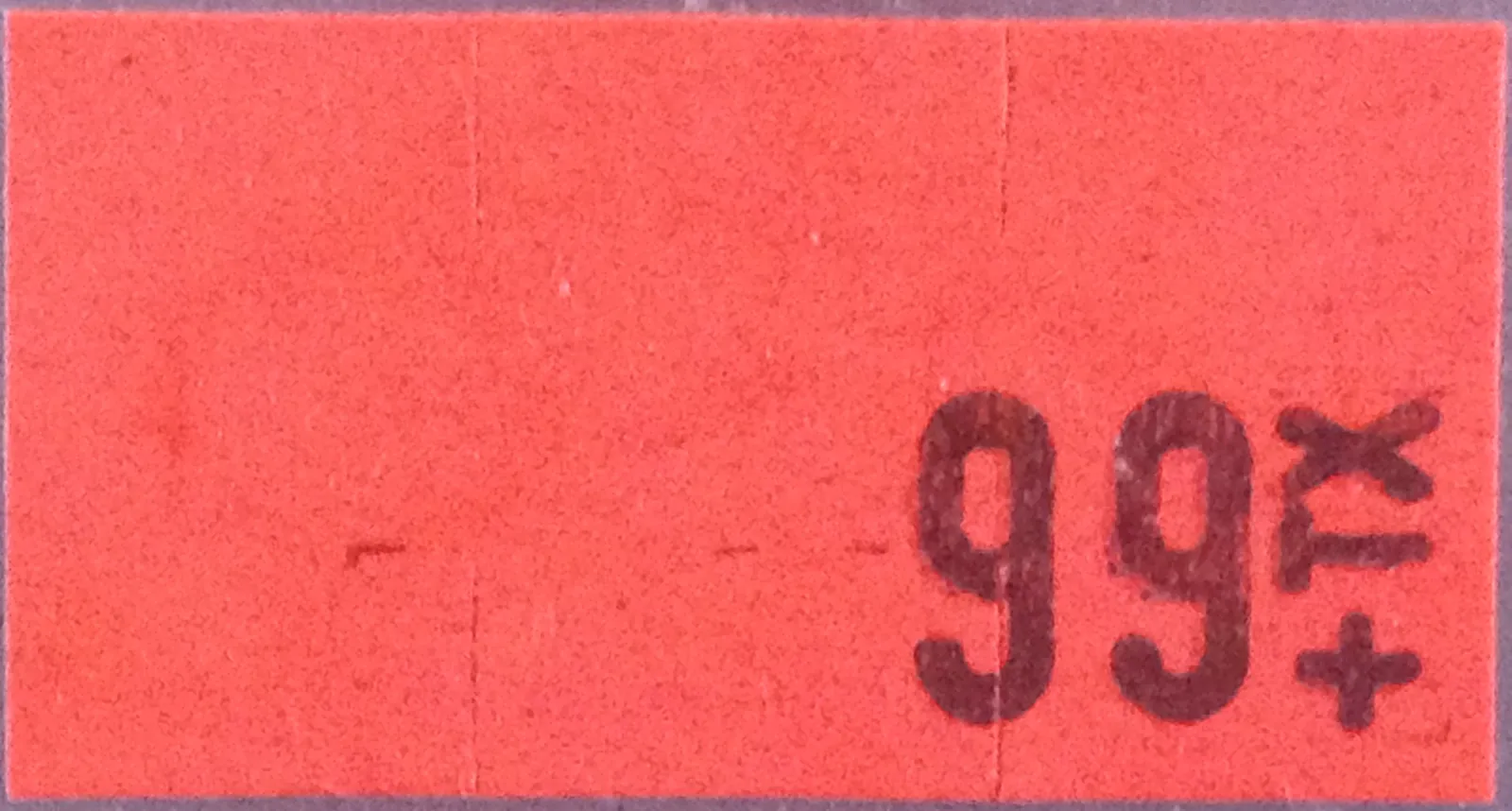
So many prices end in 99 because shoppers read numbers from left to right and anchor on the first digit, so ₹499 registers as "four hundred and something" rather than "almost five hundred." Retailers call it charm pricing, and controlled experiments show that knocking a single unit off a round number can lift sales noticeably, even though the actual saving is trivial.
That is the short answer. The longer one takes in a Czech shoemaker, a famous department-store disaster, and the reason an Indian wedding envelope holds ₹501 instead of ₹500.
The left-digit effect
Our brains are lazy readers of prices. When we see a number, we start encoding its size before we have finished reading it, and the first digit does most of the work. Psychologists call this the left-digit effect.
In a well-known 2005 study in the Journal of Consumer Research, Manoj Thomas and Vicki Morwitz showed that people judged the gap between two prices as larger when the leftmost digit changed. A drop from 3.00 to 2.99 feels bigger than a drop from 3.60 to 3.59, although both are exactly one cent. The mind has already filed the first price under "two," and that label sticks.
The effect is not limited to price tags. In a 2012 paper in the American Economic Review, economists Nicola Lacetera, Devin Pope and Justin Sydnor studied more than 22 million wholesale used-car sales in the United States. They found that prices dropped in sudden steps each time the odometer crossed a 10,000-mile mark. A car with 79,900 miles fetched noticeably more than one with 80,100, though the two are, for practical purposes, the same car. Even professional car dealers, it seems, look at the first digit and stop.
Does it really increase sales?
Yes, and the cleanest evidence comes from real shops rather than laboratories. Eric Anderson and Duncan Simester ran field experiments with a US mail-order clothing catalogue, printing different versions with different prices for the same items. In one test, a women's dress sold more copies at $39 than at either $34 or $44. A higher price beat a lower one simply because it ended in 9.
Earlier work by Robert Schindler and Thomas Kibarian, published in the Journal of Retailing in 1996, found a similar lift when a catalogue switched prices from 00 endings to 99 endings. The gains in these studies were not enormous, but in retail, where margins are thin, a few per cent more volume for no extra cost is a gift.
Part of the power is signal rather than arithmetic. Over decades, shoppers have learned that a price ending in 9 often means a sale, a discount or a value product. The ending itself has become a little advertisement that says "bargain."
Where did the habit start?
Nobody can point to a single inventor, but there are several popular origin stories, and one of them is almost certainly a myth.
The myth goes like this: in the late 19th century, shop owners priced goods at odd amounts to stop cashiers pocketing the money. A customer paying 49 cents with a 50-cent coin would need change, forcing the clerk to open the till and record the sale. It is a tidy story, and the timing fits: the first practical cash register was patented in 1879 by James Ritty, a saloon keeper in Dayton, Ohio, who was tired of staff helping themselves. But historians have found no solid evidence that odd pricing was actually invented as a theft control, and the left-digit effect explains its survival far better.
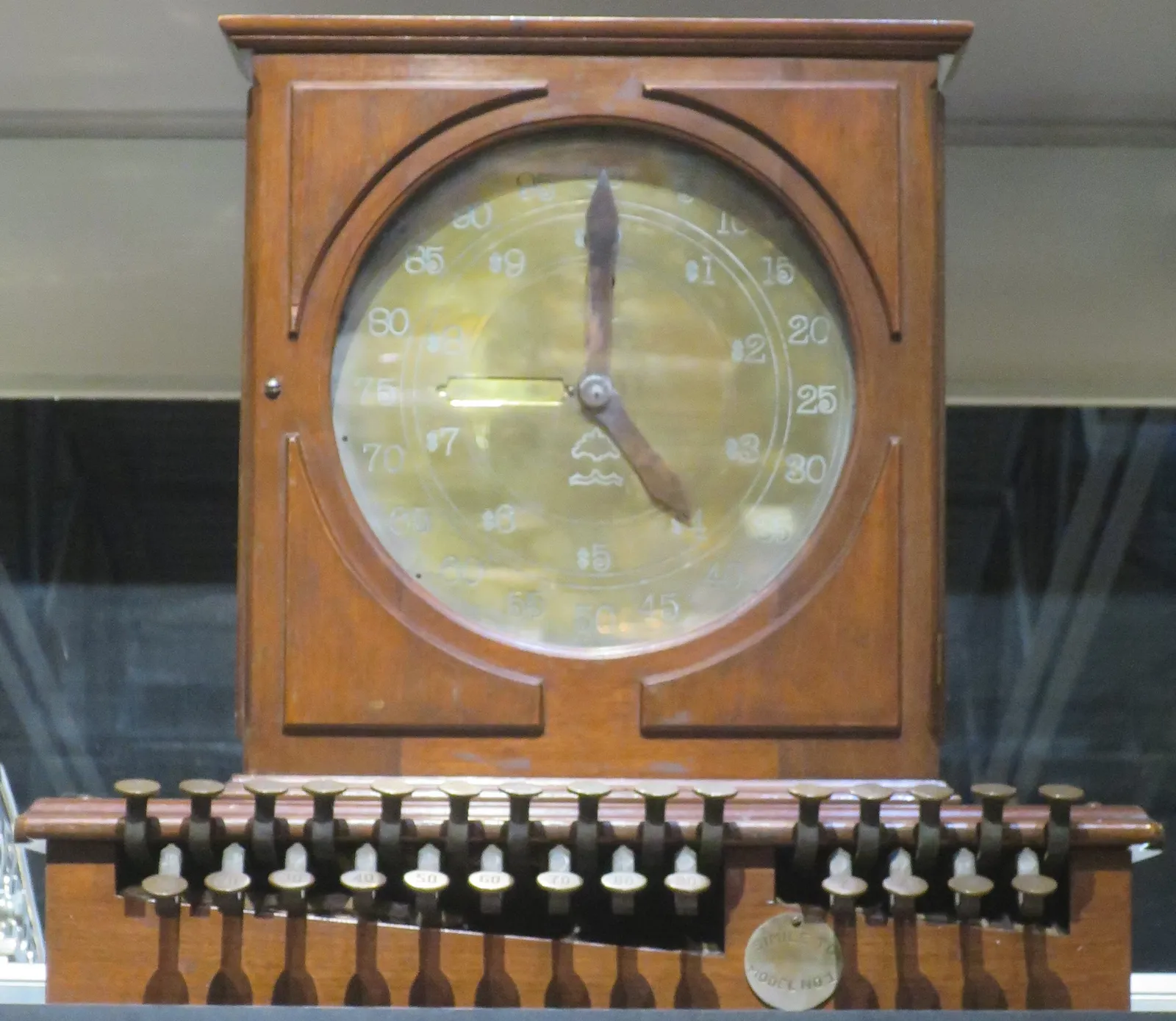
What is certain is that odd prices were common in American newspaper advertising by the late 1800s, and that they spread with mass retail in the 20th century. Petrol stations in the United States still price fuel to nine-tenths of a cent, a convention so old that most drivers no longer notice it.
The Czech shoemaker who made it a brand
In Central Europe the practice has a name. Czechs and Slovaks still call a price ending in 9 a "Baťa price" (baťovská cena), after Tomáš Baťa, the shoemaker from Zlín who built one of the world's largest footwear companies in the early 20th century. Baťa used odd prices deliberately and at enormous scale, making them part of his company's identity.
That identity travelled. Bata set up in India in the 1930s, building a factory town, Batanagar, near Kolkata, and became one of the country's most familiar brands. For generations of Indian shoppers, a Bata price tag ending in .95, as in ₹99.95 or ₹199.95, was as recognisable as the red logo itself. Few customers ever received the five paise back in change, which says something about how little the saving mattered and how much the impression did.

Why charm pricing works especially cleanly in India
India's rules give the 9 ending a quiet advantage. Under the Legal Metrology (Packaged Commodities) Rules, 2011, the maximum retail price (MRP) printed on packaged goods must be inclusive of all taxes. In the United States, by contrast, sales tax is usually added at the till, so a $9.99 item quietly becomes more than ten dollars by the time you pay. In India the number on the tag is the number you pay, so a ₹499 price keeps its charm all the way to the checkout.
Small coins have also faded. The Reserve Bank of India withdrew coins of 25 paise and below from circulation, and they ceased to be legal tender from 30 June 2011. That pushed Indian retail toward whole-rupee endings, which is why the modern versions are ₹99, ₹499, ₹999 and ₹1,499 rather than ₹99.95. Online, the same logic shapes free-delivery thresholds and "under ₹500" collections, and on UPI, where most small payments now happen through a scanned QR code, there is no change to count at all, which makes precise prices easier than ever.
When round numbers win
Charm pricing is not universal, and smart brands know when to avoid it.
- Luxury goods usually carry round prices. A ₹2,00,000 watch or a $5,000 handbag that ended in 99 would look like it was on clearance. Round numbers signal confidence and quality.
- Emotional purchases can favour round numbers too. Research by Monica Wadhwa and Kuangjie Zhang, published in the Journal of Consumer Research in 2015, found that round prices "feel right" for purchases driven by feelings, such as a gift or a holiday, while precise prices suit purchases people think through carefully.
- Big-ticket negotiations behave differently again. Studies of the US housing market have found that homes listed at precise prices, such as $364,500 rather than $365,000, tend to be seen as more carefully valued and can sell closer to their asking price.
The most famous warning comes from the American department store JCPenney. In 2012, under new chief executive Ron Johnson, it scrapped most sales and coupons and switched to "fair and square" pricing with prices ending in .00. Shoppers did not reward the honesty. Revenue fell by roughly a quarter that year, and Johnson was out by April 2013. Charm prices and sale tags were soon back.
The Indian exception: why gifts end in 1
There is a fascinating mirror image in Indian culture. When people give cash at weddings, birthdays and festivals, the amount usually ends in 1: ₹101, ₹501, ₹1,001 or ₹5,001. The extra rupee is widely seen as auspicious, a sign that the blessing should keep growing rather than end at a round, finished number.
So the same culture that buys at ₹499 gives at ₹501. In both cases, people are steering clear of the round number, one to make a price feel smaller, the other to make a gift feel more generous. It is a neat reminder that numbers carry meaning far beyond their value.
What this means for you as a shopper
Knowing the trick is the best defence against it. A few habits help:
- Round up in your head. Read ₹1,999 as ₹2,000 and $19.99 as $20. Your budget will thank you.
- Compare on unit price. Charm pricing works best on single items; the price per kilo or per litre is harder to disguise.
- Treat the 9 as a claim, not a fact. A price ending in 9 suggests a deal, but it is not proof of one. Check whether the item was really cheaper than usual.
Prices are not just numbers; they are messages, shaped by psychology, culture and law. Comparing the same burger across countries, as the Big Mac Index does, shows how much a price can reveal about an economy. Looking closely at a single price tag shows how much it can reveal about us. The next time a screen tells you something costs ₹999, you will know exactly why it was never ₹1,000.