What Is the Big Mac Index and What Does It Show?
Started as a lighthearted joke in 1986, The Economist's Big Mac Index has become one of the most quoted guides to whether currencies are overvalued or undervalued. Here is how it works, and where it falls short.
 By Sushant Kataria· 5 min read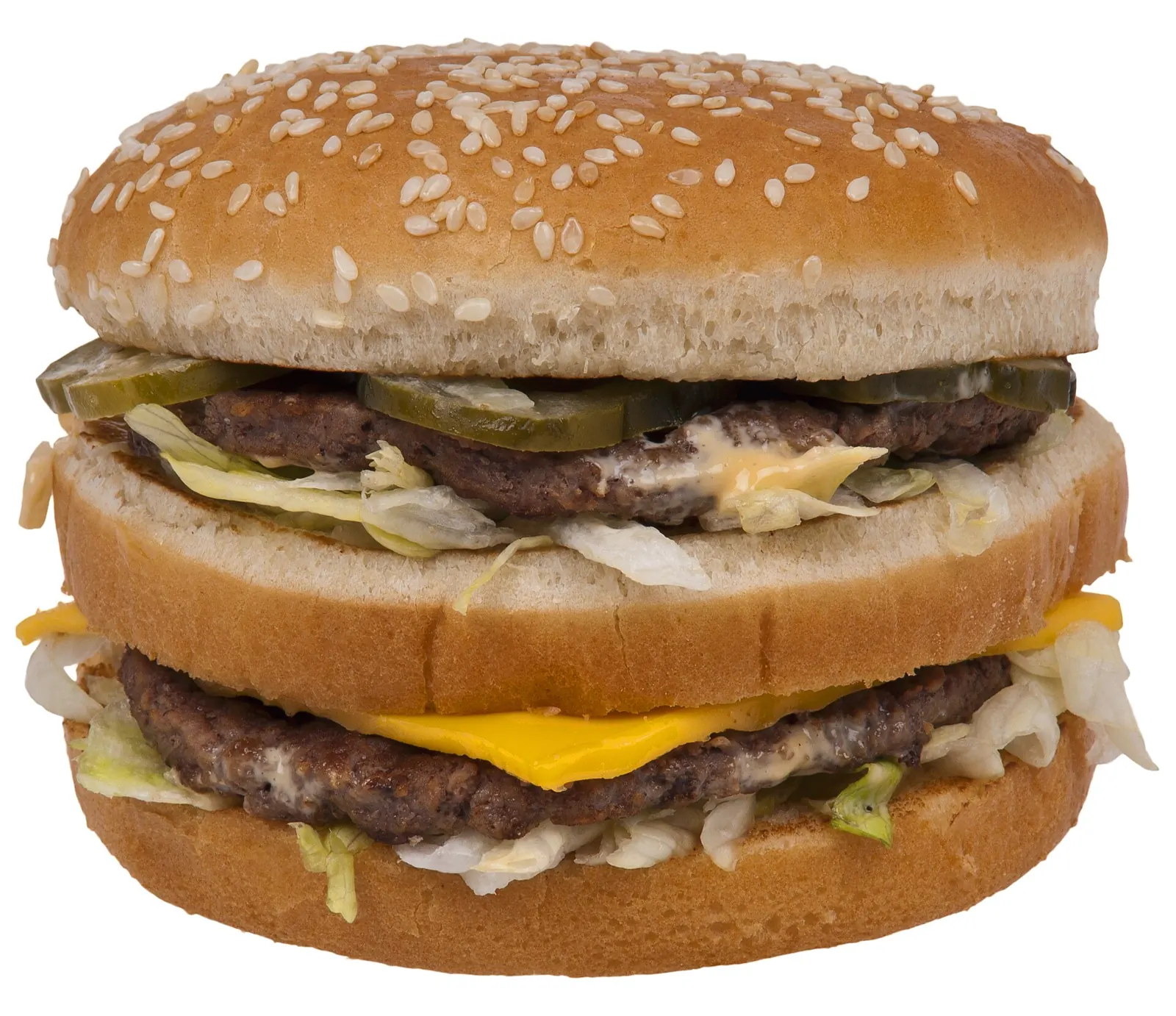
The Big Mac Index is The Economist's comparison of Big Mac prices around the world, used since 1986 as a light-hearted test of whether currencies are overvalued or undervalued. It rests on purchasing power parity: if a burger costs much less in one country after converting at market rates, that currency may be undervalued.
How do you tell whether a currency is too cheap or too expensive? Economists have elaborate models for that question. But one of the most famous answers fits on a menu board. Since 1986, The Economist has compared the price of a McDonald's Big Mac around the world to judge whether currencies are fairly valued. The Big Mac Index began as a playful explainer and became a genuine fixture in economic debate.
The idea underneath: purchasing power parity
The index rests on a theory called purchasing power parity, or PPP. Its core claim is intuitive: in the long run, exchange rates should move toward the level that makes the same basket of goods cost the same in every country.
If a basket costs 100 dollars in the United States and 15,000 yen in Japan, PPP suggests the "right" exchange rate is 150 yen to the dollar. If the market rate is very different, one currency is said to be undervalued or overvalued relative to the other.
The problem is choosing a basket. Official statisticians use thousands of carefully measured items. The Economist's insight was that a Big Mac is a surprisingly good stand-in: it is sold in many dozens of countries, it is made to a roughly standard recipe, and it combines local inputs such as beef, bread, vegetables, labour, rent and electricity. One burger becomes a tiny, tasty basket.
How the calculation works
The method takes three steps:
- Record the local price of a Big Mac in each country, in its own currency.
- Divide by the US price to find the "implied" exchange rate, the one that would make the burgers cost the same.
- Compare with the actual market exchange rate.
A simple worked example with round, illustrative numbers:
| Step | Value |
|---|---|
| Big Mac in the US | $5.00 |
| Big Mac in "Country X" | 300 local units |
| Implied exchange rate | 300 ÷ 5 = 60 units per dollar |
| Actual market rate | 100 units per dollar |
| Big Mac in Country X, converted to dollars | 300 ÷ 100 = $3.00 |
| Verdict | The local currency looks about 40% undervalued |
If the converted price is higher than the US price, the currency looks overvalued. Switzerland and the Nordic countries regularly top the table with some of the most expensive burgers in dollar terms, while countries such as India, Indonesia, Egypt and South Africa tend to appear at the cheap end. In India, where most McDonald's outlets do not serve beef, the index uses a chicken burger, the Maharaja Mac, as a substitute.
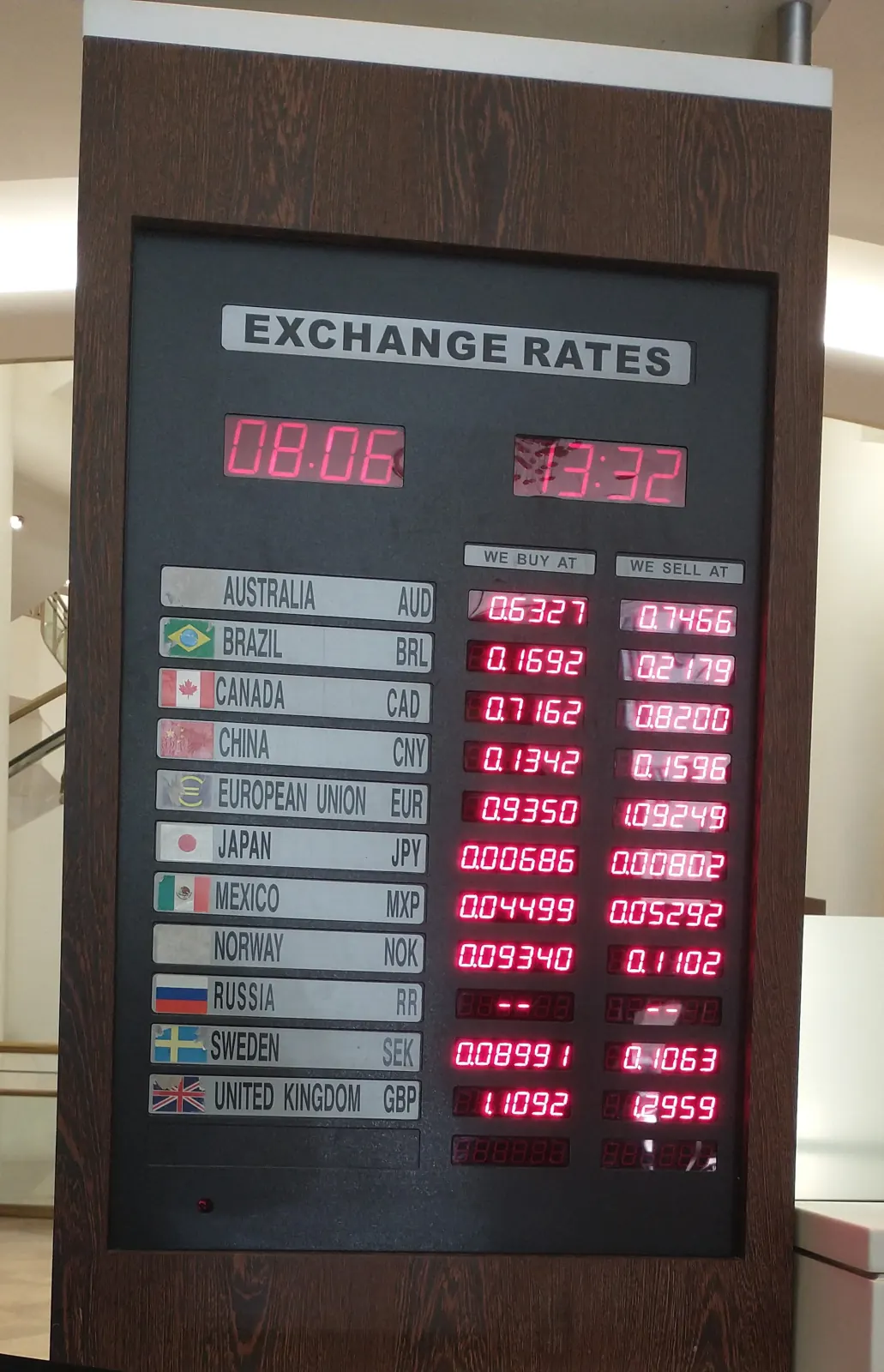
Why cheap burgers do not always mean "wrong" exchange rates
Here is the crucial caveat. Poorer countries almost always look undervalued, and that is not necessarily a mispricing. It is largely explained by the Balassa-Samuelson effect.
A Big Mac is not just beef and bread. A large slice of its price pays for local labour and rent, which are non-traded services. Workers in lower-income countries earn less, so labour-heavy goods and services cost less there. A haircut is cheaper in Hanoi than in Zurich, and no amount of currency trading will equalise that, because nobody can import a Vietnamese haircut into Switzerland.
To address this, The Economist also publishes a GDP-adjusted version of the index, which compares prices against what you would expect given each country's income level. It often tells a quite different story than the raw version, and it is the better guide to genuine misalignment.
What the index gets right
Despite its humble ingredients, the index has a respectable track record:
- The euro's early slide: when the euro launched in January 1999, the index suggested it was overvalued against the dollar. Over the next two years it fell sharply, from about $1.17 to well below $0.90.
- Long-run tendencies: academic studies have found that currencies flagged as heavily misaligned by burger prices do tend, over many years, to drift back toward parity, though slowly and unevenly.
- Accessibility: it turns an abstract concept into something everyone understands. That is why it is taught in economics classrooms worldwide.
Where it breaks down
The index has well-known limitations:
- Local tastes and competition: in some markets McDonald's is a premium foreign brand; in others it competes with abundant cheap street food. Prices reflect positioning, not just costs.
- Taxes and regulation: sales taxes, import duties on ingredients and rent controls distort prices.
- Different recipes and sizes: burgers are similar, not identical.
- Short-term irrelevance: exchange rates move daily on interest rates, capital flows and risk sentiment. PPP is a long-run anchor, not a trading signal.
Cousins of the burger
The Big Mac inspired imitators. Analysts have built comparisons using the price of a Starbucks latte, IKEA's Billy bookcase and even Apple's iPhone. Each has the same strengths and weaknesses: a globally standard product makes the comparison easy, but local costs and pricing strategies muddy it.
For serious work, economists turn to the International Comparison Program, run by the World Bank, which measures prices for a huge range of goods and services to produce official PPP rates. These are used to compare living standards: when you see a country's GDP "at PPP," it has been adjusted so that a dollar buys the same amount everywhere.
Why it still matters
A large gap between what money buys at home and abroad affects real lives. It shapes where tourists travel, where companies manufacture, how competitive a country's exports are and how far a migrant's remittances stretch back home. An undervalued currency can make a country's exports cheap and attractive, which is one reason exchange rates become flashpoints in trade disputes.
The Big Mac Index will never replace careful economic modelling, and its creators have always said so. But four decades on, it remains a brilliant piece of explanation: proof that one of the hardest questions in international finance can start with a single, familiar burger.
Prices are only half the story; how people pay is changing too, as the humble QR code turns phones into wallets from Delhi to Shanghai. And burgers are not the only global good with a price tag that travels: a pair of jeans is another product sold almost everywhere.