How Did Chillies Reach Indian Cooking?
The heat in Indian cooking is mostly New World. Portuguese traders carried Capsicum chillies from the Americas in the 16th century, and India made them its own.
 By Kirti Kaliraman· 7 min read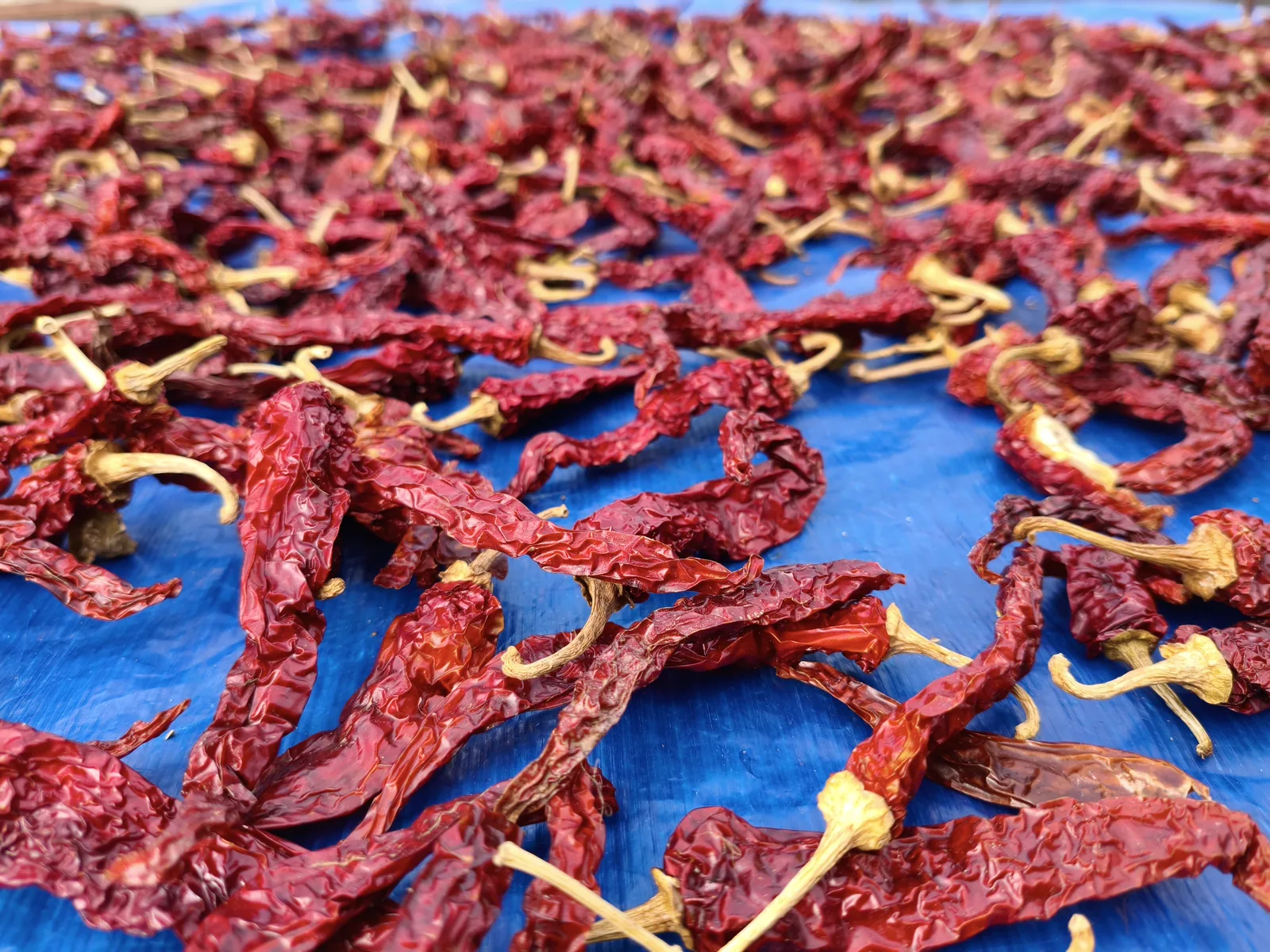
Chillies reached Indian cooking in the 16th century, when Portuguese traders carried Capsicum plants from the Americas into their Indian Ocean ports, especially Goa. Before that, Indian kitchens got heat and aroma from black pepper, long pepper, ginger, mustard and other Old World spices; within a few generations the New World fruit had remade regional cooking from Kerala to Bengal, and India is now the world's largest producer and consumer of dry chillies.
That fact surprises many people. Indian food is famous for being spicy, and chillies feel ancient in dals, pickles, chutneys and street snacks. Botanically and historically they are newcomers: relatives of tomatoes, potatoes and tobacco, domesticated in the Americas thousands of years before Columbus, then flung across the planet in the Columbian Exchange.
What "chilli" actually is
The plants that give Indian cooking its signature burn belong to the genus Capsicum, in the nightshade family. Five species have been widely cultivated. The workhorse of Indian kitchens is mostly Capsicum annuum, which covers everything from mild Kashmiri chillies used for colour to hot green chillies chopped into everyday curries. Hotter varieties such as the Bhut Jolokia (ghost pepper) of the north-east belong mainly to Capsicum chinense.
The bite comes from capsaicin and related compounds concentrated in the placenta (the white pith that holds the seeds). Birds do not feel the burn the way mammals do, which helped wild chillies spread: birds ate the fruit and scattered the seeds. Humans, oddly, learned to love the pain and bred for more of it.
The English word chilli (also chili, chile) comes from Nahuatl, the language of the Aztec world. Christopher Columbus, hunting for Asian pepper, met Capsicum in the Caribbean and called it pimiento, Spanish for pepper, because it stung like Piper nigrum. The name stuck even though the plants are unrelated.
Indian heat before Capsicum
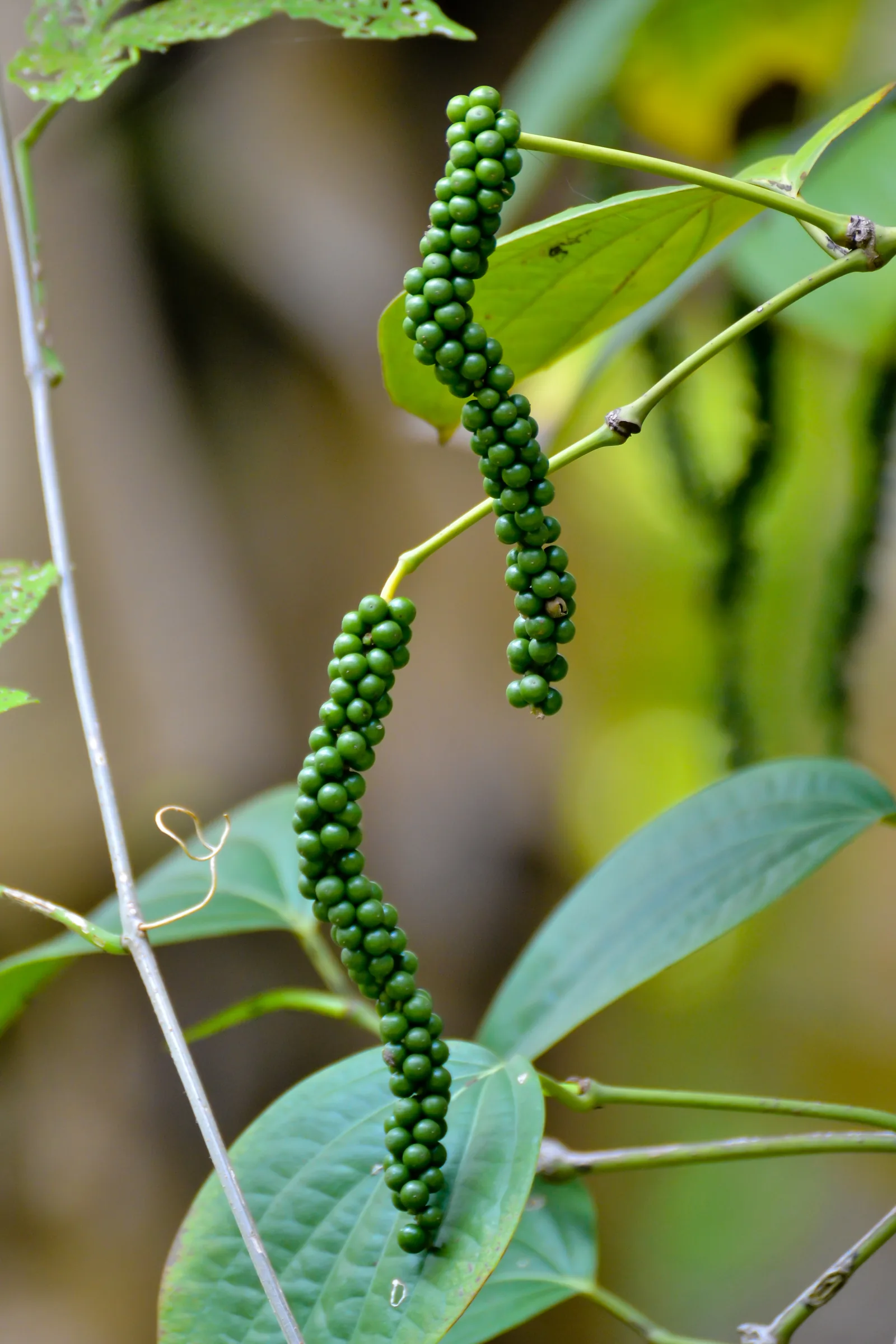
For millennia, South Asia's hot and aromatic kit looked different. The great traded spice was black pepper (Piper nigrum), native to the Western Ghats of south-west India. Long pepper (Piper longum), ginger, turmeric, mustard seeds, asafoetida, horseradish-like roots and green mangoes all contributed sharpness or warmth. Sanskrit and later culinary texts describe richly seasoned food; they do not describe the modern chilli.
Pepper was so valuable that it shaped world history. Roman writers complained about gold flowing east for spices. Medieval European kitchens used pepper as a luxury. The search for a sea route that would break Venetian and Arab middlemen on the pepper trade helped push Portuguese fleets around Africa. When Vasco da Gama reached Calicut in 1498, he was chasing Piper, not Capsicum.
So when people say Indian food has always been "spicy," they are half right. Spiced, aromatic and peppery: yes. Built around the red and green Capsicum chilli: only for the last four to five centuries.
How the Portuguese carried fire
Capsicum had been cultivated for thousands of years in Mexico and South America. After 1492 it moved quickly into Iberian gardens and kitchens. The Portuguese, holding Brazil under the Treaty of Tordesillas and running a string of African and Asian ports, were well placed to move the plant along their maritime network.
By the early to mid-1500s, chillies were being grown in India. A telling detail appears in 16th-century botanical notes: a variety grown in Goa was called "Pernambuco pepper," named after a region of Brazil, a linguistic fingerprint of the Atlantic-to-Indian-Ocean transfer (Royal Society of Chemistry; YaleGlobal). Historians of the crop in India also point to a second channel: Arabian traders carrying Capsicum into northern India while the Portuguese seeded the south (Indian Journal of History of Science).
From Goa and other ports the plant travelled inland with merchants, farmers and cooks. Unlike black pepper vines, which need a humid tropical niche, many chilli varieties grow as annuals across a wide range of climates. That made them easy to adopt in village gardens from the Deccan to Bengal. Within a few generations they were no longer a novelty; they were pantry staples.
Why India took to chillies so fast
Several forces explain the rapid adoption.
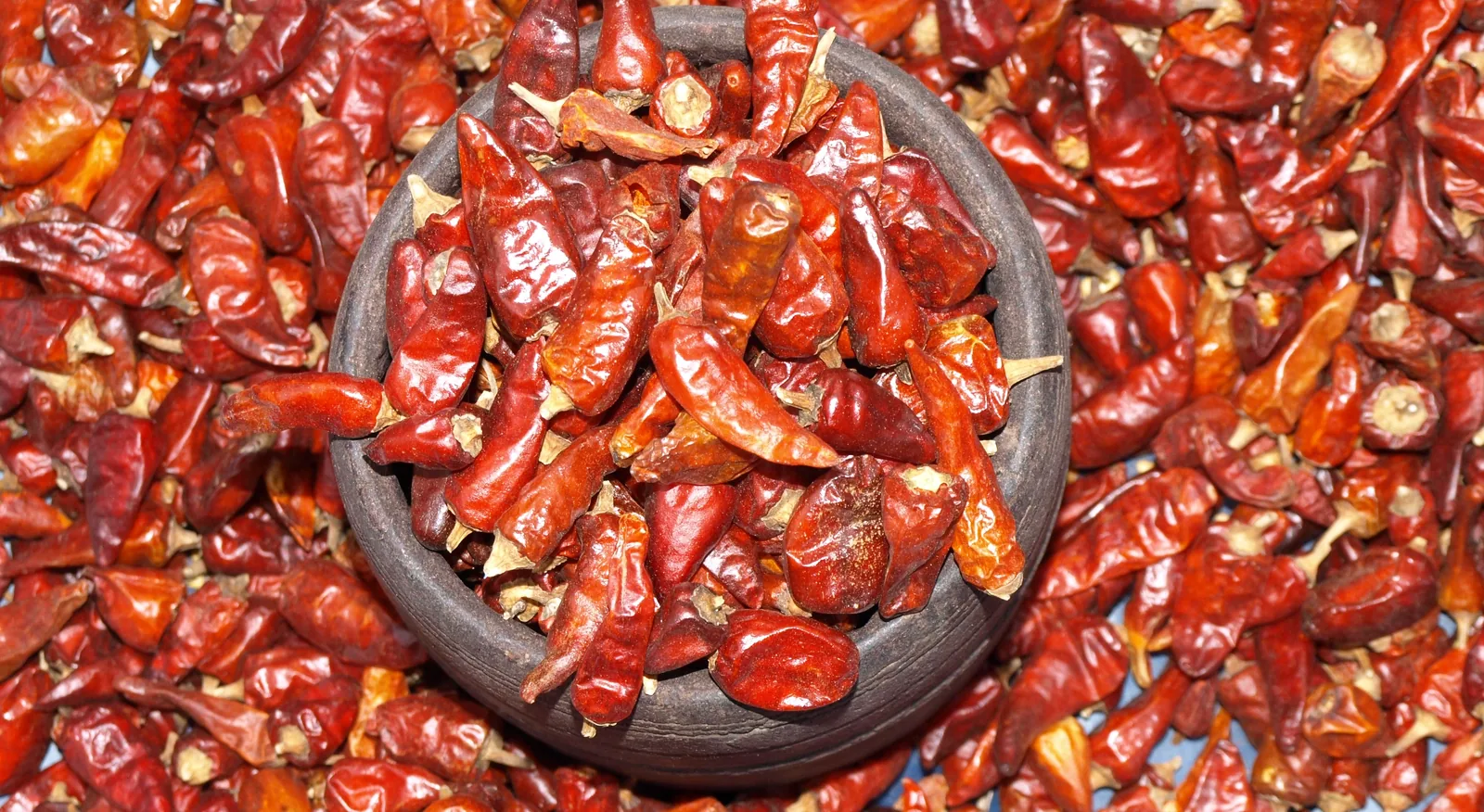
Agronomy. Chillies yield well, dry and store easily, and suit smallholder plots. A string of dried red chillies hanging in a kitchen is both seasoning and savings.
Flavour and colour. Capsaicin delivers a clean heat that black pepper does not. Mild red varieties add deep colour to gravies and rice without overwhelming heat, which is why Kashmiri and Byadgi chillies are prized for rogan josh, biryani and commercial spice blends.
Street food and home cooking. Fresh green chillies can be chopped into almost anything at the last minute. Dried chillies temper in hot oil with mustard seeds and curry leaves. Powder goes into masalas. The plant fitted every layer of the kitchen, from festival sweets' savoury sides to the fiery achar that accompanies momos and other dumplings.
Trade and empire. The same Portuguese and later Dutch and British networks that moved people and goods around the Indian Ocean also moved seeds and recipes. Chillies that landed in India also remade cooking in Thailand, Korea, Hungary (as paprika) and West Africa. India was not unique in adopting Capsicum; it was exceptionally thorough about it.
From Goa to Guntur: regional chilli cultures
Once established, chillies specialised by region.
- Andhra Pradesh and Telangana became famous for hot red chillies. Guntur is a major market town; drying yards covered in crimson pods are a seasonal landscape of their own.
- Karnataka's Byadgi chillies are wrinkled, deep red and valued more for colour and mild sweetness than for extreme heat.
- Kashmiri chillies give rich red colour to northern and Mughlai-style dishes with relatively gentle pungency.
- The north-east breeds some of the world's hottest peppers, including Bhut Jolokia, which once topped global heat rankings on the Scoville scale.
- Goan and coastal Catholic cooking absorbed chillies into vindaloo and related dishes that already mixed vinegar, garlic and Portuguese technique with local ingredients.
What looks like one "Indian chilli" from abroad is a whole catalogue of local landraces, each tuned to climate, market and recipe.
India as chilli superpower
The numbers today would have astonished a 16th-century sailor. According to FAOSTAT figures compiled for 2024, India produced about 2.91 million tonnes of dry chillies and peppers, roughly 53% of the reported world total, far ahead of China and Thailand (Terra Cultiva / FAOSTAT). India's own spice estimates for 2023–24 put red chilli production near 2.91 million tonnes on about 966,000 hectares. Andhra Pradesh alone accounts for a large share of national output.
India is also routinely described as the world's largest consumer and a leading exporter of chilli, shipping colour and heat to markets across Asia and beyond. A fruit that arrived as a colonial curiosity is now a pillar of farm income in several states and a quiet piece of soft power every time someone reaches for a bottle of chilli sauce or a packet of red chilli powder.
Part of a bigger exchange
Chillies did not travel alone. The Columbian Exchange moved maize, potatoes, tomatoes, peanuts, cashews, pineapple and tobacco from the Americas into African and Asian diets, while wheat, sugarcane, horses and Old World diseases moved the other way. Indian plates today are full of American crops that feel native: tomato in rasam and sambar, potato in aloo dishes, chilli in almost everything.
That story sits beside older Eurasian trade. Long before Columbus, the Silk Road network moved pepper, silk, paper and ideas across land and monsoon sea lanes. The chilli's arrival shows what changed when Atlantic and Indian Ocean empires linked the Americas directly into those circuits: a New World plant could remake Old World cuisines in a human lifetime.
Even the economics of everyday food keeps a global thread. Street snacks and branded burgers alike have local prices that reveal purchasing power, which is the playful idea behind the Big Mac Index. Chillies, cheap to grow and fierce in small doses, became one of the most democratic seasonings on Earth.
What the kitchen kept from before
Importantly, Capsicum did not erase what came before. Black pepper remains essential in tempering and in many masalas. Long pepper still appears in classical and Ayurvedic preparations. Ginger, turmeric and mustard never left. What happened was layering: cooks kept the old aromatic architecture and added a new source of heat and colour that was cheaper, brighter and more flexible than imported or labour-intensive alternatives in many households.
That is why "authentic" Indian cooking can both predate the chilli and depend on it. Recipes recorded before the 1500s used different heat. Recipes that define modern regional Indian food almost always assume chillies are available. Both statements are true.
The takeaway
The spice that feels most Indian on the tongue is, botanically, American. Portuguese ships and local farmers closed that gap in the 16th century; Indian agriculture and inventiveness did the rest. Next time a green chilli hits hot oil and the kitchen fills with that sharp perfume, you are smelling five centuries of globalisation compressed into a few seconds of cooking.