Who Invented the QR Code and Why?
Designed in 1994 to track components on Toyota-group factory floors, the QR code now pays for chai in Bengaluru and coffee in Shanghai. Its success came down to clever geometry, built-in error correction and one unusual decision about a patent.
The QR code was invented in 1994 by Masahiro Hara and his team at Denso Wave, a Toyota-group company, to track car parts faster than ordinary barcodes allowed. Denso Wave chose not to enforce its patent rights over the standard, which helped the code spread freely into tickets, menus and mobile payments worldwide.
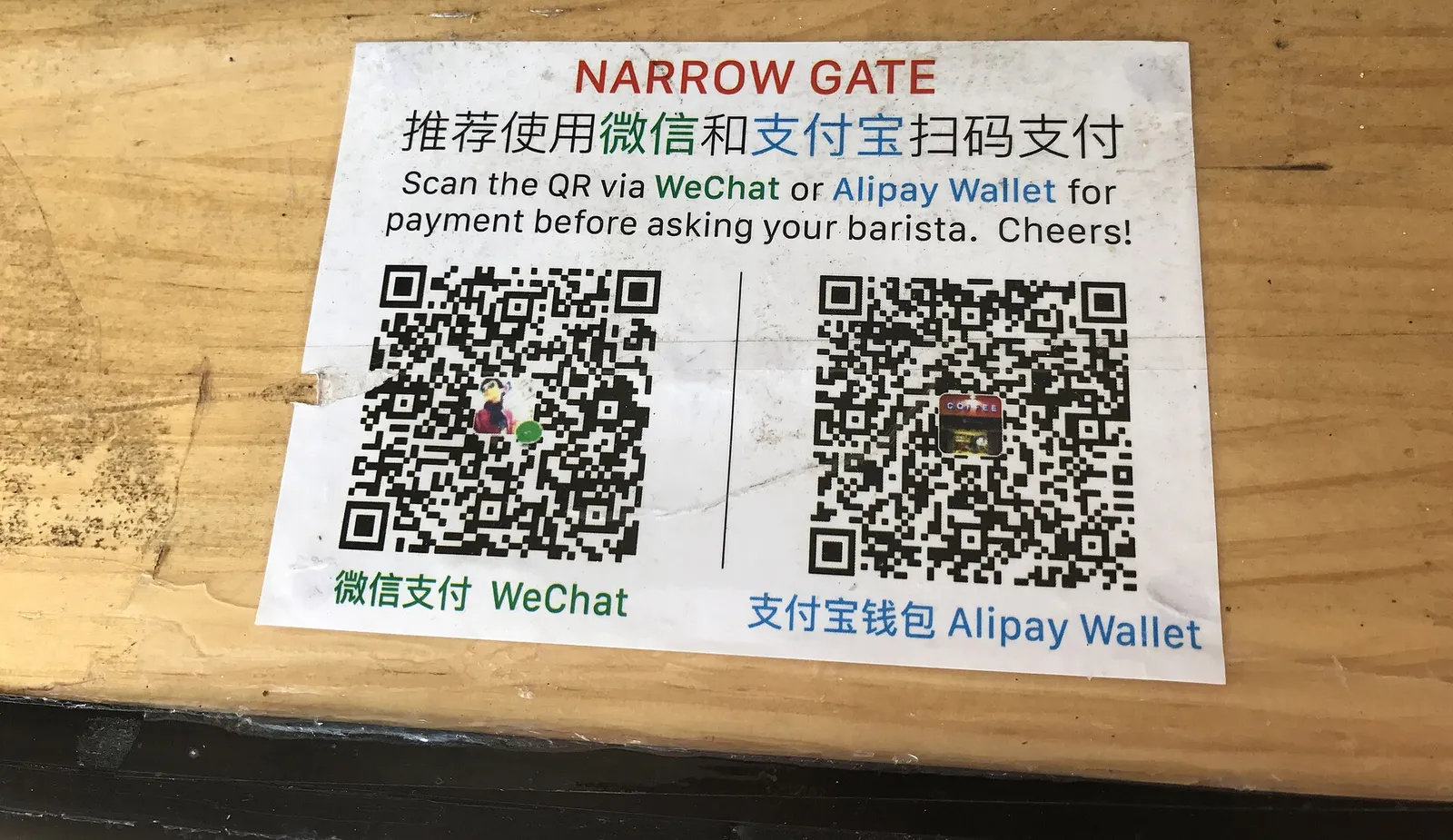
Every day, a black-and-white square settles more transactions than most banks did a generation ago. A street vendor in Delhi tapes one to a cart. A café in Shanghai props two of them on the counter. A train ticket, a boarding pass, a restaurant menu, a museum label: all of them now open with a phone camera.
The QR code looks like it was designed for smartphones. It was not. It was built in 1994 for car parts, by engineers who never imagined anyone would point a phone at it.
A barcode that ran out of room
In the early 1990s, Japanese factories ran on the one-dimensional barcode, the familiar row of vertical stripes. It worked, but it could only hold about twenty alphanumeric characters. As manufacturers tracked more detail about every component, workers were scanning several barcodes per box just to log one item.
Denso Wave, then a division of the auto-parts maker Denso in the Toyota group, gave the problem to a small team led by engineer Masahiro Hara. The brief was simple to state and hard to meet: store far more data, and read it fast, at any angle, on a busy production line.
Hara has said the breakthrough came while he was playing Go, the board game of black and white stones on a grid. A two-dimensional grid of dark and light squares could carry information both across and down, not just in one direction. That is the core of the QR code. "QR" stands for Quick Response, and speed was the whole point.
The geometry that makes it work
The most recognisable feature of any QR code is its three large squares, one in each of three corners. These are finder patterns, and they solve the hardest problem in scanning: working out where the code is, which way up it sits and how big it is, in a fraction of a second.
Each finder pattern has dark and light bands in a strict 1:1:3:1:1 ratio. The team chose that ratio after studying printed material such as flyers, magazines and cardboard boxes, looking for a pattern that almost never appears by accident. A scanner that finds the ratio along any line through the square knows it has found a corner, whatever the angle. With three corners located, the software can straighten a skewed or rotated image and read the grid.
The rest of the symbol is carefully organised:
- Timing patterns, alternating rows of dark and light modules, tell the reader how large each cell is.
- Alignment patterns, smaller squares in larger codes, correct for curved or warped surfaces.
- A quiet zone, a blank margin four modules wide, separates the code from whatever is printed around it.
- Format information near the corners tells the scanner which error-correction level and masking pattern were used.
QR codes come in 40 versions. Version 1 is a grid of 21 × 21 modules, and each step up adds four modules per side, up to 177 × 177 at version 40. At its largest, a single code can store 7,089 numeric digits, 4,296 alphanumeric characters or 2,953 bytes of binary data. It also has a dedicated mode for Japanese kanji, which mattered to its original users.
Damage built in
The feature that turned the QR code from clever into indispensable is error correction. Using Reed–Solomon codes, the same family of mathematics used on CDs and in deep-space communication, a QR code stores redundant data alongside its message. There are four levels:
| Level | Data that can be restored |
|---|---|
| L | about 7% |
| M | about 15% |
| Q | about 25% |
| H | about 30% |
A smudged label on a greasy engine part still scans. So does a code with a company logo printed over its centre, which is why brands can stamp their marks on QR codes without breaking them. The higher the error-correction level, the more of the grid goes to redundancy and the less space is left for the message itself.
The decision that made it global
Denso Wave patented the QR code, and "QR Code" is its registered trademark. But the company chose not to exercise the patent against people using the standard specification. Anyone could generate and read QR codes without paying a licence fee.
That openness, combined with formal standardisation, let the format spread far beyond Denso's factories. It was standardised by AIM International in 1997, as Japanese Industrial Standard JIS X 0510 in 1999, and internationally as ISO/IEC 18004 in 2000. Denso Wave tells the story on its own QR code history page. In 2014, Hara and his colleagues received the Popular Prize at the European Patent Office's European Inventor Award.
From factories to phones
Japan led the consumer leap. From 2002, mobile phones sold there began shipping with built-in QR readers. Elsewhere, adoption stayed patchy for years, because most phones needed a separate scanner app.
Two things changed that. First, smartphone makers built scanning straight into the camera. Apple added it to the iPhone's Camera app with iOS 11 in 2017, removing the last step between seeing a code and using it.
Second, and far more important, Asia turned the QR code into money.
A payment rail on a sticker
In China, WeChat and Alipay made the QR code the default way to pay. A merchant needs no card terminal, just a printed code linked to an account. Customers scan it, enter an amount and confirm. Overnight, the smallest stall could accept digital payments.
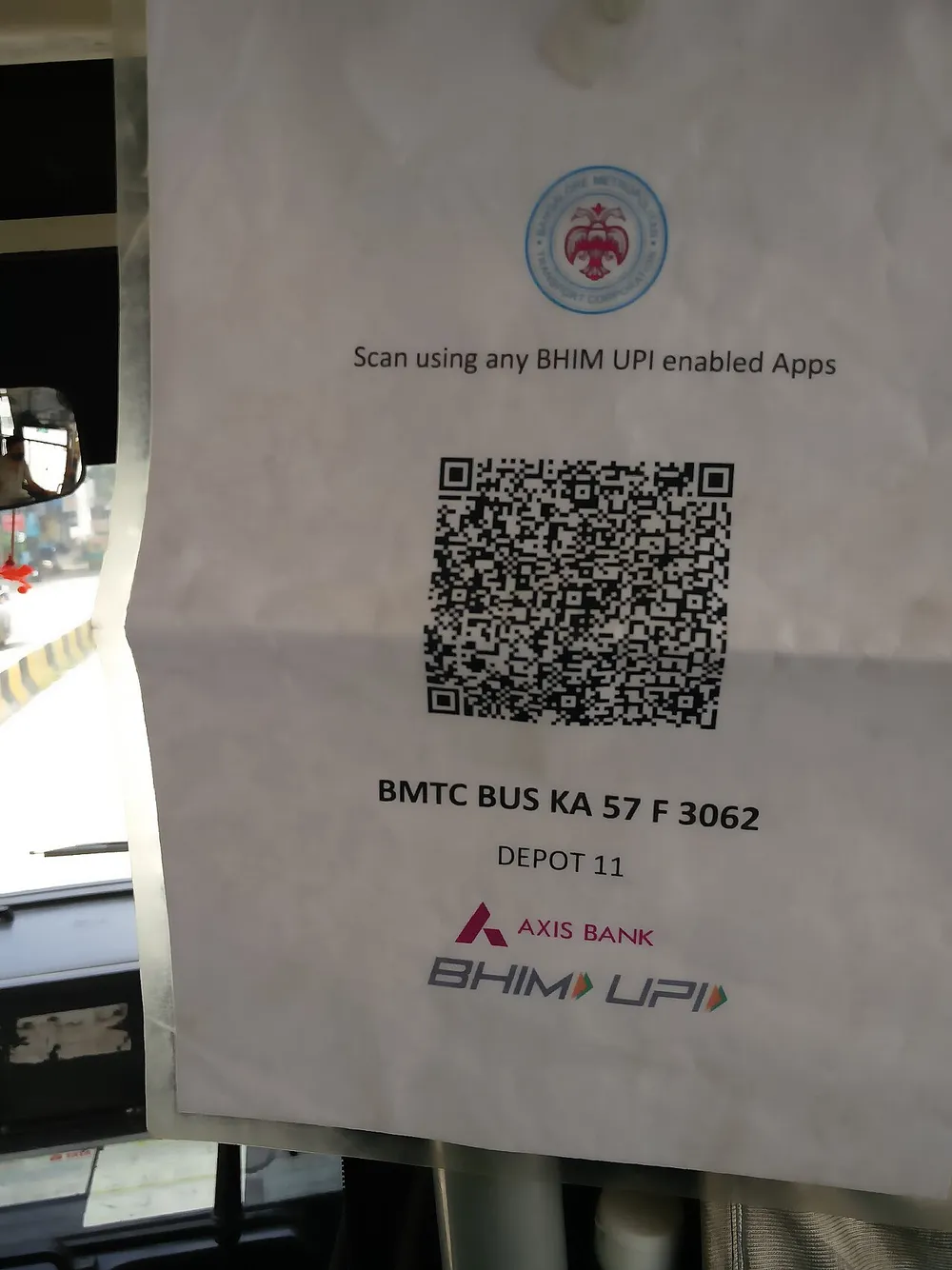
India followed with its own public infrastructure. The Unified Payments Interface (UPI), launched in 2016 by the National Payments Corporation of India, allows instant bank-to-bank transfers. Paired with QR codes, it has made scanning to pay routine across the country, from metro systems and city buses to vegetable vendors. UPI now processes billions of transactions every month, a large share of them started by a phone camera pointed at a printed square.
The COVID-19 pandemic finished the job in the rest of the world. Restaurants replaced paper menus with QR codes, and governments used them for venue check-ins and vaccination certificates. A technology that had felt like a gimmick in much of Europe and North America became everyday habit within months.
The catch
A QR code is just a link that humans cannot read, and that makes it useful to fraudsters. Security researchers call it "quishing", QR phishing: a fake code stuck over a real one on a parking meter, or a code in an email that leads to a convincing login page. The defence is simple. Check the address your phone shows before opening it, and be wary of any code that asks you to sign in or pay unexpectedly.
Thirty years on
The QR code has outlived countless technologies meant to replace it. It works because it asks so little: no chip, no battery, no network on the code's side, just ink on paper and a camera on the other end. A design meant to save factory workers a few seconds per box ended up rewiring how much of the world pays, travels and eats out.
The original engineers solved a narrow problem extremely well, then let everyone use the solution. That combination is rarer in technology than it should be, and it is the real reason the little square is everywhere.
Mobile payments are now changing how economists compare prices across borders; for a classic, low-tech approach, see the Big Mac Index. The QR code is one of several Japanese engineering exports that reshaped daily life, alongside the Shinkansen bullet train.