Who Wrote the Panchatantra?
Tradition credits the Panchatantra to Vishnu Sharma, the Brahmin who taught three dull princes through animal fables. Scholars treat that name as uncertain, while the five books and their westward journey through Kalila wa Dimna are among the best-documented stories in world literature.
 By Kirti Kaliraman· 5 min read
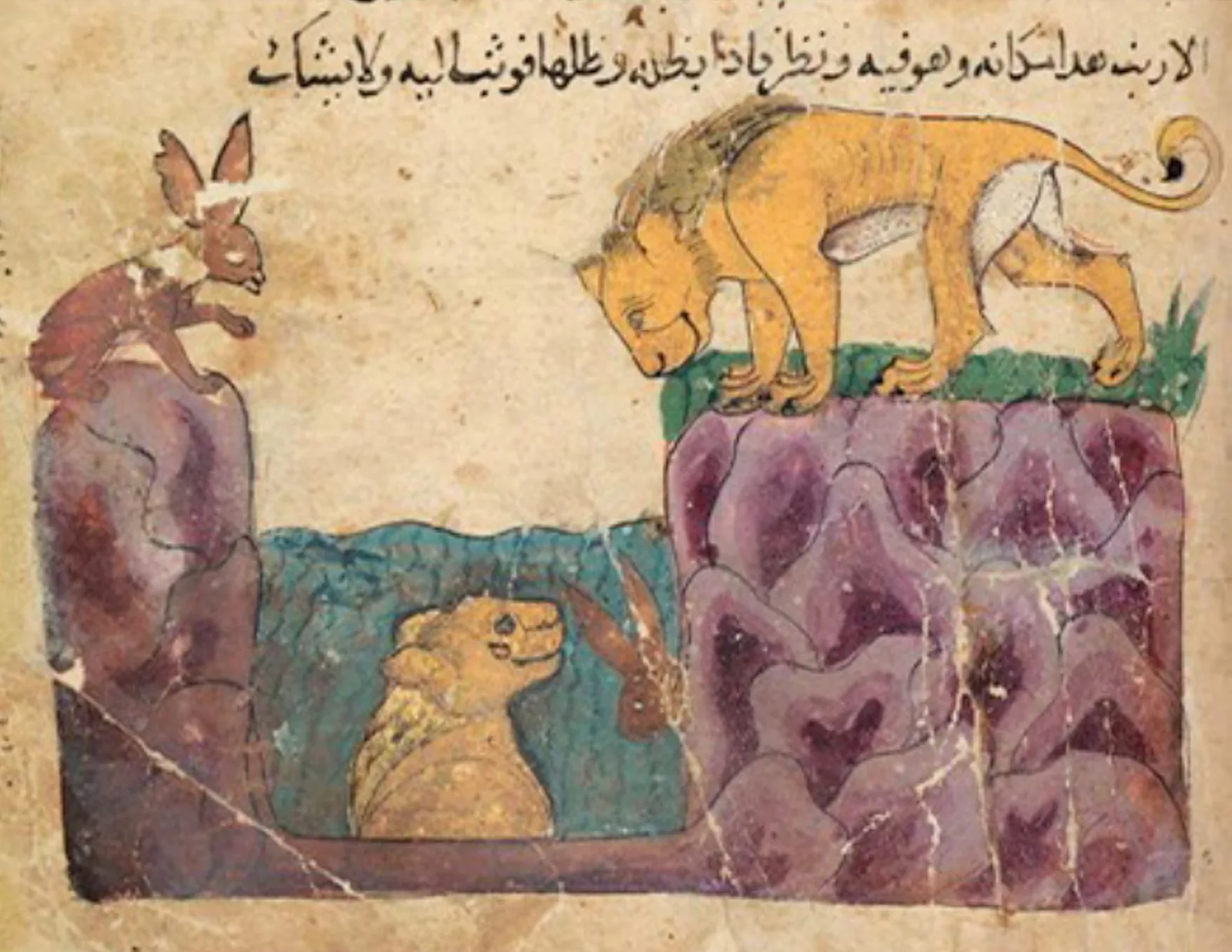
Tradition credits the Panchatantra to Vishnu Sharma (also spelled Vishnusharman), a Brahmin scholar who, in the work's own frame story, taught three dull princes of King Amarashakti of Mahilaropya through nested animal fables. Modern scholars treat that authorship as uncertain: the name comes from the text itself, not from independent historical evidence, and the lost Sanskrit original is usually placed somewhere between the late centuries BCE and the early centuries CE.
That double answer (a traditional author, a scholarly shrug) is the honest place to start. The book's later life is clearer: five treatises of niti (practical worldly wisdom), nested animal stories that still delight children, and a westward journey through Middle Persian and Arabic that made Indian fables European common property.
A teacher, three princes, five books
The outer frame is short and purposeful. King Amarashakti rules from Mahilaropya. His three sons are unfit for rule. He turns to Vishnu Sharma, who accepts the task of making them wise within six months, not by dry lectures but by stories of lions, jackals, crows, owls, monkeys and hares. The animal court becomes a school of politics.
Inside that frame sit five books, the pancha tantra of the title. English titles vary by translator. Arthur W. Ryder's classic versions and Patrick Olivelle's modern Oxford World's Classics rendering (Pañcatantra: The Book of India's Folk Wisdom, 1997) give the Sanskrit names and their sense as follows:
- Mitra-bheda: loss of friends, or causing dissension among allies
- Mitra-labha (also Mitra-lābha): winning or securing friends and allies
- Kakolukiyam (Kākolūkīyam): of crows and owls, war and peace
- Labdhapranasham (Labdhapraṇāśam): loss of gains, losing what you have won
- Apariksitakarakam (Aparīkṣitakārakaṃ): ill-considered or hasty action
Each book has its own frame tale, then stories told by characters inside that tale, sometimes nested further. Prose carries the plot; verse stamps the moral. The result is a niti-shastra: a handbook of shrewd conduct, alliance, betrayal and caution, dressed as entertainment.
When was it written, and by whom?
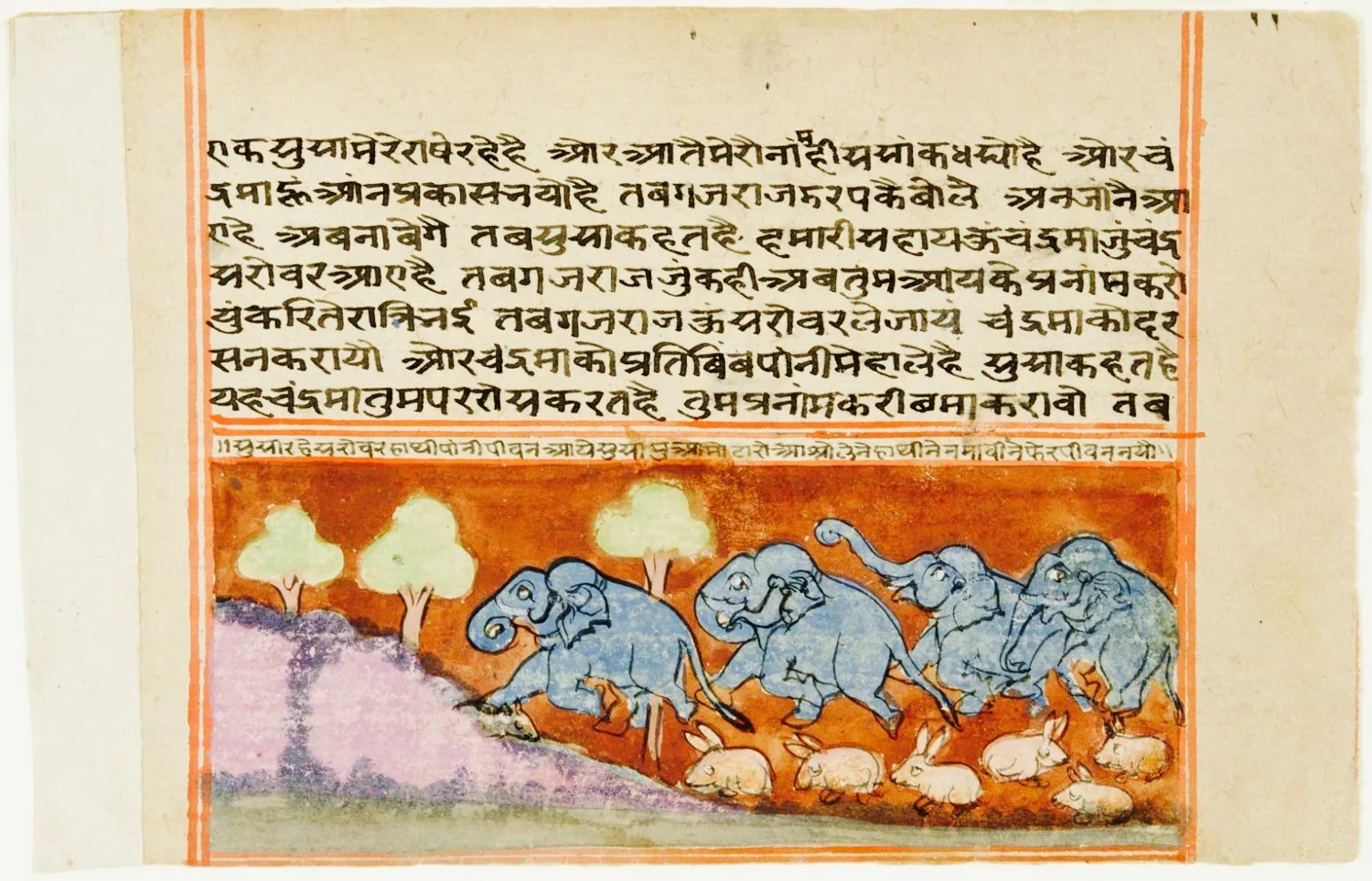
No autograph survives. What circulate are later Sanskrit recensions and translations. The German Indologist Johannes Hertel edited the Kashmirian Tantrakhyayika, long treated as among the oldest surviving Sanskrit forms. Reference summaries of Hertel's dating place the collection around 200 BCE; broader estimates for the lost original often run from about 100 BCE to 500 CE. The Institute of Ismaili Studies overview of the Arabic tradition places a compiled Sanskrit Pancatantra around 300 CE. The safe claim is a range, not a birthday.
On the author, the consensus is cooler. The prelude names Vishnu Sharma; outside that story there is no secure biography. As the overview of Vishnu Sharma notes, it is impossible to say whether he was a historical scholar or a literary invention.
Westward: Burzoy, Khosrow I, Kalila wa Dimna
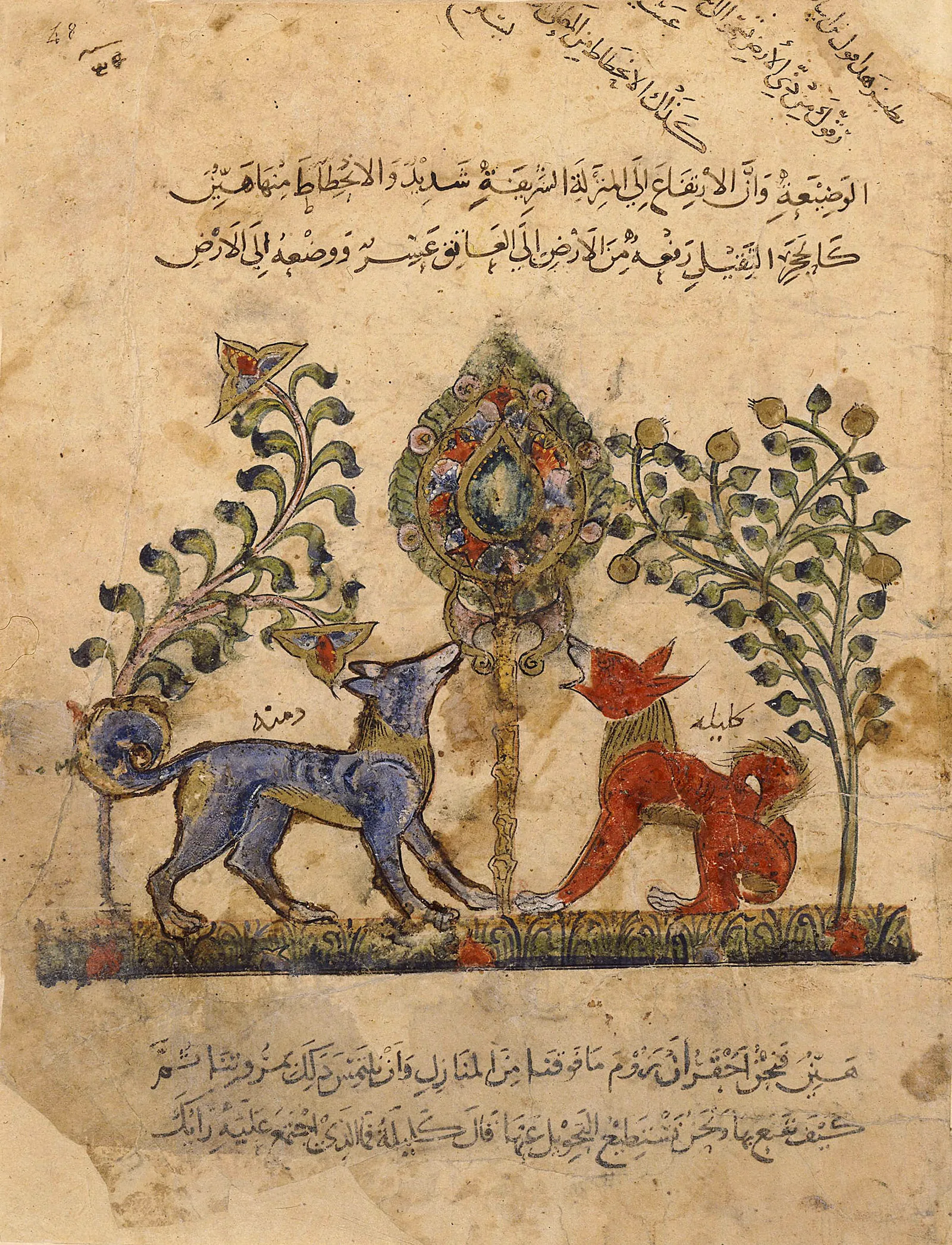
The book's second life began at the Sasanian court. In the sixth century, the Persian royal physician Burzoy (also Borzuya, Burzoe) is said to have translated a Sanskrit story cycle into Middle Persian for Khosrow I (r. 531 to 579). That Middle Persian text is lost. A Syriac version survives as a witness, and so does the far more influential Arabic remaking by Ibn al-Muqaffa (d. c. 757 to 760) in the eighth century: Kalila wa Dimna, named for the two jackals of the first book (Sanskrit Karataka and Damanaka). The Encyclopaedia Iranica entry on Kalila wa Demna maps how that Arabic book seeded Persian, Hebrew, Greek, Latin and European vernacular versions. Like chess, the fables crossed from India into the same Sasanian world under Khosrow I, then travelled further along the routes historians group under the Silk Road.
In Europe the collection travelled as the Fables of Bidpai or Pilpay. Jean de La Fontaine, in the preface to his second collection of Fables (1678), wrote that he owed the greater part to "Pilpay, the Indian sage," a debt recorded in accounts of La Fontaine's Fables. His sources were wider than that claim suggests, yet the acknowledgement shows how thoroughly the Panchatantra stream had entered French literary culture.
Scholarship: Hertel, Edgerton, Olivelle
Hertel's Tantrakhyayika editions (1909 to 1910) put a careful Kashmirian Sanskrit text before Europe. In 1924, Franklin Edgerton published The Panchatantra Reconstructed with the American Oriental Society, comparing the principal extant versions to recover a lost original (a digitised Indian reprint is also on Internet Archive). Olivelle's 1997 Oxford translation, based on that reconstructed tradition, remains the most usable scholarly English for general readers.
Inside India the stream never stopped. The Hitopadesha ("Good Advice"), associated with Narayana and often dated to the medieval period, reworks much Panchatantra material into a shorter Sanskrit collection that spread widely, especially in eastern India: fewer books, many shared plots, the same appetite for instruction through narrative.
Still Indian bedtime and classroom fare
Ask an Indian adult for the first animal stories they remember and the Panchatantra is rarely far away. Amar Chitra Katha has long sold comic collections that braid Jataka, Panchatantra and Hitopadesha tales for children. Reporting on India's draft National Curriculum Framework has described plans to use those same story cycles at the foundational school stage. An animated series, Tales of Panchatantra (2004 to 2005), and a 2003 puppet adaptation on the Indian channel ETV show that the frame story still finds cameras as well as classrooms.
That afterlife sits beside older literary prestige. Long before novels such as The Tale of Genji trained readers to follow private feeling across hundreds of pages, the Panchatantra trained listeners to follow motives across species. It perfected one of the world's most portable nested narratives, then watched the package travel farther than almost any other Sanskrit prose work.
The name that stuck
So who wrote the Panchatantra? In the story the book tells about itself, Vishnu Sharma did, for three princes who needed statecraft before they inherited a kingdom. Scholarship can verify only that an unknown compiler (or compilers) in early historic India shaped a five-book cycle of niti fables, which later redactors, Persian and Arabic translators, European fabulists and Indian comics artists kept remaking. The traditional name is the credit the tradition chose. The honest modern sentence is that we do not know the historical author, we do know the five books, and we can follow the trail from Mahilaropya's classroom to Khosrow's court, Baghdad's chancery and a child's shelf in India today.