What Is a Zero FIR?
A Zero FIR lets you report a cognizable offence at any police station, even if the crime happened elsewhere. The station registers it, then transfers the case to the police station that has territorial jurisdiction.
 By Kirti Kaliraman· 6 min read
A Zero FIR is a First Information Report that any police station in India must register when it receives information about a cognizable offence, even if the crime took place outside that station's territorial limits. The registering station then transfers the case to the police station that has jurisdiction; until that transfer, the report is numbered as "zero" rather than given a regular station serial number.
The rule exists so that a victim is not turned away for being in the "wrong" district or city. What began as committee recommendations and Home Ministry advisories after the December 2012 Delhi gang rape is now written into statute: Section 173 of the Bharatiya Nagarik Suraksha Sanhita, 2023 (BNSS), in force from 1 July 2024, expressly allows information to be given "irrespective of the area where the offence is committed," and also provides for electronic (e-FIR) reporting. This is an account of the law and practice, not legal advice.
Why "zero"?
Under the old Code of Criminal Procedure, 1973, Section 154 required an officer in charge of a police station to record information disclosing a cognizable offence. Stations still kept serial FIR numbers for cases they would investigate. When a complainant arrived with a crime from another beat, many officers refused registration and sent the person elsewhere. Evidence cooled, medical examinations were delayed, and survivors of sexual violence often had to travel while injured.
A Zero FIR breaks that refusal loop. The first station records the information, assigns a provisional "zero" number, and forwards the papers to the station with territorial jurisdiction, which then investigates under its own FIR number.
From the Verma Committee to MHA advisories
The practical push for Zero FIR is tied to the aftermath of the December 2012 Delhi gang rape. On 23 December 2012, the Union government constituted a three-member committee chaired by former Chief Justice J.S. Verma, with Justice Leila Seth and Gopal Subramanium. The Committee on Amendments to Criminal Law submitted its report on 23 January 2013.
Among its police reforms, the Committee said every individual should be able to "register an FIR at any police station irrespective of the jurisdiction in which the crime was complained of," and also to register a complaint online on a designated website. It added that every police officer on patrol is under a "moral, legal and Constitutional duty to assist the victim of any traffic accident or crime irrespective of the jurisdiction in which the crime occurred," especially in sexual offences. That is the Zero FIR idea in plain language.
The Ministry of Home Affairs then pressed states with advisories on registration of FIRs irrespective of territorial jurisdiction and on Zero FIR: register first, transfer later. Zero FIR remained an administrative instruction under the CrPC; Parliament had not yet written it into the Code itself.
Lalita Kumari: the duty to register
Zero FIR sits on a broader Supreme Court rule: when information discloses a cognizable offence, registration is mandatory. On 12 November 2013, a Constitution Bench in Lalita Kumari v. Govt. of U.P. (Writ Petition (Criminal) No. 68 of 2008) held that Section 154 CrPC is mandatory. The condition for registering an FIR is that the information discloses a cognizable offence; the reasonableness or credibility of that information is not a precondition. Preliminary inquiry, the Court said, is allowed only in limited categories (such as matrimonial or commercial disputes, medical negligence or corruption) and only to see whether a cognizable offence is disclosed, not to test whether the complaint is true.
Lalita Kumari does not invent Zero FIR, but it removes the favourite excuse for delay: "we will inquire first" or "this is not our area." Combined with MHA advisories, refusal to register became harder to defend. The case sits in the same rights tradition as habeas corpus: courts treating access to the criminal process as part of protecting liberty.
Section 173 BNSS: Zero FIR and e-FIR in the statute
Parliament replaced the CrPC with the BNSS (Act No. 46 of 2023). The President assented on 25 December 2023, and the Sanhita came into force on 1 July 2024, as PIB and a later PIB Mumbai brief both record. Section 173 ("Information in cognizable cases") is the successor to old Section 154.
The enacted opening of Section 173(1) states that every information relating to the commission of a cognizable offence, "irrespective of the area where the offence is committed," may be given orally or by electronic communication to an officer in charge of a police station. Oral information must be reduced to writing and signed; information by electronic communication must be taken on record and signed within three days. The substance is entered in the station diary book. A free copy goes to the informant or victim under Section 173(2). The PIB summary of BNSS features expressly lists "introduction of zero FIR and e-FIR provisions."
That single phrase ("irrespective of the area") is the statutory Zero FIR. Electronic communication is the statutory e-FIR route. What Verma urged and MHA advised is now text a complainant can point to at the counter.
If police still refuse
Law on paper does not always move the station house officer. Section 173(4) BNSS preserves the classic escalator: a person aggrieved by refusal to record information under Section 173(1) may send the substance of that information, in writing and by post, to the Superintendent of Police. If the SP is satisfied that a cognizable offence is disclosed, the SP must investigate personally or direct a subordinate to do so. Failing that, the aggrieved person may apply to a Magistrate.
For certain offences against women, refusal to record information can also attract criminal liability under provisions introduced after 2013. In serious cases, High Court public interest litigation or writ petitions remain a further path when police systematically refuse registration. The first practical steps remain the Zero FIR demand, the free copy, and the written complaint to the SP.
Where Zero FIR matters day to day
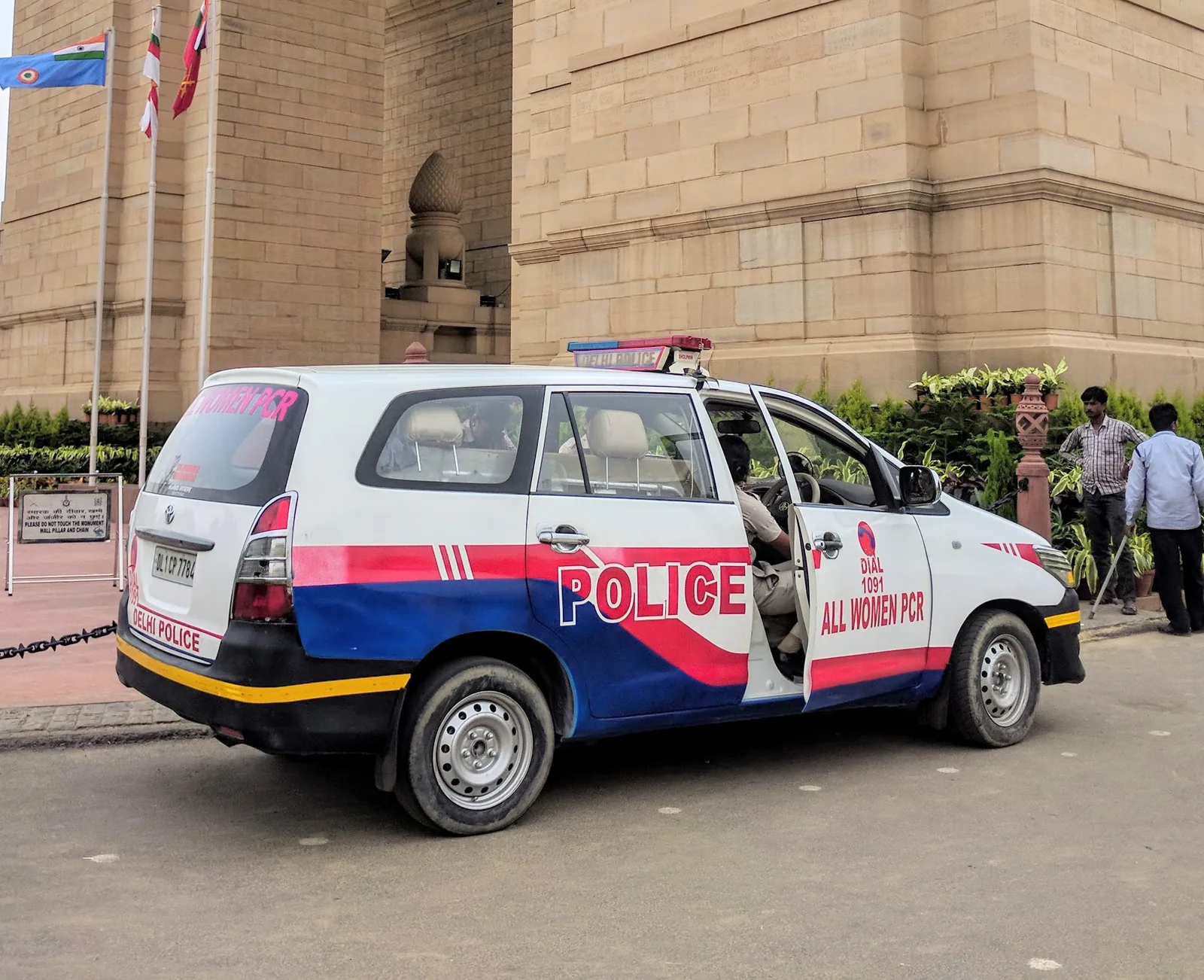
Women's safety. The Verma reforms were aimed at sexual offences. A survivor can report at the nearest station, insist on a woman officer where the BNSS provisos require it, and force transfer afterward rather than travel first. All-women PCR vans and helpdesks are the street-level face of that policy.
Cybercrime. Online fraud and image-based abuse rarely respect district maps. The National Cyber Crime Reporting Portal (cybercrime.gov.in), under the Home Ministry's Indian Cybercrime Coordination Centre, lets complainants report from anywhere; the financial-fraud helpline 1930 feeds the same system. Portal reports still move to local police, so Zero FIR and e-FIR under Section 173 pull the same way: capture the complaint first, sort jurisdiction later.
Travel. A theft on a train, an assault in another state, or a crime noticed only after the victim reaches home used to produce a jurisdictional shuffle. Zero FIR lets the first station lock the narrative and timeline, then send the file to where the offence occurred.
What it is not
A Zero FIR does not decide guilt, replace investigation by the station with jurisdiction, or license anonymous complaints: electronic information still needs signature within three days. Section 173(3) still allows, with Deputy Superintendent permission, a short preliminary enquiry for some offences punishable with three years or more but less than seven, a carve-out courts read against the Lalita Kumari baseline.
Zero FIR is a door, not a verdict. Used as Verma, the Supreme Court and Section 173 BNSS intend, it is the rule that the nearest police station is never the wrong place to begin.