Is The Tale of Genji the World's First Novel?
Written by a lady-in-waiting at the Heian court a thousand years ago, The Tale of Genji still sets the standard for psychological fiction — and the debate over whether it is the world's first novel is part of its legend.
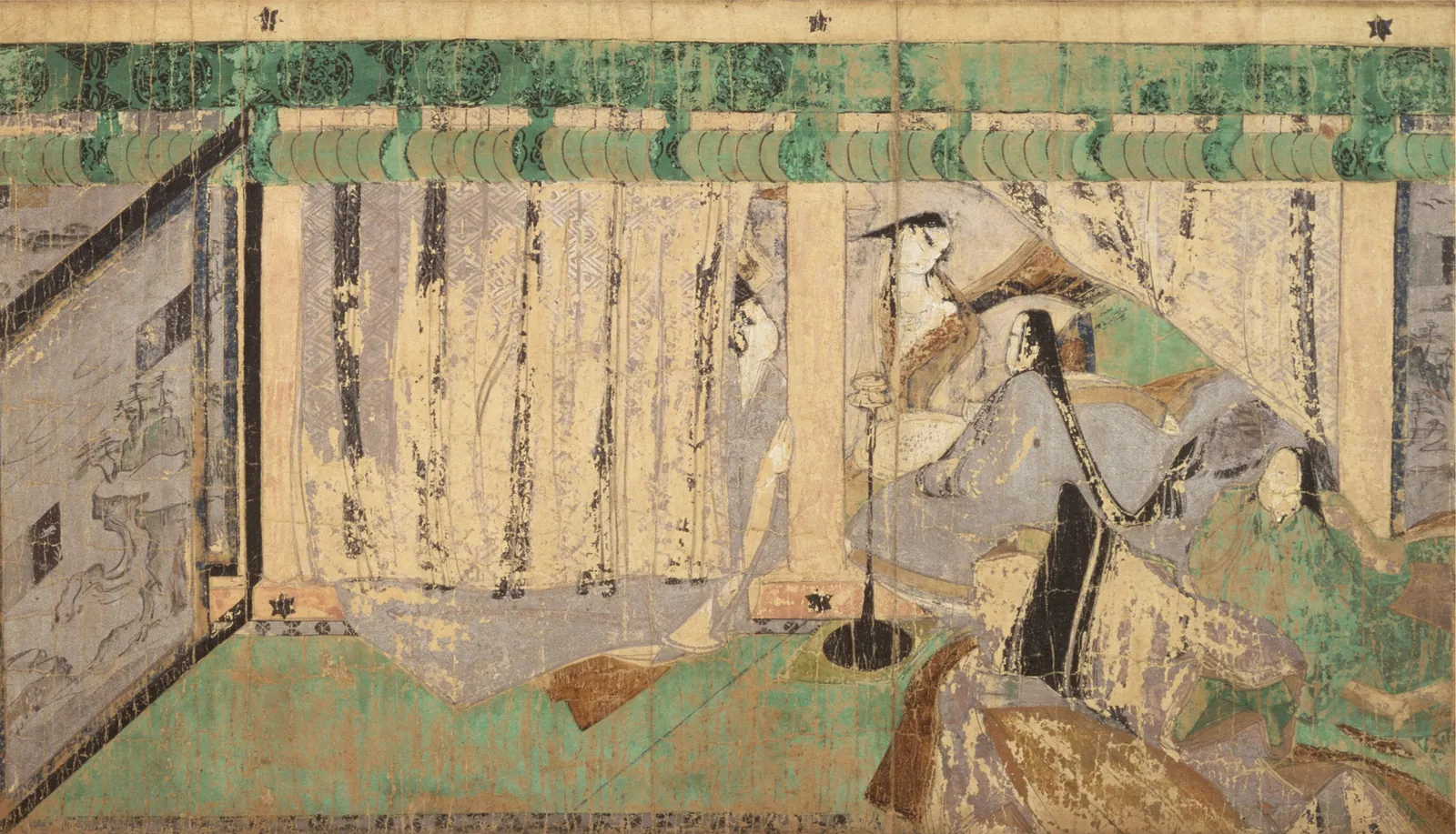
The Tale of Genji, written by Murasaki Shikibu in Heian-era Kyoto around the year 1000, is widely called the world's first novel because it is a long, sustained prose narrative centred on psychologically complex characters. Some scholars dispute the title, pointing to earlier long prose works such as the Greek and Roman romances, so "one of the first great novels" is the safer claim.
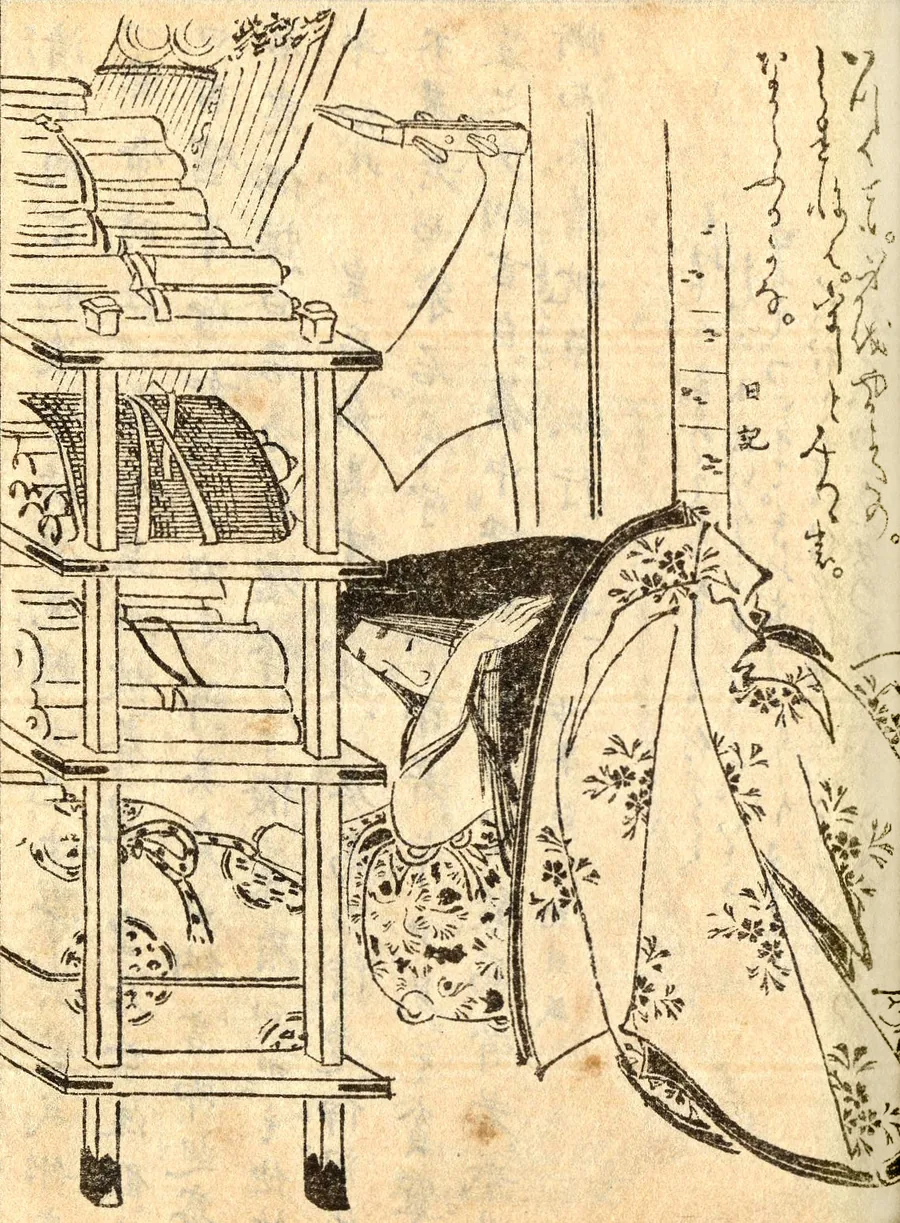
Around the year 1000, in a capital that is now Kyoto, a woman whose real name we do not know sat down to write. She was a lady-in-waiting at the Heian imperial court. Later readers called her Murasaki Shikibu, after a character in her own story and her father's court rank. What she produced — Genji monogatari, The Tale of Genji — runs to fifty-four chapters, nearly eight hundred poems and some four hundred characters. A millennium later, it is still widely called the world's first novel.
Whether that label is strictly true is less interesting than why the book earns it.
A novel before "the novel"
European literary history often dates the modern novel to Cervantes' Don Quixote (1605) or to eighteenth-century English fiction. The Tale of Genji predates both by centuries. It follows a central figure, the "Shining Genji," across decades of political intrigue, love affairs, rivalry and grief. Characters have inner lives. Time passes. Consequences accumulate. Genji himself dies roughly two-thirds of the way through; the final chapters shift to a younger generation, with a darker, more ambivalent tone.
Critics who hesitate to call it a novel point to its episodic structure, its deep embedding of waka poetry, and the fact that it was written for a small aristocratic audience rather than a print marketplace. Those caveats matter. They do not erase what Murasaki achieved: sustained psychological fiction on a scale that had almost no precedent anywhere.
Written in a woman's hand
Heian high culture prized Chinese learning. Men of rank wrote official documents and serious verse in Chinese. Women of the court wrote in the vernacular, using the phonetic kana scripts that were still evolving. That division of labour — Chinese for prestige, Japanese for intimate life — gave Murasaki a medium perfectly suited to dialogue, gossip, jealousy and the fine calibrations of status.
Her father, Fujiwara no Tametoki, was a scholar of Chinese classics and encouraged her talent even though that education was unusual for a daughter. After her husband's death she entered the service of Empress Shōshi, consort of Emperor Ichijō, at a court dominated by the Fujiwara regent Michinaga. The politics of that household — marriage alliances, favour, exile — seep into Genji's world.
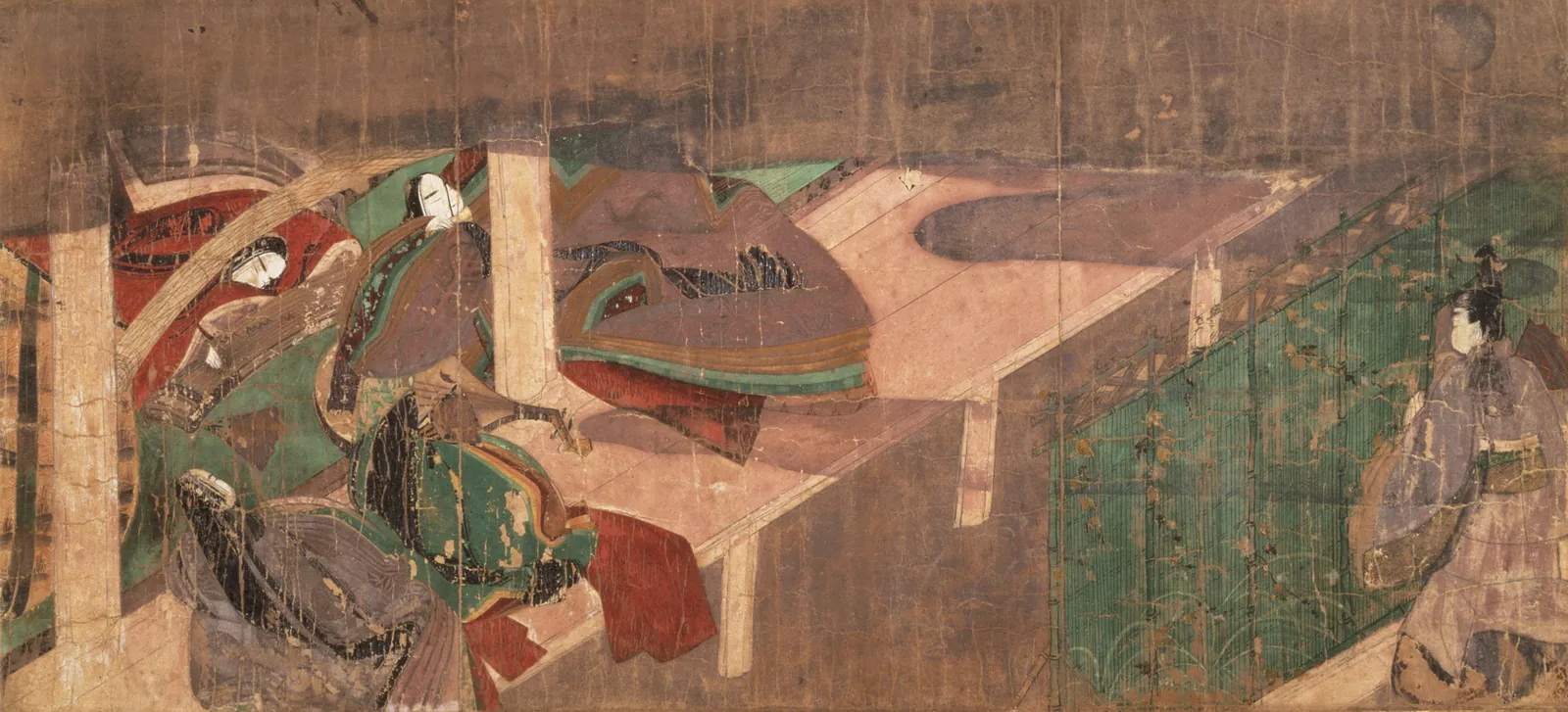
Murasaki's own diary, the Murasaki Shikibu nikki, confirms that parts of the tale were already circulating by 1008. By 1021, the author of the Sarashina Nikki could rejoice at obtaining a complete copy of more than fifty chapters. The original manuscripts are lost; what survives are later copies and, from about 1130, the painted handscrolls known as the Genji Monogatari Emaki, now a Japanese National Treasure.
What the story is about
Genji is the son of an emperor and a low-ranking favourite. Because court politics block him from the throne, he is made a commoner and given the surname Minamoto (Genji). Brilliant, beautiful and restless, he moves through a series of relationships that map the emotional geography of Heian aristocracy: the neglected Rokujo Lady, the child he raises as Murasaki, political marriages, rivalries, and the shadow of his own father's court.
The book is not a romance in the modern sense. Desire in Genji is entangled with rank, aesthetics and Buddhist unease about attachment. Seasonal imagery, clothing, scent and calligraphy carry as much meaning as dialogue. When Genji is exiled to Suma and then Akashi, the landscape itself becomes a register of disgrace and longing — a technique later Japanese literature never forgot.
The final ten chapters, often called the Uji chapters, leave Genji behind and follow Kaoru and Niou in a world where ideals have thinned. Many modern readers find these sections the most novelistic of all: less glittering, more psychologically ruthless.
From Kyoto to the world
For centuries Genji was a Japanese classic — annotated, illustrated, rewritten for Noh and later for film and manga — but little known abroad. A partial English version by Suematsu Kenchō appeared in the 1880s. The breakthrough came with Arthur Waley's six-volume translation (1925–1933), a free, literary rendering that omitted one chapter but made the book a Western sensation. Virginia Woolf praised it; a generation of English readers discovered Heian Japan through Waley's cadences.
Edward Seidensticker published the first complete English translation in 1976, aiming for stricter fidelity. Royall Tyler (2001) and Dennis Washburn (2015) offered further complete versions, each with different choices about names, titles and poetic density. In Japan itself, modern-language translations by Yosano Akiko, Jun'ichirō Tanizaki and others had already remade the text for twentieth-century readers — because classical Heian Japanese is as remote from contemporary Japanese as Chaucer is from modern English.
Why the "first novel" claim endures
Calling Genji the first novel is a useful provocation. It reminds readers that long-form prose fiction did not wait for the European printing press or the bourgeois reading public. A woman writing in a phonetic script for her peers produced a work that still rewards close reading for character, motive and moral ambiguity.
The claim also travels well because the book itself travels well. You do not need to know the Fujiwara marriage system to recognise ambition, jealousy, ageing beauty or the ache of exile. What you do need — and what translations now supply — is patience for a narrative that moves like court music: themes return, motifs deepen, and the ending refuses a simple triumph.
A thousand years on, The Tale of Genji remains what Murasaki made it: not a museum piece, but a living argument that the novel, in the fullest sense, was invented wherever someone first decided that private feeling deserved the length of a life.
Reading the past often depends on decipherment; for a dramatic case, see how the Rosetta Stone was decoded. Kyoto's court culture is a world away from modern Japan, where the bullet train now links the old capital to Tokyo in about two and a quarter hours. Popular storytelling still finds new homes, as Nigeria's Nollywood shows.