How Does Aadhaar Authentication Work?
Aadhaar authentication is a live 1:1 match of your biometrics, demographics or OTP against UIDAI's Central Identities Data Repository. Here is the path of a request, the modes India uses and the rules that govern them.
 By Sushant Kataria· 6 min read
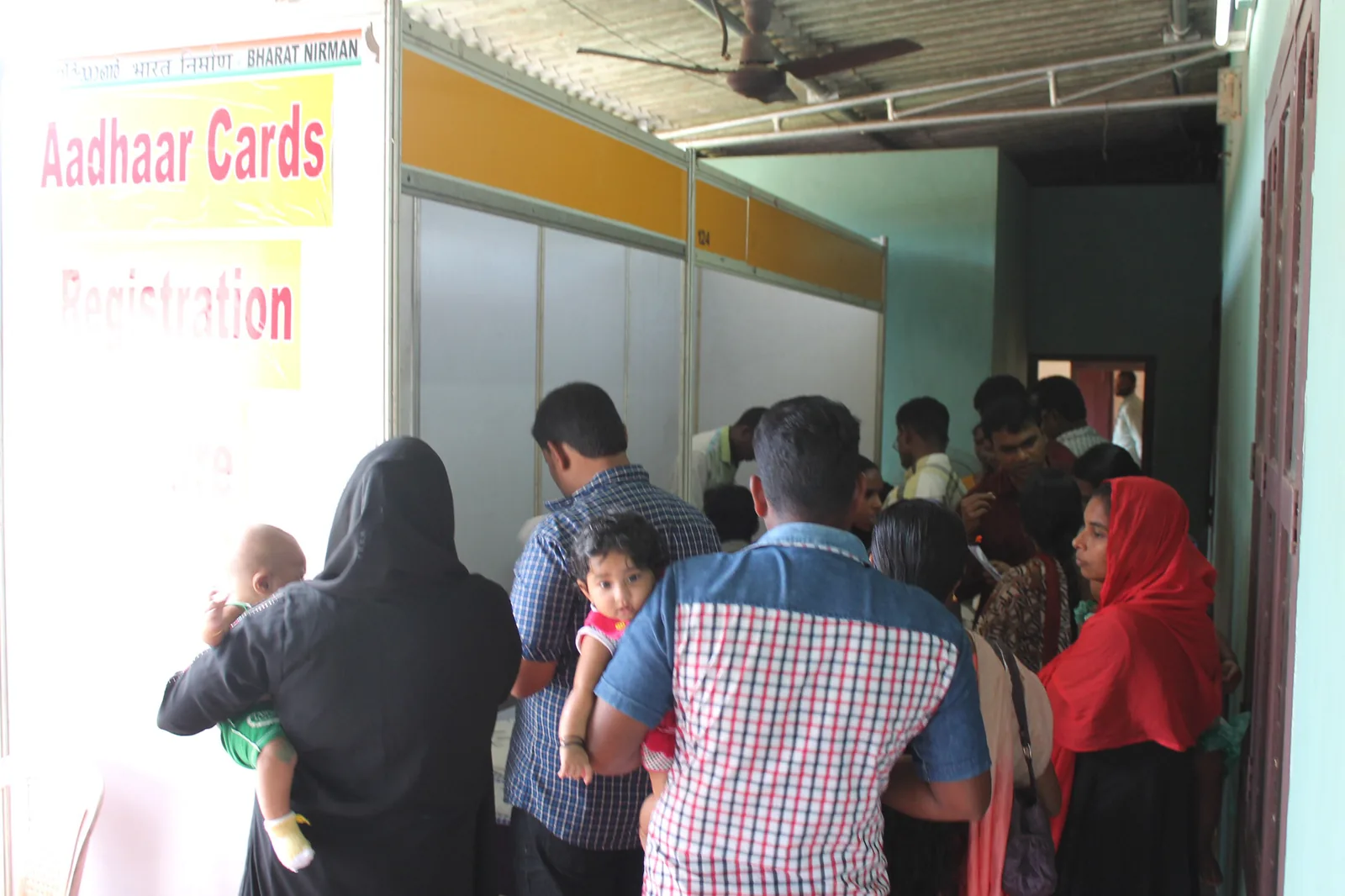
Aadhaar authentication is the process of submitting an Aadhaar number with demographic details, biometrics (fingerprint, iris or face) or an OTP to the Unique Identification Authority of India's Central Identities Data Repository (CIDR), which then confirms whether those details match the record stored for that number. In plain terms, it is a live, online 1:1 check: you claim an identity, and UIDAI answers yes or no (or, for e-KYC, returns limited demographic data) without handing your fingerprints to the shop or bank.
That architecture is why a ration shop, a bank KYC desk and a pension life-certificate app can all ask "are you this Aadhaar holder?" without building their own biometric databases. Enrolment captures you once; authentication reuses the same template millions of times a day.
What Aadhaar is, and who runs it
Aadhaar is India's 12-digit unique identity number for residents. The Unique Identification Authority of India (UIDAI) is the statutory body that issues it, under the Aadhaar (Targeted Delivery of Financial and Other Subsidies, Benefits and Services) Act, 2016, amended in 2019. UIDAI sits under the Ministry of Electronics and Information Technology. The Act defines Aadhaar as a random number with no embedded personal attributes: the digits themselves do not encode caste, religion, address or income.
As of mid-September 2025, UIDAI reported generating about 142.76 crore Aadhaar numbers. A March 2026 Rajya Sabha reply put live Aadhaar holders at about 134 crore and cumulative authentication transactions above 17,000 crore. The live Aadhaar Dashboard tracks the same totals as they rise with children's enrolment and demographic updates.
Enrolment captures demographics plus a photograph, ten fingerprints and iris images, under UIDAI's enrolment rules. Authentication is the later verification step: enrolment builds the CIDR record; authentication only asks whether a fresh sample matches it.
What happens in an authentication
UIDAI's own authentication FAQ gives the legal definition used across the system. An Aadhaar number, plus demographic or biometric information (or an OTP tied to the registered mobile), is sent to the CIDR. The repository verifies correctness against what it holds and returns a response. Core biometrics stay with UIDAI; requesting entities do not receive your fingerprint or iris templates back.
Under Section 8 of the Aadhaar Act, the path looks like this:
- A requesting entity (a bank, telecom operator, welfare department or other permitted agency) needs to confirm you are the person behind an Aadhaar number.
- Consent is taken: the entity must obtain the individual's consent (or a parent's or guardian's, for a child) before collecting identity information for authentication, and must explain what may be shared, how it will be used, and what alternatives exist.
- You present a factor: any of ten fingerprints, an iris scan, a face capture, demographic fields such as name or date of birth, or an OTP sent to the mobile number registered with UIDAI.
- The request reaches UIDAI through the licensed authentication network. The CIDR runs a 1:1 match against the templates stored for that Aadhaar number. UIDAI stresses that this is not face recognition in the one-to-many sense: the system matches your live face (or finger) to your stored record, not to a gallery of strangers.
- UIDAI responds with a positive or negative answer, or with another appropriate response that may share limited identity information excluding core biometric information. A simple Yes/No auth answers only whether the match succeeded. An e-KYC response can return demographic fields the entity is authorised to receive, which is why banks and NBFCs use Aadhaar e-KYC to open accounts faster than paper KYC.
- You get a notification when a biometric or OTP authentication hits your number: UIDAI says it emails the registered address so unexpected requests are visible.
The same Section 8 response rule is why authentication can prove presence without exporting your biometrics into every merchant's server. What leaves UIDAI is a cryptographic yes, a no, or a tightly scoped demographic packet.
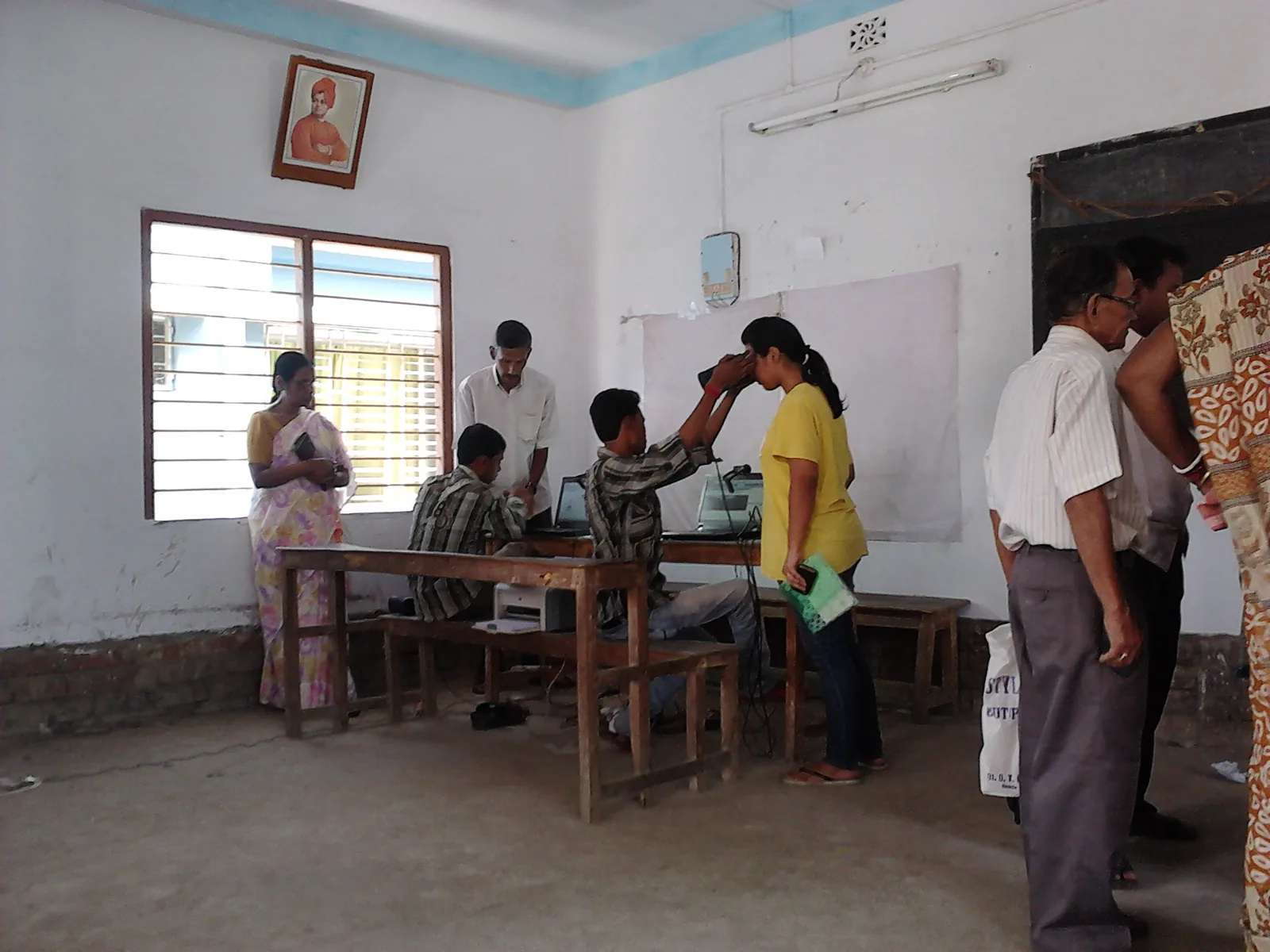
Fingerprint, iris, OTP and face
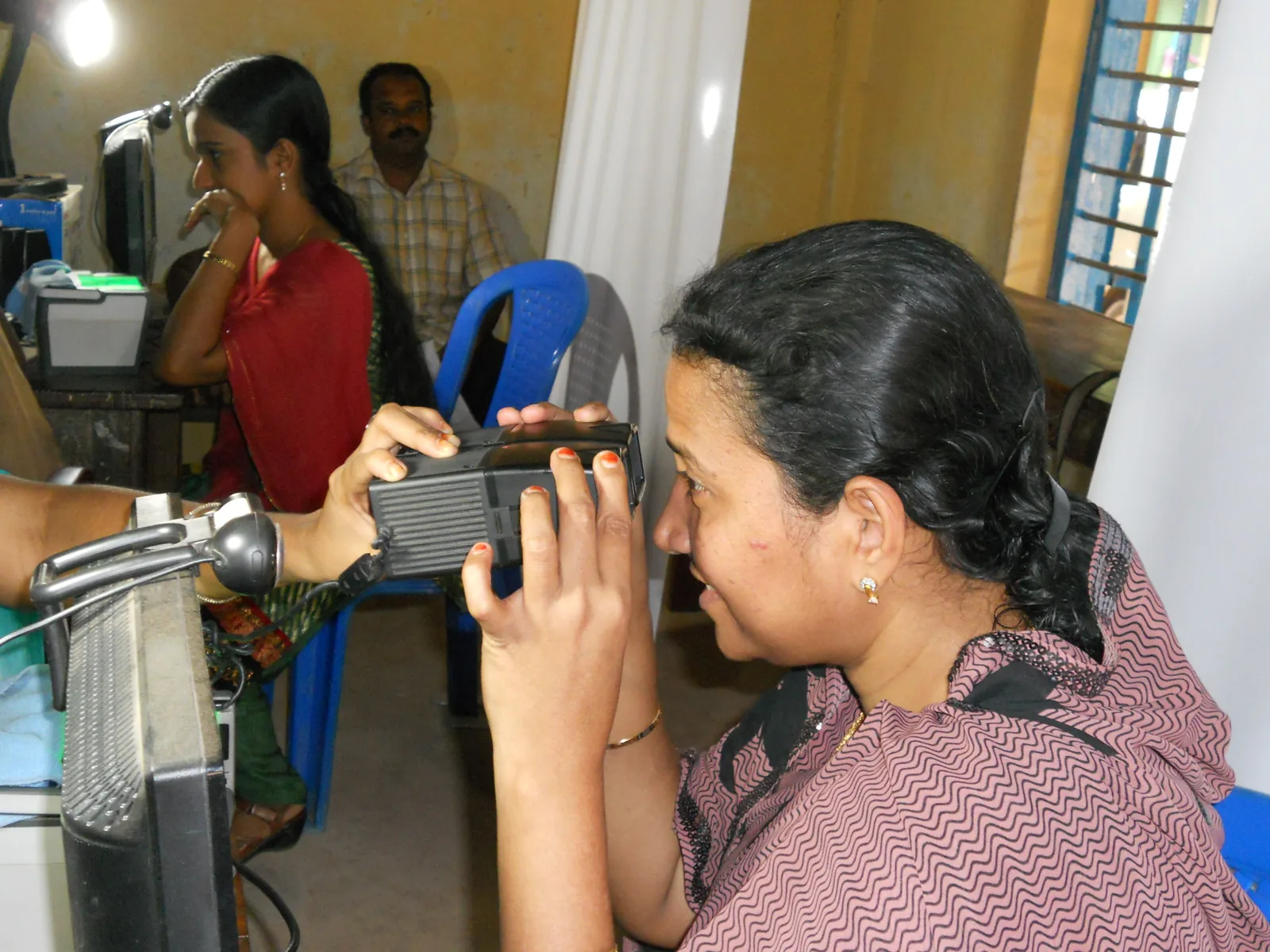
The original modalities were fingerprint and iris, plus demographic matching and OTP. Any of the ten fingers can work; worn or missing fingerprints are why alternate modes exist. Iris capture was always part of enrolment for the same reason: fingerprints degrade with age and manual labour, while iris patterns remain usable for many holders.
Face authentication is the newer contactless mode: consent-based 1:1 matching of a live facial image to the enrolment photograph, usually on a smartphone that meets Face RD specifications. A PIB note on FY 2024–25 recorded more than 2,707 crore authentication transactions that year, including about 247 crore in March 2025, with face auth crossing 15 crore that month. By June 2025 monthly face auth reached about 15.87 crore, and cumulative face authentications approached 175 crore. November 2025 saw about 231 crore total authentications and 28.29 crore face authentications; nearly 60% of pensioners' Digital Life Certificates that month used face auth.
Those volumes sit on the same digital fabric as UPI payments: public rails, private front-ends, identity checks that feel like a tap. The packets travel over the ordinary undersea and terrestrial internet; Aadhaar auth is an application of that connectivity, not a separate physical network.
Where authentication is used
Authentication shows up wherever the state or a regulated service needs to know that the person present is the person on the record. UIDAI lists PDS, MGNREGA, banks and telecom among everyday adopters. The March 2026 Lok Sabha/Rajya Sabha briefing said more than 3,100 Direct Benefit Transfer schemes and over 360 public services use Aadhaar-based authentication or verification, with bank linkage used to push subsidies into accounts. UIDAI also states that it does not collect or keep the purpose of each authentication: the scheme owner knows why it asked; the CIDR only records that a request was made and answered.
e-KYC is the commercial twin of Yes/No auth. Cumulative e-KYC transactions had reached about 2,356 crore by 31 March 2025, according to the same April 2025 PIB release, with 44.63 crore in March alone. That is the volume behind instant SIM activation and paper-light account opening.
Offline verification, added by the 2019 amendments as Section 8A of the Act, lets some checks happen without a live CIDR call, under separate consent rules: useful where connectivity fails, but still not a free-for-all copy of the database.
Consent, privacy and when auth can fail
Aadhaar authentication sits inside a constitutional frame set by the Supreme Court's privacy ruling. In 2017 the Court held privacy to be a fundamental right; the 2018 Aadhaar bench then upheld the scheme for welfare while striking down parts that had let private companies demand Aadhaar more broadly, a history we unpack in Is Privacy a Fundamental Right in India?. The full 26 September 2018 judgment is the controlling text on how far the state may push mandatory authentication.
Statute follows that logic. Section 8 requires consent and purpose limitation. Section 7 of the Act allows Aadhaar as a condition for subsidies paid from the Consolidated Fund, but also requires alternate identification if a number has not yet been assigned. The March 2026 PIB reply repeats the operational rule: no eligible beneficiary should be denied welfare for want of Aadhaar or because authentication failed; alternate means must exist. UIDAI's FAQ says the same for fingerprint failures: retry other fingers, clean the scanner, update biometrics at an enrolment centre, or fall back to iris, face, OTP or the agency's own exception process.
Failures still happen. Official explanations list connectivity problems, biometric or demographic mismatch, invalid OTPs and device faults. Multi-modal auth (fingerprint, iris, face, OTP) and periodic biometric updates are the mitigation strategy, not a claim of zero error.
Aadhaar authentication works because India built a single matching engine, kept core biometrics inside that engine, and forced requesting entities to ask a narrow question: does this sample match this number? The answer travels in milliseconds; the fingerprints stay put.