Where Did Chess Come From?
Elephants, chariots, horses and foot soldiers on an 8x8 board: chess began as an Indian war game, crossed Persia and Baghdad, and only got its all-powerful queen in 15th century Spain.
 By Sushant Kataria· 8 min read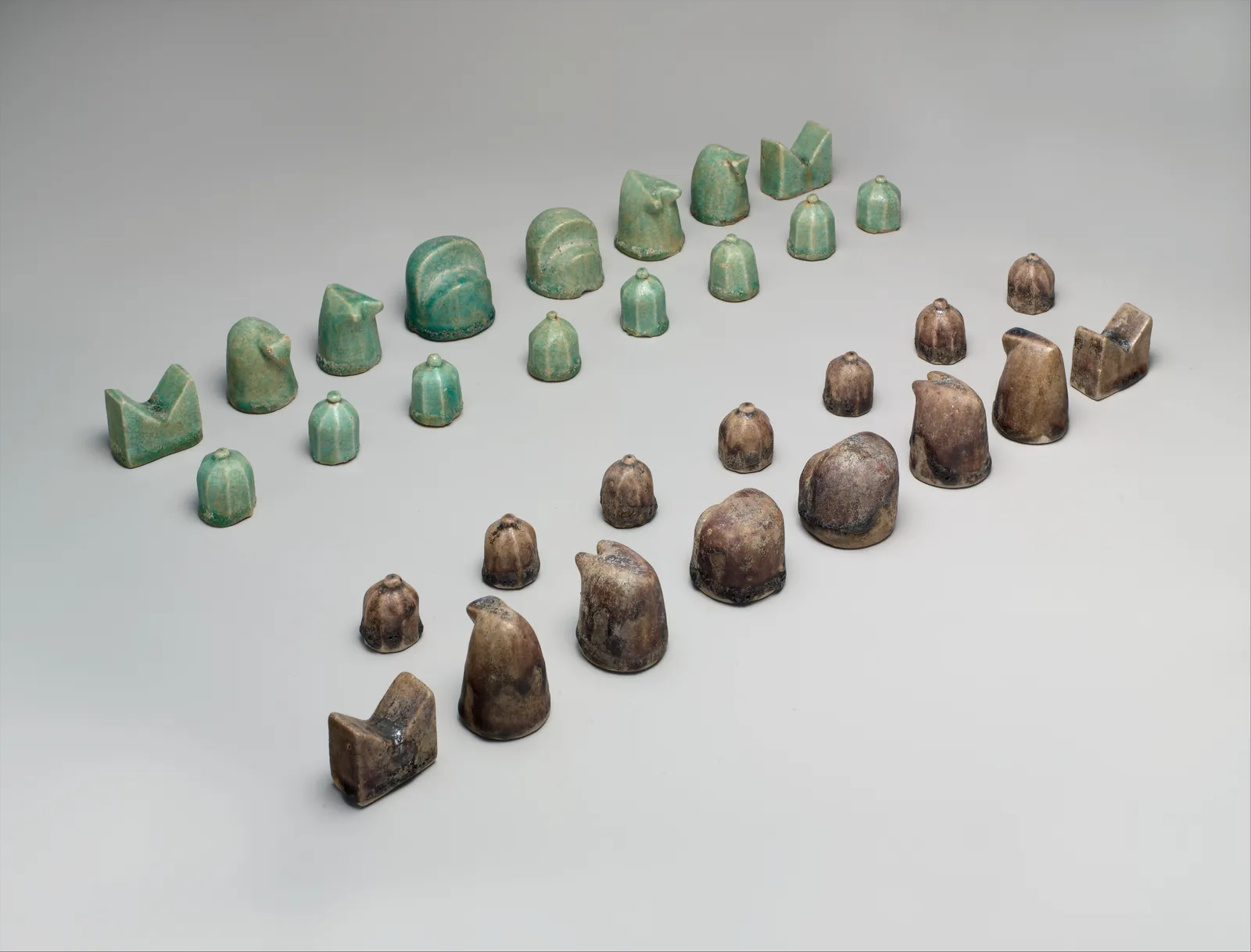
Chess came from India, where it began as chaturanga, a war game played on an 8x8 board in the north of the subcontinent by around the 6th or early 7th century CE. It travelled to Sassanid Persia as chatrang, became shatranj in the Arab world, and reached Europe through Spain and Sicily, where it slowly turned into the modern game by about 1500.
That is the consensus of chess historians, from H. J. R. Murray's landmark A History of Chess (1913) to the specialists writing today. The details are still argued over, but the overall route is clear, and it is written into the language of the game itself. The word "checkmate" is Persian, the bishop was once an elephant, and the queen started life as a male adviser who could only shuffle one square at a time.
An army on a board
The Sanskrit word chaturanga means "having four limbs", and in epic poetry it was a standard term for an army. The four limbs were the four divisions of a classical Indian force: infantry, cavalry, elephants and chariots. The game put exactly those troops on the board, led by a raja (king) and his mantri (minister or counsellor).
Each piece is the ancestor of a modern one:
| Chaturanga | Meaning | Modern piece |
|---|---|---|
| Raja | King | King |
| Mantri | Minister | Queen |
| Ratha | Chariot | Rook |
| Gaja | Elephant | Bishop |
| Ashva | Horse | Knight |
| Padati | Foot soldier | Pawn |
The game was played on the ashtapada, an uncheckered board of 64 squares that was also used for older race games with dice. The horse already moved like today's knight, the chariot like today's rook and the foot soldier like a pawn, although without the double first step. The minister was weak, moving a single square diagonally, and the elephant's move is still debated because early sources describe it in different ways.
The earliest evidence
No single inventor is recorded, and no board survives from the period. The evidence is literary. The clearest early reference comes from the poet Banabhatta, whose Harshacharita, written around 625 CE at the court of King Harsha in northern India, uses a pun on chaturanga and the ashtapada board to praise the peace of Harsha's reign. For the joke to land, his readers had to know the game well, which suggests it was already established in the post-Gupta courts of the Gangetic plain.
That is why most historians place the birth of chess in northern India in roughly the 6th–7th century CE. Older claims, such as chess pieces from the Indus Valley site of Lothal or references in the Bhavishya Purana, do not hold up: the Lothal objects are not proven to be game pieces at all, and that Purana contains late additions that even mention British rule. The prevailing view is also that chaturanga is the common ancestor of the whole family of chess games in Asia, including Chinese xiangqi, Japanese shogi, Korean janggi and Thai makruk.
The journey to Persia
From India the game moved west into the Sassanid Empire of Persia, where it became chatrang. A short Middle Persian text, the Wizarishn i Chatrang (Explanation of Chess), tells how an Indian king sent the game to the court of Khosrow I, who ruled from 531 to 579, as a challenge to work out its rules. The royal adviser Wuzurgmihr solves the puzzle and, in reply, invents the board game nard, an ancestor of backgammon, to send back to India. Around 1010 the poet Ferdowsi retold the episode in the Shahnameh, the Persian epic of kings, and later illustrators painted the scene of Indian ambassadors presenting the board.
The story is a court legend rather than a record, but it shows something historians take seriously: Persians themselves believed the game came from India. Scholars have suggested the real sender may have been a ruler of the Maukhari dynasty of Kannauj. Whatever the details, chatrang was firmly part of Persian aristocratic education by the 7th century, alongside polo and horsemanship.
Persian players added the rules that make chess feel like chess. Instead of simply capturing the king, a player warned of an attack by calling out shah ("king"), and when the king could not escape, shah mat, usually translated as "the king is helpless". Those two words became check and checkmate in English, Schach and schachmatt in German, and gave Russian its name for the whole game, shakhmaty.
Shatranj and the golden age of Baghdad
After the Arab conquest of Persia in the 7th century, the game was taken up across the new Islamic world. Arabic has no native "ch" or "ng" sounds, so chatrang became shatranj. Under the Abbasid caliphs in Baghdad, the same city where Indian numerals and the idea of zero were being translated and taught, chess became a serious intellectual pursuit.
Players such as al-Adli in the 9th century and as-Suli in the 10th wrote books on openings, endgames and composed puzzles called mansubat. They ranked players into classes by strength, much as modern ratings do, and gave pieces rough values. The pieces themselves usually became abstract shapes, partly in keeping with Islamic artistic conventions: a throne for the king, a smaller throne for the vizier and a block with a V-shaped cut for the chariot, as the Persian set at the top of this page shows.
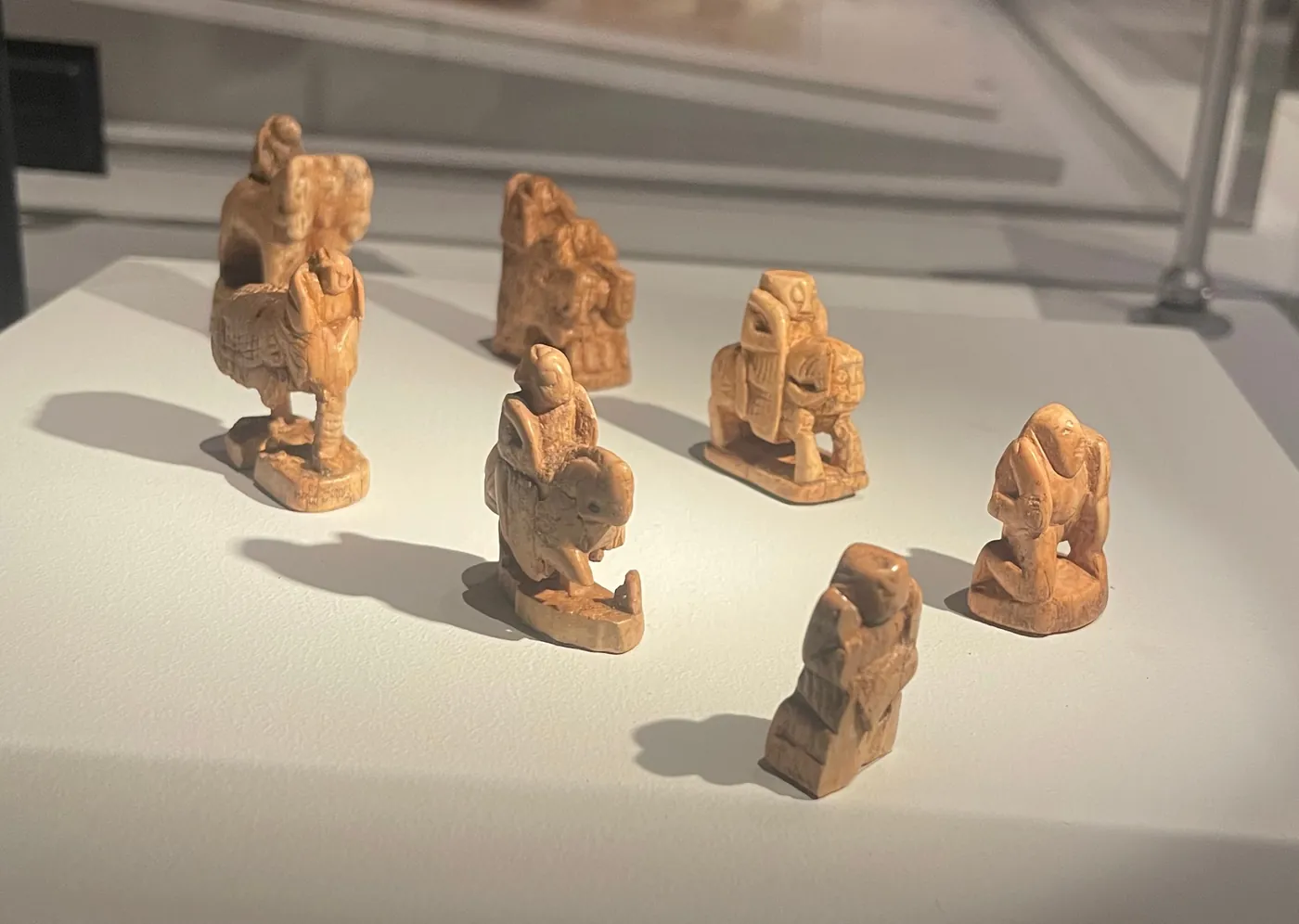
The game travelled with merchants, diplomats and soldiers along the caravan and sea routes that historians group under the name of the Silk Road. Some of the oldest surviving chess pieces, a set of small ivory figures dug up at Afrasiab in Samarkand, still show recognisable elephants and horsemen, a sign of how closely the early game kept its Indian military look.
Into medieval Europe
Muslim traders and rulers carried shatranj to North Africa, al-Andalus (Islamic Spain) and Sicily, and by the 10th century it had crossed into Christian Europe. One of the earliest Latin references, a poem known as the Einsiedeln Verses, dates from the late 10th century. By 1283 King Alfonso X of Castile had commissioned the Libro de los juegos (Book of Games), a lavishly illustrated manual of chess problems, dice and board games.
European players reshaped the pieces to fit their own world. The vizier, firz in Arabic, became a queen. The elephant, al-fil, was unfamiliar in northern Europe, and its two carved tusks looked to many like a bishop's mitre, so it became a bishop. Spanish still calls the piece alfil, Italian alfiere, and Russian simply "elephant". The chariot, rukh, became the rook, a word that survives even though the piece now looks like a castle tower.
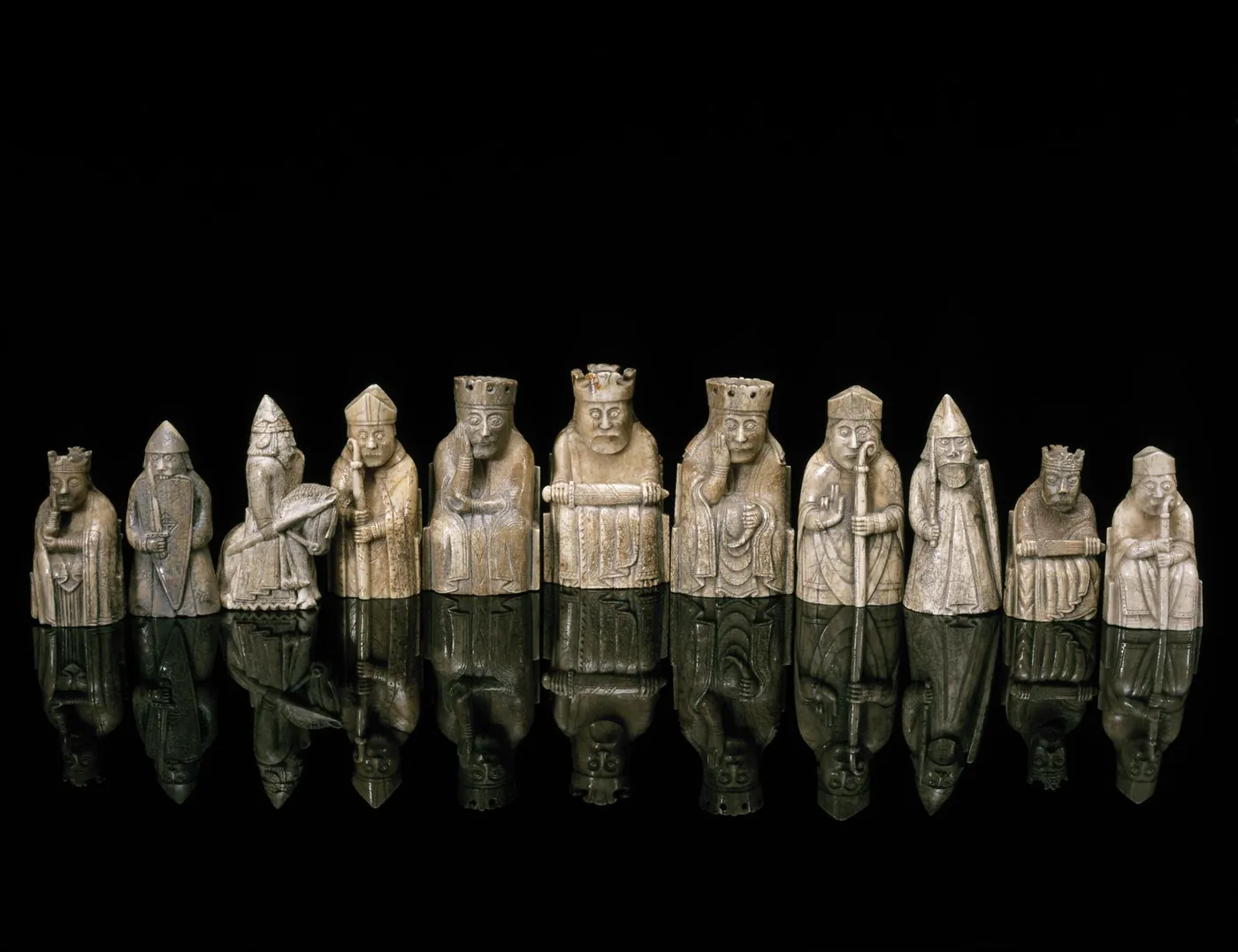
The famous Lewis chessmen, carved in the 12th century and found in Scotland in 1831, show how far this change had gone. Their bishops wear mitres and carry croziers, and their queens sit beside their kings. Yet the rules were still essentially those of shatranj, and a game could take hours to reach a decision because the queen and bishop were so weak.
The mad queen of 1475
The decisive change came in Spain at the end of the 15th century. An allegorical Catalan poem, Scachs d'amor, written in Valencia in 1475, is the first document to show the queen moving any distance in any direction, and the bishop sweeping along whole diagonals. Italians called the new style alla rabiosa, "with the madwoman". Games became faster and sharper, and pawn promotion suddenly mattered.
In 1497 the Spanish cleric Luis Ramírez de Lucena published the oldest surviving printed chess book in Salamanca, built on the new rules. Castling and the pawn's two-square first move settled in over the following centuries, and the stalemate rule was only finalised in the early 19th century. Like the oddities explained in our piece on why tennis is scored 15, 30, 40, many of chess's quirks are fossils of rules that changed slowly over hundreds of years.
Separating history from legend
Chess has attracted more origin myths than almost any game. One popular tale says a sage invented it and asked his king to pay him in grains of wheat, doubling the amount on each of the 64 squares. Another claims the game was devised to console a grieving queen. These are memorable stories about the game, not evidence of where it came from. The same caution applies to claims of a 5,000-year-old chess. What can be documented is a game of four army divisions in early medieval northern India, a Persian adaptation with check and mate, an Arabic golden age of analysis and a European reform that produced the modern queen.
India, the home of chess, is a chess power again
The game's birthplace has become one of its strongest nations. Viswanathan Anand became India's first grandmaster in 1988, won the FIDE world title in 2000 and was undisputed world champion from 2007 to 2013, finally losing the crown to Magnus Carlsen in a match in his home city of Chennai.
The generation he inspired has gone further. In December 2024, Gukesh Dommaraju, also from Chennai, beat China's Ding Liren in Singapore, winning the 14th and final classical game to become the 18th undisputed world champion and, at 18, the youngest ever. He defends the title against Uzbekistan's Javokhir Sindarov in Geneva, with the first game scheduled for 24 November 2026, the youngest world championship match in history. India also won both the open and women's gold medals at the 2024 Chess Olympiad in Budapest, and in 2025 Divya Deshmukh won the Women's World Cup.
Behind those headlines is depth. India had no grandmaster at all before Anand; by 2026 it had close to 100, with the 99th title arriving in July 2026. Chess academies, school leagues and online platforms have turned the game into a mass activity in cities and small towns alike. Roughly fifteen centuries after courtiers first lined up elephants and chariots on the ashtapada, the four-limbed army has come home.