Was the Silk Road Actually a Road?
The name is barely 150 years old, and the reality was a shifting web of caravan trails and sea lanes that carried paper, religions, technologies and plague between China, India, Persia and Europe.
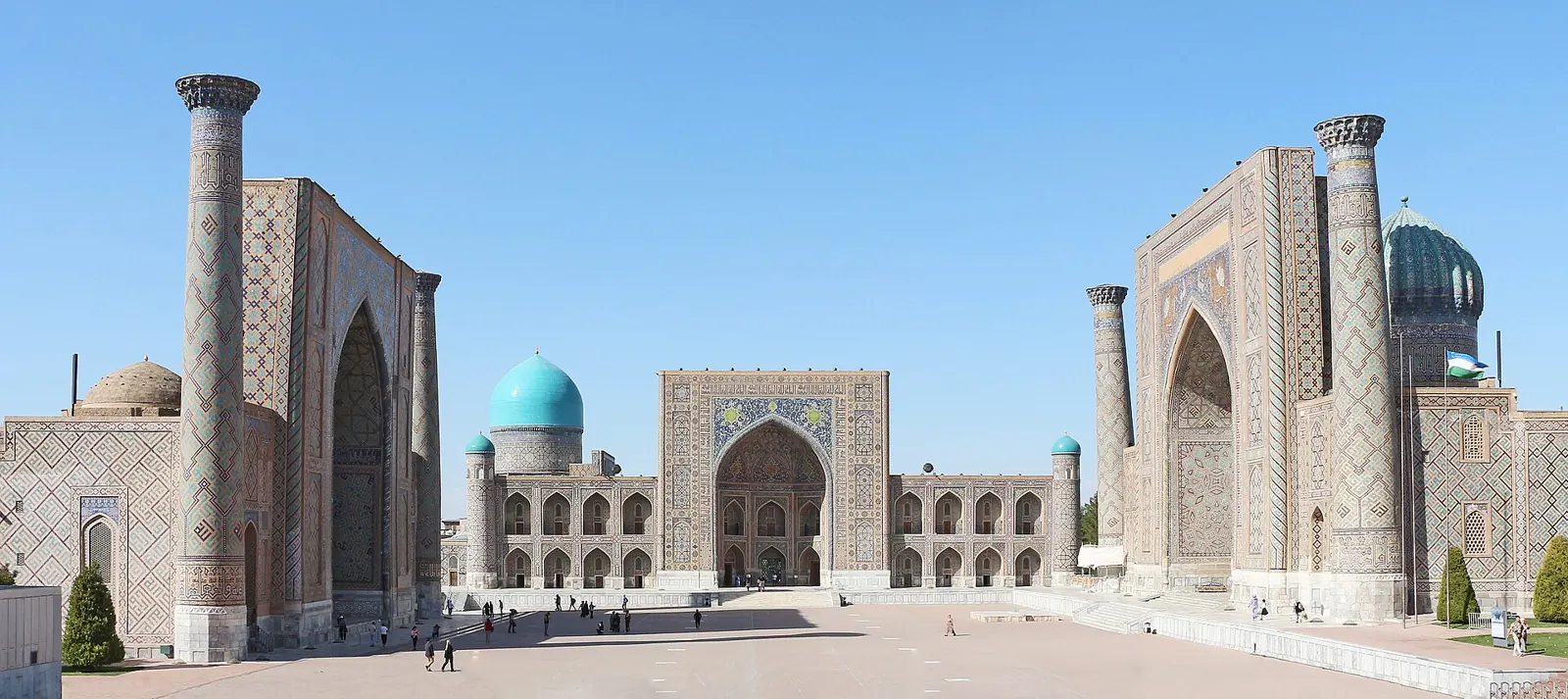
No. The Silk Road was a shifting web of caravan tracks, sea lanes and oasis towns linking China, Central Asia, India, Persia and the Mediterranean, and the name itself was only popularised in 1877 by the German geographer Ferdinand von Richthofen. Silk was one cargo among many; paper, spices, horses, religions, technologies and diseases travelled the same routes.
Few phrases conjure romance like "the Silk Road": camel caravans crossing deserts, bustling oasis markets, merchants carrying bolts of shimmering fabric from China to Rome. The image is not wrong, exactly. But almost every word in the name is misleading, and the real story is far bigger and more interesting.
A name invented in the 19th century
No ancient merchant ever spoke of the Silk Road. The term was popularised in 1877 by the German geographer Ferdinand von Richthofen, who used Seidenstraße, "Silk Road," in his work on China. The label caught on in the 20th century and became a powerful brand, later used by UNESCO, travel companies and governments alike.
Nor was it a single road. It was a sprawling, ever-changing network of routes linking China, Central Asia, India, Persia, the Middle East, East Africa and the Mediterranean. Routes shifted with wars, climate, the rise and fall of empires and the fortunes of oasis cities. Very few individuals travelled the whole length. Goods moved in relays, passing through many hands and markets, each adding a markup.
When it began
Trade across Eurasia is far older than any name. But historians often point to the Han dynasty in the 2nd century BCE as a turning point. Around 138 BCE, the emperor Wu sent an envoy, Zhang Qian, west to seek allies against the nomadic Xiongnu. Zhang Qian was captured and held for about a decade, escaped, and eventually returned with detailed reports of kingdoms in Central Asia, including the famed "heavenly horses" of the Ferghana Valley.
China then extended its control along the Hexi Corridor and into the Tarim Basin, creating safer passage for caravans. Before long, Chinese silk was reaching Rome, where it became a luxury so prized that some Roman writers complained about the drain of gold to the East.
Far more than silk
Silk was the glamour item, but the network carried a vast range of goods in many directions:
| Goods | Typical direction | Notes |
|---|---|---|
| Silk, porcelain, tea, paper | From China westward | Paper-making reached the Islamic world by the 8th century |
| Horses, jade | From Central Asia eastward | Ferghana horses were coveted by Chinese emperors |
| Spices, cotton textiles, gemstones | From India and Southeast Asia | Pepper was among the most valuable commodities |
| Glassware, silver, wool, wine | From the Mediterranean and Persia eastward | Roman glass has been found in Chinese tombs |
| Grapes, alfalfa | Westward to China | Introduced to China after Zhang Qian's era |
The real cargo: ideas
The most important things that crossed Eurasia did not fit in saddlebags.
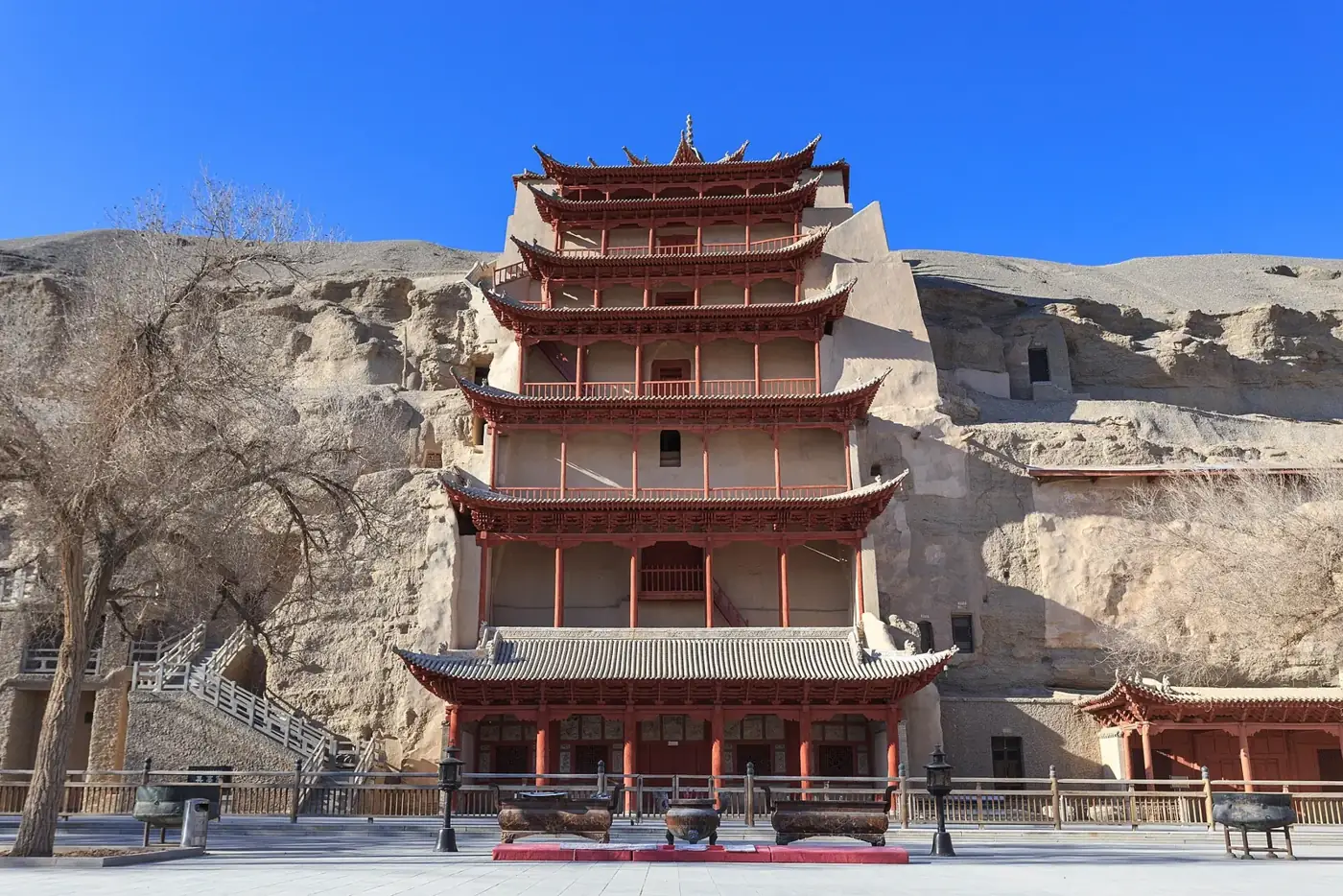
Religion travelled with merchants. Buddhism spread from India into Central Asia and China along these routes, leaving extraordinary art such as the cave temples of Dunhuang and the massive carved Buddhas of Bamiyan in Afghanistan, destroyed in 2001. Later, Islam, Nestorian Christianity, Manichaeism and Zoroastrianism all moved along the same corridors.
Technology flowed too. Paper-making, traditionally linked to the Battle of Talas in 751 CE when Chinese prisoners are said to have passed the craft to the Abbasid world, spread to Samarkand and Baghdad and eventually to Europe. Gunpowder, the compass and printing techniques all moved westward over the centuries, while glass-making know-how and new crops moved east.
Languages and art blended. Greek artistic influence, carried east after Alexander the Great, merged with Buddhist themes in the Gandhara region of modern Pakistan and Afghanistan, producing some of the earliest human depictions of the Buddha.
Disease travelled as well
Connection had a dark side. The Black Death of the 14th century is widely thought to have spread along the trade routes and through the Black Sea ports, reaching Europe in 1347. It killed an estimated one-third to one-half of Europe's population. Trade networks that carried prosperity could carry catastrophe just as efficiently.
The Mongol peak
The network reached a high point under the Mongol Empire in the 13th and 14th centuries. Having conquered a vast swathe of Eurasia, the Mongols imposed a relative security often called the Pax Mongolica. They maintained a relay system of postal stations, the yam, and issued passes that protected travellers.
This was the era of Marco Polo, the Venetian merchant whose account of his travels to the court of Kublai Khan fired European imaginations, and of Ibn Battuta, the Moroccan scholar who travelled even farther across Africa, the Middle East, India and China.
The sea took over
The overland routes were never the only path. Maritime routes, sometimes called the Maritime Silk Road, linked Chinese ports like Quanzhou with Southeast Asia, India, Arabia and East Africa, riding the predictable monsoon winds. Ships could carry far heavier and bulkier cargo, such as porcelain, than any camel.
As the Mongol Empire fragmented and European ships reached Asia directly by sea after Vasco da Gama rounded Africa to India in 1498, the overland caravan trade lost much of its importance. Oasis cities that once thrived slowly declined.
The legacy
The Silk Road's influence is still visible: in the blue-tiled architecture of Samarkand and Bukhara, in the Buddhist art of East Asia, in words that travelled between languages, and in foods that crossed continents. In 2014, UNESCO listed a 5,000-kilometre section of the routes through China, Kazakhstan and Kyrgyzstan, the Chang'an-Tianshan corridor, as a World Heritage Site.
The deeper lesson is that globalisation is not new. For well over a thousand years, Eurasia was knitted together by trade, faith and curiosity. The Silk Road was never a single road, and silk was only the beginning of what it carried.
Textiles kept travelling long after the caravans: denim and jeans owe their names to a French city and an Italian port. Food crossed the steppe too, which is one reason nearly every cuisine has a dumpling.