Where Did the Sari Come From?
The sari is not a single invention. It evolved from ancient Indian draped garments into the unstitched length of cloth women still wear across South Asia, in styles from Nivi to Nauvari and Madisar.
 By Kirti Kaliraman· 7 min read
The sari did not spring from a single inventor or date. It grew out of the Indian subcontinent's long tradition of unstitched draped cloth, from ancient three-piece ensembles described in Sanskrit and Pali texts to the single length of woven fabric that women across South Asia still wrap, tuck and throw over the shoulder today.
That evolution is why asking where the sari "came from" is really asking how a way of dressing, shaped by climate, craft, trade and social change, settled into the garment most of the world now recognises as Indian formal wear.
What is a sari, precisely?
A sari (also spelled saree) is an unstitched rectangular length of cloth, typically about 4.5 to 9 yards (roughly 4 to 8 metres) long and 24 to 47 inches wide, draped around the body as a dress. One end is secured at the waist; the other, the pallu or aanchal, rests over a shoulder. It is almost always worn with a fitted blouse (the choli) and, in many modern styles, a petticoat.
That simplicity is deceptive. Textile scholar R̥ta Kapur Chishti has documented more than a hundred regional ways of wearing a sari across India. The French researcher Chantal Boulanger grouped drapes into families, from the Deccan Nivi style that dominates cities today to the nine-yard Madisar of Tamil Brahmin women, the pleats-through-the-legs Nauvari of Maharashtra, the Bengali water-fall pallu and Kerala's two-piece mundum neryathum. Same cloth, different grammars of the body.
The ancient three-piece wardrobe
Long before the modern one-piece sari, women in the subcontinent wore a set of draped pieces. Sanskrit literature and Buddhist Pali texts of roughly the sixth century BCE describe an ensemble of:
- antarīya: a lower wrap, related to the dhoti, often passed between the legs in a "fishtail" style and held with a girdle
- uttarīya: a shawl or veil for the shoulder or head
- stanapaṭṭa: a breast band
The Hindi word sāṛī and related forms trace back to Sanskrit śāṭikā or śāṭī, a strip of cloth used as women's attire. So the idea of a draped women's garment is ancient, even if the exact modern silhouette is not.
Archaeology cannot show us a finished sari from the Indus or early historic periods, because cloth rarely survives. What it does show is that cotton was cultivated and woven on the subcontinent from a very early date, and that spindle whorls, needles and textile impressions turn up at Harappan and later sites. The dyes that still colour Indian cloth (indigo, lac, madder, turmeric) already appear in that early palette. Silk threads from Indus contexts have pushed the story of Indian silk weaving further back as well. The cloth culture that made draped dress possible was already here.
What sculpture and painting actually show
The earliest clear visual evidence for sari-like drapes comes from stone and terracotta, not from surviving garments. Reliefs from the Bharhut stupa (late second to early first century BCE) show women in clinging lower wraps and upper cloths. Similar draped figures appear at Sanchi and in early terracotta from Bengal. These are not photographs of today's Nivi sari. They are evidence that women wore carefully pleated, unstitched cloth as everyday and ceremonial dress.
By the fifth century CE, the wall paintings at Ajanta display a richer vocabulary of wraps, shawls and bodices. Gupta-period sculpture shows women in antariya and choli-like covers. Medieval manuscript painting, including Jain Kalpa Sūtra leaves from the fourteenth century, continues the three-piece logic: lower wrap, upper cloth, often a distinct breast covering.
Literary sources fill the gaps. Banabhatta's seventh-century Kadambari and Tamil works such as the Cilappatikaram describe women in fine draped cloth. Kalidasa mentions tight breast bands. The picture that emerges is of continuity with variation: draped dress as the default for centuries, with regional cuts and morals shifting what was covered and how.
How the modern Nivi style took shape
The sari you see on city streets, on Air India cabin crew and on most formal invitations is usually the Nivi drape: one end tucked into a petticoat, front pleats gathered below the navel, the pallu thrown over the left shoulder. That composition looks timeless. It is not.
Women of the Deccan had long worn related drapes. What changed in the nineteenth century was respectability under colonial eyes and the mixing of regional styles. Jnanadanandini Devi, of the Tagore family of Jorasanko, is widely credited with popularising a structured Bengali adaptation after she encountered Parsi and Gujarati ways of dressing in Bombay around 1870. Her Brahmika or Thakurbari style kept a Bengali left-shoulder pallu while adding the blouse and petticoat that Victorian propriety demanded. Brahmo women took it up, and a version of this urban drape spread.
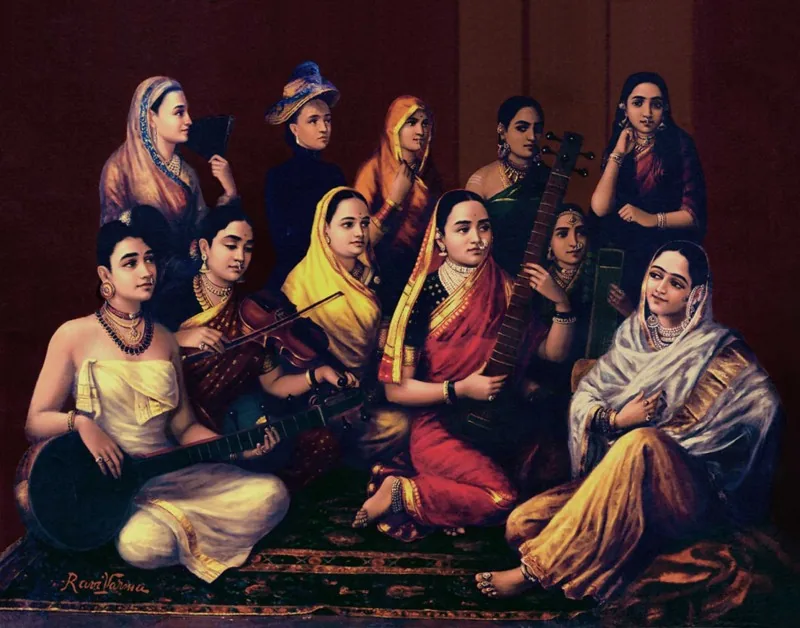
Painters helped fix the image. Raja Ravi Varma depicted women in flowing Nivi-like saris so persuasively that the style came to feel like the national default. Royal and elite women in the early twentieth century pushed it further: Maharani Indira Devi of Cooch Behar made chiffon saris fashionable among princely circles. Blouses borrowed Victorian sleeves; petticoats became standard. The unstitched cloth stayed. The supporting architecture of undergarments and cut cloth changed.
So the modern sari is both ancient and recent: ancient as draped cloth, recent as a standardised public silhouette.
Weaving centres: where the cloth itself comes from
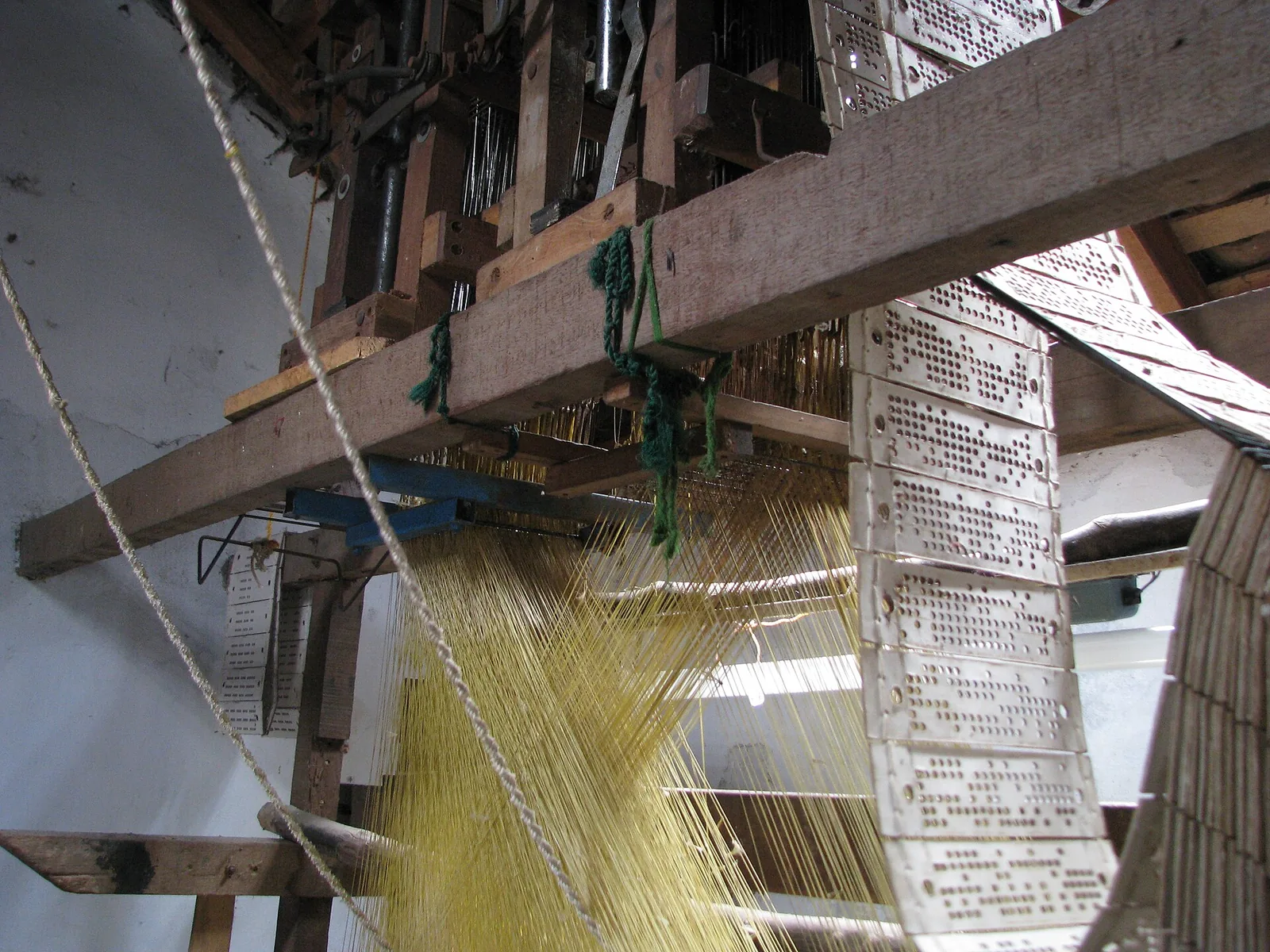
If the drape is shared, the fabric is fiercely local. India and Bangladesh still grow entire geographies of sari types:
- Banarasi brocades from Varanasi, silk with zari, Mughal floral and jali work, protected as a Geographical Indication since 2009
- Kanchipuram (Kanjivaram) silks of Tamil Nadu, known for heavy gold borders and contrast body colours
- Paithani of Maharashtra, Patola double ikat of Gujarat, Sambalpuri and Bomkai of Odisha
- Cotton and silk Jamdani of Bengal and Bangladesh (UNESCO Intangible Cultural Heritage), Chanderi and Maheshwari of Madhya Pradesh, Tant of Bengal for daily wear
- Tie-dye and print traditions such as Bandhani, Leheriya, Bagru and Ajrakh that turn monsoon cotton into patterned saris
Many of those borders and pallus still carry the curling mango motif the West calls paisley, a reminder that Indian textile design has always travelled as freely as Indian cloth once did along older trade routes.
Cloth, empire and handloom today
Indian cottons once clothed much of the trading world. European demand for calico and muslin was so strong that English law tried to shut them out. Under colonial rule the flow reversed: Lancashire mills flooded the Indian market, and village spinning and weaving suffered. That history is why Gandhi's khadi movement treated hand-spun cloth as political, and why foreign-cloth bonfires in 1921 burned fine saris as well as shirts.
The handloom sector that still produces many of India's finest saris remains large. India's Fourth All India Handloom Census (2019–20), cited by the Ministry of Textiles around National Handloom Day 2026, recorded about 35.22 lakh handloom weavers and allied workers, of whom more than 72% are women, working across roughly 28.20 lakh looms, most of them rural. Handloom exports were about ₹1,331 crore in 2025–26. Authenticity tools such as the Handloom Mark, the India Handloom Brand and a growing list of GI-tagged weaves (over a hundred handloom products by official counts) try to keep powerloom copies from erasing the hand.
Machine-made polyester and printed georgette saris dominate everyday wardrobes for cost and convenience. Handwoven silk and cotton remain the language of weddings, festivals and formal politics. Both facts can be true at once.
Why the sari endured
Climate favours it: a single layer of cotton or light silk breathes in heat that tailored wool cannot. Ritual favours it: red wedding saris, white mourning cloth, temple silks and festival cottons still mark stages of life. Craft favours it: an unstitched length is the natural canvas for brocade, ikat, embroidery and border storytelling. And identity favours it. Diaspora women wear saris at ceremonies from London to New York; politicians and diplomats reach for them as national dress; designers keep reinventing the silhouette for runways without abandoning the nine yards.
The sari did not arrive as a finished idea from elsewhere. It was grown, woven, draped and redesigned on the subcontinent, absorbing Persian motifs, Mughal courts, colonial blouses and modern fashion weeks without losing the core fact that made it possible: a length of cloth, and the skill to wear it.