What Is Khadi and Why Does It Matter?
Khadi is cloth spun and woven entirely by hand. Gandhi turned it into the uniform of India's freedom movement, and a century later it is a ₹7,000 crore industry and one of fashion's most honest fabrics.
 By Kirti Kaliraman· 7 min read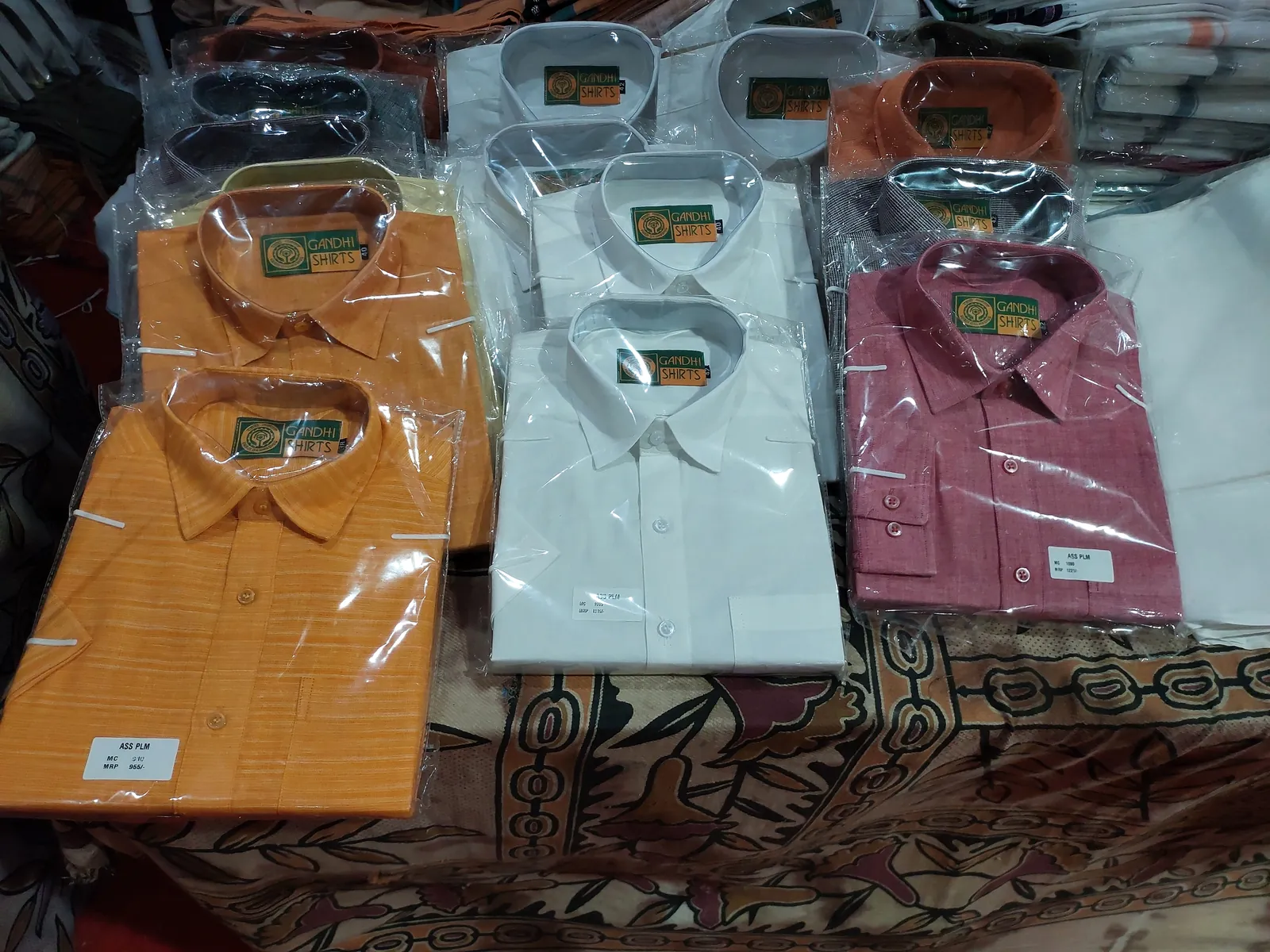
Khadi is cloth that is both hand-spun and hand-woven, usually from cotton but also from silk or wool, and Indian law reserves the name for fabric made that way in India. It matters because Mahatma Gandhi turned it into the uniform of the freedom struggle, a daily act of refusing British mill cloth, and because it survives today as a rural livelihood for lakhs of artisans and one of the most genuinely slow-made fabrics in fashion.
That double life, part political symbol and part everyday textile, is what makes khadi unlike any other cloth in the world. A khadi kurta is a piece of clothing, a piece of history and, if you know how to read it, a small statement about how things ought to be made.
What exactly counts as khadi?
The legal definition is strict. The Khadi and Village Industries Commission Act of 1956 defines khadi as cloth woven on handlooms in India from cotton, silk or woollen yarn handspun in India, or from a mix of those yarns. Both stages have to be done by hand.
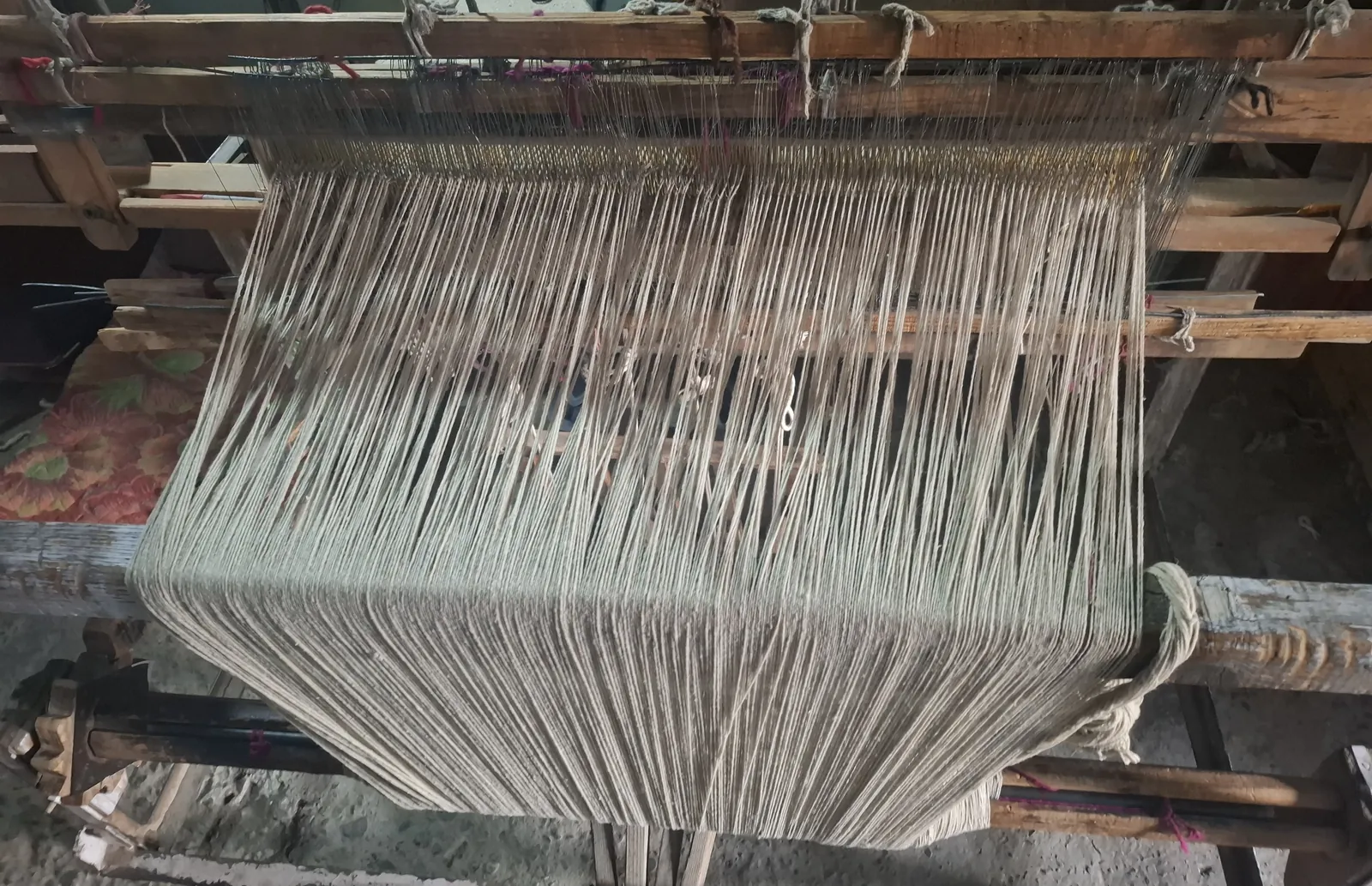
That one rule separates khadi from its close cousin, handloom. A handloom sari can be woven by hand from yarn spun in a mill. Khadi cannot. The thread itself must come off a spinning wheel, a charkha, turned by a person. Because hand-spun yarn is slightly irregular, khadi has a soft, uneven texture with tiny slubs and variations that machine-made cloth simply cannot fake convincingly.
The words are older than the movement. Khadi and khaddar were names for coarse homespun cotton in north and west India, and khaddar is still a familiar name for a winter fabric across the border in Pakistan, though most of what is sold under that name there today is mill-made.
Why did India stop spinning in the first place?
For centuries India was the world's great cotton workshop. Indian cottons, printed, painted and woven, travelled across the Indian Ocean and later to Europe in vast quantities. The English word calico comes from Calicut (Kozhikode), the same Malabar port that drew European fleets in search of black pepper. Indian cloth was so popular in England that Parliament passed the Calico Acts of 1700 and 1721 to restrict its import and use, protecting home-grown wool and silk weavers.
The Industrial Revolution reversed the flow. Machine spinning and power looms in Lancashire produced cheap cloth at enormous scale, and under colonial rule India became a major market for it, while Indian hand-spinners and weavers lost their livelihoods. By the late 19th century, a country that had clothed much of the world was importing its own clothes.
That reversal is the key to khadi. Gandhi saw the empty spinning wheel as a symbol of what colonial economics had done to village India.
How Gandhi turned a spinning wheel into a movement
The Swadeshi movement, launched on 7 August 1905 in protest against the Partition of Bengal, had already called on Indians to boycott British goods and buy Indian. Gandhi gave that idea a physical, daily form.
He praised the spinning wheel in Hind Swaraj in 1908, though he admits in his autobiography that he had not yet actually seen one. After he founded his Satyagraha Ashram in Ahmedabad in 1915, its members first learned to weave on handlooms using mill yarn. The missing piece was spinning. In 1917 Gandhi met Gangabehn Majmundar, a widow and social worker, and asked for her help. After searching across Gujarat, she found spinning wheels lying unused in homes in Vijapur, in the princely state of Baroda, and families willing to spin again. The first khadi woven at the ashram cost 17 annas a yard. It was coarse and expensive, and Gandhi recommended it to his friends anyway.
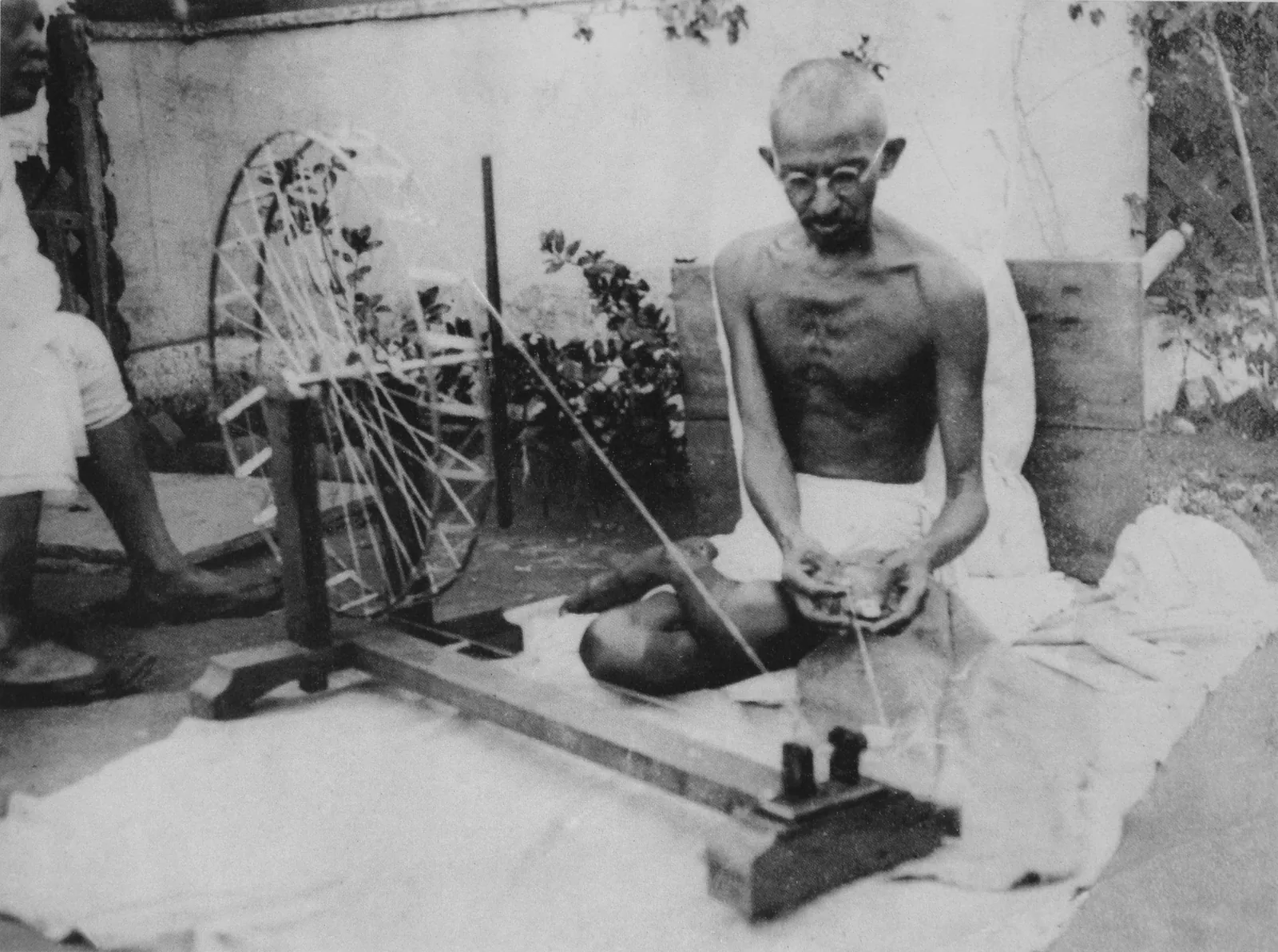
The cause went national during the Non-Cooperation Movement. On 31 July 1921, Gandhi lit a bonfire of foreign cloth in the compound of the Elphinstone Mill in Bombay, before a crowd of around 12,000 people. Fine saris, shirts and jackets went into the flames, and similar bonfires followed across India. Gandhi called the burning a sacrament.
Weeks later he made the most famous wardrobe decision in Indian history. Touring the Madras Presidency, he kept hearing that people could not afford enough khadi to replace the clothes they had discarded. On 22 September 1921, in Madurai, he announced that he would give up his cap and vest and wear only a loincloth, with a shawl when needed. He meant it as a temporary example. He wore that simple dress for the rest of his life.
Khadi soon became organised. In 1925 the All India Spinners' Association was formed to buy yarn, pay spinners and sell cloth, and the Congress for a time allowed members to pay their dues in self-spun yarn. Wearing khadi became the visible mark of a nationalist, and the charkha sat at the centre of the flag the Congress adopted in 1931.
The visit to Lancashire
The boycott had real consequences in Britain. Indian demand for Lancashire cloth fell, and mills there were already suffering in the Depression. In September 1931, while in England for the Round Table Conference, Gandhi visited Darwen in Lancashire at the invitation of the owners of Greenfield Mill. He met unemployed mill workers, explained that Indian poverty ran far deeper than theirs, and did not promise to end the boycott. He was still greeted warmly, and photographs of women mill workers crowding around him remain some of the most striking images of the era.
Khadi after independence
When India became independent, khadi moved from protest to policy. The Khadi and Village Industries Commission (KVIC), set up under the 1956 Act, supports khadi institutions, sets standards and runs the Khadi India stores. Since 2013, the Khadi Mark has been used to certify that a product is genuine khadi, a response to the many shops selling mill cloth under the name.
The numbers today are substantial. According to provisional KVIC figures, khadi sales reached about ₹7,146 crore in 2024–25, up from roughly ₹1,081 crore in 2013–14, and the Ministry of MSME's dashboard shows provisional sales of about ₹7,869 crore in 2025–26. Close to five lakh artisans work in khadi, and KVIC says around 80% of them are women.
Khadi is also tied to the national flag. The Flag Code of India once required the tricolour to be made of hand-spun, hand-woven khadi bunting, and the Karnataka Khadi Gramodyoga Samyukta Sangha at Bengeri in Hubballi became the country's only BIS-certified unit making khadi flags. An amendment dated 30 December 2021 allowed machine-made and polyester flags as well, and sales at Bengeri have fallen since, a reminder of how fragile hand-made industries can be.
Why does khadi matter in fashion now?
For decades khadi carried a dated image: the plain kurta of politicians and the discounted cloth of Gandhi Jayanti sales. That has changed, largely because the qualities that once made it an act of protest now read as luxury.
- It breathes. Hand-spun cotton is loosely twisted and air moves through the weave, so khadi feels cool in heat and humidity and softens with every wash.
- It is low-energy at the core. Spinning and weaving by hand need human skill rather than electric motors, which is why khadi sits naturally in conversations about slow fashion, the opposite end of the scale from the water-hungry industrial finishing behind mass-market denim.
- It is traceable. A khadi garment comes from a known chain of spinners and weavers, often in a specific village, which is exactly what conscious shoppers ask brands for.
- It is not only cotton. Silk khadi, woollen khadi from the hills and muslin-fine counts from Bengal show a range that surprises many people.
Designers have noticed. Ritu Kumar, one of the pioneers of Indian fashion, has long worked with khadi and handloom, and a newer generation of labels uses khadi for structured jackets, relaxed shirts and occasion wear rather than only traditional cuts. Fashion weeks in Mumbai and Delhi now regularly showcase handloom and hand-spun textiles, and khadi has found buyers abroad who know nothing of its history but love the hand.
How to buy real khadi
- Check for the Khadi Mark or a KVIC-certified label, and buy from Khadi India outlets or certified institutions when you can.
- Look closely at the weave. Genuine khadi shows slight irregularities in the yarn. Perfectly uniform cloth is likely mill-made.
- Mind the price. Hand spinning is slow. Very cheap "khadi" deserves suspicion.
- Wash it gently at first. Cotton khadi can shrink a little, and it improves with use.
The textile story of the subcontinent has always been global, from Kashmir's shawls and the paisley motif to the calicoes of Calicut. Khadi is the chapter where India took that story back into its own hands, quite literally. A century after the bonfires of 1921, it remains the only fabric in the world that is at once a garment, a craft and a declaration of independence.