Why Do Planes Fly at 35,000 Feet?
Airliners cruise at about 35,000 feet because the thin air there lets them fly faster on less fuel, above most of the weather, while still giving the wings and engines enough air to work. Here is how that height is chosen, and why monsoon storms over India can tower even higher.
 By Kirti Kaliraman· 7 min read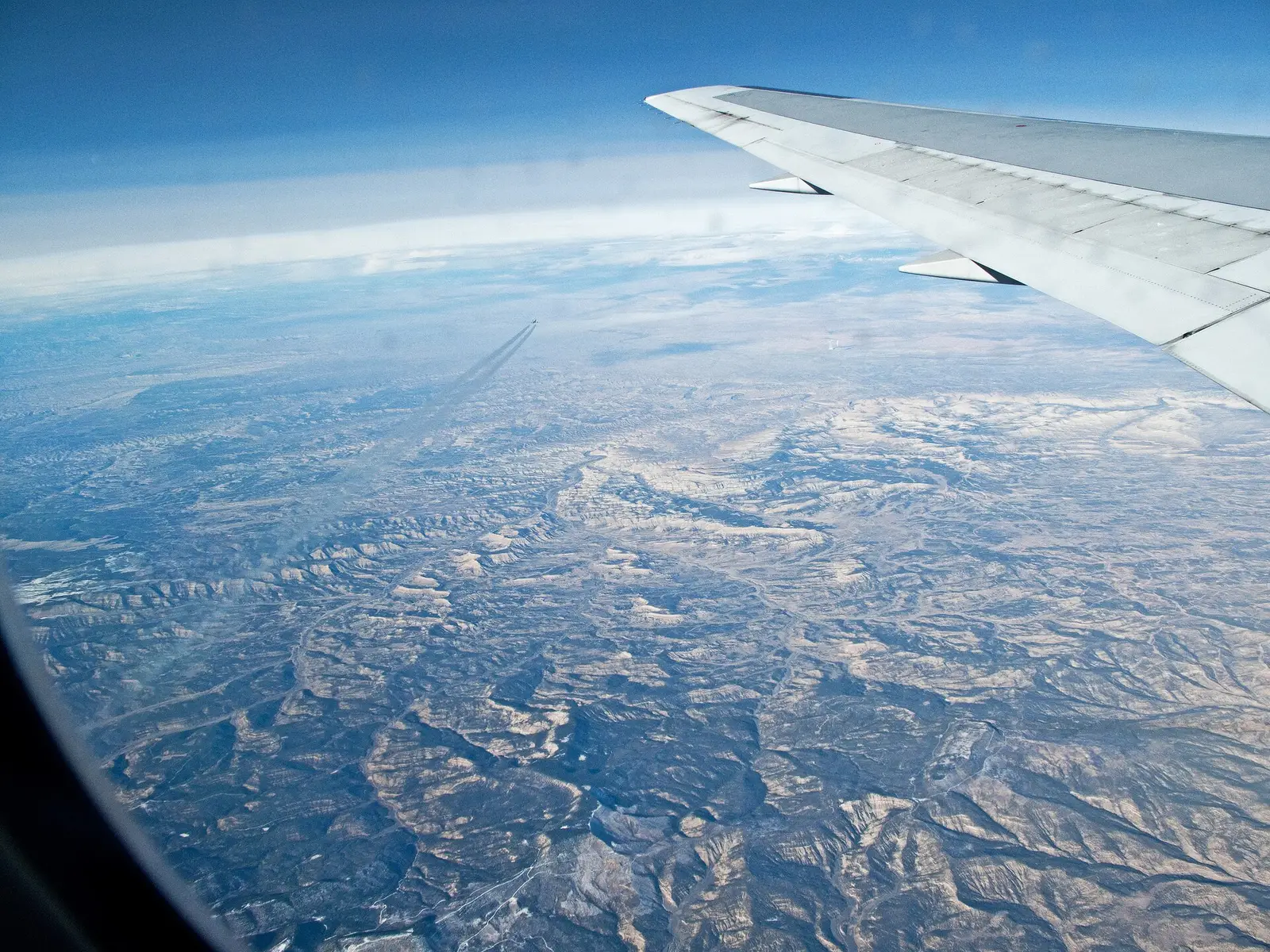
Planes fly at about 35,000 feet because the air up there is roughly a third as dense as at sea level, so a jet meets far less drag and covers more distance on every kilogram of fuel. That height also sits above most clouds, turbulence and traffic, yet still leaves enough air for the wings to generate lift and the engines to breathe.
Strictly speaking, 35,000 feet is not a magic number. Airliners cruise anywhere from about 31,000 to 41,000 feet, and the exact level on any flight depends on the aircraft's weight, the direction it is heading, the winds and what air traffic control can offer. But "thirty-five thousand feet" has become shorthand for the sweet spot where physics, engine design and airspace rules overlap.
What the air is like at 35,000 feet
At 35,000 feet (about 10.7 kilometres) the International Standard Atmosphere, the reference model that aviation uses for every altitude calculation, puts the temperature at about minus 54°C. Air pressure is only about 24% of the sea-level figure and air density about 31%. In other words, the plane is moving through air that is roughly one third as thick as the air it took off in.
That thin air is the whole point. Aerodynamic drag rises with air density, so a jet can travel much faster for the same push from its engines. A typical narrowbody such as the Airbus A320 cruises at around 78% of the speed of sound, which at that temperature works out to roughly 830 km/h. Try that close to the ground and the drag, fuel burn and stress on the airframe would be enormous.
The same thin air is also why the sky looks so deep blue from a window seat: there are fewer molecules overhead to scatter sunlight, the effect we explained in why the sky is blue.
Why not fly even higher?
If thinner air is better, why stop at 35,000 feet? Because wings and engines both need air to work.
- Lift. A wing produces lift by pushing air downwards. With less air to push, the plane must fly faster, or at a steeper angle, to stay up. Climb too high and the narrow gap between the slowest safe speed and the fastest safe speed closes, a zone pilots call the "coffin corner".
- Weight. A heavy aircraft at the start of a long flight cannot climb as high as the same aircraft hours later with half its fuel gone. That is why long-haul flights often "step climb", moving up a level or two as they burn fuel.
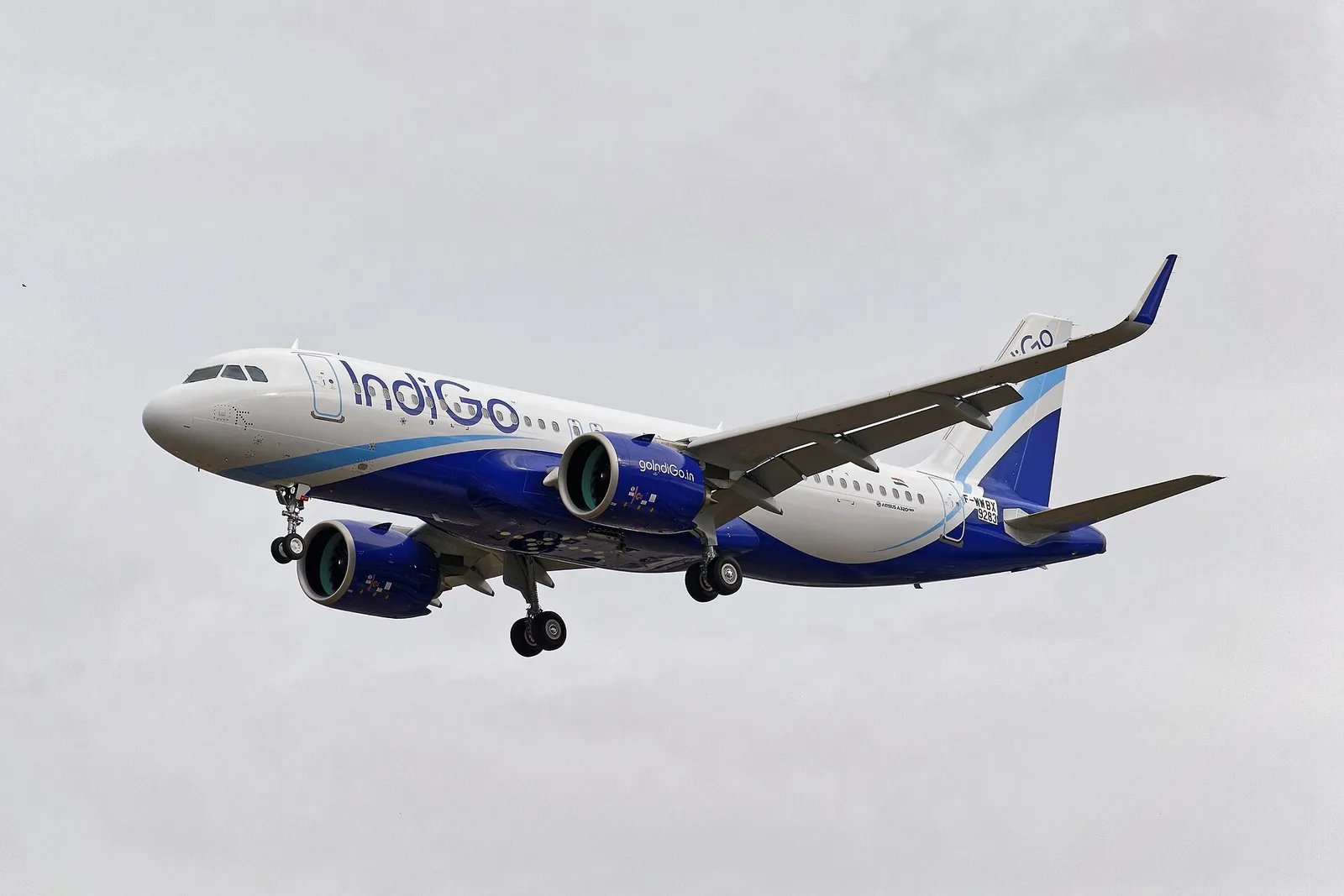
- Certification. Every type has a certified maximum operating altitude. According to an FAA table of aircraft ceilings, the A320neo family is limited to 39,800 feet and the Boeing 787-8 and 787-9 to 43,100 feet.
- The cabin. The higher a jet flies, the bigger the pressure difference its fuselage must hold. US certification rules in 14 CFR 25.841 require a normal cabin altitude of no more than 8,000 feet, and they bar designs that could expose passengers to a cabin altitude above 40,000 feet after any failure that is not extremely improbable.
That cabin rule matters because the outside air at cruise cannot keep anyone conscious for long. The FAA's advisory circular on high-altitude operations gives a time of useful consciousness of just 30 seconds to one minute at 35,000 feet, and only 15 to 30 seconds after a rapid decompression. This is why the oxygen masks drop and the crew is told to put on their own first.
Why not fly lower?
Lower altitudes are not only thirstier, they are busier and bumpier. Most weather, from rain clouds to the churning air near the ground, lives in the bottom layer of the atmosphere, the troposphere. Over mid-latitude countries its upper boundary, the tropopause, sits at about 11 kilometres, close to 36,000 feet. Cruising just under or around that boundary keeps a jet above the bulk of the cloud while staying in air dense enough to work with.
Jet engines also run more efficiently in cold air and at high speed, so the fuel saving from altitude compounds. Smaller aircraft are the exception. Turboprops such as the ATR 72-600, which Indian regional networks use heavily, have a maximum operating altitude of 25,000 feet, and on a short hop such as Delhi to Jaipur even a jet may barely reach cruise before it is time to descend.
How air traffic control assigns the height
High above the ground, altitude is expressed in flight levels. FL350 means 35,000 feet measured against a standard pressure setting of 1013.25 hectopascals, so that every aircraft in the sky uses the same reference regardless of local weather.
Direction then decides which levels a flight can use. Under ICAO's table of cruising levels, aircraft on a magnetic track between 000 and 179 degrees, broadly eastbound, fly odd levels such as FL330, FL350 and FL370, while westbound traffic takes even levels such as FL340 and FL360. India layers its own flight level allocation scheme on top for its busiest route networks, but the principle holds: a jet you see at exactly 35,000 feet is usually heading roughly east.
The gap between those levels shrank in India on 27 November 2003, when Reduced Vertical Separation Minima (RVSM) came into force in Indian and neighbouring airspace. Between FL290 and FL410, approved aircraft are now separated vertically by 1,000 feet instead of 2,000 feet, which turned seven usable levels into thirteen and made room for far more flights on the same routes. Reporting at the time, Rediff noted that officials were asked about the 1996 Charkhi Dadri mid-air collision near Delhi and said pilots and controllers had been trained for the change.
India's skies make the case for altitude
India now gives these rules a serious workout. According to DGCA figures reported by Business Standard, domestic airlines carried 16.69 crore passengers in 2025, up 3.48% from 16.13 crore in 2024. Most of them flew in narrowbody jets cruising in that RVSM band, and the same three-letter codes on their boarding passes are the subject of our piece on why airport codes look so strange.
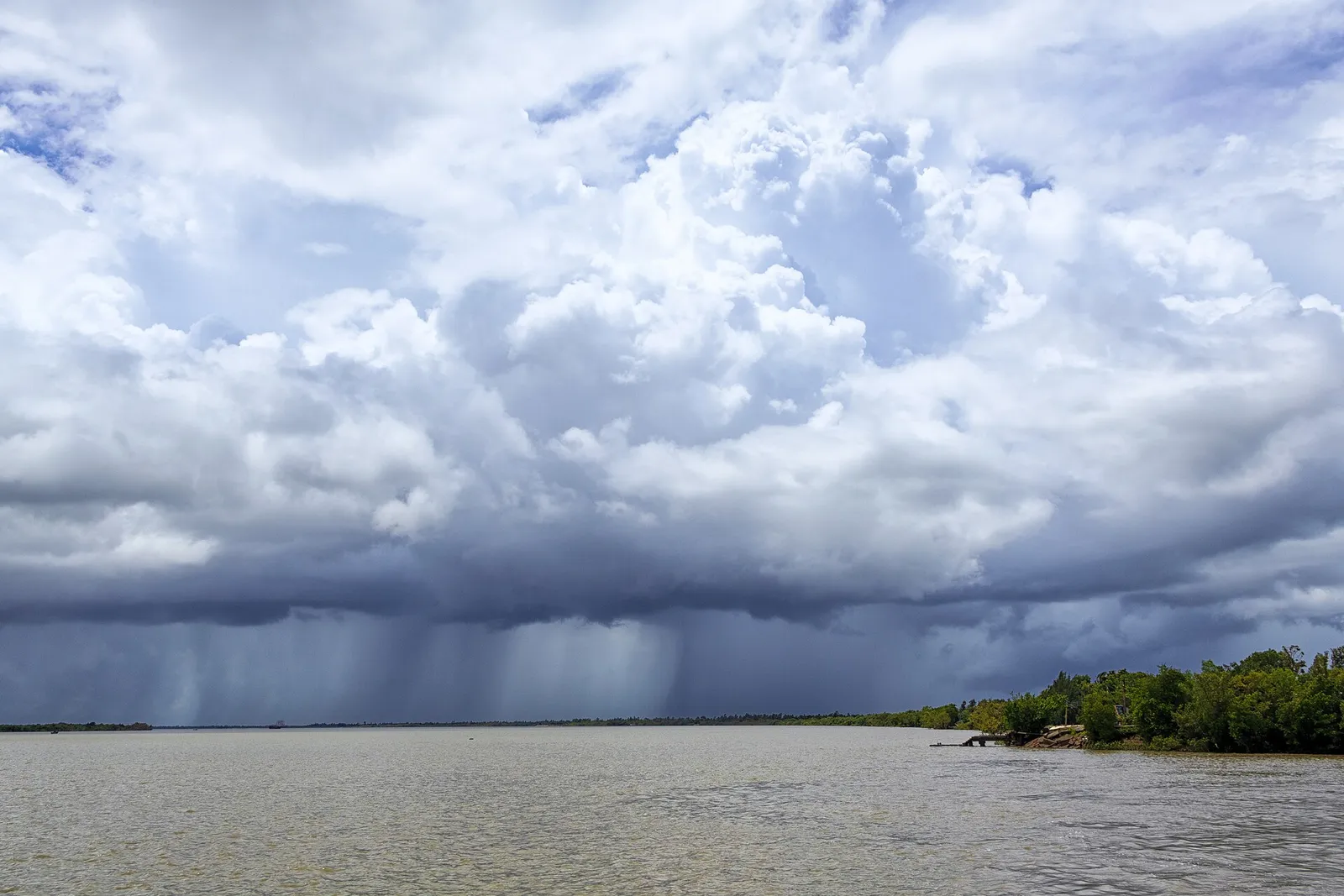
There is a tropical twist, too. Because the tropics are warmer, the tropopause over India sits far higher than over Europe, typically around 16 to 17 kilometres, with a study in the IMD journal Mausam recording a peak of 17.4 km in June and July. Monsoon thunderclouds can climb almost all the way. Another Mausam study of storms around Mumbai airport found cumulonimbus tops reaching or crossing 16 km in 36 cases between 1990 and 1999, with rare tops of up to 20 km in June and September.
That is well above 35,000 feet (10.7 km), which means that over India in the monsoon, an airliner cannot simply climb over the worst weather. Pilots instead use onboard weather radar to steer around the biggest cells, and controllers build in room for those deviations, especially over the Bay of Bengal during cyclones.
The Himalayas add one more constraint. Mount Everest rises to 8,849 metres, or about 29,032 feet, and the Tibetan Plateau averages more than 4,500 metres. If a jet loses cabin pressure, the standard response is an immediate descent to around 10,000 feet, where people can breathe without masks. Over that terrain there is nowhere that low to descend to, so airlines planning routes across or near the plateau must carry extra oxygen or map out escape routes towards lower ground.
The short answer, again
Airliners cruise near 35,000 feet because it is the best compromise available: thin enough for fast, efficient flight, thick enough for wings and engines to work, high enough to clear most weather and organised enough for controllers to stack hundreds of flights safely, 1,000 feet apart. The next time the captain announces your cruising altitude, you will know it was chosen by weight, wind, direction and the atmosphere itself. Just remember to keep your passport handy for the other end.