What Is Paisley and Where Did It Come From?
The curling teardrop the world calls paisley is the Persian and Indian boteh, perfected on Kashmir shawls and named after the Scottish town that copied them on industrial looms.
 By Kirti Kaliraman· 7 min read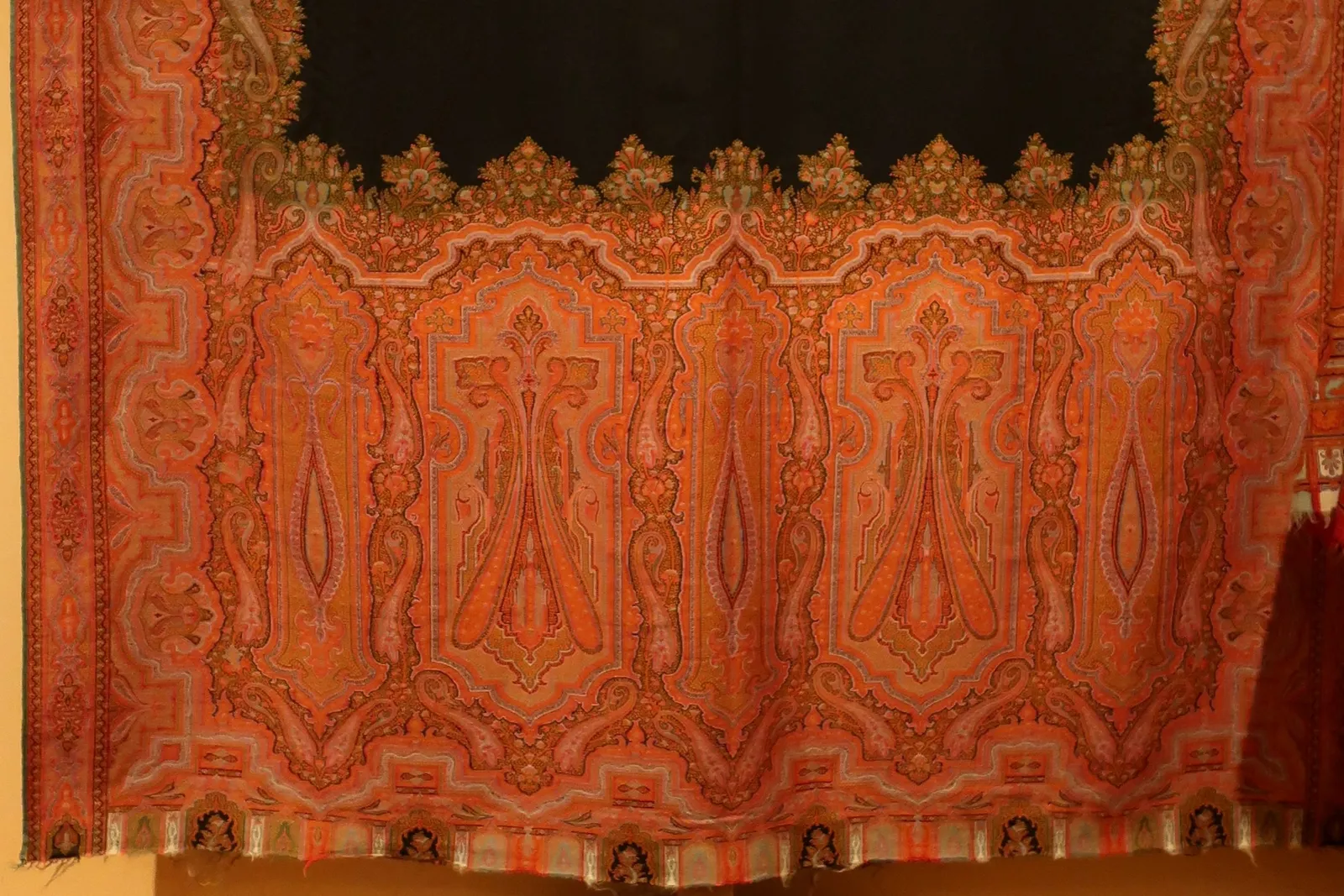
Paisley is the curved teardrop motif, rounded at one end and curling to a point at the other, that originated in Persia and India, where it is called the boteh or buta. It reached the world on luxurious Kashmir shawls, and it takes its English name from Paisley, a weaving town in Scotland that mass-produced copies of those shawls in the 19th century.
So the pattern on your grandfather's tie, a cowboy's bandana and a bride's mehendi all share one ancestor: a stylised flowering plant that Kashmiri weavers refined over two centuries.
What does the shape actually represent?
Nobody can point to a single origin, and that is part of the motif's appeal. The Persian word boteh means a shrub, a bush or a bud, and early versions look exactly like that: a small flowering plant with a bent tip. Scholars have linked the form to the cypress tree, a Zoroastrian symbol of life, to a flame, and to a palm shoot. Ancient Persian and Central Asian textiles show related shapes, and goods carrying them moved along the trade networks we describe in the Silk Road was never a road.
In India, the shape picked up its own homely names. In much of the north it is the ambi or kairi, a raw mango. In Tamil Nadu, the same curl on a Kanchipuram silk border is the mankolam, the mango design. Textile historians also use kalka for the bold, elongated version found on brocades. Ask most Indians what the motif is and they will say a mango, which is as good an answer as any.
How Kashmir turned a flower into a teardrop
The motif became a global phenomenon because of one product: the Kashmir shawl. Kashmiri weaving was already celebrated before the Mughals, but under Mughal patronage from the late 16th century the shawl became a mark of rank. Emperors presented shawls as robes of honour, and courtiers wore them draped over the shoulders or tied at the waist.
Early Mughal-era shawls carried a naturalistic buta: a single flowering plant with roots, leaves and blossoms, often repeated along the end borders. Over the 18th century the plant grew denser and more stylised. Its outline closed up, its tip bent over, and by the early 19th century it had become the tight, swelling cone packed with tiny flowers that the world now recognises as paisley. The change is one of the clearest examples of a design evolving inside a single craft tradition.
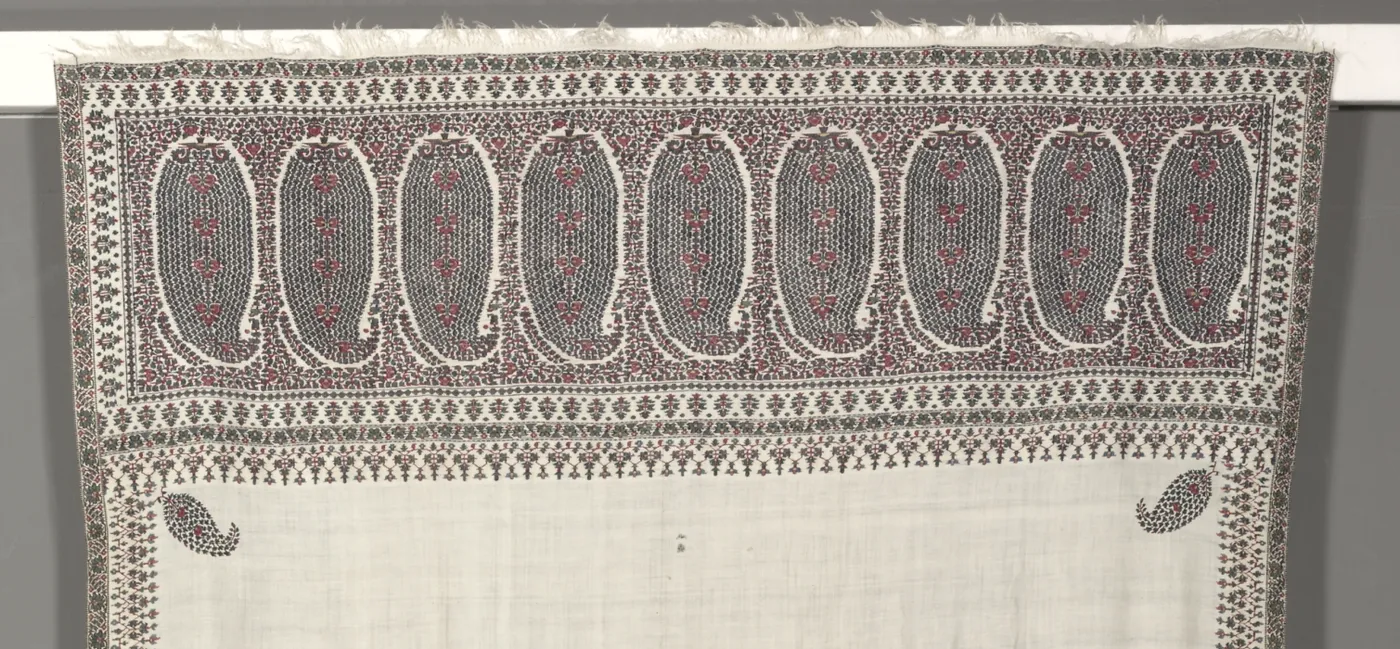
Two techniques produced these shawls. Kani shawls were woven using a twill tapestry method, with dozens of small wooden bobbins, each carrying one colour, worked across the warp by hand. A large, intricate kani piece could occupy a workshop for many months. From the early 19th century, amli shawls copied the same designs in fine needle embroidery on a plain woven base, which was faster and cheaper. Both styles are still made in the Kashmir Valley, and both "Kani Shawl" and "Kashmir Pashmina" are protected as Geographical Indications in India.
Why was the wool so precious?
The softness came from pashm, the fine winter undercoat of the Changthangi goat. These goats are raised by the nomadic Changpa herders on the high Changthang plateau of Ladakh and western Tibet, at altitudes above 4,000 metres where winter temperatures can drop below minus 30 °C. The goats grow a downy underlayer to survive, and herders comb it out by hand in spring when the animals begin to moult.
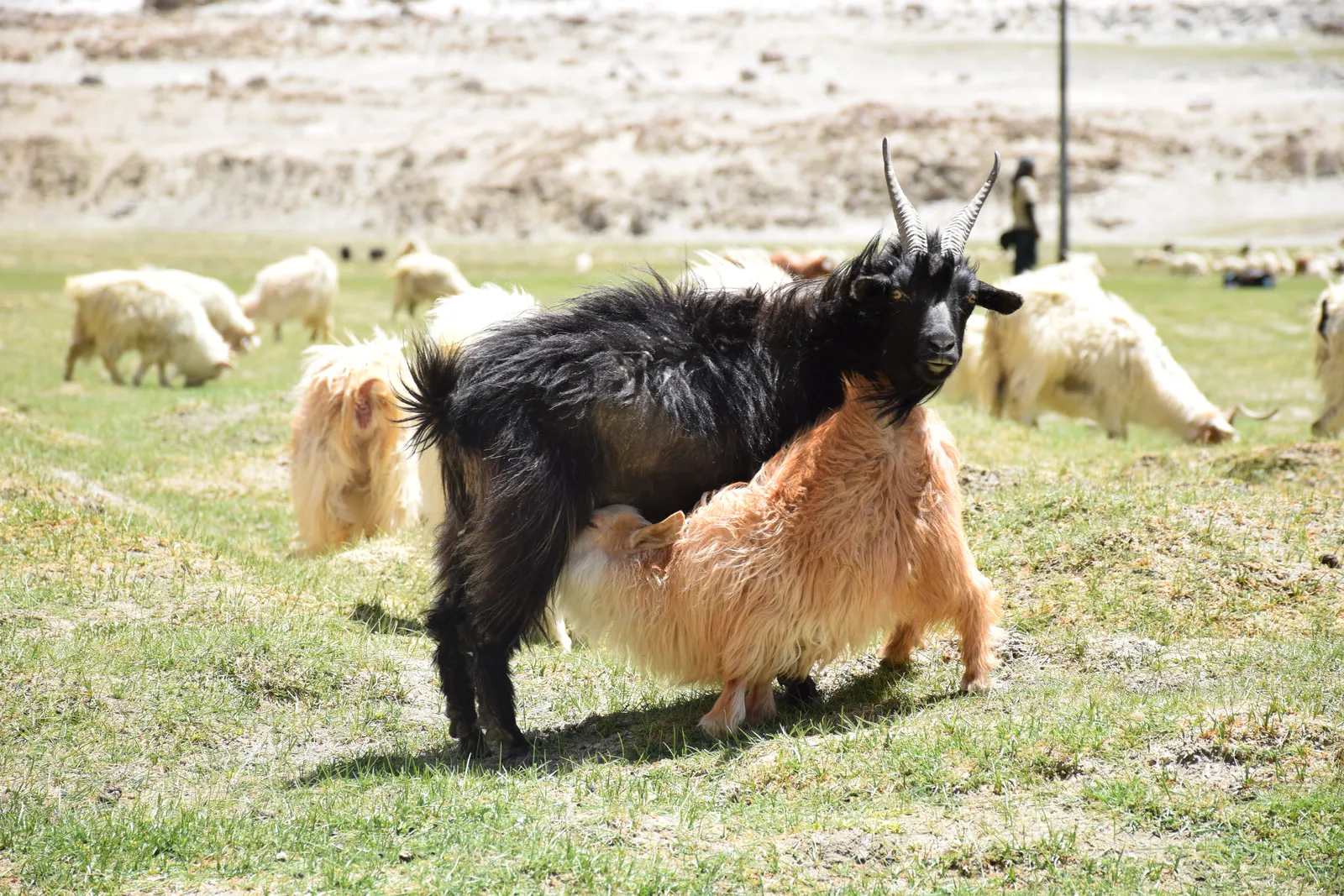
Each goat yields only a small amount of usable fibre a year, and the individual fibres are extraordinarily fine, typically around 12 to 15 microns across, finer than most merino wool. Spinning such short, delicate fibre is skilled hand work, and the finished cloth is light, warm and drapes like silk. Europeans named the fibre after the place they bought it, which is why the English word cashmere is simply an old spelling of Kashmir.
An even finer and rarer cloth, shahtoosh, was woven from the underwool of the Tibetan antelope, or chiru. Because the fibre could only be collected by killing the animal, chiru populations collapsed, and shahtoosh is now banned under the CITES wildlife treaty and by Indian law.
How a Scottish town took the name
Kashmir shawls began reaching Britain in the late 18th century, carried home by officials and officers of the East India Company, the same trading empire whose ships moved chillies into Indian kitchens and Indian goods to Europe. In France, the fashion took off around the time of Napoleon's Egyptian campaign, and Empress Joséphine is said to have owned hundreds of shawls. A genuine Kashmir shawl was a status object, often passed down as an heirloom.
Prices that high invited imitation. Weavers in Norwich and Edinburgh produced copies first, but the town that came to dominate the trade was Paisley, just west of Glasgow, which already had a skilled community of silk and cotton weavers. From the early 1800s Paisley's looms turned out shawls in wool, silk and cotton blends at a fraction of the cost of the originals.
The decisive technology was the Jacquard loom, invented in Lyon in 1804, which controlled complex patterns with chains of punched cards. Adapted by Paisley weavers, it could reproduce the dense buta designs mechanically and in many colours. Paisley's output became so closely tied to the motif that English speakers simply started calling the shape itself "paisley." Kashmir's workshops, in turn, adjusted their designs to suit European buyers, so influence flowed in both directions.
Why the shawl craze ended
The boom did not last. Around 1870, women's fashion moved from the wide crinoline skirt, which a large square shawl suited perfectly, to the bustle, which a shawl hid. The Franco-Prussian War of 1870 to 1871 cut off France, Kashmir's richest export market, and a severe famine struck the Kashmir Valley later in the decade. Within a generation both the Kashmiri export trade and Paisley's shawl industry had shrunk dramatically.
The motif survived on smaller things: printed cotton, scarves, dressing gowns and neckties. It also travelled on the bandana, a word that itself comes from India, from the Hindi bandhna, to tie, linked to tie-dyed bandhani cloth. Printed paisley bandanas became standard workwear in the American West and later a fixture of country music and street style.
The 1960s revival and paisley today
Paisley's second great moment came in the late 1960s. As young Western musicians and travellers looked to India, The Beatles famously spent time at an ashram in Rishikesh in 1968, and paisley became shorthand for psychedelia. It appeared on shirts, jackets, posters and even guitars: Fender sold a pink paisley Telecaster in 1968. Prince later named his song and his Minnesota studio complex Paisley Park.
Today the motif belongs to everyone. Italian house Etro made it a signature from the late 1960s, and it returns to catwalks every few seasons in the way that classics like denim keep reinventing themselves. In India it never went away. It sits on Banarasi brocades, Kanchipuram borders, block-printed Rajasthani cottons, mehendi patterns and wedding shawls, still known to most people as the humble mango.
How to spot the real thing
If you are shopping for a Kashmir shawl, a few checks help:
- Look for the GI label. Genuine Kashmir Pashmina is tested and labelled at a certification centre in Srinagar. A low price and the word "pashmina" alone mean little, since the term is widely used for machine-made blends.
- Check the back. A kani shawl looks almost the same on both sides, with tiny floats where colours change. Amli embroidery shows stitching on the reverse, and a printed pattern is crisp on the front and faint behind.
- Feel the weight. True pashmina is very light and warm, and a large shawl can feel startlingly thin for its warmth.
- Never buy shahtoosh. Possessing or selling it is illegal in India and in most of the world.
The next time you see a paisley tie or a printed scarf, you are looking at a design with a remarkable route: from a Persian flowering bush, through Mughal courts and Kashmiri workshops, to the looms of a Scottish town that lent it a name, and back into Indian wardrobes where it never stopped being a mango.