Where Did Kabaddi Come From?
Kabaddi was played on village mud across the Indian subcontinent for centuries under a dozen local names. Here is how a breath-holding raid game got its rules in Maharashtra, its first world stage in Berlin and a professional league watched by hundreds of millions.
 By
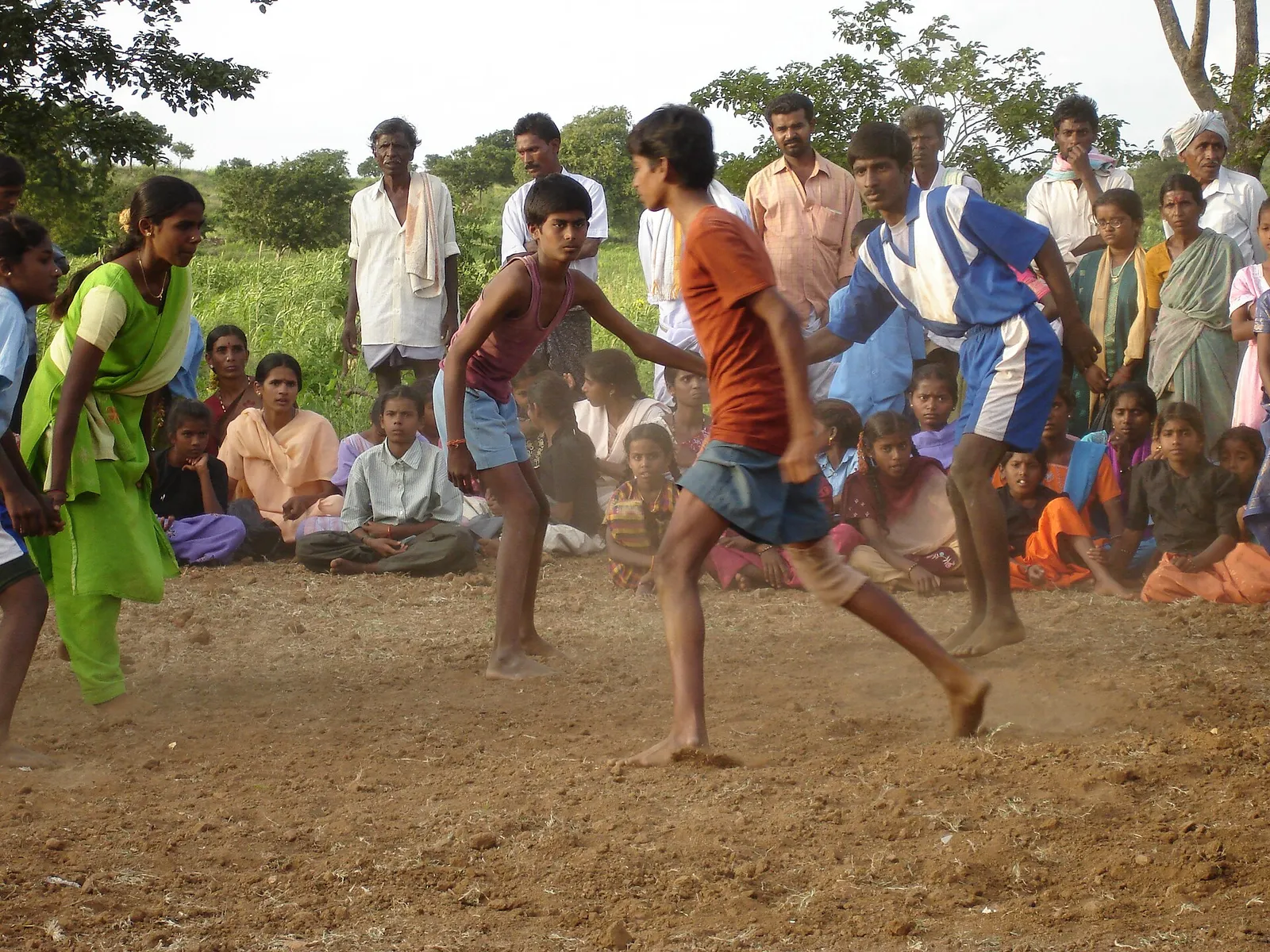
Kabaddi came from the Indian subcontinent, where villagers played raid-and-tag games on open mud for centuries under local names such as hu-tu-tu, sadugudu, chedugudu and ha-du-du. The modern sport took shape in Maharashtra, where its first set of rules was drawn up in 1921 and revised in 1923, and it reached a world audience when a club from Amravati played exhibition matches in Berlin in 1936.
From there it became a national sport, a fixture of the Asian Games and, since 2014, one of the most watched professional leagues in India. Few games have kept their village character so completely while turning into a television product, and the route between the two says a lot about how Indian sport organised itself in the twentieth century.
A game older than its name
Nobody can point to the first game of kabaddi, because for most of its life it was never written down. Britannica notes the theory that it began as a test of the reflexes needed for hunting and self-defence, and that it was long played for exercise by pupils in gurukuls. It also points to a famous parallel in the Mahabharata: Abhimanyu's doomed raid into the enemy formation at Kurukshetra, the chakravyuha, which looks a lot like a kabaddi raider trapped among defenders. The NCERT physical education textbook mentions the same school of thought.
What is certain is that the game was everywhere and called something different almost everywhere. It was sadugudu in Tamil Nadu, chedugudu in Andhra Pradesh, hu-tu-tu in western India, ha-du-du in Bengal and jabarjang in Punjab. One popular explanation traces the word kabaddi to the Tamil kai (hand) and pidi (to hold), though like most folk etymologies it is hard to prove. Iran has its own claim: Iranian players have argued that a version of the game was played in Sistan thousands of years ago. What nobody disputes is that the sport as the world knows it was organised in India.
The basic idea never changed. One player, the raider, crosses into the other team's half, tries to touch as many defenders as possible and get back across the midline, all on a single breath while chanting "kabaddi, kabaddi". The defenders try to hold the raider until the breath runs out. It needs no equipment at all, just a flat patch of ground and a line scratched in the dirt, which is exactly why it spread through every village.
Rules written in Maharashtra
Like badminton, which took its first rules on Indian soil as Poona, kabaddi became a formal sport in western India. The first rules were framed in Maharashtra in 1921 and revised in 1923, the year a national tournament was held in Baroda (now Vadodara). The physical culture movement of the time, which tied sport and fitness to national self-confidence, gave the game an institutional home in the vyayamshalas (gymnasiums) of the region.
The most influential of these was the Hanuman Vyayam Prasarak Mandal (HVPM) in Amravati, founded in 1914. It would give kabaddi its first moment on the world stage.
Berlin, 1936: exhibition, not Olympic event
Kabaddi is often described as a demonstration sport at the 1936 Olympics. Olympics.com is clear that it was not part of the official programme. What happened was arguably more interesting.
HVPM's vice-president, Dr Siddhanath Kane, an executive member of the Indian Olympic Association, wrote to Carl Diem, chief organiser of the Berlin Games, asking to show India's traditional sports. Diem already knew the game through Laxmanrao Kokardekar, an Indian studying in Berlin, and agreed. A 35-member HVPM contingent travelled to Germany and performed kabaddi (then billed as hu-tu-tu), mallakhamb and other disciplines at the Congress of Physical Education held just before the Games. Their 40-minute exhibition match on the university grounds drew such a response that, by Olympics.com's account, the team was asked to play two more.
Two years later kabaddi was included in the Indian Olympic Games at Calcutta in 1938, the forerunner of today's National Games. Much as chess, which travelled from India to Persia and Europe, the game had begun to leave home, though this time on India's own terms.
Federations, a national game and the Asian Games
After independence the sport built its institutions quickly:
- 1950: The All India Kabaddi Federation was formed and compiled standard rules. Men's national championships followed from 1952 and women's from 1955.
- 1951: Kabaddi was a demonstration sport at the first Asian Games in New Delhi.
- 1972: The Amateur Kabaddi Federation of India (AKFI), still the national governing body, was set up (some sources give 1973). The same year, Bangladesh made kabaddi, known there as ha-du-du, its national game.
- 1978: The Asian Amateur Kabaddi Federation was founded, giving the region a governing body affiliated to the Olympic Council of Asia.
- 1980: The first Asian Kabaddi Championship was played in Calcutta, and India beat Bangladesh in the final.
- 1982: Kabaddi returned as a demonstration sport at the New Delhi Asian Games.
- 1990: It became a full medal sport at the Beijing Asian Games.
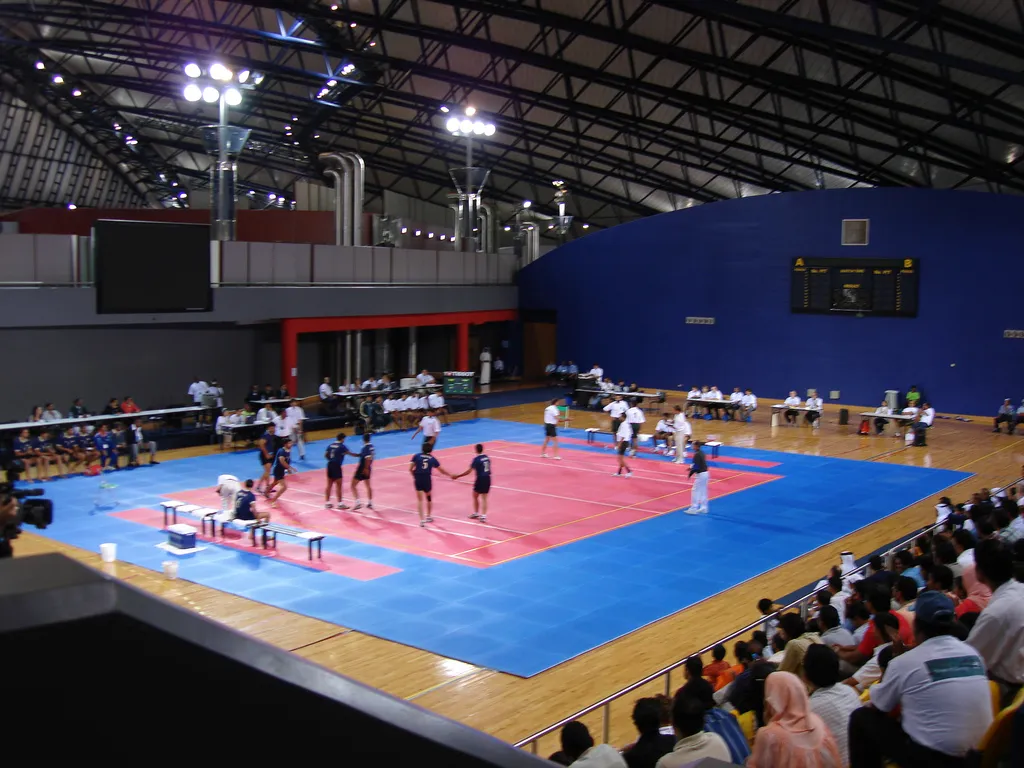
The move indoors changed the game. Mud gave way to synthetic mats, the court was fixed at 13 metres by 10 metres for men, and modern international and professional rules cap each raid at 30 seconds. A team fields seven players on court. A baulk line 3.75 metres from the midline must be crossed for a raid to count, and a bonus line one metre beyond it earns the raider an extra point if six or more defenders are on court. The breath rule survives as the cant: the raider has to keep saying "kabaddi" clearly and continuously, and stopping means being declared out.
India's long reign, and Iran's challenge
India won the first seven Asian Games men's golds, from Beijing 1990 to Incheon 2014. The run ended in Jakarta in 2018, when Iran beat India in the semi-finals and went on to take both the men's and women's titles. Iran's rise was no accident: its players had become stars of Indian professional kabaddi, and defender Fazel Atrachali is now the most successful foreign player in Pro Kabaddi League history.
India answered. At the Hangzhou Games, held in 2023, the men beat Iran 33-29 and the women beat Chinese Taipei 26-25. Then, on 26 September 2026 at the Aichi-Nagoya Asian Games in Japan, both Indian teams beat Iran in their finals on the same day: the women 37-34 and the men, captained by Sunil Kumar, 40-34 after trailing 17-18 at half-time. That makes nine men's golds in ten editions and four women's golds in the five editions since the event was added in 2010.
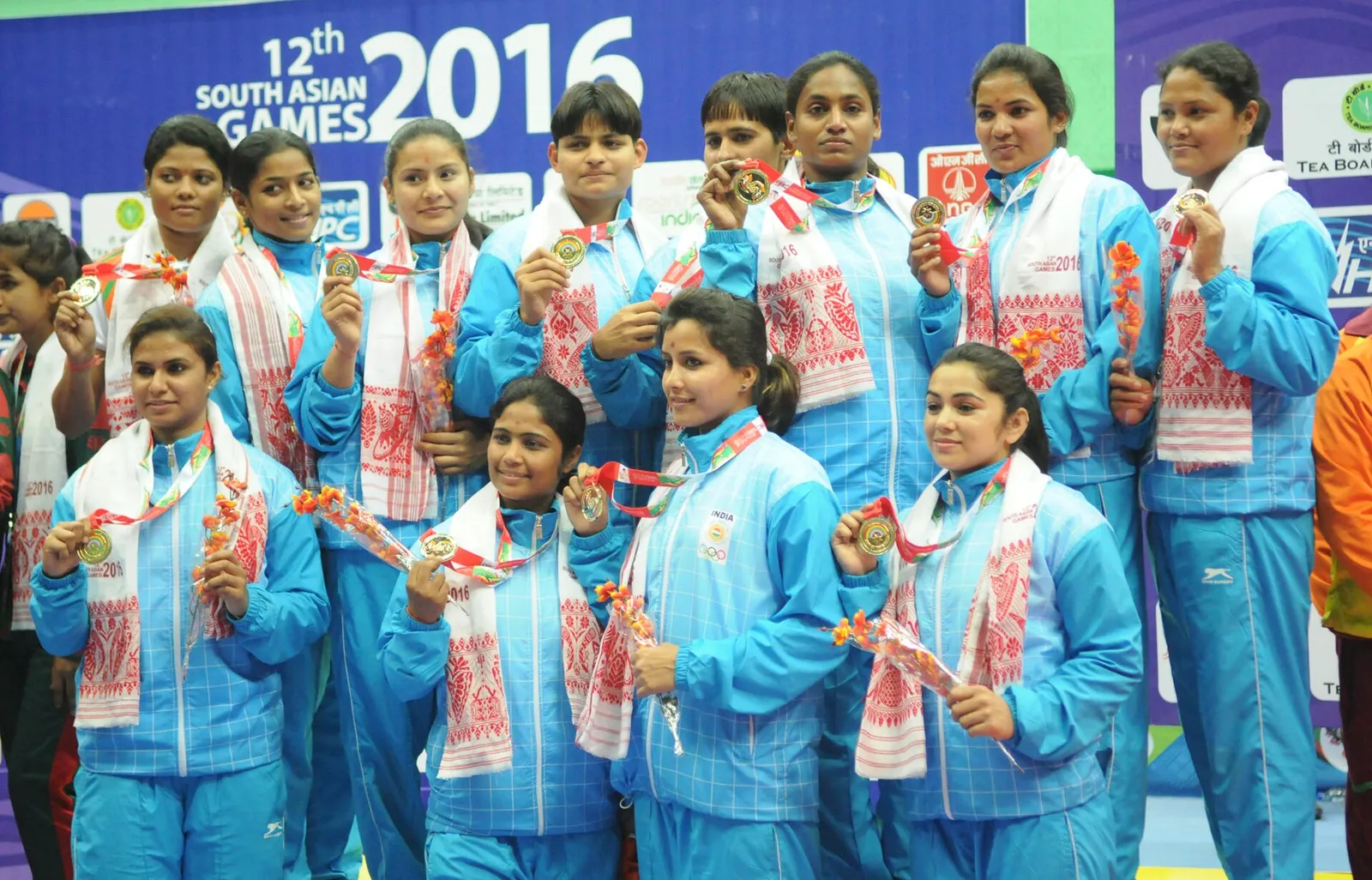
World Cups tell the same story. India won all three men's standard-style Kabaddi World Cups, in 2004 (Mumbai), 2007 and 2016 (Ahmedabad), with Iran runner-up each time. The women won the first Women's Kabaddi World Cup in Patna in 2012 and, on 24 November 2025 in Dhaka, retained it unbeaten with a 35-28 win over Chinese Taipei in an 11-nation tournament.
From village mud to prime time
The biggest change in kabaddi's modern history came off the court. In 2014, Mashal Sports, co-founded by commentator Charu Sharma with backing from Anand Mahindra, launched the Pro Kabaddi League with Star Sports as broadcaster. Its first season reached 435 million viewers in India, second only to that year's IPL, and the final between Jaipur Pink Panthers and U Mumba drew 86.4 million.
The format suited television perfectly: matches last about 40 minutes, the scoring is constant and every raid is a self-contained contest. Players from Haryana, Maharashtra, Tamil Nadu and Karnataka villages became household names, and franchises gave the sport a year-round career path it had never had.
Season 12 ended on 31 October 2025 at the Thyagaraj Indoor Stadium in Delhi, where Dabang Delhi K.C. beat Puneri Paltan 31-28 for their second title. That made Delhi the third team, after Patna Pirates and Jaipur Pink Panthers, to win more than once. Season 13 was pushed back to make room for the Asian Games; as of mid-October 2026 no official schedule had been published, with reports pointing to a start in late December.
Why the origin still matters
Most global sports with Indian roots, from chess to badminton and even snakes and ladders, were reshaped and renamed elsewhere before coming back. Kabaddi is different. It was codified in India, governed from India and taken to the world by Indians, and the country still sets the standard, which is why its rules read like a description of a village game rather than a translation of a foreign one. Its distances, unlike those of the marathon, which settled on 42.195 km at a London Olympics, were decided by Indian administrators for Indian courts.
The short answer
Kabaddi came from the traditional raid-and-tag games played for centuries across the Indian subcontinent under names like hu-tu-tu, sadugudu and ha-du-du. Its rules were first written in Maharashtra in 1921 and revised in 1923, Amravati's HVPM showed it to the world in Berlin in 1936, and national and Asian federations turned it into an Asian Games medal sport from 1990. Since 2014 the Pro Kabaddi League has made it one of India's most watched sports.