Where Did Badminton Come From?
Badminton is named after an English country house, but the game itself took shape on the lawns of British India, where it was known as Poona. Here is how a children's pastime played across Asia and Europe became the fastest racket sport on earth, and why India now sits near the top of it.
 By Sushant Kataria· 8 min read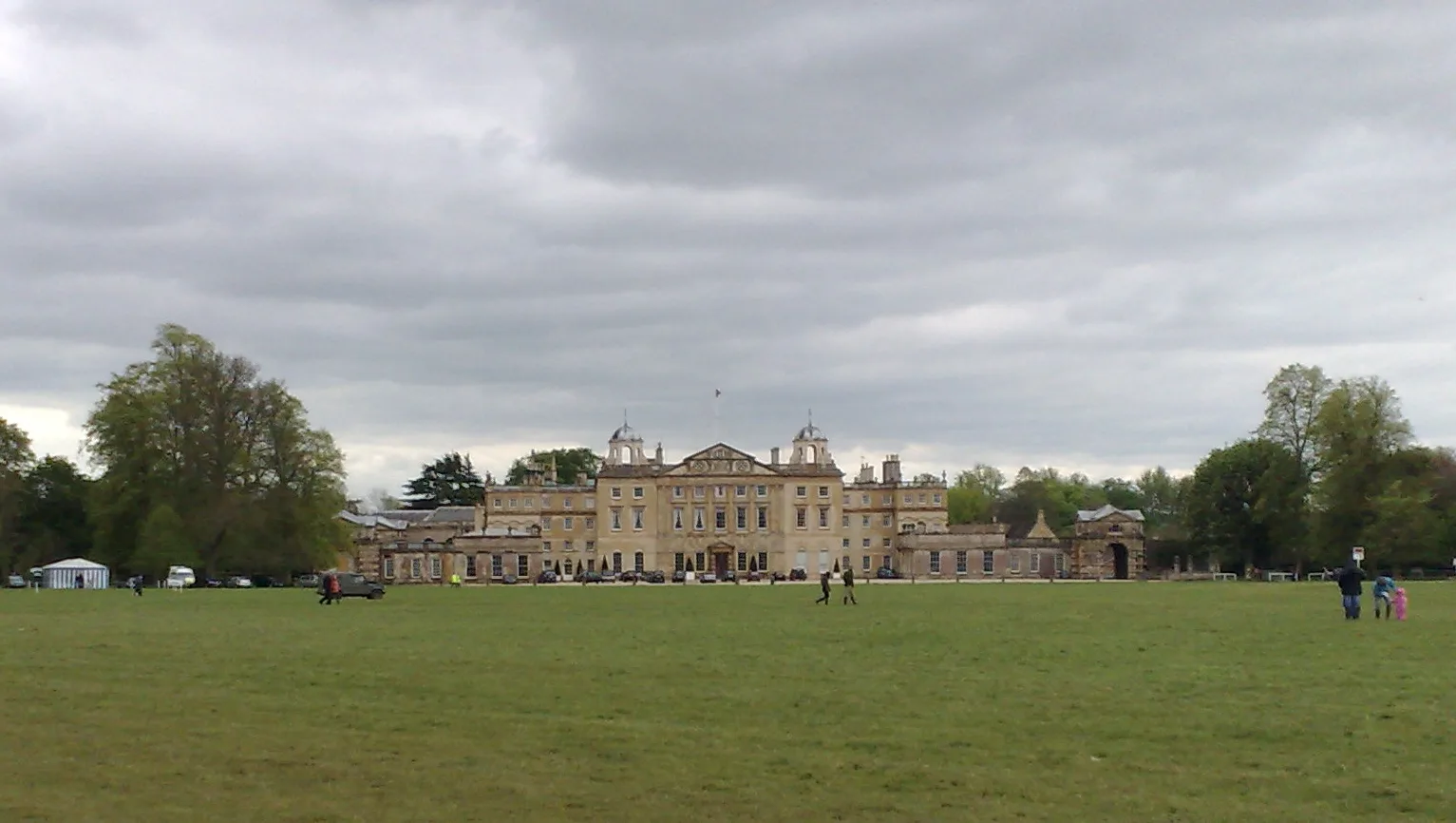
Badminton came from the ancient game of battledore and shuttlecock, which was turned into a competitive sport with a net by British army officers in India in the 1860s, where it was known as Poona after the garrison town now called Pune. It takes its name from Badminton House, the Duke of Beaufort's estate in Gloucestershire, England, where the game was played at a famous lawn party around 1873.
So the sport carries an English name, an Indian birthplace and a family tree that runs back through China, Japan, Greece and the courts of eighteenth-century France. Few games have travelled quite so far before settling on a single set of rules, and the journey explains a lot about the sport that more than 200 national federations now play.
A pastime older than any rulebook
Long before anyone strung a net, people were hitting feathered objects back and forth for fun. Britannica traces the roots of badminton to battledore and shuttlecock, a game played in ancient Greece, China and India. The idea was simple: two players used small paddles (battledores) to keep a shuttlecock in the air for as long as possible. It was cooperative rather than competitive. The point was a long rally, not a winner.
In China, a close cousin called jianzi is still played today, with the shuttle kicked rather than hit. Versions appear in Japan, Korea and Southeast Asia, and the shuttlecock itself (a cork or weighted base with feathers fixed around it) turns out to be one of humanity's more widely shared toys.
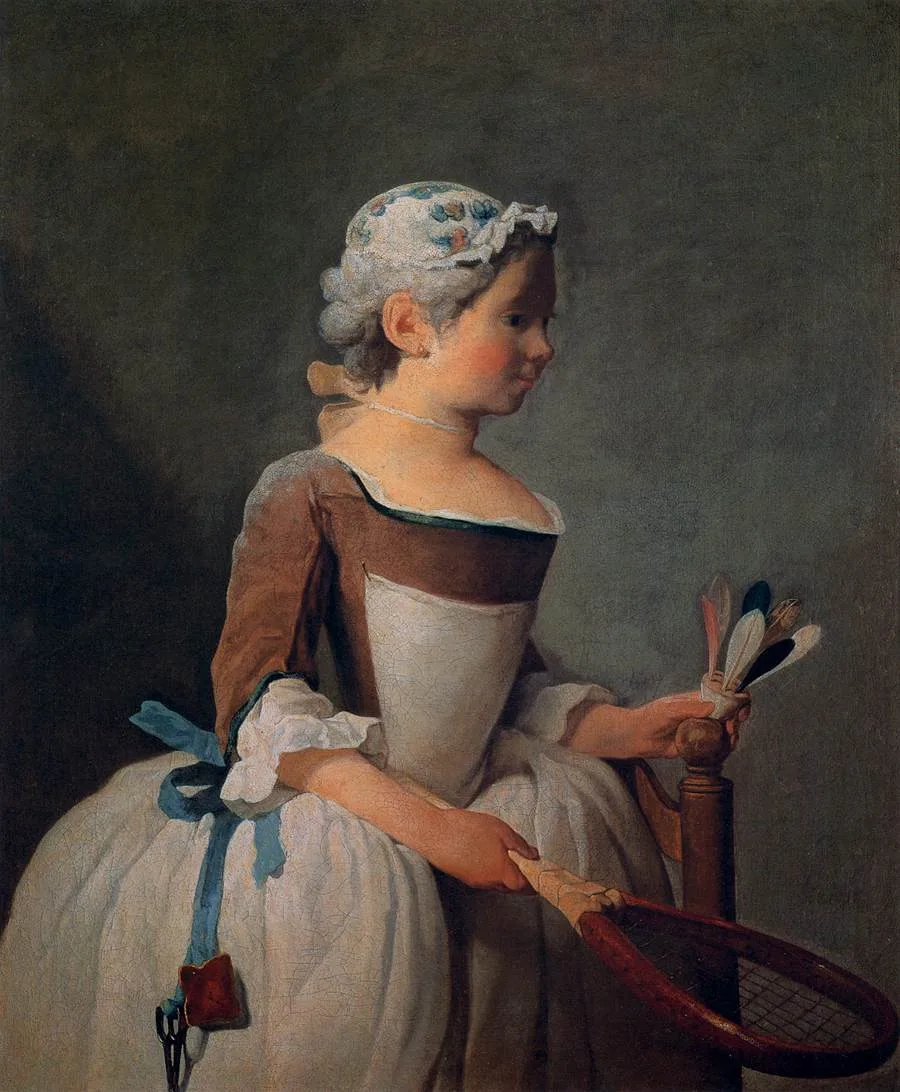
By the seventeenth and eighteenth centuries, battledore and shuttlecock was a fashionable amusement in Europe, especially among children of well-off families. The French painter Jean-Baptiste-Siméon Chardin captured it in 1737.
What none of these versions had was a net, a court or a scoring system. That transformation happened in India.
Poona: the game takes shape in British India
In the 1860s, British army officers stationed in India came across local shuttlecock games and began adapting them. Their key addition was the net, which changed everything: instead of cooperating to keep the shuttle up, two sides now tried to land it on the other side where the opponent could not reach it. A pastime became a contest.
The new game was called Poona (or Poonah), after the cantonment town of Pune in present-day Maharashtra, where it was popular among the garrison. Olympics.com notes that the first informal rules were put together in India in 1867; other accounts place the first written rules in Poona a few years later, around 1873. Either way, the shape of the modern sport, a net across the middle and points won by forcing an error, was settled on Indian soil.
India also produced a sister sport that never left home in the same way. Ball badminton, played with a yellow wool ball instead of a feathered shuttle, is said to have been played at the royal court of Thanjavur (Tanjore) in the nineteenth century, and it is still played across South India today. It is a reminder that the subcontinent was not simply a backdrop for the British; it had its own racket-and-net traditions.
Why it is named after an English country house
Officers returning home from India brought Poona with them. Around 1873, the Duke of Beaufort introduced the game to guests at a party at Badminton House, his estate in Gloucestershire. The guests took to it, and the game became known as "the Badminton game", and then simply badminton. The name stuck so firmly that the Indian one faded almost completely.
Badminton England adds a lovely detail: the Great Hall at Badminton House is the same size as a modern badminton court, 44 feet by 20 feet (13.4 by 6.1 metres). Whether the court was modelled on the room or the coincidence was noticed later, the story has become part of the sport's folklore.
It is a familiar pattern in English sport. Just as cricket's 22-yard pitch comes from an old surveyor's chain and tennis kept its strange 15, 30, 40 scoring from medieval France, badminton kept a name that reflects where the gentry first played it, not where the game was actually invented.
From lawn parties to a governed sport
The early English game was played with many different rules, and some early courts were narrower at the net than at the baselines, giving them an hourglass shape. Order arrived in stages:
- 1877: The Bath Badminton Club, the first dedicated badminton club, was formed. Ten years later it rewrote the informal rules brought back from India, laying the framework for the modern game.
- 13 September 1893: Nine clubs met at a house called Dunbar in Southsea, Hampshire, and founded the Badminton Association, the first national badminton body in the world. Its first honorary secretary was Major (later Colonel) S. S. C. Dolby.
- 4 April 1899: The Association held a one-day tournament at the London Scottish Rifles Drill Hall. That event became the All England Championships, the oldest and still one of the most prestigious tournaments in the sport.
- 1903: The first international match was played in Dublin between Ireland and England. England won 5-2.
- 5 July 1934: Representatives of Canada, Denmark, England, France, the Netherlands, Ireland, New Zealand, Scotland and Wales met at Bush House in London to found the International Badminton Federation (IBF). India joined in 1936.
The driving force behind the IBF was Sir George Thomas, a champion player who won 21 All England titles and served as the federation's first president from 1935 to 1955. He also donated the trophy for the men's world team championship, the Thomas Cup, first contested in 1948–49 and won by Malaya. The IBF was renamed the Badminton World Federation (BWF) in 2006 and now has more than 200 members.
How the game went global, and Asian
Although the rules were written in England, the sport's centre of gravity moved east during the twentieth century. Denmark remained a European stronghold, but Malaysia, Indonesia, China, South Korea and Japan became the powers that dominated world events.
The Olympic story shows the shift. Badminton was a demonstration sport at the Munich Games in 1972, an exhibition event at Seoul in 1988 and a full medal sport from Barcelona 1992, where Indonesia won both singles golds. Since then, Asian players have taken the overwhelming majority of Olympic medals.
The modern rules have kept evolving too. In 2006 the sport switched to rally scoring, in which every rally wins a point and games are played to 21, replacing the old system where only the serving side could score. The equipment has stayed recognisably traditional: under the BWF Laws, a feathered shuttle has 16 feathers fixed in a cork base and weighs between 4.74 and 5.50 grams. The net stands 1.55 metres high at the posts and 1.524 metres at the centre.
That light, feathered shuttle explains why badminton is the fastest racket sport. On 14 April 2023, India's Satwiksairaj Rankireddy set the Guinness World Records title for the fastest badminton hit, a smash measured at 565 km/h at a Yonex facility in Soka, Japan. Malaysia's Tan Pearly set the women's record of 438 km/h on the same day. The drag from those feathers slows the shuttle dramatically within metres, which is why a rally can switch from blistering smashes to delicate net shots in a second.
India's badminton story comes full circle
For a long time India's role in badminton history was a footnote about Poona. That has changed completely.
Prakash Padukone became the first Indian to win the All England Championships in 1980 and rose to world No. 1. Pullela Gopichand won the All England in 2001, then built the academy in Hyderabad that shaped a generation. Saina Nehwal won India's first Olympic badminton medal, a bronze at London 2012, and in 2015 became the first Indian woman to reach world No. 1.
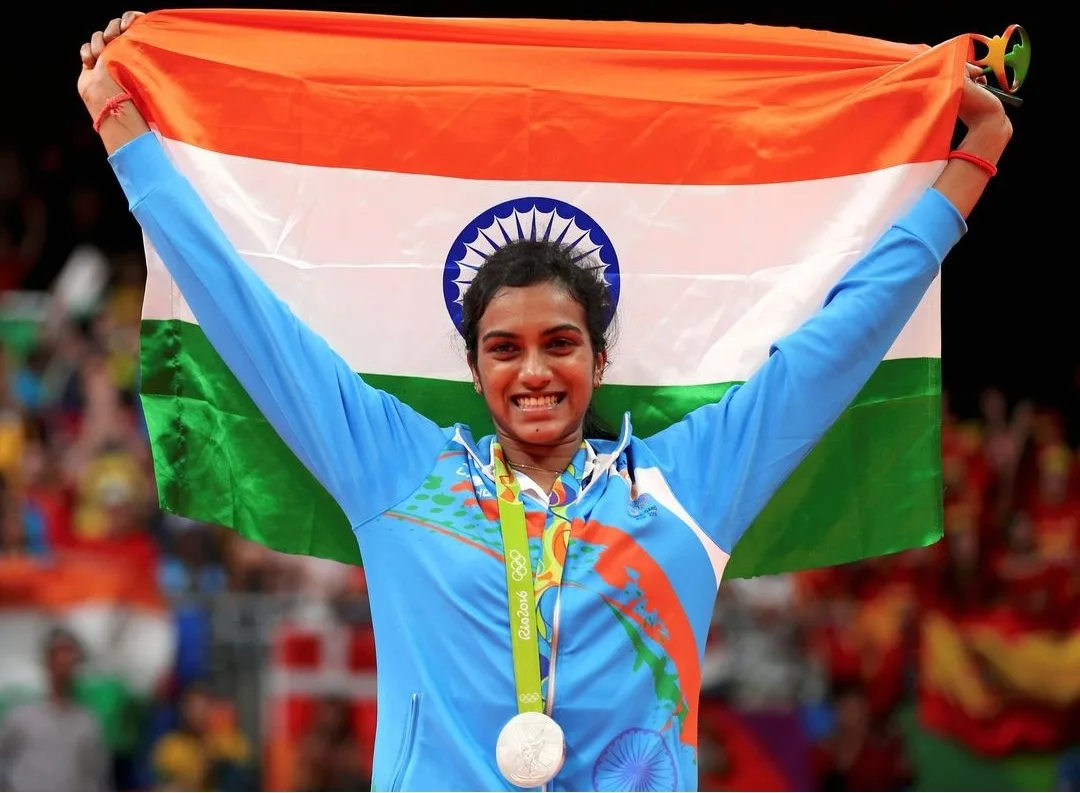
P. V. Sindhu went further: silver at Rio 2016, the world title in Basel in 2019 (India's first badminton world champion) and bronze at the Tokyo Games, making her one of only a handful of Indians to win two individual Olympic medals. In May 2022, India's men beat 14-time champions Indonesia 3-0 in Bangkok to win the Thomas Cup for the first time, the very trophy Sir George Thomas donated more than seventy years earlier. A year later Satwiksairaj Rankireddy and Chirag Shetty won India's first Asian Games badminton gold in men's doubles at Hangzhou.
Today badminton is one of the most widely played sports in India, from neighbourhood courts drawn in chalk on a street to air-conditioned academies in Hyderabad and Bengaluru. Like chess, which travelled from India to Persia and Europe before returning as a sport India now leads, badminton has made a round trip: born as Poona in a Maharashtra cantonment, named in an English country house, codified in Southsea and London, and now won, again and again, by players from the country where its net was first strung.
The short answer
Badminton grew out of battledore and shuttlecock, a game played for centuries across Asia and Europe. British officers in India added a net and competitive rules in the 1860s and called it Poona. The Duke of Beaufort's guests played it at Badminton House around 1873, which gave the sport its English name, and the Badminton Association (1893) and the International Badminton Federation (1934) turned it into the global sport played today.