Why Is a Marathon 26.2 Miles?
The marathon's oddly precise distance has nothing to do with ancient Greece. It was fixed by a London race route in 1908 and made official in 1921. Here is the full story, from Pheidippides to the sub-two-hour era.
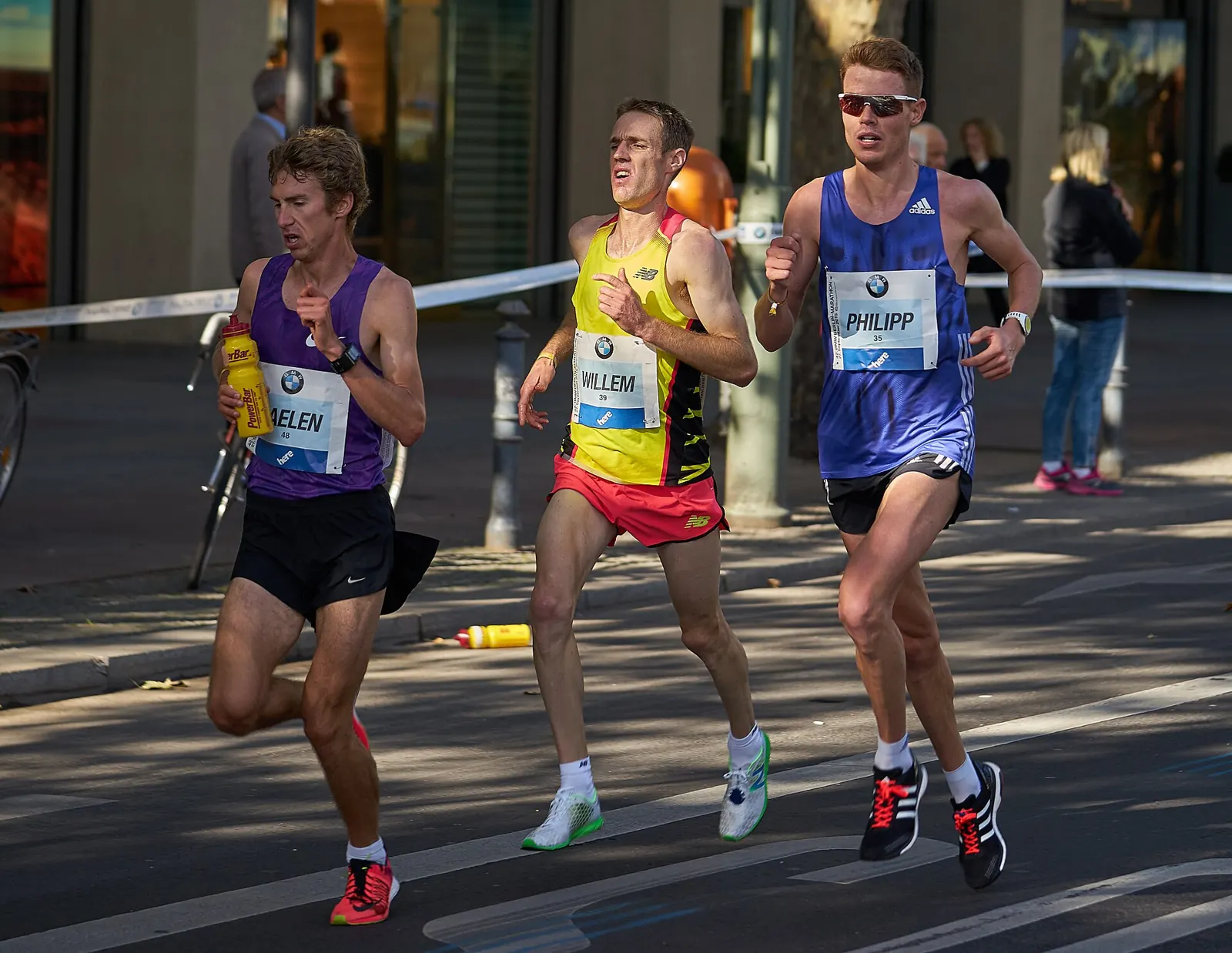
A marathon is 26.2 miles (42.195 km) because of the 1908 London Olympics, where the course was set to run from Windsor Castle to finish in front of the royal box at the new stadium. That distance was adopted as the official standard in 1921, long after the Greek legend of a messenger running from Marathon to Athens inspired the race.
Ask runners why a marathon is 42.195 kilometres, or 26.2 miles, and many will tell you it is the distance a Greek messenger ran from the battlefield of Marathon to Athens. That is half right. The legend inspired the race, but the precise number comes from a decision made in London more than two thousand years later.
The legend of Pheidippides
According to legend, after the Athenians defeated the Persians at the Battle of Marathon in 490 BCE, a messenger ran roughly 40 kilometres to Athens, announced the victory and collapsed and died. The story became attached to the name Pheidippides, although the ancient historian Herodotus actually describes Pheidippides running from Athens to Sparta, about 240 kilometres, to request help before the battle. The dramatic death-after-victory version appears in later sources, including Plutarch and Lucian, centuries after the event.
Historians treat the Marathon-to-Athens run as more legend than fact. But it was a perfect story, and in the 19th century it caught the imagination of Europe, notably through Robert Browning's 1879 poem "Pheidippides."
The first marathon, 1896
When Pierre de Coubertin and his colleagues revived the Olympic Games in Athens in 1896, the French philologist Michel Bréal proposed a long-distance race from Marathon to Athens to honour the legend. The idea was a hit with the Greek hosts.
The course was about 40 kilometres, and the race was won by Spyridon Louis, a Greek water carrier, in just under three hours. His victory, the only Greek athletics win of those Games, made him a national hero. For the next few Olympics, the marathon distance varied, generally around 40 kilometres, depending on the course.
London 1908: the royal start
The distance we run today was set at the 1908 London Olympics. The organisers planned a course from Windsor Castle to the new Olympic stadium at White City. The start was positioned on the lawn below the windows of the royal nursery, widely reported to allow the royal children to watch, and the finish was set in front of the royal box inside the stadium.
That route measured 26 miles 385 yards, or 42.195 kilometres. It was not chosen for any mathematical reason; it was simply what the start and finish locations produced.
The drama that made the distance famous
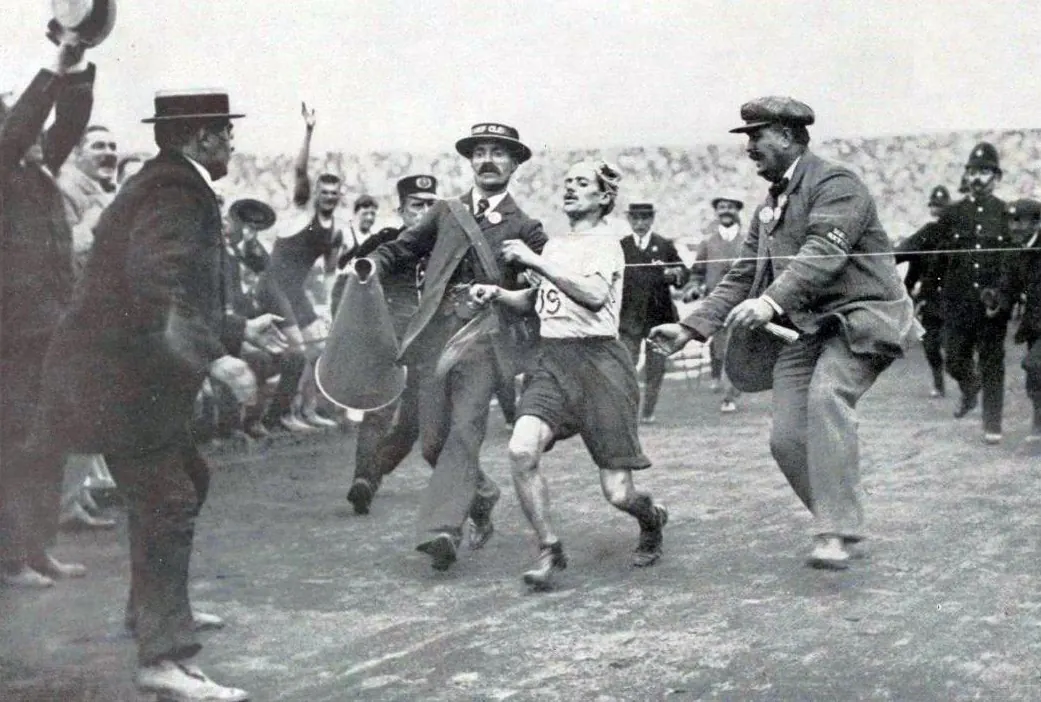
The 1908 race itself helped immortalise the number. On a hot July day, Italian runner Dorando Pietri entered the stadium first but was severely dehydrated and disoriented. He turned the wrong way, collapsed several times, and was helped across the line by officials. American Johnny Hayes, who finished second, protested, and Pietri was disqualified.
Pietri became an international celebrity anyway. Queen Alexandra presented him with a special gilded silver cup in recognition of his courage, and the story spawned a craze for marathon races in Europe and the United States.
Making it official
Even after 1908, distances varied: the 1912 Stockholm marathon was around 40.2 kilometres, and the 1920 Antwerp course was longer, about 42.75 kilometres. Finally, in 1921, the International Amateur Athletic Federation, today called World Athletics, adopted 42.195 kilometres as the official standard. Every Olympic and championship marathon since 1924 has used it.
How courses are measured today
Getting exactly 42.195 kilometres on city streets is a precise science. Officials measure certified courses with a calibrated bicycle fitted with a device called a Jones counter, which records wheel revolutions. The bicycle follows the shortest possible route a runner could legally take, cutting tangents on every bend. A short course correction factor of 0.1% is added, so that no runner can possibly run less than the full distance. Records only count on certified courses that meet strict rules on elevation drop and separation between start and finish.
The march toward two hours
Marathon times have tumbled over the past century:
| Year | Runner | Time | Significance |
|---|---|---|---|
| 1908 | Johnny Hayes (USA) | 2:55:18 | Olympic champion at the new distance |
| 1960 | Abebe Bikila (Ethiopia) | 2:15:16 | Olympic gold in Rome, running barefoot |
| 1988 | Belayneh Dinsamo (Ethiopia) | 2:06:50 | A record that stood for a decade |
| 2018 | Eliud Kipchoge (Kenya) | 2:01:39 | Berlin world record |
| 2023 | Kelvin Kiptum (Kenya) | 2:00:35 | Chicago world record |
Abebe Bikila's barefoot win in Rome in 1960 made him the first Black African Olympic champion and launched East Africa's long dominance of distance running. In 2019, Eliud Kipchoge ran 1:59:40 in Vienna in a special event with rotating pacemakers and other assistance, which is why it is not an official record, but it proved that the two-hour barrier could be broken by a human being.
Advances in carbon-plated "super shoes", sports science, nutrition and pacing have all contributed to the recent acceleration in times, and they have sparked debate about technology's role in records.
A distance for everyone
The marathon has become one of the world's great mass-participation events. The World Marathon Majors, Tokyo, Boston, London, Berlin, Chicago, New York and Sydney, draw tens of thousands of runners each, from elite professionals to people raising money for charity in costumes. The New York City Marathon is regularly among the largest marathons in the world by number of finishers.
And the Greeks have not forgotten their legend. The Athens Authentic Marathon follows the historic route from the town of Marathon to the Panathenaic Stadium, the marble venue of the 1896 Games.
So the next time you see a runner wearing a "26.2" sticker, you will know the truth: the number owes less to an ancient messenger than to a British royal nursery, a stadium's royal box, and a dramatic afternoon in London in 1908.
If 26.2 miles sounds daunting, remember that every runner starts with the basics; a daily walk delivers many of the same health benefits. Sport is full of numbers with strange histories, as tennis scoring shows.