Why Is India Called India?
India is named after a river: Sanskrit Sindhu became Persian Hindush and Greek India. Here is how that outsiders' name sits beside Bharat and Hindustan, and how the Constituent Assembly settled on both in 1949.
 By Sushant Kataria· 9 min read
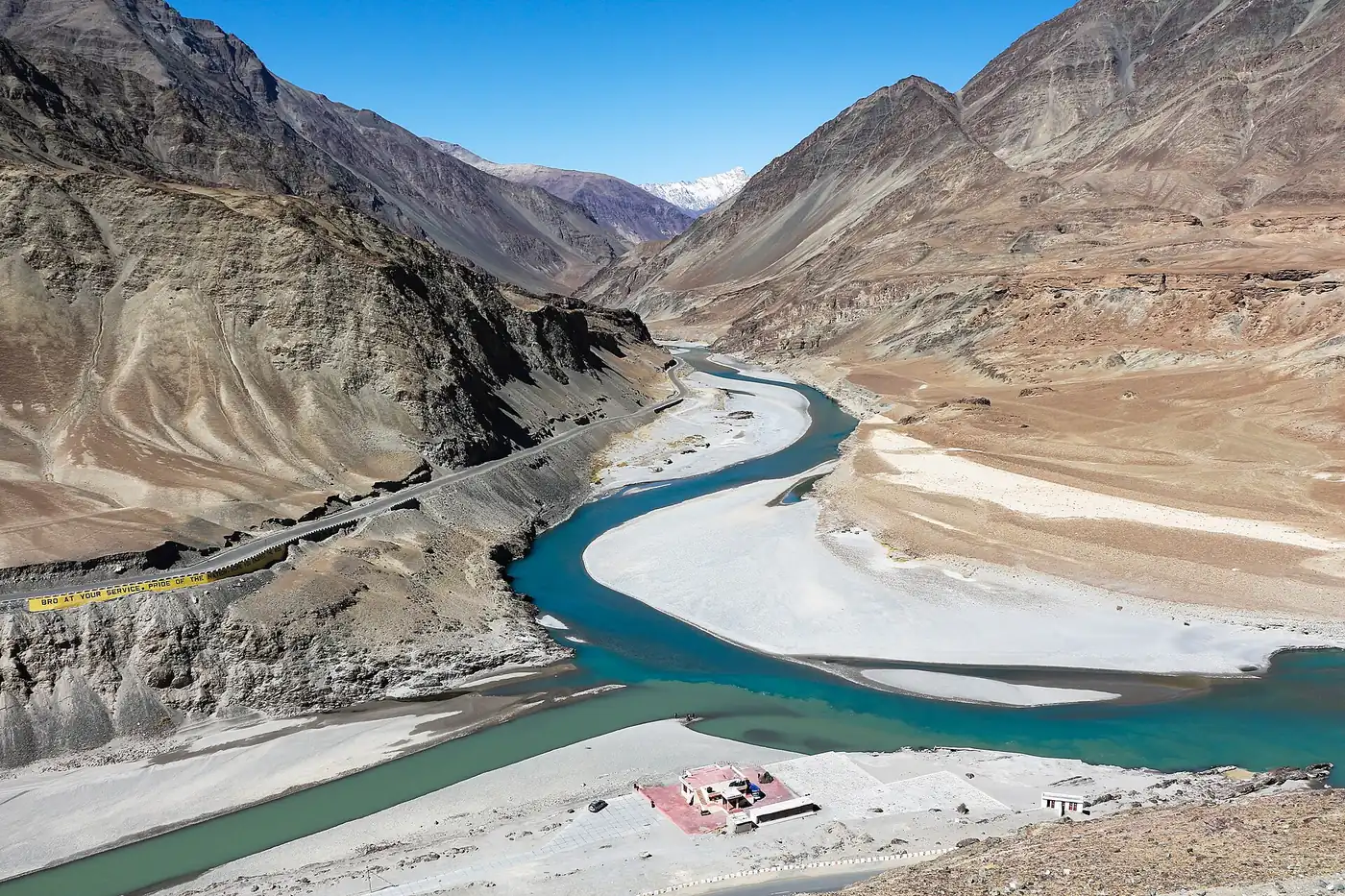
India is called India because of a river: the Indus, known in Sanskrit as Sindhu, which ancient Persians pronounced Hindu and Greeks then turned into Indos, naming the land beyond it India. Latin borrowed the Greek word, European languages inherited it from Latin, and by the 16th century "India" was the standard English name for the whole subcontinent.
The country's other official name, Bharat, comes from inside the subcontinent rather than from its neighbours. It is drawn from Sanskrit texts that describe Bharatavarsha, the land of Bharata, and since 1950 the Constitution has used both names in its very first line: "India, that is Bharat, shall be a Union of States."
So the short answer is that one name was given by outsiders who met India at its north-western river, and one was kept by the people who lived there. Modern India chose to keep both, and the story of how those names travelled takes in Persian emperors, Greek historians, Chinese pilgrims and a tense morning in the Constituent Assembly.
A river called Sindhu
The Indus rises on the Tibetan plateau near Mount Kailash, runs north-west through Ladakh and then turns south across Pakistan to the Arabian Sea, a journey of more than 3,000 kilometres. For the people who composed the Rigveda, India's oldest text, in the north-west of the subcontinent in the second millennium BCE, it was the great river. Sindhu could mean "river" in general, and the region the hymns describe was the land of seven rivers, Sapta Sindhava.
Linguists still argue about where the word sindhu itself comes from, because it has no clear Indo-Aryan root. What is certain is that it was the name outsiders heard first. Anyone arriving from Iran or Central Asia met the Indus before anything else, so the river became the label for everything beyond it, in the same way that travellers often name a country after the first landmark they cross.
How Sindhu became Hindu
The next step happened in Persia. Old Iranian languages had a regular sound change in which an initial s became h. The Sanskrit ritual drink soma is haoma in the Avestan scriptures of Zoroastrianism, and the Rigveda's "seven rivers" appear in the Avesta as Hapta Hendu. By the same rule, Sindhu became Hindu.
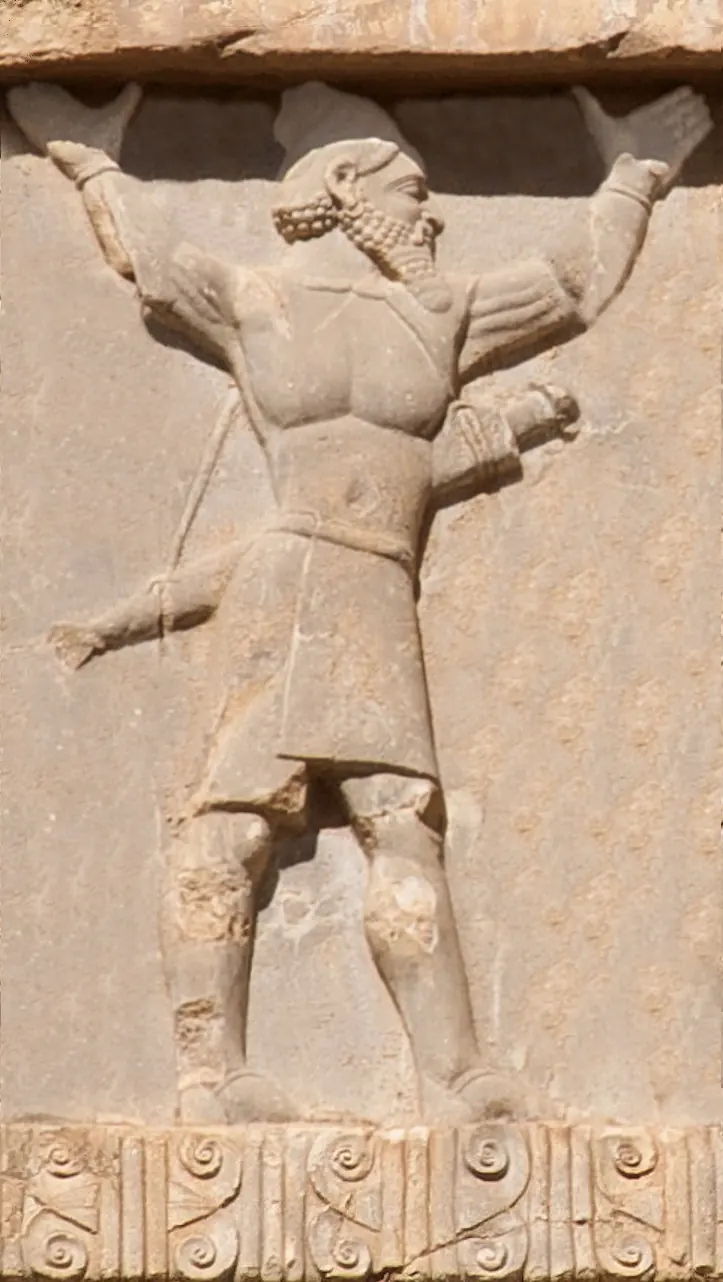
In the late 6th century BCE the Achaemenid emperor Darius I pushed the Persian Empire into the Indus valley and listed the new province, Hindush, among his subject lands. The name appears in his inscriptions, including the one carved on the façade of his tomb at Naqsh-e Rostam near Persepolis, and Indian soldiers were carved holding up the royal throne on the tombs of Darius and his successors. According to Encyclopaedia Iranica, Darius's foundation charter for his palace at Susa even records that its ivory came from Hindush.
The province was rich. The Greek historian Herodotus, writing in the 5th century BCE, called the Indians "more numerous than any other nations known to us" and said they paid the Persian king 360 talents of gold dust a year, the largest tribute of any province in the empire.
From Indos to India
The Ionian Greeks who served and traded inside the Persian Empire dropped the opening h, which their dialect did not use. Hindu became Indos, a word for both the river and a person from its banks, and the land became India. Early Greek geographers such as Hecataeus of Miletus and the explorer Scylax of Caryanda, whom Darius sent down the Indus, had already fixed these terms before Herodotus wrote.
Alexander the Great crossed the Indus in 326 BCE, and a generation later Megasthenes, the Seleucid envoy to Chandragupta Maurya's court at Pataliputra, wrote a famous account simply called Indika. With each new report the name stretched further east, from the Indus valley to the Ganga plains and eventually to everything between Persia and China. Roman merchants who sailed the monsoon winds to buy Malabar pepper, the "black gold" of the ancient world, knew the whole coast as India too.
Latin India passed into Old English, where the name appears as India or Indea. Medieval English more often used Ynde or Inde, taken from Old French, which is where "the Indies" comes from. According to the Online Etymology Dictionary, the form India began to prevail again in the 16th century, probably under Spanish and Portuguese influence. By then the name had already gone global by mistake: in 1492 Christopher Columbus thought he had reached the Indies, which is why the Caribbean islands are still the West Indies and the native peoples of the Americas were called "Indians". The English East India Company, chartered on 31 December 1600, carried the name back to the subcontinent itself, and the Indian Ocean remains the only ocean named after a country.
Hindustan, al-Hind and Yindu
The Persian form never went away. The Sasanian king Shapur I, in an inscription carved around 262 CE at the Ka'ba-ye Zartosht near Persepolis, called his son Narseh king of Hind, Sakastan and Turan, according to the Parthian Sources Online translation. Add the Persian suffix -stan, "place of", and you get Hindustan, the land of the Hindus in the old geographical sense of the people beyond the Indus, not yet a religious label.
Arabic writers took the same root as al-Hind. The scholar al-Biruni, who travelled with Mahmud of Ghazna, wrote his great study of Indian science and belief around 1030, and it is still known simply as his India. Under the Delhi Sultans and the Mughals, Hindustan became the everyday name in Persian chronicles, court documents and coin legends, the same Persian-language world that gave the subcontinent the silver rupiya and the word rupee. In 1904 Muhammad Iqbal wrote "Saare Jahan Se Achha, Hindostan Hamara", and Hindustan is still the name heard at cricket grounds and in Hindi film songs today.
China took a separate route. The historian Sima Qian, writing in the 1st century BCE, recorded the land as Shendu, and later Chinese texts used Tianzhu. In the 7th century the pilgrim Xuanzang, who spent years studying at Nalanda, standardised the name as Yindu, explaining that it meant "moon". Modern Mandarin still calls the country Yindu.
Bharat: the name from within
Indian texts used a different name altogether. The Puranas describe the known world as a set of continents and call the subcontinent Bharatavarsha. The Vishnu Purana gives the classic definition: the country that lies north of the ocean and south of the snowy mountains is called Bharata, for there dwell the descendants of Bharata.
Which Bharata is meant depends on the tradition. The Mahabharata traces the line to Bharata, son of King Dushyanta and Shakuntala, the couple whose story Kalidasa turned into his celebrated play. Jain texts and some Puranas name Bharata, the son of Rishabhanatha, the first tirthankara. Older still, the Rigveda tells of the Bharatas, a powerful clan whose king Sudas won the Battle of the Ten Kings. All three trace the country's name to an ancestor or people rather than to a feature of the landscape.
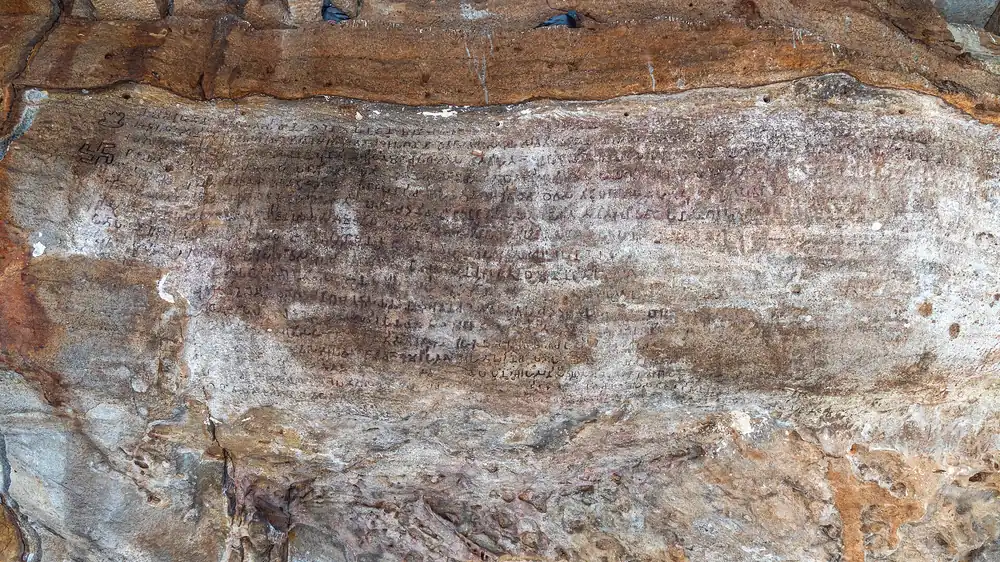
The oldest inscription to use the name was carved in Odisha. The Hathigumpha inscription of Kharavela, king of Kalinga, cut into the ceiling of a cave on Udayagiri hill near Bhubaneswar in about the 1st century BCE, records that in his tenth regnal year he sent an army towards Bharadhavasa, the Prakrit form of Bharatavarsha. Scholars read it as northern India rather than the whole subcontinent, but it shows the name was in political use more than two thousand years ago. Two centuries earlier, Emperor Ashoka's edicts used another indigenous name for his realm, Jambudvipa.
In the freedom movement, Bharat carried emotional weight that India did not. The image of Bharat Mata, Mother India, and the cry "Bharat Mata ki Jai" made it the name of patriotic songs and protest marches.
1949: "India, that is Bharat"
When the Constituent Assembly reached Article 1, the name became a live question. On 17 September 1949 B. R. Ambedkar moved the wording "India, that is, Bharat shall be a Union of States", and members asked for time to object. The next morning, according to the official record of the debates, H. V. Kamath of the Central Provinces and Berar called it the namakaran, the naming ceremony, of the new republic, and listed the names on offer: Bharat, Hindustan, Hind, Bharatbhumi and Bharatvarsh.
Kamath proposed "Bharat or, in the English language, India", citing the Irish Constitution of 1937, which reads "Eire, or in the English language, Ireland". Seth Govind Das wanted Bharat placed first, and Hargovind Pant, from the hill districts of the United Provinces, said the people of northern India "wanted Bharatvarsha and nothing else". Kamath's amendment was put to a show of hands and lost by 38 votes to 51, and Ambedkar's wording was adopted. The Hindi text of the Constitution reverses the order: Bharat, arthat India, rajyon ka sangh hoga.
The choice was practical as well as symbolic. India was already a founding member of the United Nations under that name, and keeping it preserved the country's treaties and international identity, while Bharat placed the indigenous name in the founding text. Changing Article 1 now would need a constitutional amendment under Article 368, the same amending power whose limits the Supreme Court later drew in the basic structure case.
Is India changing its name?
Petitions keep asking the courts to drop "India". In March 2016 Chief Justice T. S. Thakur dismissed one, telling the petitioner: "If you want to call this country Bharat, go right ahead and call it Bharat. If somebody chooses to call this country India, let him call it India." In June 2020, as The Hindu reported, Chief Justice S. A. Bobde refused another, observing that "India is already called Bharat in the Constitution", and sent it to the government as a representation.
The government has leaned into the second name without changing the first. In September 2023 President Droupadi Murmu's invitations to the G20 summit dinner in New Delhi described her as the "President of Bharat", and Prime Minister Narendra Modi sat behind a nameplate reading "Bharat" when the summit opened on 9 September, Reuters reported. The same placard appeared at the 18th BRICS summit at Bharat Mandapam in New Delhi on 12–13 September 2026. Article 1 has not been amended, and both names remain fully official.
Two names, one country
The names describe the same place from two directions. India and Hindustan are views from outside, coined by Persians and Greeks who reached the subcontinent at its north-western river. Bharat is a view from within, rooted in Sanskrit epics, Puranic geography and a Kalinga king's boast in stone.
There is a final irony. Since Partition in 1947, most of the Indus flows through Pakistan, and within India it runs only through Ladakh. The river that named the country barely touches it now, yet the name has outlasted empires, languages and borders, and it sits in the Constitution beside the older word Indians have always used for home.