What Makes a Banarasi Saree Banarasi?
A Banarasi saree is a handwoven silk saree from Varanasi and nearby eastern Uttar Pradesh districts, known for brocade work with zari woven into the cloth, and protected by a Geographical Indication.
 By Kirti Kaliraman· 7 min read
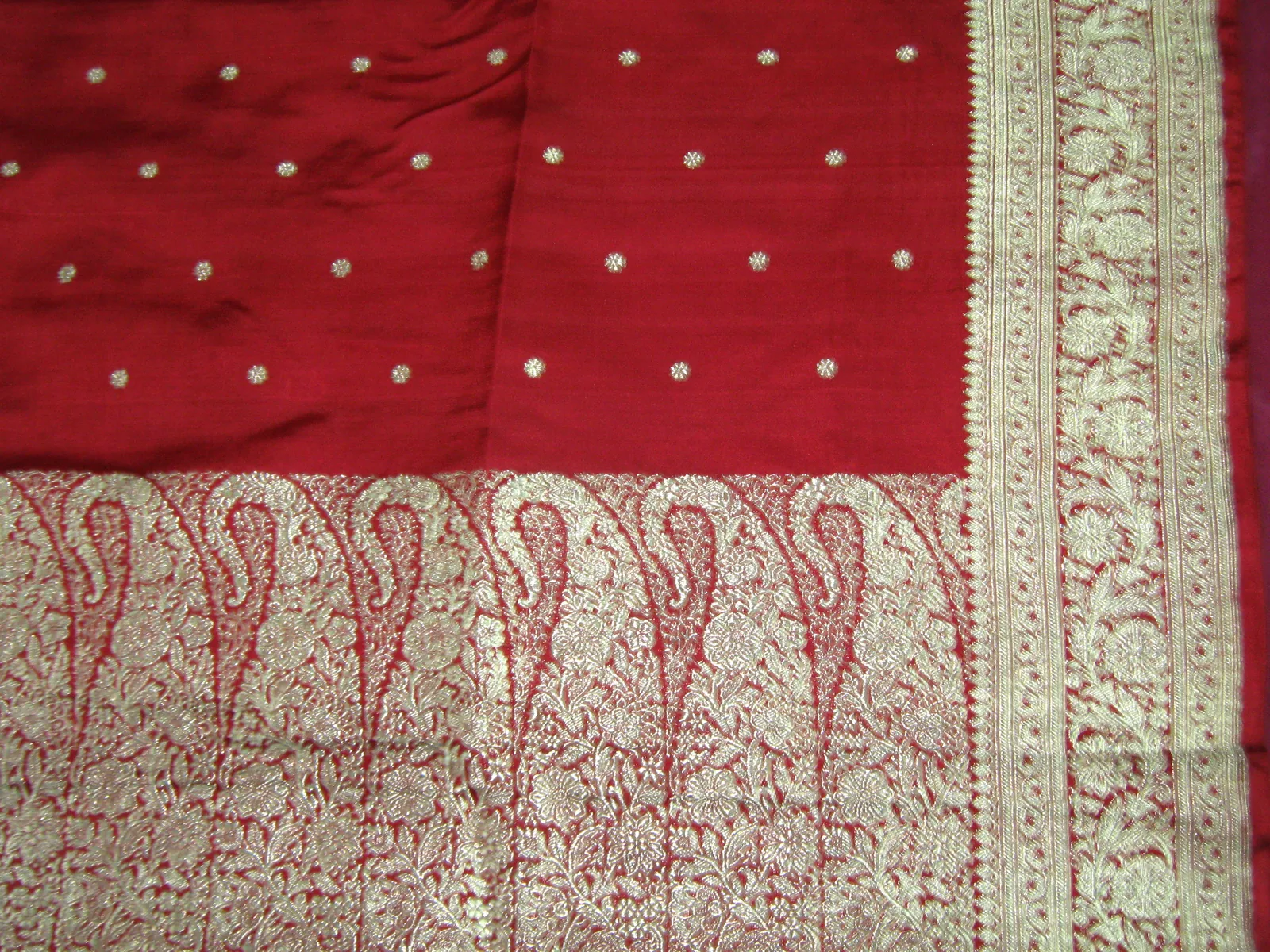
A Banarasi saree is a handwoven silk saree from Varanasi and nearby districts of eastern Uttar Pradesh, known for brocade work in which zari (gold or silver metallic thread) is woven into the fabric rather than embroidered on top, and protected in Indian law as the Geographical Indication Banaras Brocades and Sarees. That mix of place, technique and legal name is what makes a Banarasi Banarasi, not a generic shiny silk sold under the same label.
The sari as a draped length of cloth is shared across South Asia. Banarasi is one of its fiercest local dialects: silk, metal thread, Jacquard patterning and a registered map of weaving towns.
Brocade, Jacquard and zari on the loom
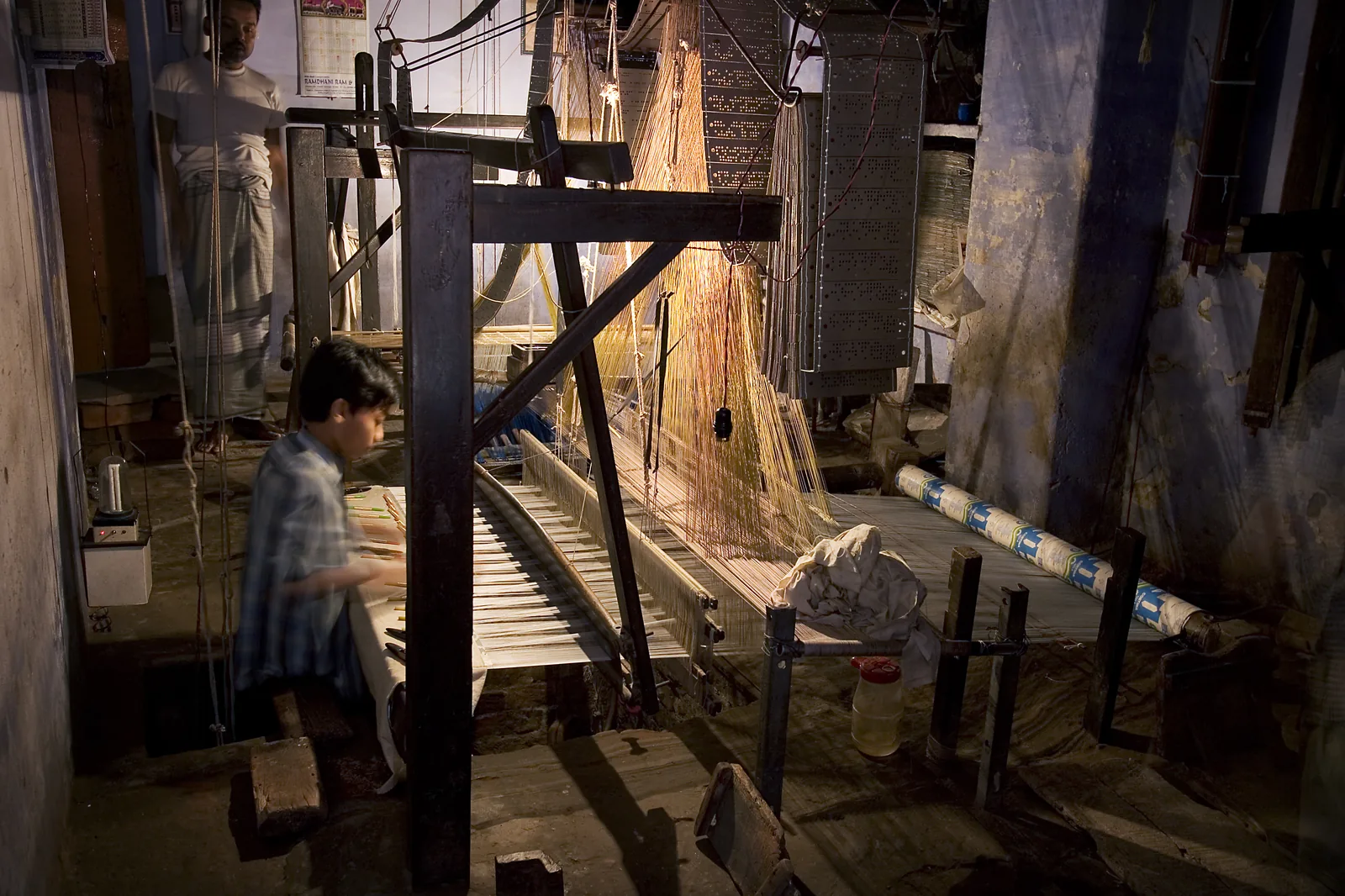
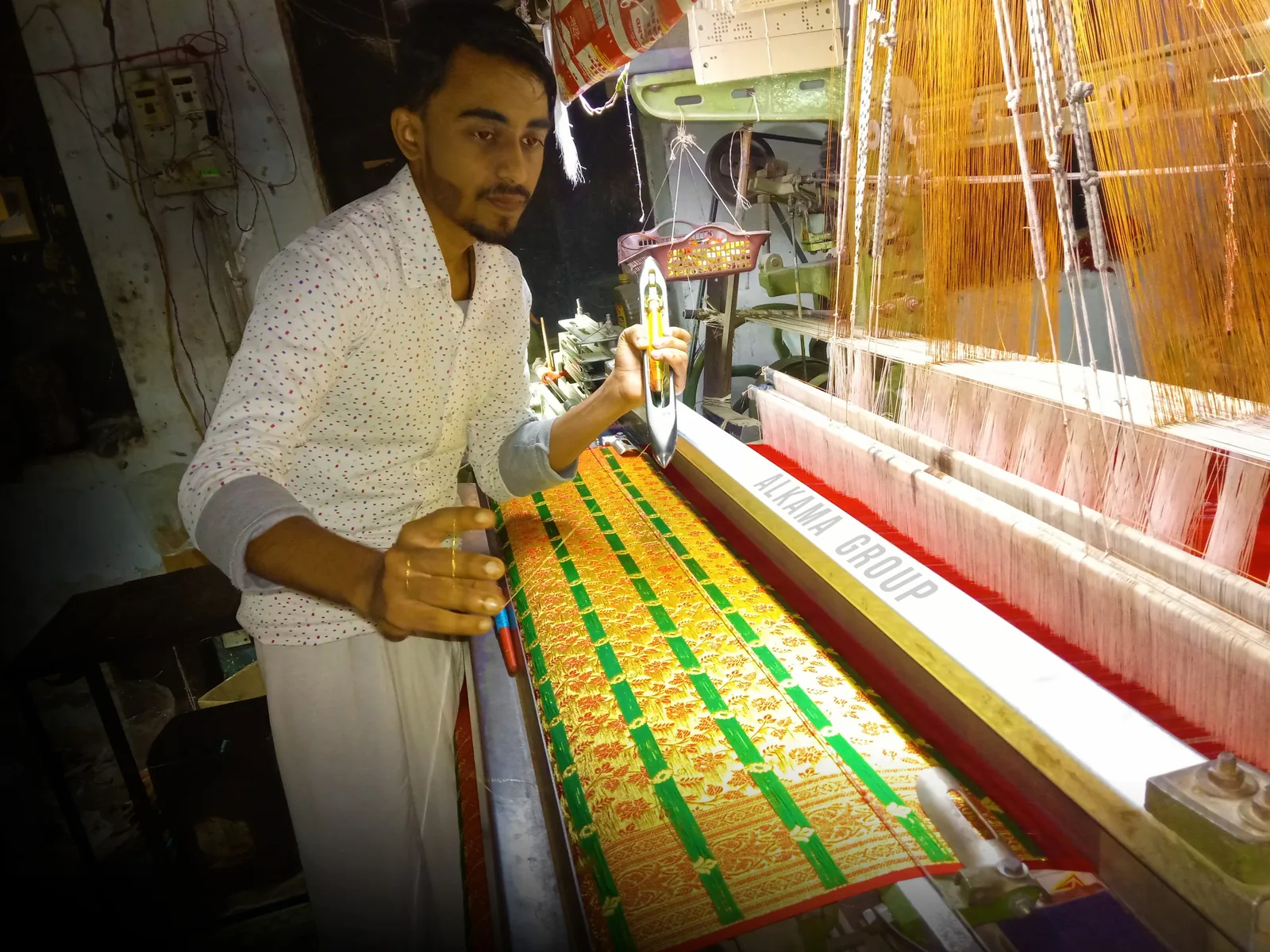
Brocade here means the pattern is built in the weave. Incredible India's account of Banaras brocades describes the craft as Jacquard handloom weaving with warps and wefts of different colours, and names the metallic weft technique (zari) as a defining feature: gold or silver thread worked into motifs and borders. The official Varanasi district page adds the familiar toolkit of the Banaras pit loom: a conventional Banaras handloom Jacquard, sometimes with jala, pagia and naka attachments for motifs, plus Mughal-inspired florals such as kalga and bel, jali netting and meena colour work.
The GI application papers for Banaras Brocades and Sarees spell out the workshop chain: a naqshaband draws the design, technicians punch cardboard cards, and those cards run on a Jacquard so the loom lifts the right warps in sequence. Weavers still speak of two ways to place the extra pattern weft. In fekwa (also fekuwa), the patterning thread runs selvedge to selvedge and leaves floats on the reverse, which may stay or be trimmed. In kadhua (also karhwan or kadhuan), each motif is worked with its own small spool on a restricted set of warps, so the reverse stays cleaner between figures. Both can be honest handloom; a Times of India buyers' guide tells shoppers to turn the saree over to see which one they have.
Styles the GI and trade actually name
The registered goods under the Banaras GI are not one silhouette. The IP India record and the accompanying application text list silk sarees and dress materials such as Jamdani, Jangla, Jamawar Tanchoi, Tissue, Cutwork and Butidar, plus silk embroidery, alongside satin-based and organza-type work as local production streams. Wikipedia's summary of Banarasi varieties mirrors that trade vocabulary: fabric bases such as katan (twisted pure silk), organza / kora and georgette, and design families including Jangla, Tanchoi, Cutwork, Tissue and Butidar.
Those names describe yarn and layout, not marketing adjectives. Jangla is an all-over floral field; Tanchoi is densely patterned silk brocade; cutwork removes floating pattern threads so the ground looks more open; butidar scatters butis across the body. Organza or kora keeps a crisp, sheer hand. None of that replaces the GI rule that the weaving must sit inside the registered geography.
Mughal courts and Persian design language
Silk weaving in Varanasi is older than any one dynasty, but the look most people mean by Banarasi took shape under Mughal patronage. Incredible India states that brocade weaving was introduced to Banaras by Persian artisans in the Mughal era, and that Mughal and Persian floral language still reads in the motifs. The Varanasi district brief likewise points to Mughal-inspired kalga, bel, jali and meena as special characteristics of Banaras brocade sarees. Persian words still cling to the craft: zari from zar (gold), and kimkhab for rich metal brocade. Silk itself had long moved across Eurasia on the shifting caravan and sea networks later nicknamed the Silk Road; Banaras turned that fibre into a court fabric with Indian drape.
The GI: name, year, number and districts
Legal protection is precise. On the Geographical Indications Registry, Banaras Brocades and Sarees is Application No. 99, filed on 4 July 2007, certificate dated 4 September 2009 (Certificate No. 110), covering classes 23 to 26 for handicraft silk brocades, textile goods, silk sarees and dress materials, and embroidery. A separate logo registration, Application No. 237, was certified on 30 March 2013. Contemporary reporting when the certificate arrived, including a Times of India story, listed the protected belt as Varanasi, Mirzapur, Chandauli, Bhadohi (then Sant Ravidas Nagar), Jaunpur and Azamgarh. The application text places production by longitude and latitude across that eastern Uttar Pradesh cluster, with Banaras city as the historic core.
Outside that map, a powerloom lookalike can still shine. It cannot lawfully claim the registered Banaras name.
Handloom versus powerloom, and what the labels mean
Cheap machine copies from other centres are the everyday threat the GI was meant to blunt. Authenticity today is a stack of marks, not one sticker. The Handloom Mark, launched on 28 June 2006 as the Press Information Bureau records, certifies that a product was woven on a handloom. The India Handloom Brand, launched by the Prime Minister on the first National Handloom Day, 7 August 2015, adds quality testing for niche handloom goods. A later PIB brief restates the split: Handloom Mark for loom origin, India Handloom Brand for higher quality and compliance. Silk Mark speaks only to natural silk fibre. None of those marks, by themselves, proves zari purity or GI authorised-user status; buyers who want all three facts need all three kinds of evidence.
That concern sits in the same Indian handloom politics that made khadi a freedom fabric: the hand versus the mill, and the fight to keep the cheaper copy from stealing the name.
Real zari, tested zari, plastic shine
Zari is not one material. A Textiles and Clothing Research Centre field study of Banaras and Surat workshops (2017) sorts today's trade into three groups: real or pure zari (silver wire plated with gold over a silk or cotton core, now mostly made to order in Banaras), imitation zari on a copper base (including tested gold zari with a little silver in the copper, and powder zari finished with lacquer), and metallic or plastic zari (metallised plastic film wound on a synthetic core). Imitation metal zari largely replaced pure silver-gold thread in the mid-twentieth century; plastic zari is cheaper still and common in low-priced "Banarasi-look" cloth. Ask what the seller means by zari, and do not confuse metallic glitter with handloom origin.
How big is the handloom backdrop?
Banaras weaving sits inside a much larger Indian handloom economy. According to the Fourth All India Handloom Census 2019-20 figures tabled in Parliament, India had about 26.74 lakh handloom weavers and 8.49 lakh allied workers (35.23 lakh workers in all). Uttar Pradesh alone counted 1,30,778 handloom weavers and 60,179 allied workers (1,90,957 total). Those state totals are not a Varanasi-only headcount, but they show why eastern UP's silk clusters matter to national handloom policy, and why GI tags, Handloom Mark labels and India Handloom Brand registrations are treated as livelihood tools rather than tourist branding.
How to tell a genuine Banarasi (verifiable checks)
- Geography and paperwork. Genuine Banaras Brocades and Sarees come from the registered eastern UP districts. Ask for GI authorised-user documentation, not only a shop sign that says Banarasi.
- Loom, not shine. Look for a Handloom Mark label if the claim is handwoven; a powerloom can mimic motifs at speed.
- Silk separately. Silk Mark tests fibre, not place or loom.
- Read the reverse. Continuous floats or trimmed cutwork point to fekwa-type extra weft; neat, motif-bound reverses suggest kadhua-style spool work. Identical, flat backs are a warning for machine copies.
- Price and zari honesty. Pure silk with real metal zari is slow and expensive. Very cheap "pure Banarasi" usually means plastic zari, powerloom, or both.
A Banarasi saree is Banarasi when the silk was woven in the protected geography, the pattern rose from the loom with zari as part of the cloth, and the seller can stand behind GI, handloom and fibre claims without changing the subject. Everything else is a costume that borrowed the name.