What Is a Healthy BMI for Indians?
For Indian adults, a healthy BMI is 18.5 to 22.9. ICMR-NIN and Indian experts use lower Asian cut-offs than the global 25, because risk rises at lower weights, and they ask you to check your waist too.
 By Kirti Kaliraman· 8 min read
For Indian adults, a healthy BMI is 18.5 to 22.9 kg/m², with 23 to 27.5 counted as overweight and above 27.5 as obesity. That is lower than the global range of 18.5 to 24.9 because Indians tend to carry more body fat, especially around the belly, at the same weight, so the risk of diabetes and heart disease starts climbing earlier.
Those Asian cut-offs are the ones India's own nutrition body uses in the ICMR-NIN Dietary Guidelines for Indians 2024, and Indian obesity specialists went a step further in 2025 by treating any BMI above 23 as the starting line for obesity care. The number is still only a screening tool. Your waist tells you as much as your weight does.
How BMI is worked out
Body mass index is a simple ratio: weight in kilograms divided by height in metres, squared. A woman who is 1.55 m tall and weighs 55 kg has a BMI of 55 ÷ (1.55 × 1.55), or about 22.9. A man who is 1.70 m tall and weighs 72 kg lands at about 24.9.
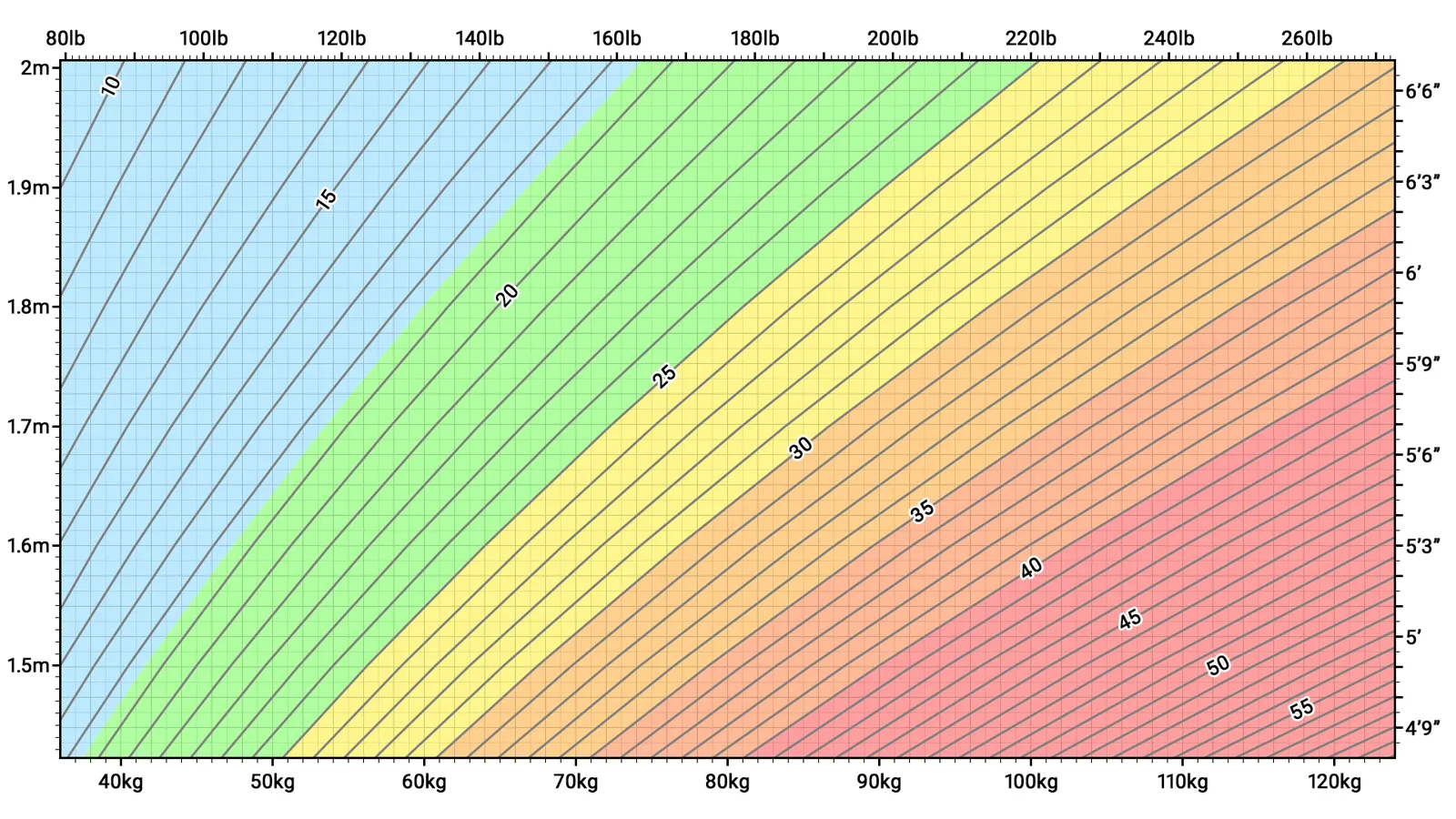
Under the World Health Organization adult definitions, overweight is a BMI of 25 or more and obesity is 30 or more. By that yardstick, the 1.70 m man above is "normal". By the Indian yardstick, he is already overweight. For his height, the 18.5 to 22.9 range works out to roughly 53 to 66 kg, while the global range stretches to about 72 kg. That six-kilo gap is the whole argument in one example.
Why Indians get a lower cut-off
The idea is not new. In 2004 a WHO expert consultation published in The Lancet, Appropriate body-mass index for Asian populations, reviewed the evidence and found that Asian populations have a different link between BMI, body fat and health risk than European populations. A substantial share of Asian people had a high risk of type 2 diabetes and cardiovascular disease at BMIs below 25. The consultation kept the global categories for international comparison but flagged extra public health action points at 23, 27.5, 32.5 and 37.5 for Asian countries to use.
Indian clinicians turned that into national practice. A 2009 consensus led by Delhi diabetologist Anoop Misra set overweight for Asian Indians at a BMI of 23 to 24.9 and obesity at 25 and above, with abdominal obesity defined as a waist of 90 cm or more in men and 80 cm or more in women. ICMR-NIN's 2024 guidelines now spell out the Asian bands directly: Guideline 9 says Asians should keep BMI between 18.5 and 23 "since they tend to have higher percentage body fat even at a given BMI compared to Caucasians and Europeans, which leaves them at a higher risk of NCDs."
The pattern clinicians describe is sometimes called the "thin-fat" phenotype: a person who looks slim in clothes but carries relatively little muscle and a lot of fat inside the abdomen, packed around the liver and other organs. That visceral fat is metabolically active. It feeds insulin resistance, raises triglycerides and pushes up blood pressure, which is why diabetes in India so often appears in people who never thought of themselves as overweight.
The 2025 Indian definition: BMI is only the first gate
In January 2025, the India Obesity Commission published a revised definition of obesity in Asian Indians in Diabetes & Metabolic Syndrome: Clinical Research & Reviews, built through a five-round expert Delphi process. It replaces a BMI-only label with two stages:
- Stage 1 obesity: BMI above 23 with no effect yet on organ function or daily activities. Normal blood sugar, blood pressure and lipids. The goal is diet and exercise to stop disease from starting.
- Stage 2 obesity: BMI above 23 plus excess waist circumference or waist-to-height ratio, plus either symptoms that limit daily life (breathlessness, palpitations, or knee and hip pain during ordinary tasks) or an obesity-related disease such as type 2 diabetes, hypertension or fatty liver.
The full paper also lists the diagnostic numbers clinicians should use:
| Measure | Cut-off for Asian Indian adults |
|---|---|
| Normal BMI | 18.5 to 22.99 |
| BMI Grade I | 23 to 24.9 |
| BMI Grade II | 25 to 27.5 |
| BMI Grade III | 27.6 to 32.4 |
| BMI Grade IV | 32.5 and above |
| Waist circumference | 90 cm or more (men), 80 cm or more (women) |
| Waist-to-height ratio | above 0.5 |
| Body fat (if measured) | above 25.5% (men), above 38% (women) |
This mirrors a global shift. A Lancet Diabetes & Endocrinology commission on the definition and diagnostic criteria of clinical obesity, published the same month, argued that BMI should serve as a population-level screening measure and that excess fat should be confirmed with waist measures or direct fat assessment before anyone is labelled. The Indian paper says its framework aligns with that worldwide move.
Your waist: the second number to know
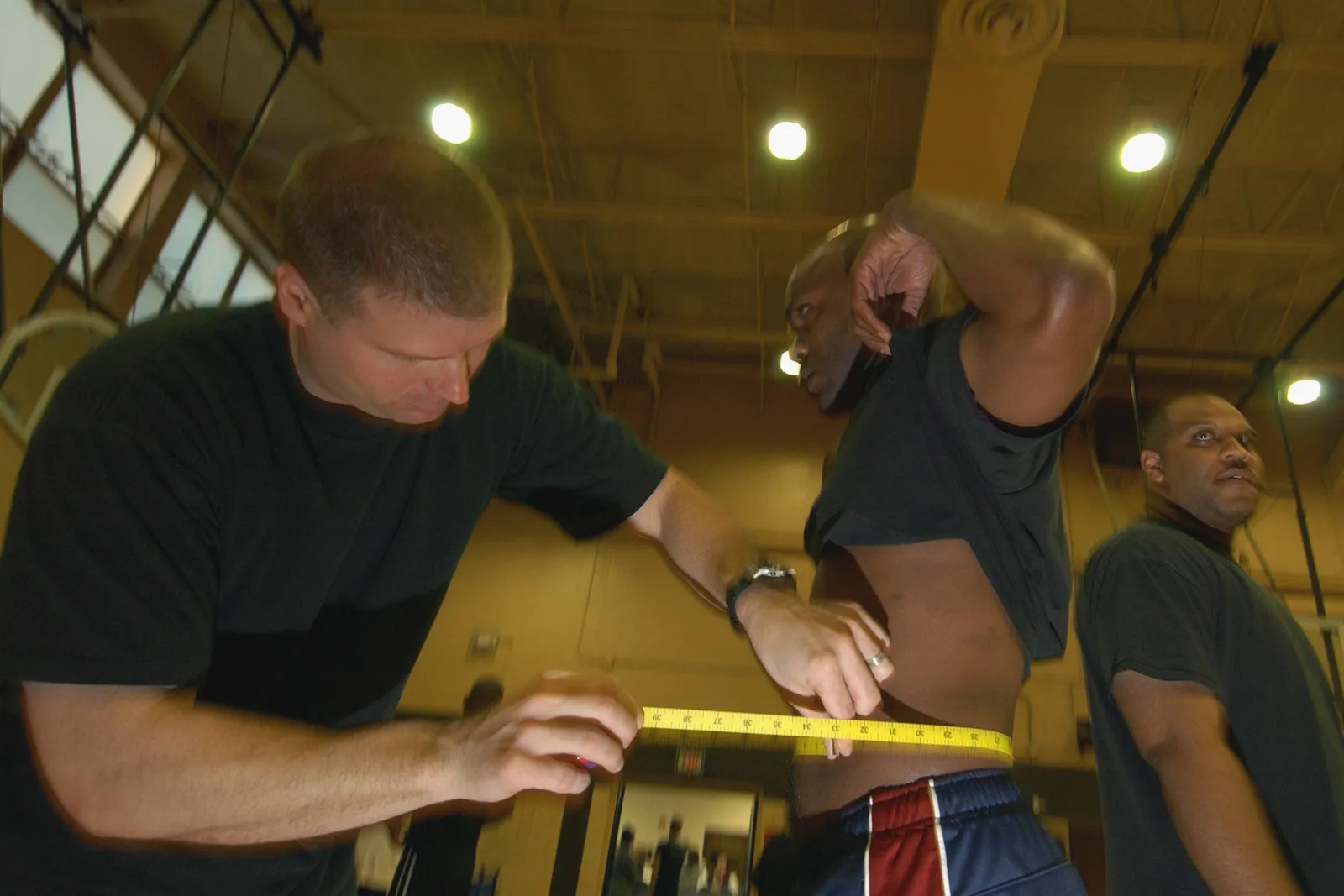
If BMI is the headline, the tape measure is the fine print. ICMR-NIN treats a waist of more than 90 cm in men and more than 80 cm in women as a marker of higher risk of lifestyle diseases. An easier rule from the 2025 Indian definition: keep your waist under half your height. At 170 cm tall, that means a waist below 85 cm.
To measure, stand relaxed, breathe out gently and wrap a tape around your bare abdomen midway between the lowest rib and the top of the hip bone (roughly at the navel), keeping it snug but not pressing into the skin. Measure at the same time of day each month, ideally before breakfast.
How many Indians are above the line?
The latest national survey shows the trend clearly. According to the Health Ministry's July 2026 release on NFHS-6 (fieldwork 2023-24), 30.7% of women and 27.3% of men aged 15 to 49 are overweight or obese, up from 24.0% and 22.9% in the NFHS-5 report (2019-21). The same release reports high blood sugar (or diabetes medicine) rising from 13.5% to 17.8% in women and from 15.6% to 20.9% in men.
Note the catch: NFHS counts overweight from a BMI of 25, the global cut-off. Using India's own threshold of 23 would place a larger share of adults above the healthy line.
NFHS-5 was also the first round to measure waist and hip circumference. It found that 57% of women and 48% of men aged 15 to 49 had a waist-to-hip ratio that put them at substantially increased risk of metabolic complications, and nearly 40% of women had a waist above 80 cm. Overweight rose steeply with age and wealth: among women, from 10% in the poorest households to 39% in the richest.
The ICMR's own ICMR-INDIAB-17 study, which measured more than 1.1 lakh adults across 31 states and union territories using the Asia-Pacific cut-offs, put generalised obesity at 28.6% and abdominal obesity at 39.5%, alongside diabetes at 11.4% and hypertension at 35.5%. All of these were more common in cities than villages.
For context, WHO estimates that in 2024, 2.6 billion adults worldwide were overweight, 940 million of them living with obesity. The South-East Asia Region, which includes India, had the lowest overweight share at 32%, but that figure uses the global cut-offs too.
When a "normal" BMI can still mislead
BMI cannot tell fat from muscle, so it misjudges people at both ends:
- A muscular athlete or a manual labourer can sit at BMI 25 or 26 with little excess fat.
- A slim desk worker with a BMI of 22 can still have a waist above 90 cm, high triglycerides and prediabetes. In India, this second case is the more common trap.
- Older adults lose muscle with age, so the same BMI can mean more fat at 65 than at 35.
- Children and teenagers need age- and sex-specific BMI charts, not the adult bands.
- Pregnancy uses separate weight-gain targets; ICMR-NIN gives those by pre-pregnancy BMI.
That is why the 2025 Indian definition treats body fat as the gold standard where it can be measured, and why a waist check plus basic blood tests (fasting sugar or HbA1c, lipids, blood pressure) tell you more than the scale alone.
Getting into the healthy range
ICMR-NIN's advice is unglamorous and consistent. Weight loss should be gradual: about half a kilogram a week is considered safe, and weight-reduction diets should not fall below 1,000 kcal a day. For the general population, the guidelines say rapid weight-loss approaches and anti-obesity drugs should be avoided; the 2025 Indian definition reserves medicines for Stage 2 obesity, managed by a doctor. For everyone else, the building blocks are the same habits this site keeps returning to:
- Move daily. WHO's floor of 150 minutes of moderate activity a week is easy to reach on foot, and a daily walking habit also helps blunt blood-sugar spikes after meals. Add some strength work to hold on to muscle.
- Fix the drinks first. Sweetened chai, juices and soft drinks add calories without filling you up; keeping free sugars near about 25 g a day is a good place to start.
- Rebuild the plate. Half vegetables and fruit, whole grains instead of refined, enough pulses, curd, eggs or fish to stay full, and less fried namkeen.
- Sleep enough. ICMR-NIN links poor sleep and long screen time with weight gain, so protect the 7 to 9 hours most adults need.
- Track the tape, not just the scale. A shrinking waist with a steady weight usually means you are losing fat and gaining muscle.
The everyday answer
If you are an Indian adult, aim for a BMI between 18.5 and 22.9, and keep your waist below 90 cm (men) or 80 cm (women), or simply below half your height. A BMI of 23 to 25 that the rest of the world calls normal is, for most Indians, an early warning worth acting on. If your BMI is above 23 and you also have a large waist, raised blood sugar, high blood pressure or joint pain, see a doctor for a proper assessment rather than relying on a calculator.