What Is Anticipatory Bail?
Anticipatory bail is a direction from a High Court or Sessions Court that, if you are arrested for a non-bailable offence, you must be released on bail at once. Here is where the idea came from, how Section 482 of the BNSS works, and the Supreme Court rulings that decide how long the protection lasts.
 By Kirti Kaliraman· 10 min read
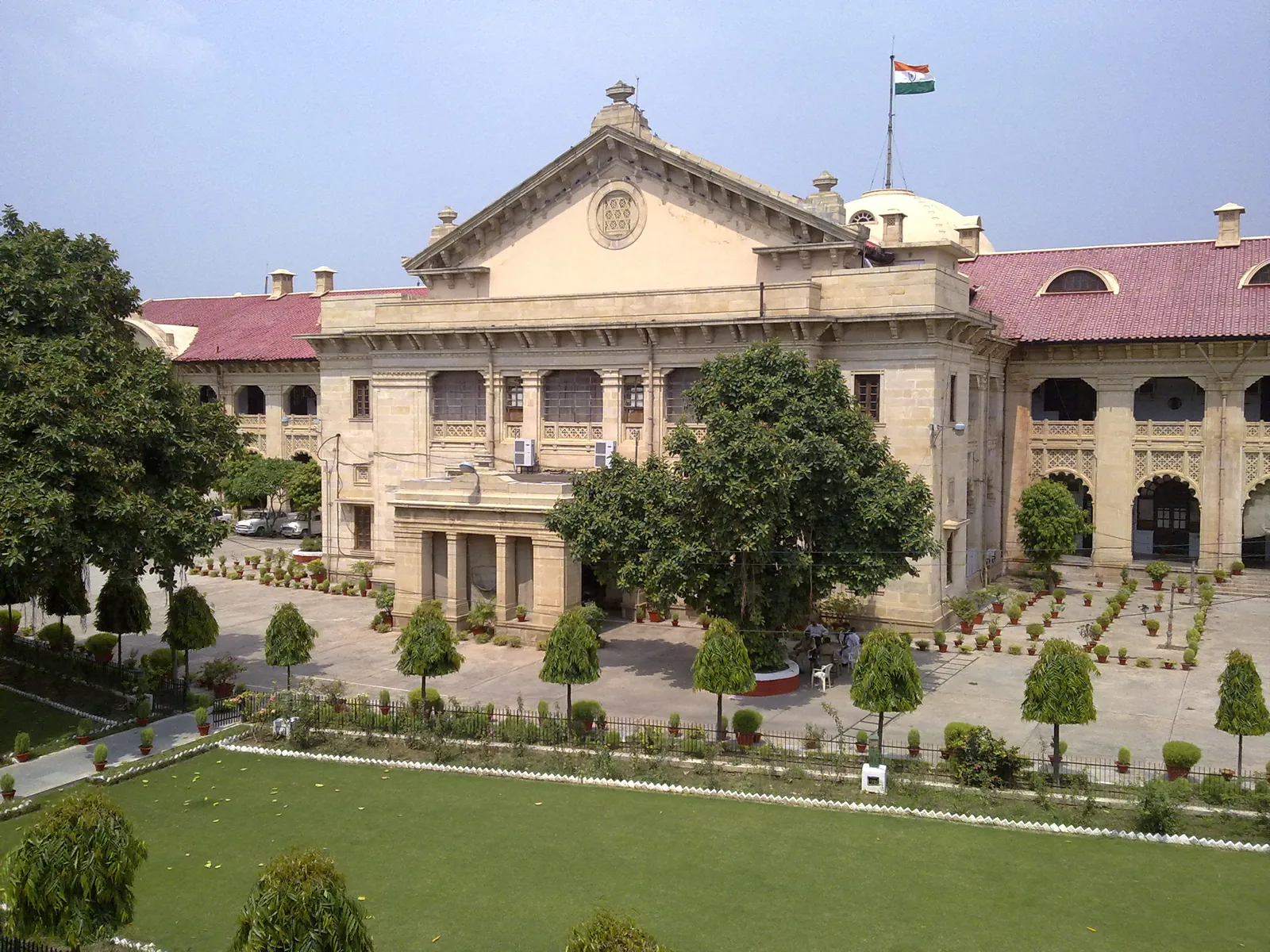
Anticipatory bail is an order from a High Court or a Court of Session directing that, if a person is arrested for a non-bailable offence they fear being accused of, they must be released on bail straight away. It does not stop the police from investigating or even from arresting; it guarantees that the arrest ends in release rather than a stay in custody.
In India the power now sits in Section 482 of the Bharatiya Nagarik Suraksha Sanhita, 2023 (BNSS), which replaced Section 438 of the Code of Criminal Procedure, 1973 when the new criminal laws came into force on 1 July 2024, as PIB recorded. The words of the section barely changed. What gives it shape is half a century of Supreme Court rulings. This is an explanation of the law, not legal advice for any particular case.
Why India invented bail before arrest
Most countries treat bail as something you ask for after you are in custody. India built a remedy for the moment before. The idea came from the Law Commission of India's 41st Report, dated 24 September 1969, which reviewed the old Code of 1898. Paragraph 39.9 noted that courts were divided on whether any power to grant bail before arrest existed, and that the majority said it did not. It then explained why one was needed:
"The necessity for granting anticipatory bail arises mainly because sometimes influential persons try to implicate their rivals in false cases for the purpose of disgracing them or for other purposes by getting them detained in jail for some days. In recent times, with the accentuation of political rivalry, this tendency is showing signs of steady increase."
The Commission added that even outside false cases, where a person is not likely to abscond or misuse liberty, "there seems no justification to require him first to submit to custody, remain in prison for some days and then apply for bail." It recommended a new Section 497A and said the power should be given only to the High Court and the Court of Session. Parliament adopted the idea as Section 438 of the 1973 Code, which came into force on 1 April 1974. The phrase "anticipatory bail" never appears in the section itself; it is the Commission's label, and it stuck.
What Section 482 BNSS actually says
The section has four parts, and each matters in practice.
- Who can apply, and where. Any person who "has reason to believe" that they may be arrested on an accusation of a non-bailable offence may apply to the High Court or the Court of Session. A magistrate cannot grant it.
- Conditions. The court may attach conditions, including that the person makes themselves available for police interrogation when required, does not threaten or induce witnesses, and does not leave India without the court's permission. It can add any condition allowed for regular bail under Section 480(3).
- What happens on arrest. If the person is later arrested without a warrant and is ready to give bail, the officer in charge of the police station must release them. If a magistrate decides a warrant is needed, it must be a bailable warrant that follows the court's direction.
- Exclusions. The section does not apply to arrests for the gravest sexual offences against girls: rape of a girl under 16 under Section 65 of the Bharatiya Nyaya Sanhita, 2023, and gang rape of a girl under 18 under Section 70(2). These carry over exclusions that Parliament added to the old Section 438 in 2018.
So an order under Section 482 is a shield with a specific shape. It applies to an identified accusation, it comes with duties attached, and it can be lost by breaking those duties.
Gurbaksh Singh Sibbia: the 1980 foundation
The first great test came from Punjab. Gurbaksh Singh Sibbia, who had served as Irrigation and Power Minister in the state government, faced allegations of political corruption and sought anticipatory bail. A Full Bench of the Punjab and Haryana High Court refused and laid down a long list of limits: the power was "extra-ordinary," to be used "sparingly in exceptional cases only," and could not be used at all for offences punishable with death or life imprisonment unless the charge looked false.
On 9 April 1980, a five-judge Constitution Bench led by Chief Justice Y.V. Chandrachud rejected most of those limits in Gurbaksh Singh Sibbia v. State of Punjab. The Court said society has "a vital stake" in both personal liberty and the investigational power of the police, and that the High Court and Sessions Court should be trusted to balance them "by a wise and careful use of their discretion." Reading in restrictions that Parliament had not written, it warned, risked an unfair limit on liberty that would offend Article 21, the same guarantee of life and personal liberty that runs through the privacy ruling in Puttaswamy.
Sibbia also drew the line that still holds. The applicant must show a "reason to believe" that rests on something tangible, not a vague fear. And a "blanket order" that protects a person "whenever arrested for whichever offence whatsoever" should not be passed, because it would cripple the police's right and duty to investigate.
How long does it last? Sushila Aggarwal (2020)
For decades, smaller benches disagreed on a practical question: should anticipatory bail expire after a fixed period, or when the accused is summoned to trial, forcing them to surrender and seek regular bail? Some rulings said yes. In Siddharam Satlingappa Mhetre v. State of Maharashtra (2 December 2010), a two-judge bench went the other way and set out the factors courts weigh, including the nature and gravity of the accusation, the applicant's antecedents, the possibility of fleeing justice, the risk of repeat offences, and whether the accusation was made "only with the object of injuring or humiliating the applicant."
A five-judge bench settled the conflict on 29 January 2020 in Sushila Aggarwal v. State (NCT of Delhi). Its answers:
- Protection "should not always or ordinarily be limited to a fixed period"; it should operate "without any restriction as to time."
- It does not end when the accused is summoned or when charges are framed, and "can also continue till the end of the trial."
- A court can still limit it in time, or tie it to an event, where a case has special features such as seriousness or gravity.
- Orders must relate to a specific incident. Anticipatory bail "cannot operate in respect of a future incident that involves commission of an offence."
- An application can be made even before an FIR is registered, as long as the facts are clear and the fear of arrest is reasonable.
The bench also overruled earlier statements in Mhetre that no restrictive conditions at all could be imposed, keeping the court's discretion in both directions.
Where anticipatory bail is not available
Parliament and the states have carved out exceptions, and courts have policed their edges.
Atrocities against Scheduled Castes and Scheduled Tribes. Section 18 of the Scheduled Castes and Scheduled Tribes (Prevention of Atrocities) Act, 1989 says the anticipatory bail provision does not apply to offences under that Act, and Section 18A, added in 2018, reinforced the bar. In Prathvi Raj Chauhan v. Union of India (10 February 2020) the Supreme Court upheld the 2018 amendment, while accepting that courts keep the power to grant relief where the complaint does not make out a prima facie case under the Act.
The Uttar Pradesh gap. India's most populous state went without anticipatory bail for more than four decades. As the Supreme Court recounted in Priya Indoria v. State of Karnataka, the Code of Criminal Procedure (Uttar Pradesh Amendment) Act, 1976 omitted the provision during the Emergency. It returned only through the Code of Criminal Procedure (Uttar Pradesh Amendment) Act, 2018 (UP Act 4 of 2019), and the Allahabad High Court's notice to lawyers dated 1 July 2019 points to the state notification of 6 June 2019. A further UP amendment in 2022 keeps it out of cases under laws such as the UAPA, the NDPS Act, the Official Secrets Act, the UP Gangsters Act and POCSO, and for offences punishable with death.
Other special laws. Several anti-terror and narcotics statutes either exclude anticipatory bail or impose much tighter tests for any bail, so the general rule in Section 482 always has to be read alongside the specific Act.

When the FIR is in another state
People often fear arrest on an FIR filed far from home, for example in a matrimonial dispute where one spouse has moved to another state. In Priya Indoria, decided on 20 November 2023, the Supreme Court held that a Sessions Court or High Court may entertain a plea for limited anticipatory bail even if the FIR was not filed within its territorial jurisdiction. It should at least consider "transit anticipatory bail," an interim protection of limited duration until the accused can approach the competent court where the case is registered. To guard against forum shopping, the Court set conditions: the investigating officer and public prosecutor handling the FIR must get notice on the first date of hearing, the order must record why an inter-state arrest is feared, and the applicant must show why they cannot first approach the court that has territorial jurisdiction.
This is the mirror image of the Zero FIR rule. A complainant can report a cognizable offence at any police station; an accused can seek short-term protection from the nearest competent court, and the real contest then moves to the place where the case belongs.
Why it matters: the numbers behind the remedy
Anticipatory bail is not a luxury for politicians. It speaks to how many people in India are held before any court has found them guilty. According to the National Crime Records Bureau's Prison Statistics India 2023, 5,30,333 people were in Indian jails on 31 December 2023, and 3,89,910 of them, or 73.5%, were undertrials. Only 25.6% were convicts.
In Satender Kumar Antil v. CBI (11 July 2022), the Supreme Court noted that more than two-thirds of prison inmates were undertrials, many of whom may not have needed to be arrested at all. It directed that ordinary bail applications be decided within two weeks and anticipatory bail applications within six weeks, and suggested that the government consider a separate Bail Act to streamline the law.
Anticipatory bail, regular bail and habeas corpus
It helps to place the remedy among its neighbours:
| Remedy | When it is used | Who grants it |
|---|---|---|
| Anticipatory bail (Section 482 BNSS) | Before arrest, when arrest for a non-bailable offence is reasonably feared | High Court or Court of Session |
| Regular bail (Sections 480 and 483 BNSS) | After arrest or appearance in custody | Magistrate, Court of Session or High Court, depending on the offence |
| Habeas corpus | When a person is held unlawfully, without legal authority | High Court (Article 226) or Supreme Court (Article 32) |
Habeas corpus asks whether a detention is lawful at all. Regular bail accepts that custody was lawful and asks whether it should continue. Anticipatory bail asks whether lawful custody needs to begin in the first place.
The short answer
Anticipatory bail is India's answer to the arrest used as punishment. It lets a High Court or Sessions Court decide in advance that, for a specific accusation, an arrest should end in immediate release, on conditions that keep the investigation intact. Sibbia made it a broad and flexible power rooted in Article 21. Sushila Aggarwal made clear it can last until the end of a trial. Section 482 of the BNSS carries it into the new criminal code with almost the same words that the Law Commission drafted in 1969.