Why Do Passports Come in Only Four Colours?
No international rule sets passport colours, yet almost every booklet is red, blue, green or black. Durability, politics and a 1981 European decision explain why.
 By Kirti Kaliraman· 8 min read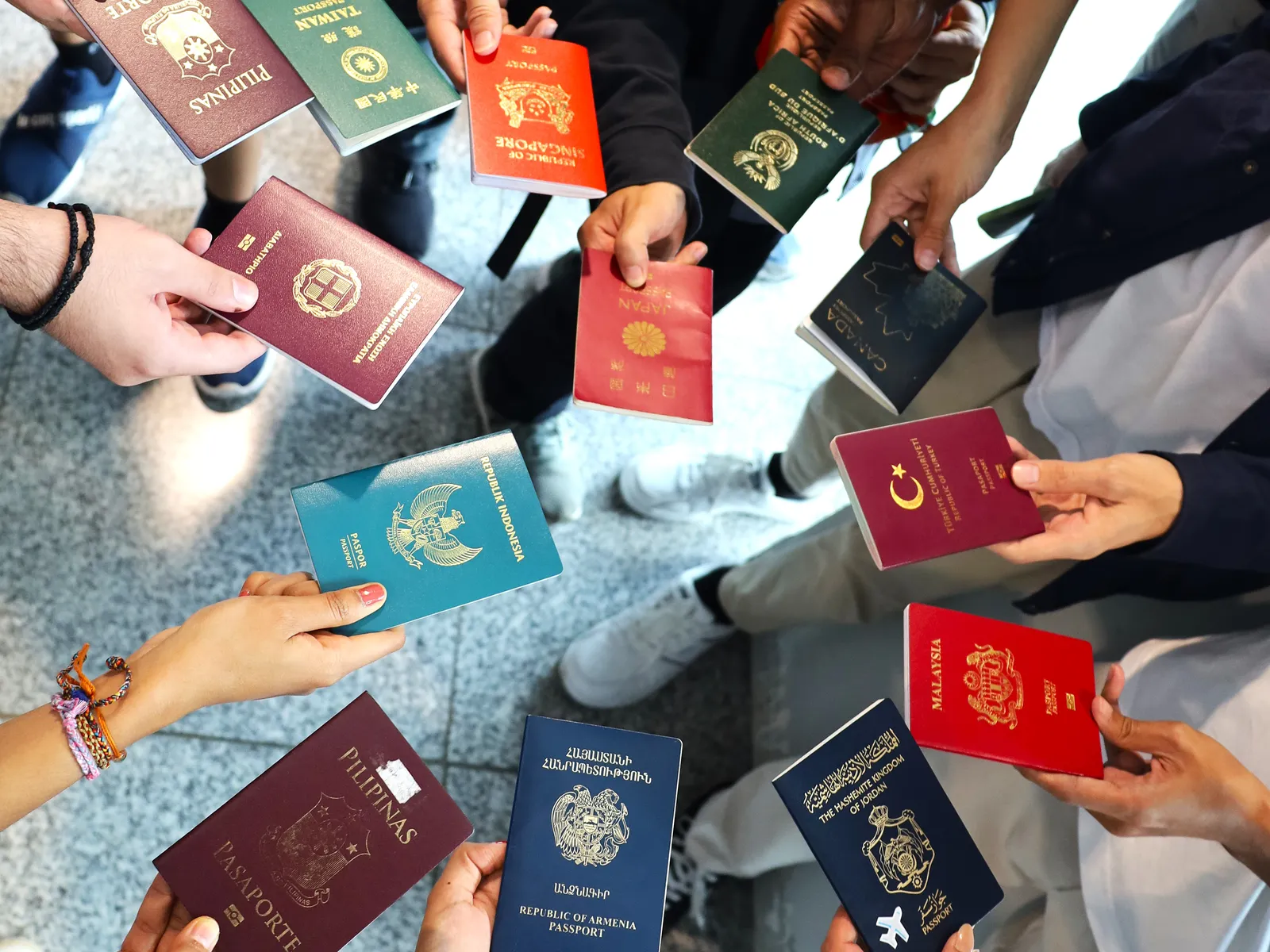
Passports come in only four colours (red, blue, green and black) because governments pick dark, serious, hard-wearing shades that look official and hide dirt, and because regional blocs have deliberately matched one another. No global rule requires it: the UN's aviation agency sets the size, layout and chip standards for passports, but says nothing about the colour of the cover.
Within those four families there is a surprising amount of meaning. Burgundy usually signals Europe, green often points to the Muslim world or West Africa, blue dominates the Americas and the Pacific, and black is rare enough to be a statement. India's own navy blue booklet sits squarely in the most popular group.
Who actually decides what a passport looks like?
The rulebook is ICAO Document 9303, published by the International Civil Aviation Organization, the UN body that also governs the airport identifiers we unpacked in why airport codes look so strange. Doc 9303 fixes the booklet size (125 by 88 millimetres for a standard passport), the layout of the photo page and the two lines of letters, numbers and chevrons at the bottom, called the machine-readable zone. It also sets the rules for the contactless chip inside an e-passport.
That machine-readable zone is deliberately primitive: it uses only the capital letters A to Z, the digits 0 to 9 and the filler character "<", printed in a typeface called OCR-B, so that any scanner on Earth can read it. Names written in Devanagari, Arabic or Chinese on the photo page are transliterated into plain Latin letters there, a world away from the thousands of scripts handled by Unicode.
Colour, by contrast, is left entirely to each country. A government could legally issue a pink or orange passport tomorrow. Almost none do.
Why the palette stays so narrow
Designers and passport officials tend to give the same practical reasons:
- Durability. A passport may spend ten years in pockets, handbags and hotel safes. Dark dyes on coated card or polymer covers hide scuffs, sweat and fading far better than pale ones.
- Seriousness. A passport is a state document that asks foreign officials to let its holder pass. Deep, sober colours look authoritative; bright ones risk looking like a souvenir.
- Gold foil. Nearly every country stamps its coat of arms and name in gold or silver foil, and metallic foil reads best against a dark background.
- Recognition. Border officers process thousands of booklets a day. A familiar colour helps them spot the right document at a glance, and an unusual one draws questions.
Counting country by country, blue is the most common colour, followed by red, then green, with black a distant fourth. Shades vary widely, from the light sea blue of some Pacific island passports to blues so dark they read as black.
Burgundy: a 1981 European decision
The most visible colour bloc is Europe's. On 23 June 1981, the representatives of the governments of the European Community member states adopted a resolution on a passport of uniform pattern, which specified the cover colour simply as "burgundy red". A follow-up agreement in 1982 tightened that to a shade as close as possible to RAL 4004, a Bordeaux red-violet from the German colour standard.
It was a political choice, not a legal requirement. The resolution was an agreement between governments rather than binding EU law, but it did its job: a traveller from Lisbon and a traveller from Copenhagen now hold booklets that look like siblings. Several countries that hoped to join, or simply wanted to look European, followed suit, which is why Turkey's passport is also burgundy.
The most famous exception proves the rule. The United Kingdom adopted burgundy in 1988 to fit in with its partners, then, after leaving the EU, began issuing dark blue passports again in 2020. Nothing in EU law had ever forced the change in either direction.
Green, blue and black
Green is widely used by Muslim-majority countries, including Saudi Arabia, Pakistan and Bangladesh, because green carries strong associations in Islam. Several West African states, such as Nigeria, also use green, and Taiwan and Indonesia carry their own distinctive greens.
Blue is the default across much of the Americas, the Caribbean and Oceania. The United States moved to navy blue in 1976 to mark its bicentennial, and Canada and Australia also use dark blue. In the Caribbean, member states of the CARICOM regional bloc share a common blue design.
Black is the rarest. New Zealand's black passport, with its silver fern, echoes the black worn by its national sports teams, and a handful of other countries, including some in Africa, use black or near-black covers.
Some countries even use colour inside their own systems. Japan, for instance, issues a red passport valid for ten years and a dark blue one valid for five.
India's navy blue, white and maroon
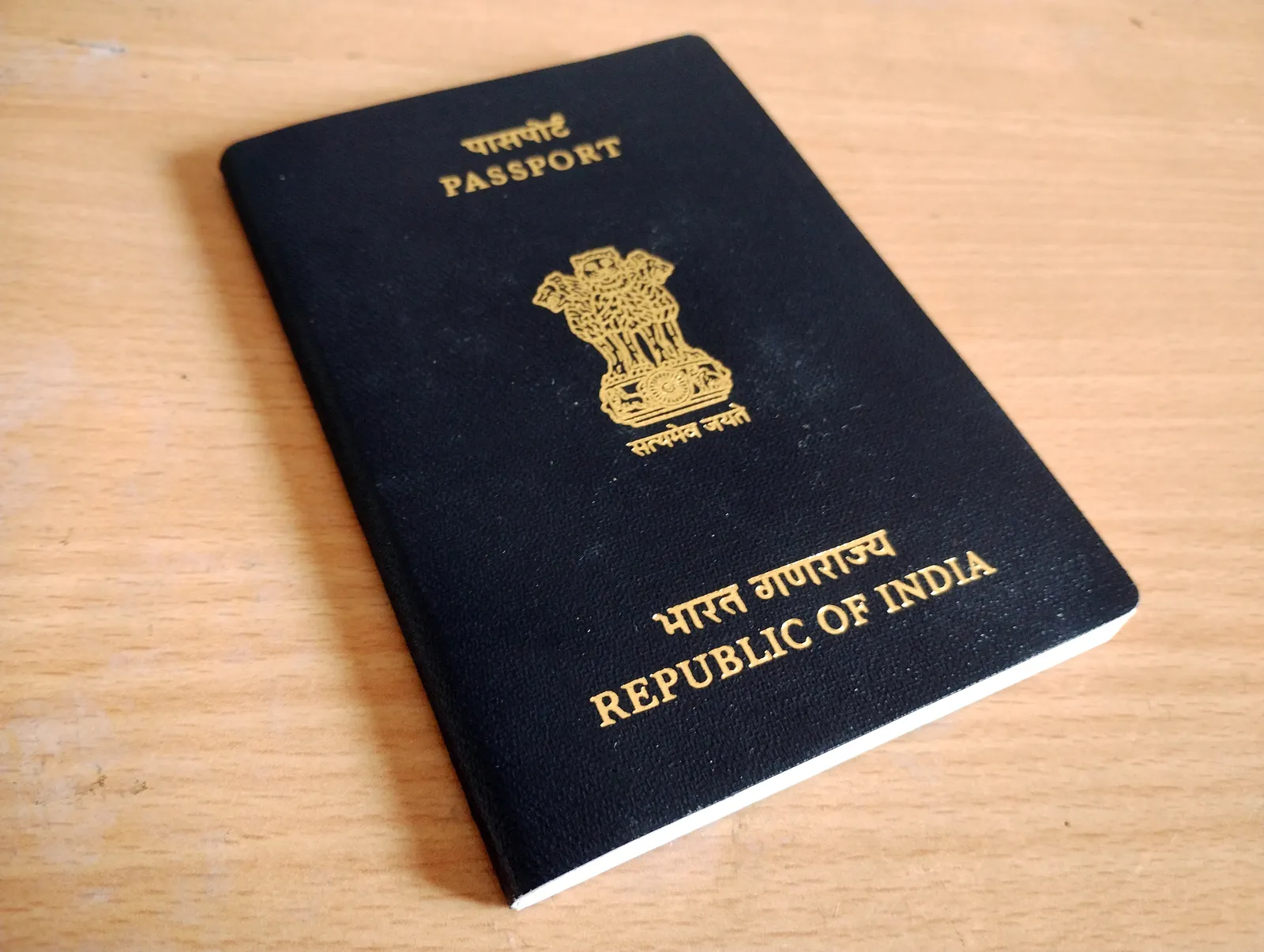
India uses colour to separate types of travel document. The ordinary passport, carried by almost every Indian traveller, is navy blue. Official passports, issued to government officials travelling on state business, are white, and diplomatic passports are maroon. Each carries the national emblem and the words "Passport" and "Republic of India" in Hindi and English.
The country once came close to adding a fourth colour. On 12 January 2018 the Ministry of External Affairs announced that passport holders with Emigration Check Required (ECR) status, mostly workers who had not studied beyond Class 10 and who need clearance before taking jobs in certain countries, would receive passports with an orange jacket. Critics argued that a different colour would mark poorer, less educated Indians at every border, and a public interest petition was filed in the Kerala High Court. On 29 January 2018, the ministry reversed course and decided not to issue separate orange passports. It was a vivid example of how much a cover colour can say about its holder.
The bigger change since then has been inside the cover. Indian passports now carry a small gold chip symbol on the front, marking them as e-passports with an embedded chip that stores the holder's details and photo, as specified in ICAO Doc 9303. Every passport office and Passport Seva Kendra in India, and every Indian mission abroad, now issues them, and the government told the Rajya Sabha in August 2026 that more than 1.73 crore e-passports had been issued so far.
From safe-conduct letters to booklets
Travel papers are ancient. In the Hebrew Bible, the Book of Nehemiah describes the Persian king Artaxerxes I giving Nehemiah letters around 445 BCE asking governors to grant him safe passage. Medieval rulers issued similar "safe conducts", and an English Act of Parliament of 1414, under Henry V, is often cited as an early legal reference to them.
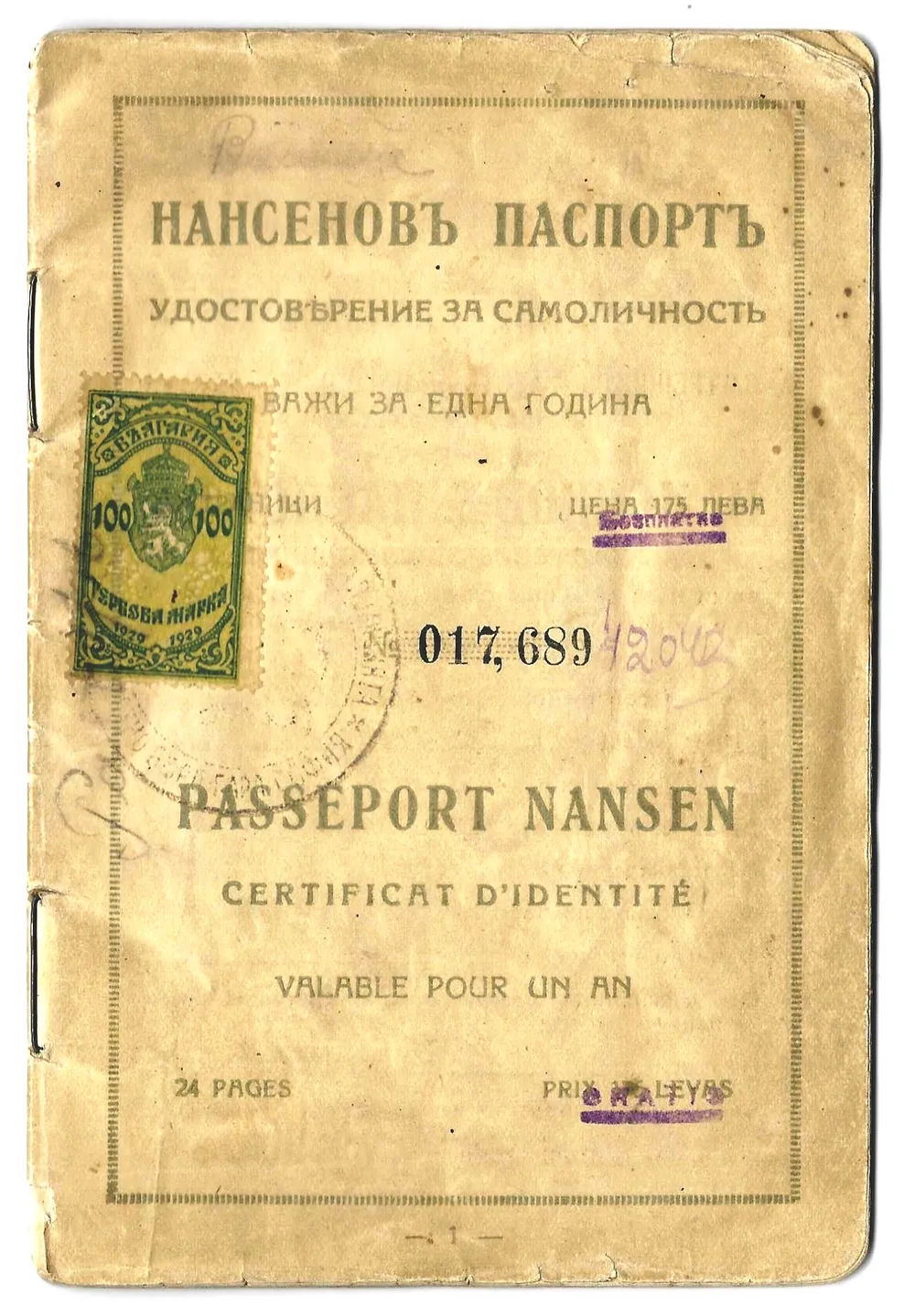
The modern booklet is a product of the First World War, when European states tightened borders and demanded identity papers. In October 1920 the League of Nations held a Paris Conference on Passports, Customs Formalities and Through Tickets, which recommended a standard 32-page booklet with a cardboard cover. Two years later the League created the Nansen passport, named after the Norwegian explorer Fridtjof Nansen, so that refugees left stateless by the Russian Revolution could travel. Those early documents were often plain buff or grey paper; colour as national branding came later, as states began to treat the passport as a symbol of the nation as well as a permit.
India's own legal framework followed a similar arc. The colonial Indian Passport Act of 1920 dealt mainly with entry into India. The modern Passports Act, 1967 came after the Supreme Court held in Satwant Singh Sawhney (1967) that the right to travel abroad is part of personal liberty under Article 21. In Maneka Gandhi v. Union of India (1978), a case that began when the government impounded a passport, the Court went further and ruled that any procedure restricting that liberty must be fair, just and reasonable. That expansive reading of Article 21 later underpinned the right to privacy judgement in Puttaswamy.
Does colour say anything about a passport's power?
Not directly. What makes a passport powerful is the number of countries that let its holders in without applying for a visa in advance. In recent editions of the Henley Passport Index, Singapore's red passport has ranked first, with visa-free or visa-on-arrival access to about 192 destinations. In the October 2026 edition India was placed 84th, with access to 55 destinations without a prior visa, according to Business Today's report.
Red, blue, green and black all appear at both ends of that table. The colour tells you something about a country's history, its neighbours and the image it wants to project. The power comes from diplomacy.
Practical tips for travellers
- Check validity, not colour. Many countries require at least six months of validity left on your passport and one or two blank pages for stamps.
- Use a cover with care. A passport cover protects the booklet, but some airlines and border posts will ask you to remove it, and thick covers can block e-gate scanners from reading the chip.
- Never bend the chip page. On an e-passport the chip and antenna sit in the cover or a data page; a damaged chip can mean a slower check at immigration and, eventually, a replacement.
- Photograph the data page. A clear photo stored securely makes replacing a lost passport far easier, at home or at an Indian embassy abroad.
The next time you join an immigration queue, look at the booklets in the hands around you. You will almost certainly see only four colours, and each one tells a small story about where its holder comes from.