What Is Habeas Corpus?
Habeas corpus is the oldest legal weapon against unlawful imprisonment: a court order forcing the state to bring a prisoner before a judge and explain why they are held. Here is where it came from, how India's courts use it, and the day the Supreme Court said it could be switched off.
 By Kirti Kaliraman· 8 min read
Habeas corpus is a court order that requires whoever is holding a person in custody, whether a police station, a prison, the army or even a private family, to bring that person before a judge and show a lawful reason for the detention. If the jailer cannot justify it, the court orders the person released, which is why habeas corpus is often called the "Great Writ" of personal liberty.
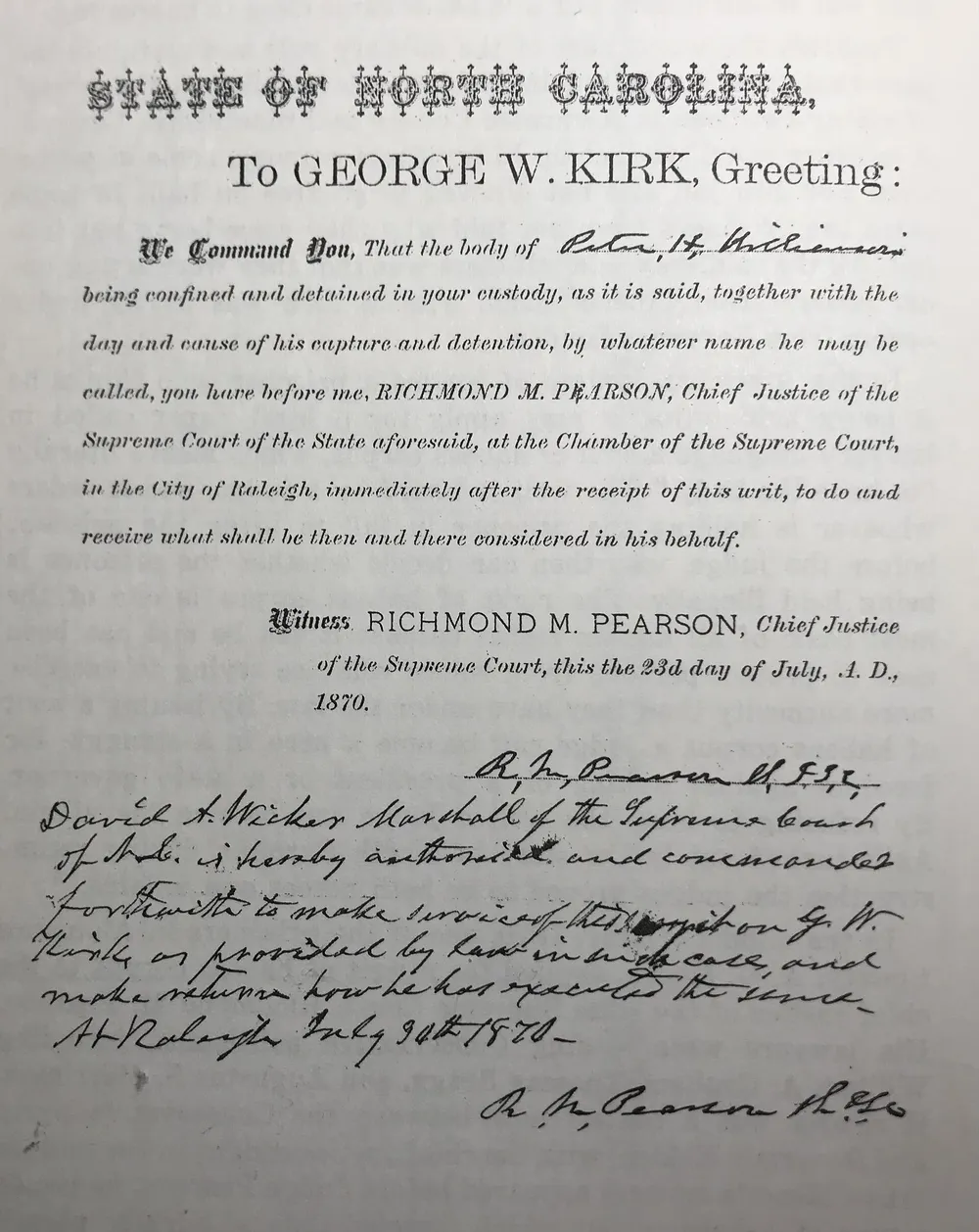
The Latin phrase means "that you have the body". It comes from the opening words of the medieval writ, which commanded a sheriff or jailer to produce the prisoner's body in court. Today the remedy is written into the constitutions of India, the United States and dozens of other countries, and it remains the fastest route from an illegal cell to a courtroom.
How the writ works
Most court cases ask a judge to decide who is right in a dispute. Habeas corpus asks a narrower and more urgent question: is this detention lawful, right now? It does not decide guilt or innocence. It tests whether the state, or anyone else, has legal authority to hold the person at all.
In practice the process runs in three steps:
- A petition is filed. The detained person can file it, but so can a relative, a friend or, in India, almost any public-spirited person, because the detainee is often unable to reach a lawyer.
- The court issues notice or a rule. The custodian must produce the detainee, or at least the records of the detention, and explain under what law the person is held.
- The court decides. If the detention has no legal basis, ignores the procedure the law requires, or has been made in bad faith, the court orders immediate release.
Courts treat these petitions as urgent. Indian judges have heard habeas corpus matters late at night and during vacations, and the Supreme Court has repeatedly said that delay in deciding such a petition is itself a denial of liberty.
From Magna Carta to the 1679 Act
The idea is far older than any modern constitution. Clause 39 of Magna Carta, sealed by King John in 1215, promised that no free man would be seized or imprisoned "except by the lawful judgement of his equals or by the law of the land." Over the following centuries English judges turned the writ of habeas corpus into the practical tool for enforcing that promise.
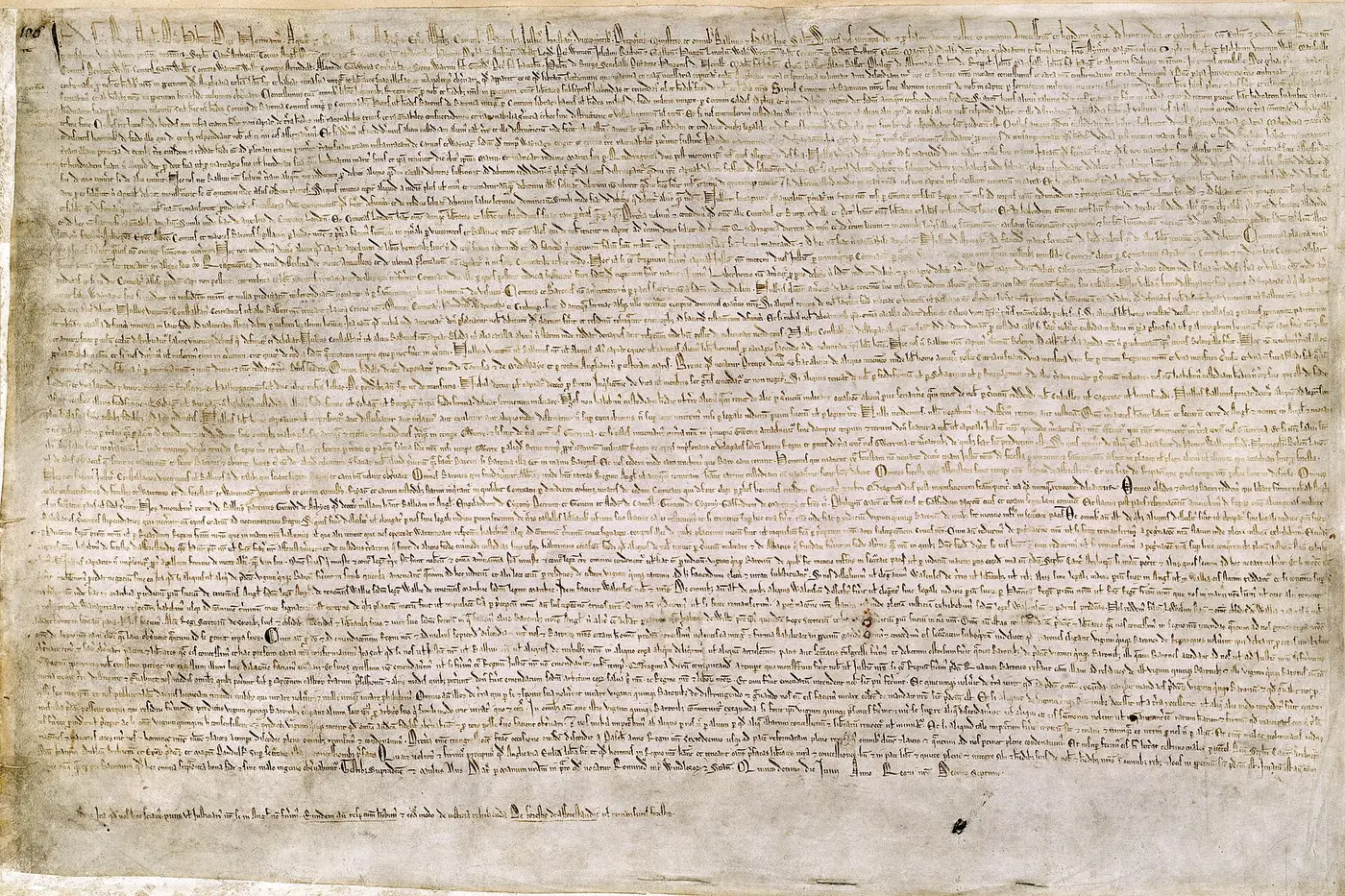
Kings resisted. Charles I's government jailed opponents "by special command" of the monarch without giving any cause, and judges hesitated to intervene. Parliament's answer was the Habeas Corpus Act 1679, which received royal assent from Charles II on 27 May 1679. It set deadlines for producing prisoners, fined judges and jailers who ignored the writ, and banned shipping prisoners overseas to escape the courts' reach. The UK Parliamentary Archives still hold the original Act.
A famous story, told by Bishop Gilbert Burnet, claims the bill passed the House of Lords only because a teller counted a very fat peer as ten votes as a joke. Historians such as Helen Nutting have called that tale "highly improbable", but it has stuck to the Act for more than three centuries.
The writ's most celebrated English use came in 1772. In Somerset v Stewart, James Somerset, an enslaved man held on a ship bound for Jamaica, was brought before Lord Mansfield on a writ of habeas corpus. Mansfield ruled that no law in England allowed him to be forcibly removed, and Somerset walked free.
The American version
The founders of the United States thought the writ important enough to protect in the body of the Constitution itself, before the Bill of Rights existed. Article I, Section 9 says that "the Privilege of the Writ of Habeas Corpus shall not be suspended, unless when in Cases of Rebellion or Invasion the public Safety may require it."
That exception has been tested. Abraham Lincoln suspended the writ in parts of the country during the Civil War in 1861, drawing a sharp rebuke from Chief Justice Roger Taney in Ex parte Merryman. More recently, in Boumediene v. Bush (2008), the US Supreme Court held 5–4 that prisoners at Guantánamo Bay were entitled to challenge their detention through habeas corpus.
Habeas corpus in India
India's Constitution names habeas corpus explicitly. Article 32 lets anyone go straight to the Supreme Court to enforce a fundamental right, and empowers the Court to issue "writs, including writs in the nature of habeas corpus, mandamus, prohibition, quo warranto and certiorari." Article 226 gives every High Court the same power, and more. In the Constituent Assembly on 9 December 1948, B.R. Ambedkar described Article 32 as "the very soul of the Constitution and the very heart of it."
The writ works alongside Article 22, which requires that anyone arrested be told the grounds of arrest and produced before the nearest magistrate within 24 hours. Section 58 of the Bharatiya Nagarik Suraksha Sanhita, 2023, which replaced the old criminal procedure code, repeats that 24 hour limit. When police hold someone longer without a magistrate's order, habeas corpus is the remedy.
Indian courts have also stretched the writ well beyond its English origins:
- Prison conditions. In Sunil Batra v. Delhi Administration (1980), the Supreme Court treated a prisoner's letter about the torture of a fellow inmate as a habeas corpus petition and used the writ to protect people already lawfully in jail from cruel treatment.
- Compensation. In Rudul Sah v. State of Bihar (1983), a man acquitted on 3 June 1968 was not released until 16 October 1982, more than 14 years later. His habeas corpus petition led the Court, under Chief Justice Y.V. Chandrachud, to order the state to pay ₹30,000 on top of ₹5,000 already paid, establishing that a violation of the right to liberty can earn monetary compensation.
- Adults' own choices. In the Hadiya case, Shafin Jahan v. Asokan K.M., the Kerala High Court had used a father's habeas corpus petition in May 2017 to annul his adult daughter's marriage. The Supreme Court set that order aside on 8 March 2018 and explained in its 9 April 2018 judgement that once a detainee appears and says she is not under illegal confinement, the writ court's job is done. The writ exists to free people, not to make their decisions for them.
The day India switched it off
The writ's darkest chapter in India came during the Emergency declared on 25 June 1975. Two days later a Presidential order under Article 359 suspended the right to move any court to enforce Article 21, the right to life and personal liberty. Thousands of opposition leaders, journalists and activists were detained under the Maintenance of Internal Security Act. High Courts across the country nonetheless kept hearing their habeas corpus petitions.
On 28 April 1976, a five-judge bench of the Supreme Court ruled 4–1 in ADM Jabalpur v. Shivakant Shukla that, while the order stood, no detainee could approach a High Court for habeas corpus, even to argue that the detention was illegal or made in bad faith. Chief Justice A.N. Ray and Justices M.H. Beg, Y.V. Chandrachud and P.N. Bhagwati formed the majority.
The lone dissent came from Justice H.R. Khanna, the same judge whose vote had decided the basic structure case three years earlier. He held that the state cannot deprive anyone of life or liberty without the authority of law, Emergency or not. Two days later the New York Times wrote that if India ever found its way back to freedom and democracy, "someone will surely erect a monument to Justice H. R. Khanna." In January 1977 he was passed over for Chief Justice in favour of Justice Beg, and he resigned.
The country repaired the damage in two stages. The 44th Amendment of 1978 changed Article 359 so that Articles 20 and 21 can no longer be suspended during any Emergency. Then, in the 2017 Puttaswamy privacy judgement, the Supreme Court declared the majority opinions in ADM Jabalpur "seriously flawed" and expressly overruled them. Khanna's dissent had become the law of the land.
Why it still matters
Habeas corpus is not only a story about emergencies. India's prisons are crowded with people who have not been convicted of anything. According to the National Crime Records Bureau's Prison Statistics India 2023, 5,30,333 people were in Indian jails on 31 December 2023, of whom 3,89,910, or 73.5%, were undertrials awaiting the outcome of their cases. Total jail capacity was 4,39,119.
Most of those undertrials are held under valid court orders, so habeas corpus is not the tool that frees them; bail is. But the writ remains the backstop for every case where the paperwork is missing, the deadline has passed or nobody will admit who is holding a person. The same pattern runs through rights cases everywhere, from Lord Mansfield's courtroom in 1772 to South Africa's Constitutional Court abolishing the death penalty in 1995: a guarantee on paper is only as strong as the judges willing to enforce it.
That is the lesson of 1976. A right to liberty written in a constitution means little unless someone can walk into court, demand to see the body, and get an answer. Habeas corpus is that demand, and more than 800 years after Magna Carta it is still the first question a free legal system asks of the state: by what authority do you hold this person?