Why Does Indian Railways Use Broad Gauge?
Indian Railways uses 1,676 mm broad gauge because colonial engineers wanted a wider, steadier track than Britain's standard, and India later unified almost the whole network on that same width. Here is how that choice stuck, and why it still shapes every long-distance journey.
 By Kirti Kaliraman· 6 min read
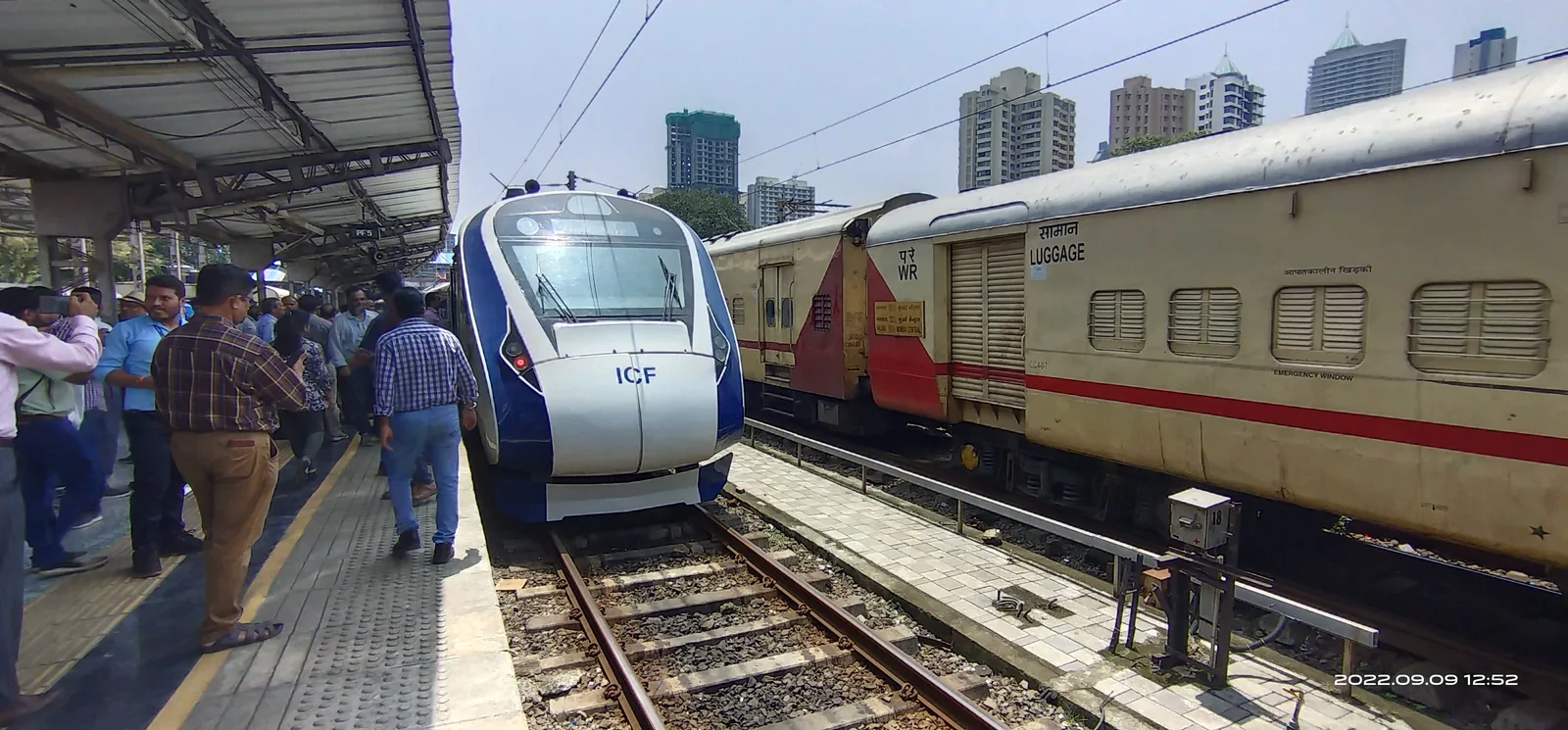
Indian Railways uses broad gauge, a track 1,676 millimetres (5 feet 6 inches) wide, because nineteenth-century engineers picked a wider stance than Britain's standard for steadier locomotives and roomier coaches, and because India later decided to convert almost every other gauge to that same width. That choice now carries the vast majority of the network's passengers and freight, from Rajdhani expresses to heavy ore trains.
Gauge is simply the distance between the inner faces of the two rails. Most of the world's mainline railways use standard gauge of 1,435 mm (4 ft 8½ in). India's mainline standard is wider. The same Indian gauge also runs in Pakistan, Sri Lanka, Nepal and parts of Bangladesh, plus Argentina, Chile and San Francisco's BART system, as summarised on the 5 ft 6 in gauge page.
How 5 feet 6 inches was chosen
When the East India Company planned India's first passenger lines in the 1840s and 1850s, Britain itself was still fighting a "gauge war" between George Stephenson's standard and Isambard Kingdom Brunel's much wider Great Western tracks. For India, Frederick Walter Simms, Consulting Engineer to the Government of India, recommended 5 ft 6 in as a middle path: wider than English standard, yet cheaper and more practical than the even broader widths some officials preferred. A Business Standard account of that decision notes that early contracts briefly floated standard gauge, Lord Dalhousie favoured something closer to 6 ft, and Simms's compromise of 1,676 mm is what stuck.
The first passenger train in India ran on 16 April 1853 from Bombay's Bori Bunder to Thane on that broad gauge, under the Great Indian Peninsula Railway. Once the trunk routes used 5 ft 6 in, every later mainline decision had to match if trains were to run through without unloading people and goods at a break of gauge.
Wider track was sold as engineering common sense for Indian conditions. A broader wheelbase rides more steadily on soft soils and in strong cross-winds, leaves more room for large locomotive boilers and fireboxes, and lets coaches carry more passengers per vehicle. Canada and Maine once used the same 1,676 mm "Provincial" or "Portland" gauge, then converted to standard. India never converted. It doubled down.
Then came metre gauge, and a divided map
Broad gauge was expensive. From the 1870s the colonial state also built a cheaper metre-gauge (1,000 mm) network for branch lines and thinner traffic, especially across the north and west. Narrow gauges of 762 mm and 610 mm climbed hills where sharp curves and light earthworks mattered more than speed. By Independence in 1947, India had a patchwork: roughly comparable lengths of broad and metre gauge, plus thousands of kilometres of narrow gauge, a split still visible in historical comparisons collected under Project Unigauge.
That patchwork was a daily tax. Freight had to be transhipped where gauges met. Passengers changed trains. Wagons and coaches could not roam freely. A railway that was supposed to bind a subcontinent was, in practice, several networks sharing a brand.
Project Unigauge: one width for almost everything
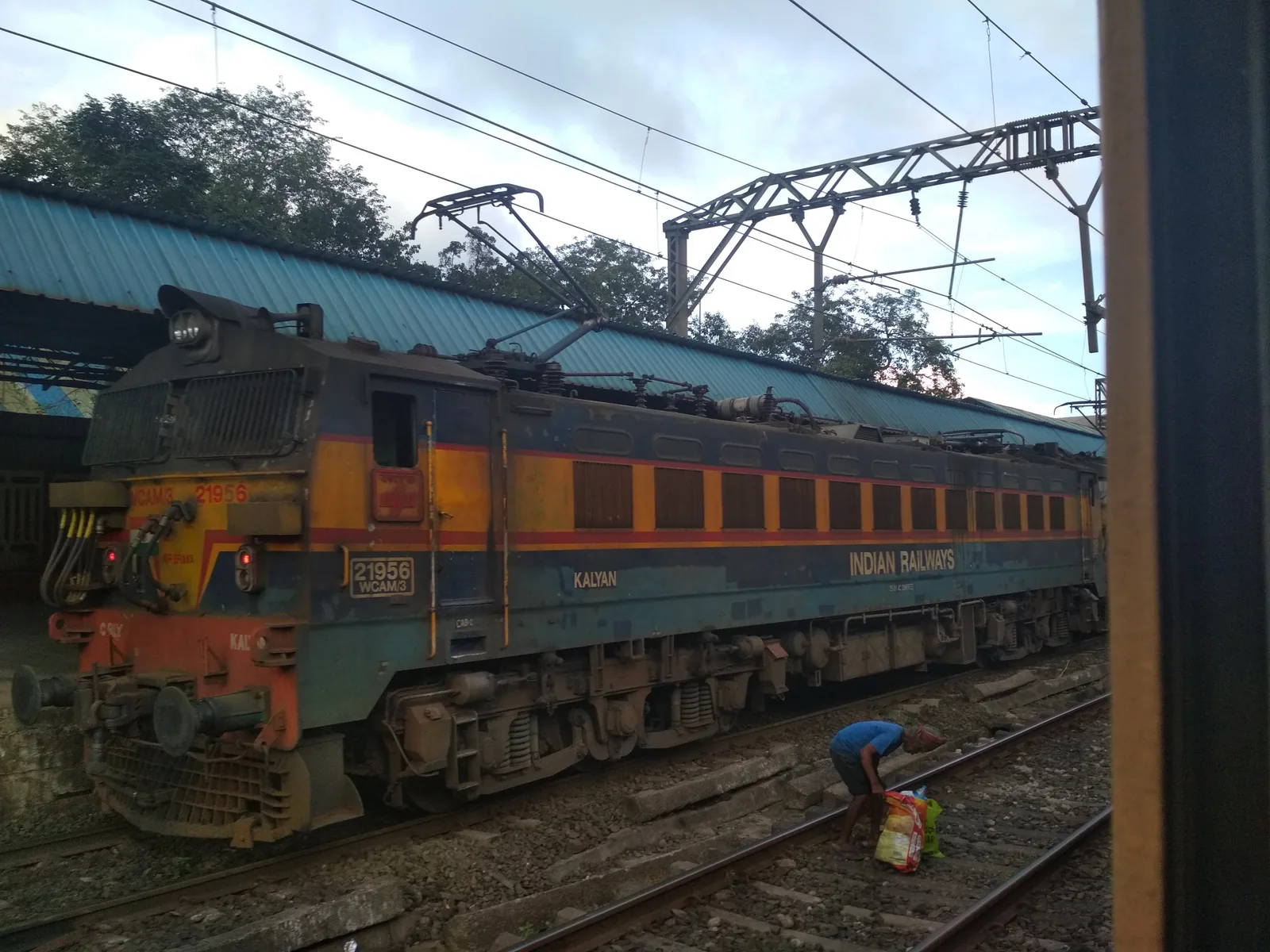
On 1 April 1992 Indian Railways formally launched Project Unigauge: convert metre and most narrow-gauge lines to 1,676 mm so trains could run end to end. The programme has been one of the largest gauge-conversion efforts anywhere. By March 2024, Indian Railways Year Book figures summarised on that page put broad gauge at 66,820 route kilometres (about 96.6% of the network), with metre gauge down to 1,159 km and narrow gauge to 1,202 km. By March 2025 the same series shows broad gauge at 67,372 km, or about 97% of 69,439 total route kilometres, with metre gauge at 894 km and narrow gauge at 1,173 km.
The Union Budget's railway physical targets still keep a line for gauge conversion: the 2024–25 Expenditure Profile set a budget target of 200 route kilometres of conversion for that year, after 242 km were achieved against a smaller revised target the year before. The remaining non-broad stretches are often hills, heritage tourism lines or pockets still queued for works.
A 2023 review of Indian railway modernisation treated Unigauge as largely complete in spirit: a near-unified 1,676 mm system that finally lets planners electrify, double and speed up one continuous grid. That matters for freight corridors and for the simple idea that a sealed wagon loaded in Gujarat should not need emptying in Rajasthan just because the rails get narrower.
What broad gauge buys you in practice
On a unified broad-gauge map, Indian Railways can run heavier axle loads and wider coaches than metre gauge ever allowed. Mail and express trains share the same rails as freight. Electric locomotives, already dominant on the broad-gauge core, can haul both. The Press Information Bureau reported in November 2024 that about 97% of the broad-gauge network had been electrified, with a later 2025 update putting the share even higher as remaining sections were wired. Electrification and Unigauge reinforce each other: there is little point stringing 25 kV wires over a line you still plan to rip up and relay to a different gauge.
Broad gauge is not automatically "faster" than standard gauge. Speed comes from alignment, signalling, rolling stock and whether passenger and freight share the same tracks. Japan's Shinkansen runs on standard gauge on dedicated high-speed lines, and India's Mumbai–Ahmedabad bullet train is being built to that same 1,435 mm standard so it can use proven Shinkansen technology. Airliners solve a different optimisation, which is why planes fly at about 35,000 feet. Everyday Indian Railways, though, stays on 1,676 mm because that is the installed base for tens of thousands of route kilometres, hundreds of thousands of wagons and the coaching fleet that already fits those platforms and bridges.
The narrow-gauge exceptions worth keeping
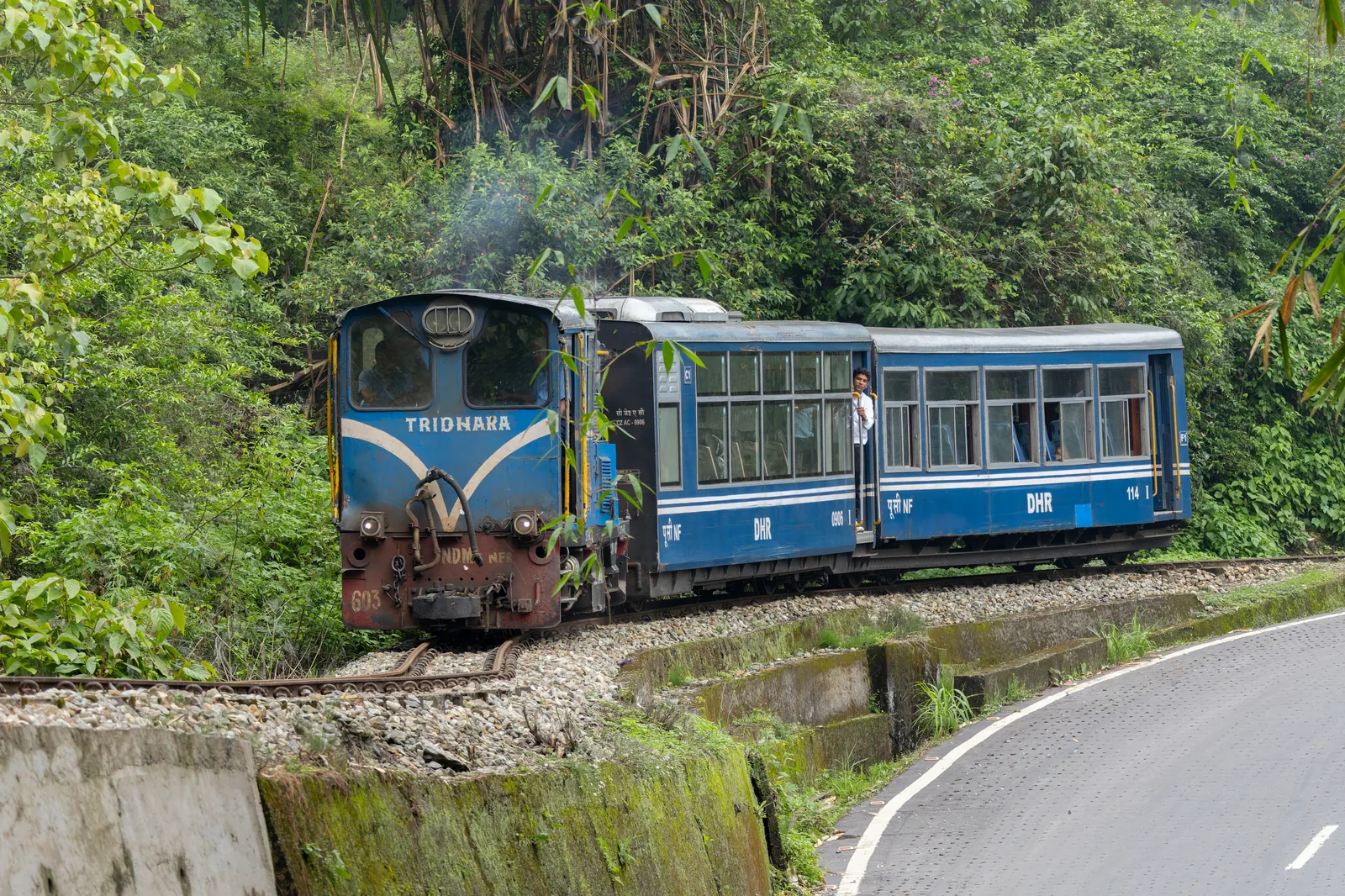
Not every inch of steel will become broad. India's mountain railways keep their historic narrow gauges as living museums and tourist draws. The Darjeeling Himalayan Railway, the Nilgiri Mountain Railway and the Kalka–Shimla Railway form the UNESCO-listed Mountain Railways of India. Their 610 mm and metre-gauge curves would lose their character (and much of their alignment) if forced onto broad gauge. Matheran Light Railway is another cherished exception. Unigauge was always about the commercial network, not about erasing every toy train.
Cities tell a related story. Many newer metro systems use standard gauge. Kolkata Metro and parts of Delhi Metro were built to broad gauge so they could share workshops or habits with Indian Railways. Gauge is path-dependent: change it only when the benefit outweighs decades of sunk cost.
The short answer, again
Indian Railways uses broad gauge because Simms's 1,676 mm compromise became the nineteenth-century trunk standard, because a wider stance suited heavy tropical traffic, and because Project Unigauge spent three decades making that width nearly universal. When you step onto a platform from Howrah to Chennai Central, the rails under the train are 241 mm wider than those under a Eurostar or a Shinkansen, and that extra span is the quiet reason a sealed container can roll across most of India without changing trains. The boarding passes at the airport next door still speak a different code language, which is why airport codes look so strange, but on the ground the country's mainline story is now one gauge, almost everywhere it matters.