Where Do Denim and Jeans Come From?
Jeans are the closest thing the world has to a universal garment. Their story runs from Nîmes and Genoa to the California gold fields, Hollywood, Japan's vintage mills and today's sustainability reckoning.
 By Kirti Kaliraman· 5 min read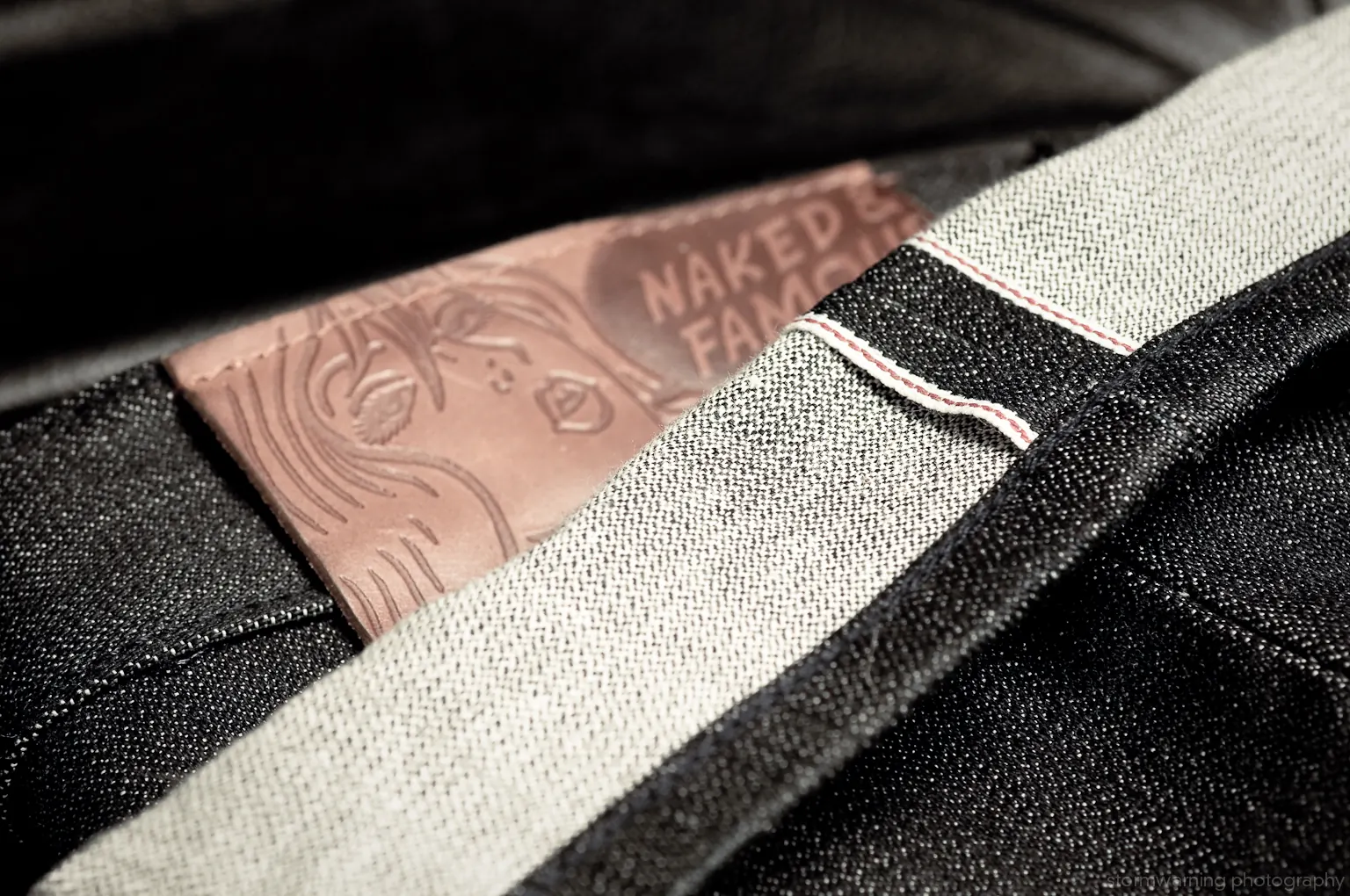
Denim takes its name from serge de Nîmes, a sturdy twill linked to the French city of Nîmes, while "jeans" most likely comes from Gênes, the French name for the Italian port of Genoa. The modern pair of jeans was born in 1873, when Levi Strauss and Jacob Davis patented copper rivets for work trousers in America.
Walk through a market in Lagos, a metro station in Seoul or a university campus in São Paulo and you will see the same thing on thousands of legs: blue jeans. Few garments cross borders, classes and generations so easily. Billions of pairs are sold worldwide every year, and the average wardrobe in many countries holds several. How did a sturdy working fabric become the planet's default uniform?
Two cities in the name
The clues are hidden in the words themselves. Denim is widely traced to serge de Nîmes, a twill cloth associated with the southern French city of Nîmes. Jeans most likely derives from Gênes, the French name for Genoa, the Italian port whose sailors and dockworkers wore hard-wearing cotton trousers.
Denim's defining feature is its weave. It is a warp-faced twill: the lengthwise (warp) threads are dyed with indigo while the crosswise (weft) threads are left white. That is why jeans are deep blue on the outside and pale on the inside, and why they fade so characteristically. Indigo molecules sit on the surface of the cotton fibre rather than penetrating it fully, so every wash and every bend wears a little of the colour away.
The rivet that changed everything
The decisive moment came in the American West. In 1873, Levi Strauss, a Bavarian-born dry-goods merchant in San Francisco, and Jacob Davis, a Latvian-born tailor in Reno, received a US patent for using copper rivets to reinforce the stress points of work trousers. Miners, farmers and railway workers were ripping through pockets; the rivets stopped them tearing.
Those first "waist overalls" were pure utility. The famous lot number 501 came later, and the garment would spend more than half a century as workwear before anyone thought of it as fashion.
From work clothes to rebellion
Hollywood made jeans glamorous. Westerns of the 1930s and 1940s put cowboys in denim, and holidaymakers on American dude ranches brought the look home. Then, in the 1950s, Marlon Brando in The Wild One and James Dean in Rebel Without a Cause turned jeans into a symbol of youthful defiance. Some American schools reportedly banned them, which only made them more desirable.
By the 1960s and 1970s, denim had become the uniform of counterculture: flared, patched, embroidered and worn to protests and festivals. In the Soviet Union and across the Eastern Bloc, genuine Western jeans were scarce and coveted, traded on black markets at prices that could equal a month's wages. A pair of Levi's carried a message about freedom that no slogan could match.
Japan's obsession with the perfect pair
If America invented jeans, Japan perfected their craft. After the Second World War, American denim arrived through surplus shops and occupying troops. By the 1970s and 1980s, Japanese makers in the Okayama region, particularly the town of Kojima, were producing their own jeans and soon became obsessed with recreating vintage American quality.
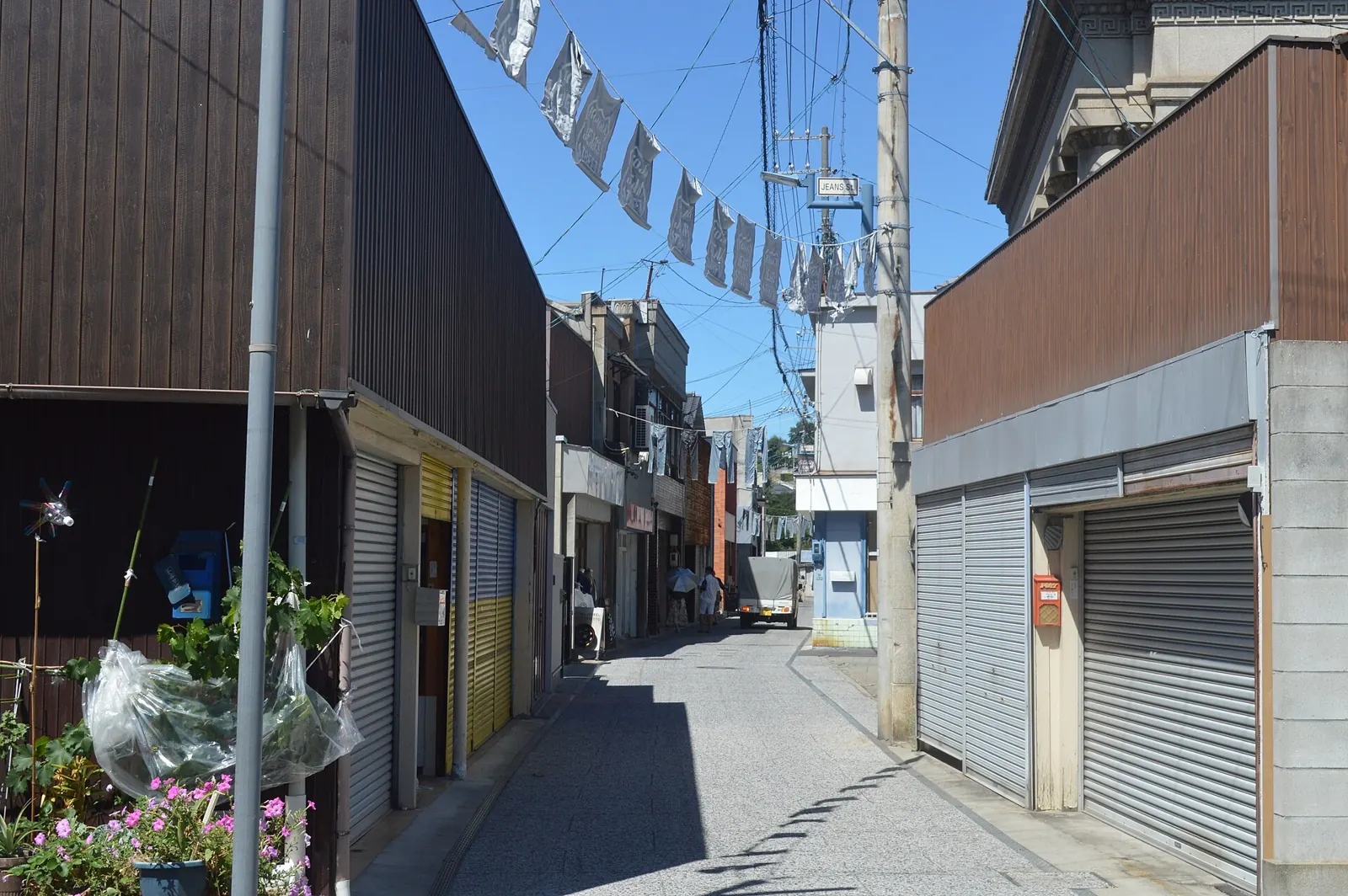
The key was selvedge denim, woven on old narrow shuttle looms that produce a tightly finished edge. American mills largely abandoned these slow looms for faster, wider projectile looms. Japanese mills bought or restored them and paired them with traditional rope-dyeing in natural or synthetic indigo. Today, Japanese selvedge is prized by collectors worldwide, and Kojima markets itself as the jeans capital of Japan, complete with a "Jeans Street" lined with independent brands.
Fit is a mirror of its era
Silhouettes track culture with remarkable precision:
| Era | Defining fit | Cultural signal |
|---|---|---|
| 1950s | Straight, cuffed | Rebel cool, rock and roll |
| 1970s | Flares and bell-bottoms | Counterculture, disco |
| 1980s | High-waisted, acid-wash | Pop excess, designer labels |
| 1990s | Baggy and relaxed | Hip-hop, grunge |
| 2000s | Low-rise, bootcut | Celebrity and pop culture |
| 2010s | Skinny | Indie music, stretch fabrics |
| 2020s | Wide-leg, straight, vintage cuts | Comfort, nostalgia, secondhand |
The arrival of stretch denim, blending cotton with elastane, made the skinny era possible. The recent swing back to rigid, 100% cotton fabric and looser shapes reflects a wider appetite for durability and vintage authenticity.
The environmental bill
Denim's popularity comes with a heavy footprint. Cotton is a thirsty crop, and producing the cotton for a single pair of jeans can require thousands of litres of water, depending on where and how it is grown. Traditional finishing methods such as stone-washing, sandblasting and chemical bleaching consume more water and energy, and sandblasting was linked to the deadly lung disease silicosis among garment workers, leading major brands to ban it.
Production hubs in China, Bangladesh, Pakistan, India, Turkey and Mexico have faced scrutiny over dye run-off coloring local rivers. The industry's response includes laser and ozone finishing that create faded effects with far less water, organic and recycled cotton, and closed-loop dyeing systems.
Why jeans endure
The deeper reason denim conquered the world is that it does something few garments can: it gets better with age. A pair of raw jeans moulds to its wearer, recording every habit in creases and fades, so that no two worn pairs are alike. It is mass-produced and deeply personal at the same time.
That paradox explains why the secondhand denim market is booming, why vintage Levi's sell for remarkable sums, and why designers keep returning to a fabric invented for miners. Denim is democratic, adaptable and endlessly reinvented, which is precisely why, 150 years after that rivet patent, the whole world is still wearing it.
Cloth has always been a global traveller: centuries before denim, silk moved along a web of trade routes rather than any single road. And for all the talk of fashion, jeans remain what they were built to be, everyday clothes for people on the move, ideal for the simple daily walk that does more for health than most trends.