Why Does Every Cuisine Have a Dumpling?
From Nepali momos to Polish pierogi and Georgian khinkali, wrapping a filling in dough is one of humanity's most universal kitchen ideas. Here is why.
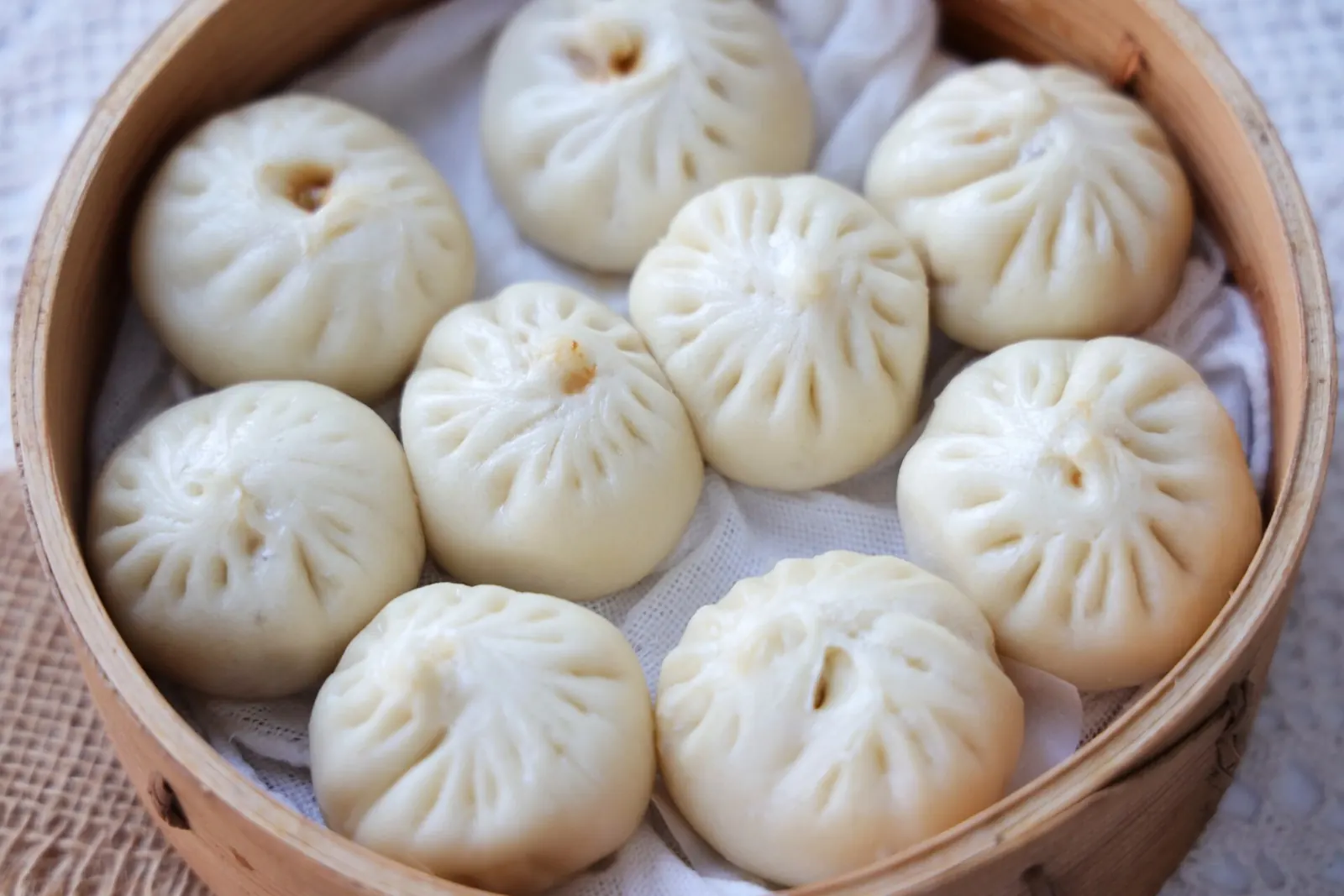
Nearly every cuisine has a dumpling because wrapping a filling in dough solves universal problems: it stretches small amounts of meat or vegetables, keeps juices in, cooks evenly and travels well. Trade and migration did the rest, carrying the idea along Central Asian routes, which is why manti, mantu and mandu share a name.
Travel almost anywhere and you will find someone folding a filling into a little parcel of dough. China has jiaozi, Nepal and Tibet have momos, Poland has pierogi, Georgia has khinkali, Italy has ravioli, Japan has gyoza, Korea has mandu, Central Asia has manti. The resemblance is no accident.
A brilliant solution to old problems
Before refrigeration, cooks needed ways to stretch precious meat, use up scraps and make food portable. A dumpling does all three. A small amount of filling, seasoned well, goes a long way once wrapped in inexpensive flour. Sealed parcels also cook evenly, keep juices in and travel well in a pocket or a lunch tin.
Following the Silk Road
Many food historians trace a shared lineage along the trade routes of Central Asia. Turkic and Mongol peoples carried versions of the filled dumpling across the steppe, which helps explain why manti in Turkey, mantu in Afghanistan and mandu in Korea share a name. Wheat cultivation, nomadic movement and centuries of trade did the rest.
Same idea, wildly different personalities
| Dumpling | Where | What makes it distinct |
|---|---|---|
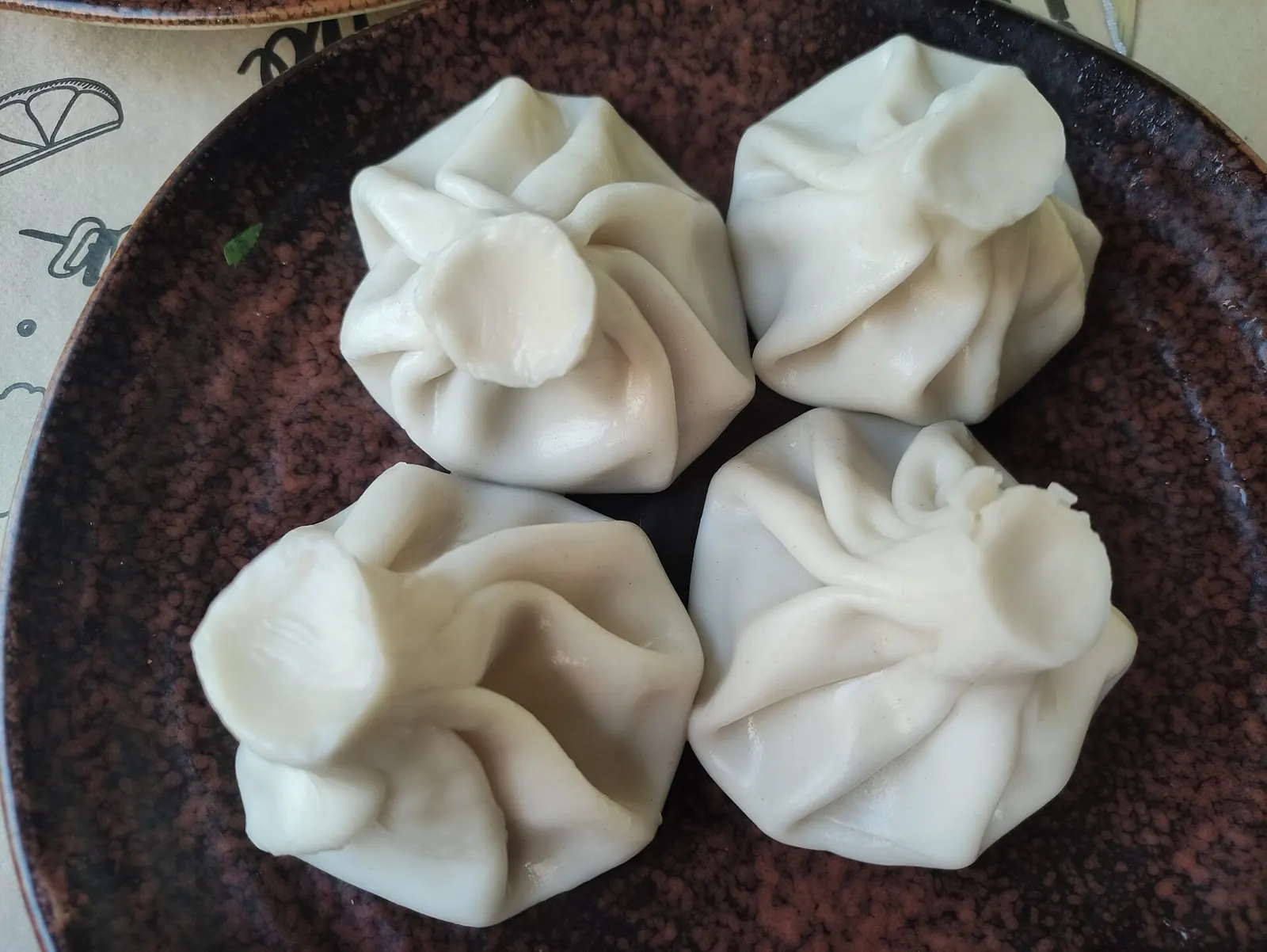
| Khinkali | Georgia | Twisted top knot, broth inside, eaten by hand |
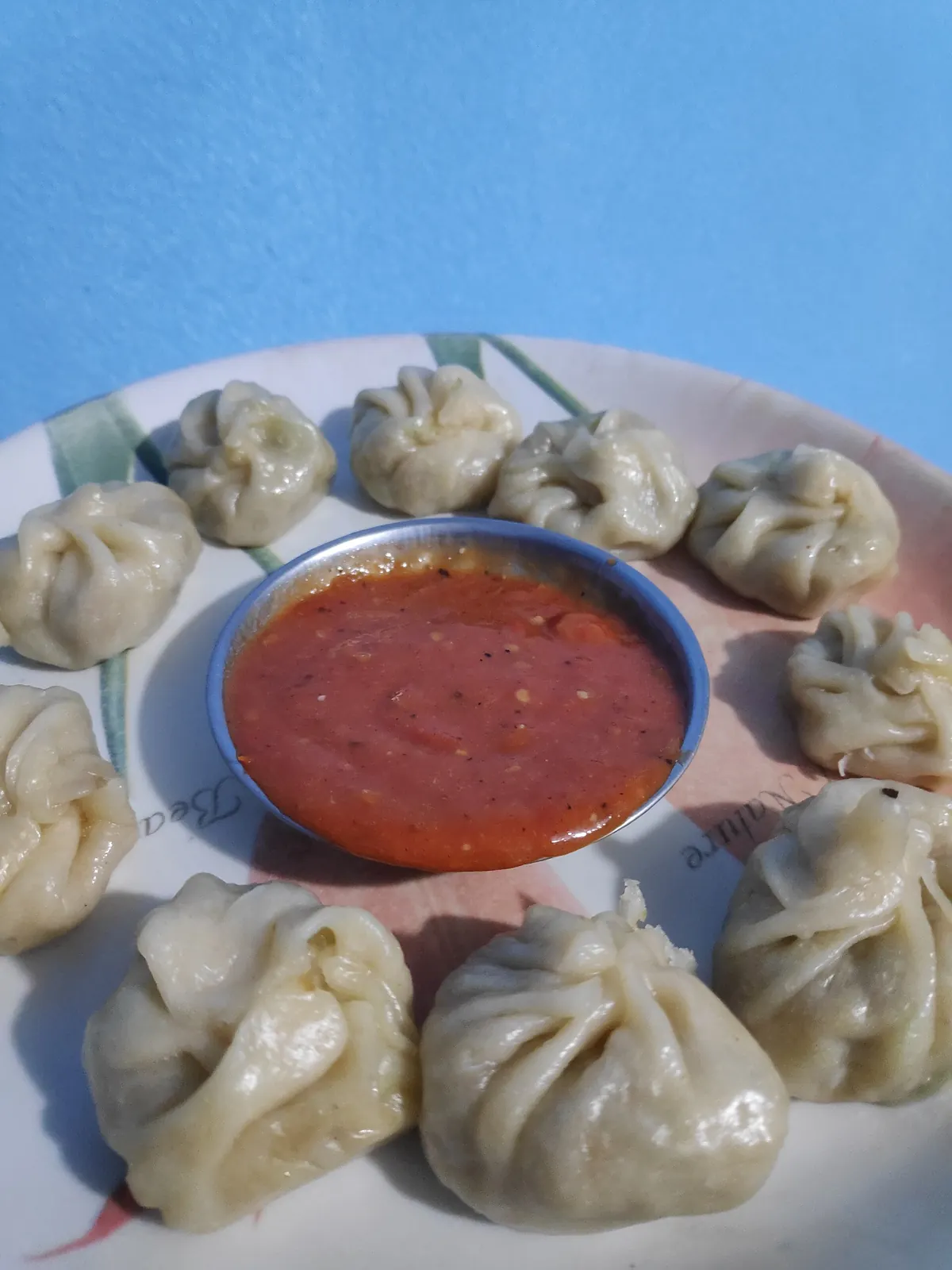
| Momo | Nepal, Tibet | Steamed, served with fiery tomato achar |
| Pierogi | Poland | Half-moon, often potato and farmer's cheese |
| Xiaolongbao | Shanghai | Delicate pleats around a burst of hot soup |
| Manti | Turkey | Tiny, topped with garlic yoghurt and chilli butter |
India's dumplings: momos and modak
India has two very different dumpling stories, one savoury and recent, one sweet and ancient.
Momos arrived from the Himalaya. The steamed dumplings of Tibet and Nepal were long eaten in Darjeeling, Sikkim and the north-east, and Tibetan refugees who settled in India after 1959 carried them further into the plains. Through the 1990s and 2000s momos became a fixture of street food in Delhi and Kolkata, sold from steamers on carts outside markets, colleges and metro stations (Al Jazeera). India then made them its own: fried momos, tandoori momos grilled with a spiced yoghurt marinade, paneer and corn fillings for vegetarians, and the fiery red chutney that many Delhi eaters consider the main event.
Modak is far older. In Maharashtra, ukadiche modak, steamed parcels of rice-flour dough filled with fresh coconut and jaggery and scented with cardamom, is the sweet most closely associated with Ganesh Chaturthi, when it is offered to Ganesha, said to be his favourite food. The rice-and-coconut version reflects the produce of the Konkan coast, and versions of the sweet appear across India: kozhukattai in Tamil Nadu and kudumu in Andhra Pradesh, among others (Down To Earth). The pleats are a skill in themselves; a well-made modak has a neat, pointed top formed by pinching the dough into many folds.
Put the two side by side and the global logic of the dumpling is clear. One travelled down from the mountains with migrants; the other grew out of local grain and a religious festival. Both wrap something precious in an inexpensive dough.
How old are dumplings?
Very old. Archaeologists excavating the Astana tombs near Turpan, in China's Xinjiang region, found dried dumplings that look strikingly like modern jiaozi, preserved by the desert climate for well over a thousand years from the Tang dynasty era. Turpan sat on a major caravan route, which fits the idea that the dumpling spread with merchants, soldiers and settlers as much as with recipes.
Steamed, boiled, fried or baked
Cooking method shapes a dumpling's personality as much as its filling does:
- Steaming keeps wrappers soft and fillings juicy. It suits rice-flour doughs like modak and delicate wheat skins like momos and xiaolongbao.
- Boiling gives a slippery, chewy wrapper, typical of Chinese jiaozi, Polish pierogi before they are pan-fried, and Georgian khinkali.
- Pan-frying after steaming creates the crisp base of Japanese gyoza and Chinese potstickers.
- Deep-frying produces a crunchy shell, as with fried momos or Indonesian pangsit goreng.
- Baking pushes the idea towards the pie, as with the Cornish pasty or the empanada.
Wrapper and filling matter too. Wheat dominates in northern China, Central Asia and Europe, while rice-based doughs are more common in southern India and parts of South-East Asia. Fillings follow local supply: mutton on the steppe, pork in much of China, cabbage and potato in Eastern Europe, and coconut, jaggery or paneer in India.
Why dumplings belong to festivals
Dumplings are ceremonial food in many cultures, partly because making them is social: families gather to fold hundreds at once. In northern China, jiaozi are eaten at Lunar New Year, and their shape is often compared to old silver ingots, a symbol of prosperity. In India, modak marks Ganesh Chaturthi. In Poland, pierogi are part of the meatless Christmas Eve supper in many homes. A food that takes many hands to make is a natural way to bring people together.
How to eat them like a local
- Khinkali: hold the knot, bite a small hole, sip the broth, then eat. Leave the knot on the plate; locals count them to keep score.
- Xiaolongbao: lift gently onto a spoon, nip the skin, let the soup cool for a second.
- Momos: dip generously. The sauce is half the point.
The spread of dumplings along trade routes is a reminder that the Silk Road was never really a single road, but a web of exchanges. And because street food is priced locally, it can say a lot about currencies, which is the idea behind the Big Mac Index.
The takeaway
Dumplings are proof that good ideas travel. Wherever flour meets a hungry crowd, someone eventually decides to wrap something delicious inside it.