Who Designed the Indian Flag?
Pingali Venkayya, a freedom fighter from Andhra's Krishna district, drew the flag that became India's tricolour at Gandhi's request in 1921. A 1931 Congress committee and the Constituent Assembly in 1947 refined it into the saffron, white and green flag with the Ashoka Chakra.
 By Sushant Kataria· 8 min read
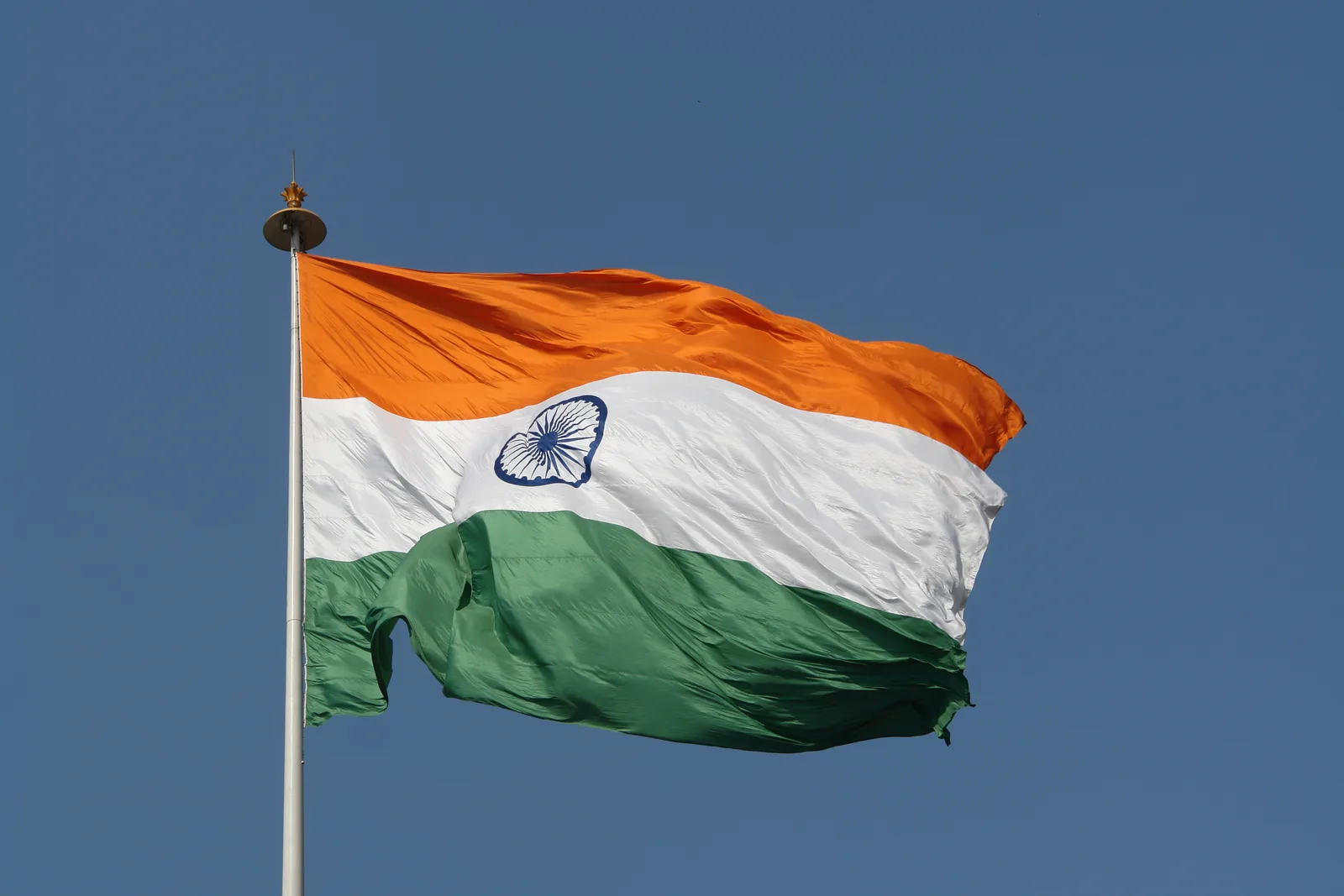
The Indian flag was designed by Pingali Venkayya, a freedom fighter and teacher from Machilipatnam in Andhra Pradesh, who drew the first version for Mahatma Gandhi at the Congress meeting in Bezwada (now Vijayawada) in 1921. His design was refined by a Congress committee in 1931, and on 22 July 1947 the Constituent Assembly adopted it as the national flag, swapping Gandhi's spinning wheel for the Ashoka Chakra.
So the honest answer has one name at its centre and several hands around it. Venkayya supplied the idea and the drawing, Gandhi shaped its symbolism, and two committees edited the colours and the emblem before the tricolour went up over a free India.
The flags that came before
India had no single national flag under British rule, and the freedom movement tried several. A Ministry of Culture note on the evolution of the flag lists the milestones. In 1906, during the Swadeshi agitation against the Partition of Bengal, a flag was hoisted at Parsee Bagan Square in Calcutta. In 1907 Madame Bhikaji Cama raised a modified version abroad, and it was shown in Berlin, earning the name Berlin Committee Flag. In 1917 Annie Besant and Bal Gangadhar Tilak flew a Home Rule flag which, as the government's New India Samachar describes it, had red and green stripes, seven stars and, awkwardly for a nationalist banner, a Union Jack in the corner.
None of these caught on across the country. That gap is what a young Andhra Congressman set out to fill.
The man from Machilipatnam
Pingali Venkayya was born on 2 August near Machilipatnam in the old Krishna district. The government dates his birth to 1876: the Press Information Bureau marked his 146th anniversary in 2022 and his 150th in August 2026. His biographer Venna Vallabha Rao argues for 1878, as The New Indian Express reported, a reminder that even the flag's designer has a contested biography.
His life reads like several careers stitched together. He served with the British Indian Army in South Africa during the Boer War, where he first met Gandhi. He learned Japanese at the DAV College in Lahore in 1904, which earned him the nickname "Japan Venkayya". He experimented with imported cotton seed on a zamindari estate at Munagala, which earned him "Patthi (Cotton) Venkayya", and later worked in geology and diamond mining, hence "Diamond Venkayya". The name that stuck was Jhanda Venkayya, Flag Venkayya.
From 1911 to 1919 he taught at the National College in Machilipatnam, and there he studied the flags of other nations. In 1916 he published a book, A National Flag for India, with a set of model designs, and he raised the flag question at Congress sessions year after year.
Bezwada, 1921: a flag in three hours
The breakthrough came at a special meeting of the All India Congress Committee held in Bezwada on 31 March and 1 April 1921, at the Victoria Jubilee Hall that is now the Bapu Museum. A 1921 history of the freedom struggle in Andhra, digitised by the Internet Archive, records that Gandhi accepted Venkayya's design as the Congress flag "with a few slight alterations", and that "it was this flag which with a few other modifications ultimately became the flag of Free India."
Gandhi described the episode himself in Young India on 13 April 1921, in lines quoted by The Times of India on the centenary: "At Bezwada, I asked Mr Venkayya to give me a design containing a spinning wheel on red (Hindu colour) and green (Muslim colour) background. His enthusiastic spirit enabled me to possess a flag in three hours."
The spinning wheel was not Venkayya's idea. Gandhi credited Lala Hansraj with suggesting the charkha as the centrepiece, and he added a white band himself to stand for India's other faiths and for peace. The result, usually called the Swaraj flag, had white, green and red stripes with a charkha spread across all three. The charkha made sense: it was the emblem of khadi, the hand-spun cloth Gandhi turned into the uniform of the freedom movement, and a reminder that self-rule began with self-reliance.
1931: saffron moves to the top
Through the 1920s the Swaraj flag flew at Congress meetings and protests, but its colours carried an uncomfortable message: red for Hindus, green for Muslims. In 1931 the Congress formally adopted a revised version. The red became saffron, the order became saffron, white and green from top to bottom, and the charkha was placed in the white band alone. The Ministry of Culture note says saffron stood for courage, white for peace and green for fertility and growth, and the party stated plainly that the colours had no communal meaning.
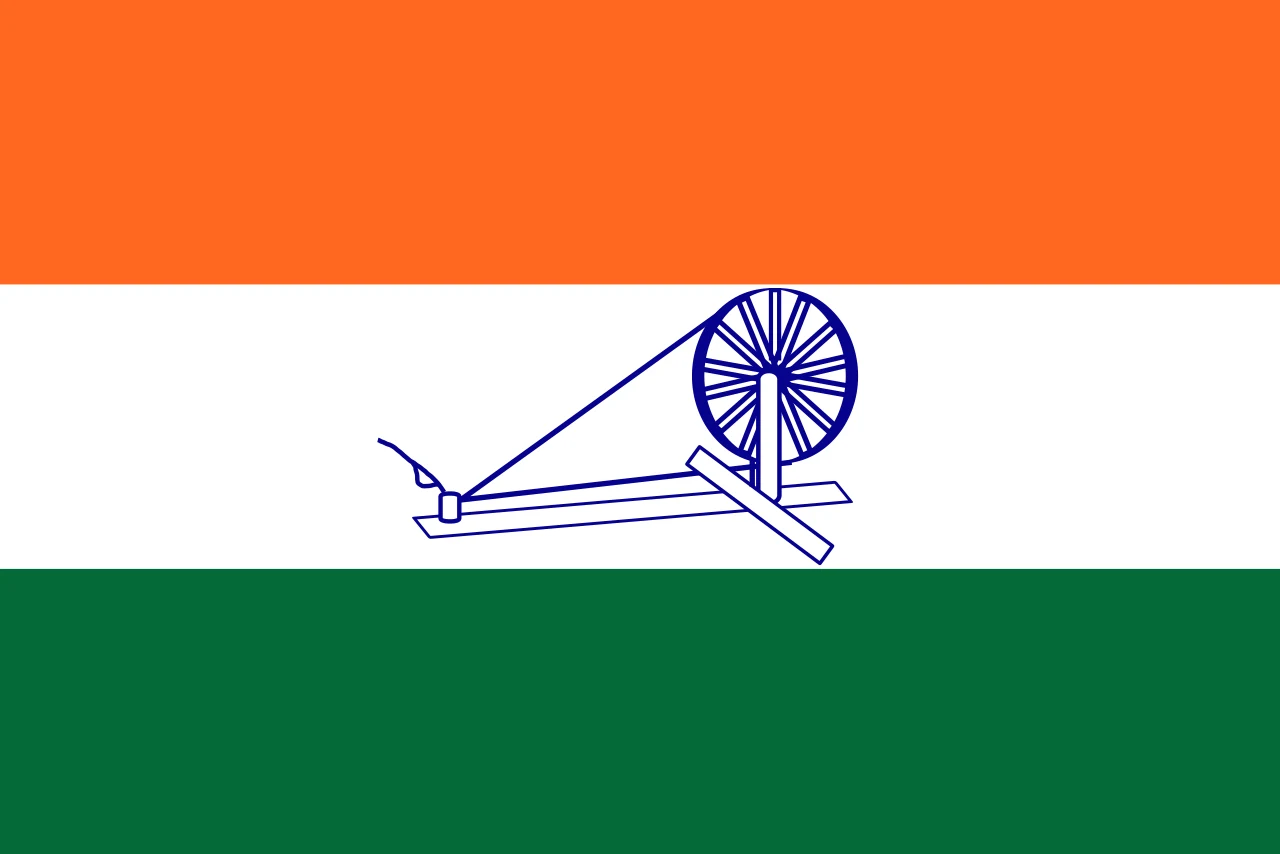
This is the flag most freedom fighters marched under for the next sixteen years, and it travelled well beyond Congress meetings. Union Home Minister Amit Shah, speaking at the 2022 Tiranga Utsav, recalled that Bose hoisted the tricolour at Port Blair on 29 December 1943.
22 July 1947: from charkha to chakra
Three weeks before independence, Jawaharlal Nehru rose in the Constituent Assembly to move the flag resolution. The record of the debate gives the exact words: a "horizontal tricolour of deep Saffron (Kesari), white and dark green in equal proportion", with "a Wheel in navy blue to represent the Charkha" in the centre, drawn from "the Wheel (Chakra) which appears on the abacus of the Sarnath Lion Capital of Asoka", in a ratio of width to length of "ordinarily" 2:3.
Nehru explained why the spinning wheel had gone. A flag must look the same from both sides, but a charkha has its wheel at one end and its spindle at the other, so it reversed when seen from behind. Keeping only the wheel solved the problem, and choosing Ashoka's wheel tied the flag, he said, to "one of the most magnificent names not only in India's history but in world history." He presented two flags to the House, one of silk and one of cotton khadi.
The debate that followed is a portrait of the Assembly. H. V. Kamath withdrew an amendment to put a swastika inside the chakra once he saw the design. P. S. Deshmukh, who wanted the charkha kept, chose not to press his. Frank Anthony told members he had served on the committee that finalised the flag and that it carried no communal significance. S. Radhakrishnan read the colours as renunciation, truth and the soil, and Sarojini Naidu closed by asking the House to rise and salute. The motion was adopted with the whole Assembly standing. Two years later Kamath would fight another symbolic battle in the same chamber, over whether the country should be called India or Bharat.
Who makes the flag today
The design is fixed, but the rules around it keep changing. The Flag Code of India, 2002 sets the 3:2 ratio, the position of honour and the dos and don'ts, alongside the Prevention of Insults to National Honour Act, 1971. For two decades it required the flag to be made of hand-spun, hand-woven khadi bunting. An order of 30 December 2021, the Press Information Bureau confirmed, allowed machine-made and polyester flags too, and a further amendment in July 2022 let flags on homes and in the open fly day and night for the Har Ghar Tiranga campaign.
Official flags still follow a stricter standard. According to a 2023 reply in the Rajya Sabha, only flags meeting Bureau of Indian Standards specifications may be used for official display, four khadi institutions hold BIS licences to make them, and the silk flag unfurled at the Red Fort on 15 August comes from the Ordnance Clothing Factory in Shahjahanpur. The best known of the khadi makers, the Karnataka Khadi Gramodyoga Samyukta Sangha at Bengeri in Hubballi, employs around 1,200 people, mostly women, and saw orders fall sharply after polyester was allowed, The Hindu reported in 2022.
For decades after independence, private citizens were largely limited to flying the flag on designated national days. That changed on 23 January 2004, when the Supreme Court in Union of India v. Naveen Jindal held that the right to fly the national flag "freely with respect and dignity" is a fundamental right under Article 19(1)(a), part of the freedom of expression, though subject to reasonable restrictions. It is the same chapter of fundamental rights the court later read to include privacy in the Puttaswamy case.
A late recognition
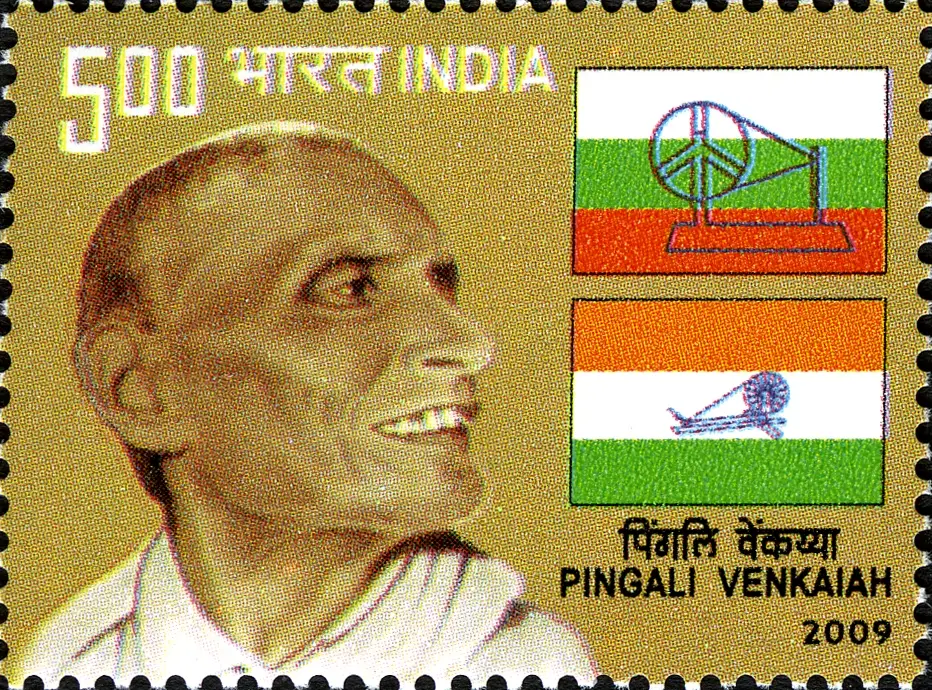
Venkayya never saw his flag raised at the Red Fort as an honoured guest. He spent his last years in a modest house in Vijayawada and died on 4 July 1963, his biographer told The New Indian Express, wrapped at his own request in the national flag. Recognition came decades later: an India Post stamp in 2009, a second commemorative stamp released at the Tiranga Utsav in 2022, and on 2 August 2026 a tribute from the Prime Minister on his 150th birth anniversary, recalling "his invaluable role in giving our nation the Tricolour."
So who designed the Indian flag? Pingali Venkayya drew it, Gandhi gave it its first meaning, a 1931 committee settled its colours, and the Constituent Assembly gave it Ashoka's wheel. Every saffron, white and green flag flying today, khadi or polyester, traces back to the design he sketched in three hours at Bezwada.