How Did South Africa Abolish the Death Penalty?
On 6 June 1995, South Africa's Constitutional Court unanimously held that capital punishment violated the Interim Constitution. The ruling emptied death row and set a global benchmark for dignity-based constitutional interpretation.
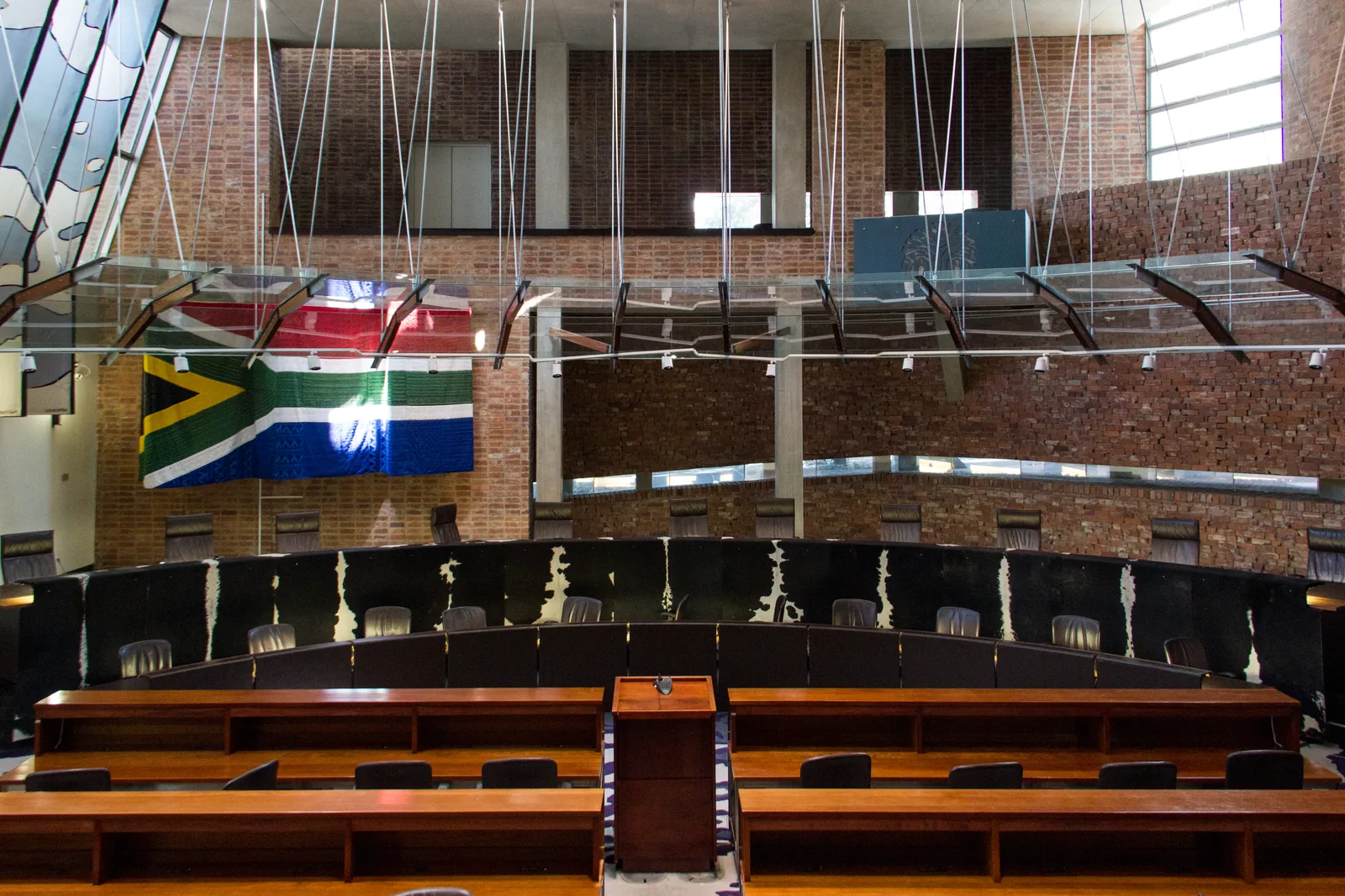
South Africa abolished the death penalty through a court judgement: on 6 June 1995, in S v Makwanyane, the new Constitutional Court ruled unanimously that capital punishment violated the Interim Constitution's rights to life, dignity and freedom from cruel punishment. All pending death sentences were set aside, and no one has been executed by the South African state since.
On 6 June 1995, eleven judges of South Africa's brand-new Constitutional Court delivered a unanimous judgement that remade the country's criminal justice system overnight. In S v Makwanyane and Another (CCT 3/94), the Court held that the death penalty was incompatible with the Interim Constitution. Every sentence of death still pending was converted; no prisoner would be hanged by the South African state again.
The case is one of the founding landmarks of modern African constitutionalism. It showed that a young democracy, emerging from apartheid, could place the rights to life and dignity above retribution — and do so through judicial reasoning grounded in the text of its own Bill of Rights.
How the question reached the Court
The appellants, T. Makwanyane and M. Mchunu, had been convicted of murder and sentenced to death under section 277(1)(a) of the Criminal Procedure Act 51 of 1977. After the Interim Constitution (Act 200 of 1993) came into force, the Appellate Division referred the constitutionality of the death sentence to the newly created Constitutional Court.
The framers of the Interim Constitution had left the issue deliberately open. Negotiators could not agree whether to abolish capital punishment in the text itself. They adopted what the Court later called a "Solomonic solution": the Bill of Rights guaranteed an unqualified right to life (section 9), dignity (section 10), and freedom from cruel, inhuman or degrading punishment (section 11(2)), and left it to the Court to decide whether the death penalty survived those guarantees.
By the early 1990s South Africa had already imposed a de facto moratorium on executions. But death sentences continued to be passed, and hundreds of people remained on death row. The Court's task was therefore not abstract: a ruling either way would decide the fate of every condemned prisoner.
What President Chaskalson held
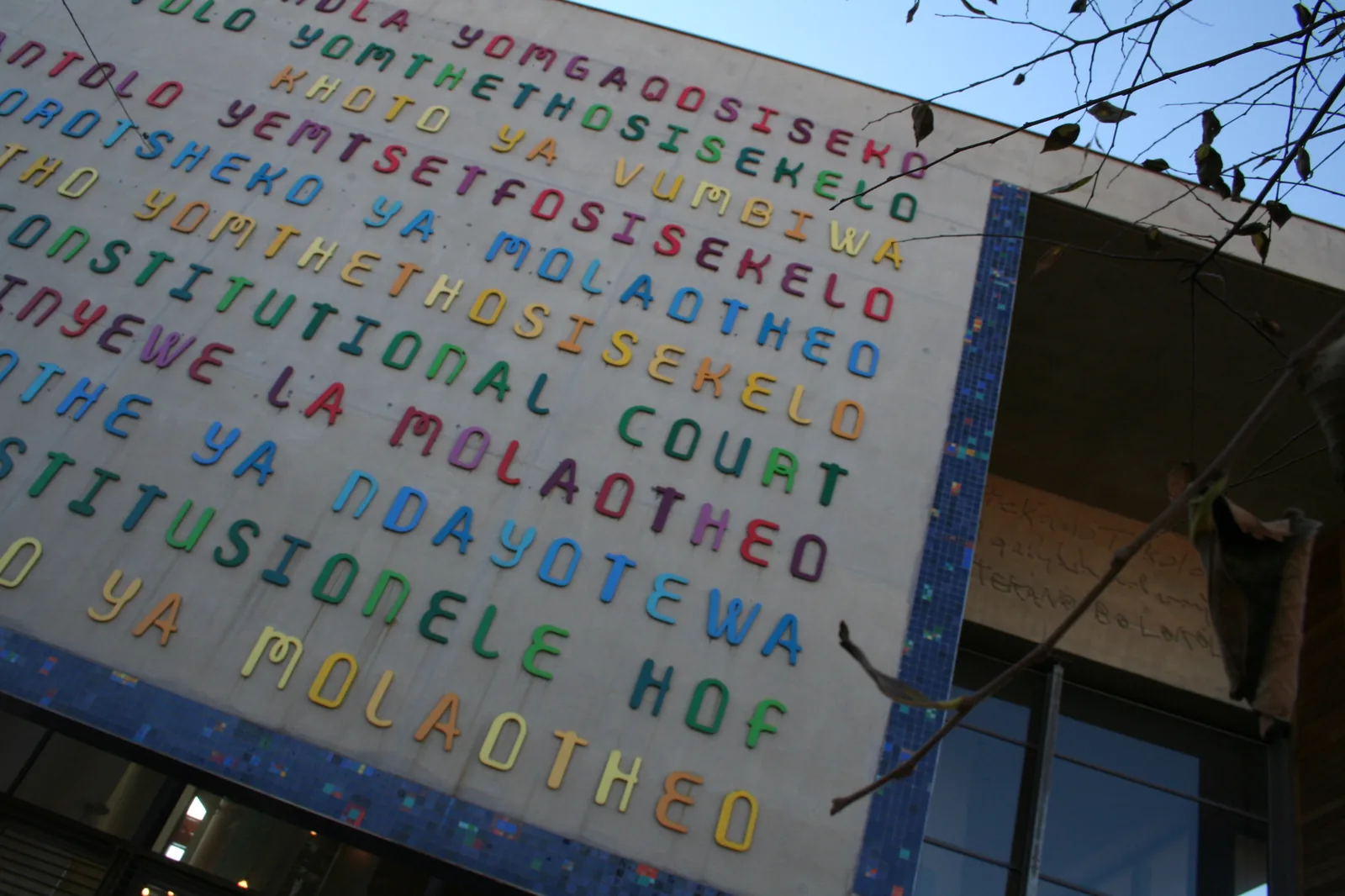
President Arthur Chaskalson wrote the lead judgement. All ten other judges concurred, many with separate opinions that deepened the reasoning rather than diluting it. The core holdings were clear:
- The death penalty violates the right to life under section 9 of the Interim Constitution. Unlike many older constitutions, South Africa's right to life was stated without a capital-punishment exception.
- It violates human dignity under section 10. Execution annihilates the person; dignity cannot survive a state-mandated killing.
- It is cruel, inhuman or degrading punishment under section 11(2), given the psychological torment of death row, the irreversibility of error, and the arbitrary way capital sentences had historically been imposed.
- It cannot be justified under the general limitations clause (section 33). Retribution does not outweigh life and dignity under a constitution founded on freedom and equality. The state had not shown that death is a materially better deterrent than life imprisonment.
Chaskalson surveyed comparative law extensively — the United States, India, Canada, Hungary, the European Court of Human Rights, and international human-rights instruments — but insisted that South Africa's answer had to grow from its own constitutional text and history. Public opinion favouring retention, he held, could not override entrenched rights.
Ubuntu and a distinctive African voice
Several concurring judgements, notably those of Justices Madala, Mokgoro and Sachs, foregrounded ubuntu — an African ethic of shared humanity often summarised as "a person is a person through other people." They argued that ubuntu was part of the spirit of the new constitutional order and incompatible with a penalty that ends the possibility of rehabilitation and communal restoration.
That turn matters beyond South Africa. Makwanyane is frequently cited as an early, authoritative example of a court weaving indigenous values into a modern Bill of Rights without treating them as mere decoration.

Immediate and lasting effects
The order was practical as well as symbolic. The Court invalidated the statutory provisions authorising the death penalty for the offences before it, and directed that all existing death sentences be set aside and replaced with lawful alternatives — typically life imprisonment. South Africa moved, in a single day, from a high-execution jurisdiction of the late apartheid era to a firmly abolitionist constitutional democracy.
The 1996 final Constitution retained the rights to life and dignity. Parliament later confirmed abolition in statute. Attempts to revive capital punishment through politics have repeatedly run into the constitutional wall Makwanyane built.
Internationally, the judgement is a staple of comparative capital-punishment scholarship. Courts and advocates from the Caribbean to Eastern Europe have cited its proportionality analysis and its refusal to let majoritarian sentiment trump the Bill of Rights. It sits alongside cases such as Furman v. Georgia (United States) and India's evolving death-penalty jurisprudence as a reference point for how apex courts reason about state killing.
Why the case still matters
Makwanyane is not only about whether a particular penalty is available. It is about how a constitution orders values when they collide. By ranking life and dignity above retribution, and by demanding a "clear and convincing" justification before the state may take a life, the Court set a method that South African judges still use in hard cases — from socio-economic rights to equality.
For readers outside South Africa, the lesson travels. When a constitution protects life and dignity without carving out an exception for the gallows, abolition is not a policy preference. It is a constitutional obligation. That is the lasting force of S v Makwanyane.
Sources
- Constitutional Court of South Africa, S v Makwanyane and Another (CCT 3/94) [1995] ZACC 3; 1995 (3) SA 391 (CC); 1995 (6) BCLR 665 (CC), judgement of 6 June 1995: official full judgement (collections.concourt.org.za), case record: collections.concourt.org.za
- SAFLII HTML text of the judgement: saflii.org
- Constitution of the Republic of South Africa, Act 200 of 1993 (Interim Constitution), sections 9, 10, 11(2) and 33: gov.za / SAFLII
- Criminal Procedure Act 51 of 1977, section 277 (as amended): historical capital-sentencing provision discussed in the judgement
- Constitution of the Republic of South Africa, 1996 (final Constitution), rights to life and dignity: gov.za
Courts in other young constitutional democracies have taken similarly far-reaching decisions; India's Supreme Court, for example, declared privacy a fundamental right in the Puttaswamy judgement. Both rulings show how the meaning of a constitution is worked out case by case, much as scholars pieced together meaning on the Rosetta Stone.