How Was the Rosetta Stone Decoded?
A broken slab of granodiorite found by French soldiers in 1799 carried the same decree in three scripts. Turning that into the key to ancient Egypt took a race between two rival geniuses and a flash of insight in Paris in 1822.
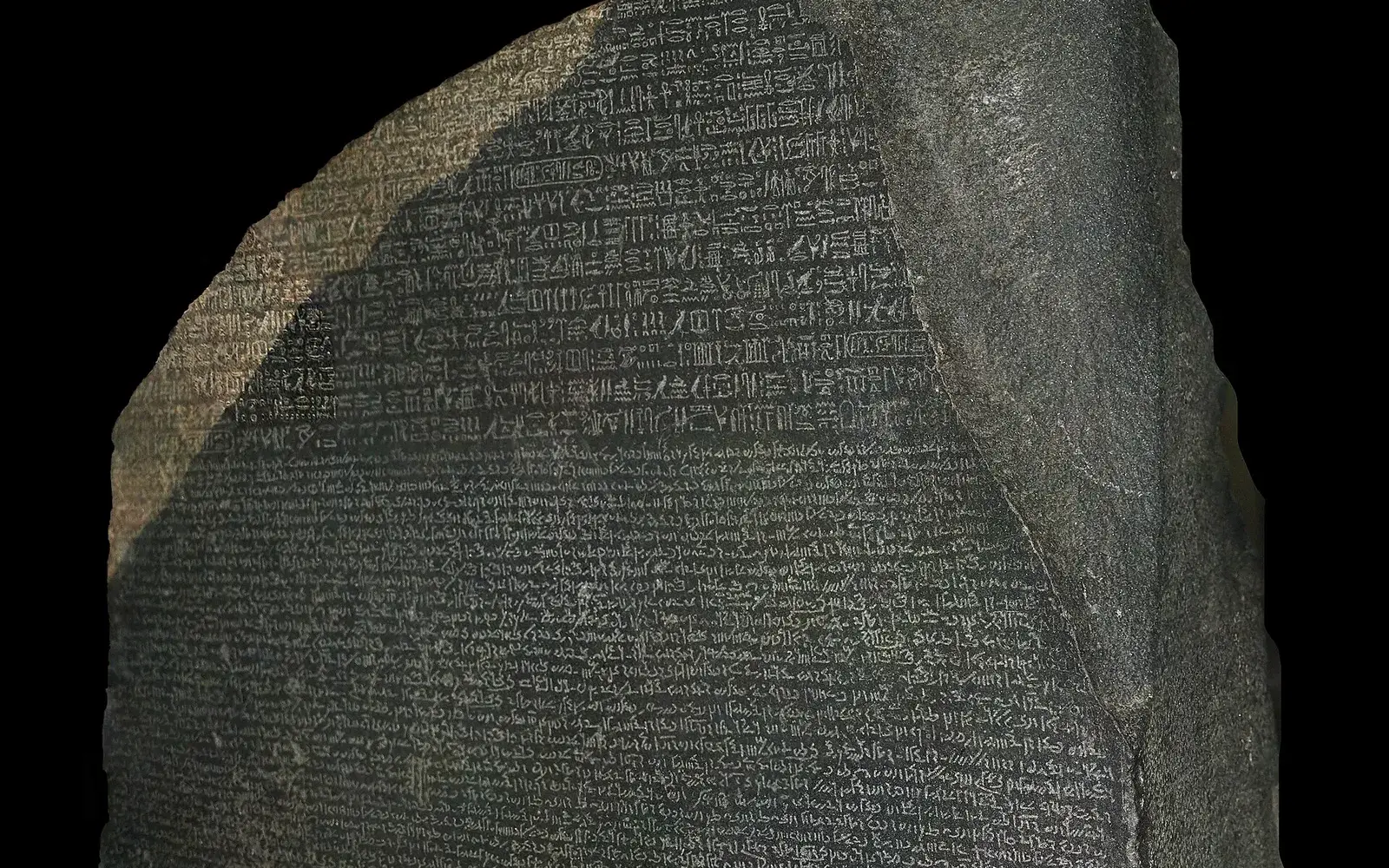
The Rosetta Stone was decoded by comparing its three scripts, which repeat the same decree in hieroglyphs, Demotic and Greek: Thomas Young made early progress with royal names, and Jean-François Champollion announced the breakthrough in Paris in 1822. Champollion showed that hieroglyphs mixed sound signs with picture signs, using his knowledge of Coptic to read them.
For roughly 1,400 years, nobody on Earth could read an Egyptian hieroglyph. The temples, tombs and obelisks were covered in writing, yet the last people who understood it had died out in late antiquity. The last dated hieroglyphic inscription, carved at the temple of Philae, dates to 394 CE. After that, the script fell silent.
Then, in July 1799, a group of French soldiers knocked a dark slab out of an old wall near the town of Rashid, which Europeans called Rosetta, in the Nile Delta. It became the most famous stone in the world. But the stone itself did not "solve" anything. It took more than two decades, a bitter intellectual rivalry and a deep knowledge of a nearly forgotten language before anyone could truly read it.
What the stone actually is
The Rosetta Stone is a fragment of a larger stele made of granodiorite, about 112 cm tall, 76 cm wide and 28 cm thick, and it weighs around 760 kg. It records a decree issued at Memphis in 196 BCE by a council of Egyptian priests, affirming the royal cult of the young king Ptolemy V on the first anniversary of his coronation.
The text is fairly routine, listing the king's good deeds such as tax relief and gifts to temples. What made it priceless was the format. The same decree was written three times:
| Script | Language | Who used it |
|---|---|---|
| Hieroglyphic | Egyptian | Priests, for sacred and monumental texts |
| Demotic | Egyptian | A cursive everyday script for documents and administration |
| Ancient Greek | Greek | The language of the Ptolemaic rulers and their government |
Egypt was then ruled by a Greek-speaking dynasty descended from one of Alexander the Great's generals, so official texts were often published in both languages. Scholars in 1799 could read Greek perfectly well. If the three versions said the same thing, the Greek could act as a translation key.
There was a catch. The top of the stone is broken away, and only 14 lines of the hieroglyphic section survive, most of them incomplete. The Demotic section has 32 lines and the Greek 54.
From a French fort to a London museum
The stone was found while soldiers of Napoleon's Egyptian campaign were rebuilding a fortification later called Fort Julien. The officer in charge, Pierre-François Bouchard, recognised that it might be important, and it was sent to the scholars Napoleon had brought with him to Egypt.
It did not stay French for long. After British and Ottoman forces defeated the French army in Egypt, the Capitulation of Alexandria in 1801 handed over a list of antiquities, the Rosetta Stone among them. It arrived in Britain in 1802 and went on display at the British Museum the same year. It has been there ever since, apart from a spell underground for safety during the First World War.
Crucially, the French had already made inked prints and casts before giving it up, and the Society of Antiquaries in London distributed copies across Europe. The puzzle was now open to everyone.
The first wrong turns
The biggest obstacle was an assumption. Since the Renaissance, European thinkers, most famously the 17th-century Jesuit scholar Athanasius Kircher, had treated hieroglyphs as mystical symbols, each picture conveying a philosophical idea. Kircher published long "translations" that were pure fantasy.
Early work made some progress with the Demotic text, where Silvestre de Sacy and Johan David Åkerblad identified a few proper names by comparing them with the Greek. The hieroglyphs resisted.
Thomas Young and the cartouches
The English polymath Thomas Young, a physician famous for his work on light, took up the stone in 1814. He noticed that some hieroglyphs were enclosed in oval rings, now called cartouches, and argued that these held royal names. By matching positions with the Greek, he identified the cartouche of Ptolemy and worked out sound values for several signs. In 1819 he published his findings in a long article on Egypt for a supplement to the Encyclopaedia Britannica.
Young had established something important: hieroglyphs could represent sounds. But he believed this applied mainly to foreign names like Ptolemy, while native Egyptian words remained symbolic. That half-step kept him from the full answer.
Champollion's breakthrough
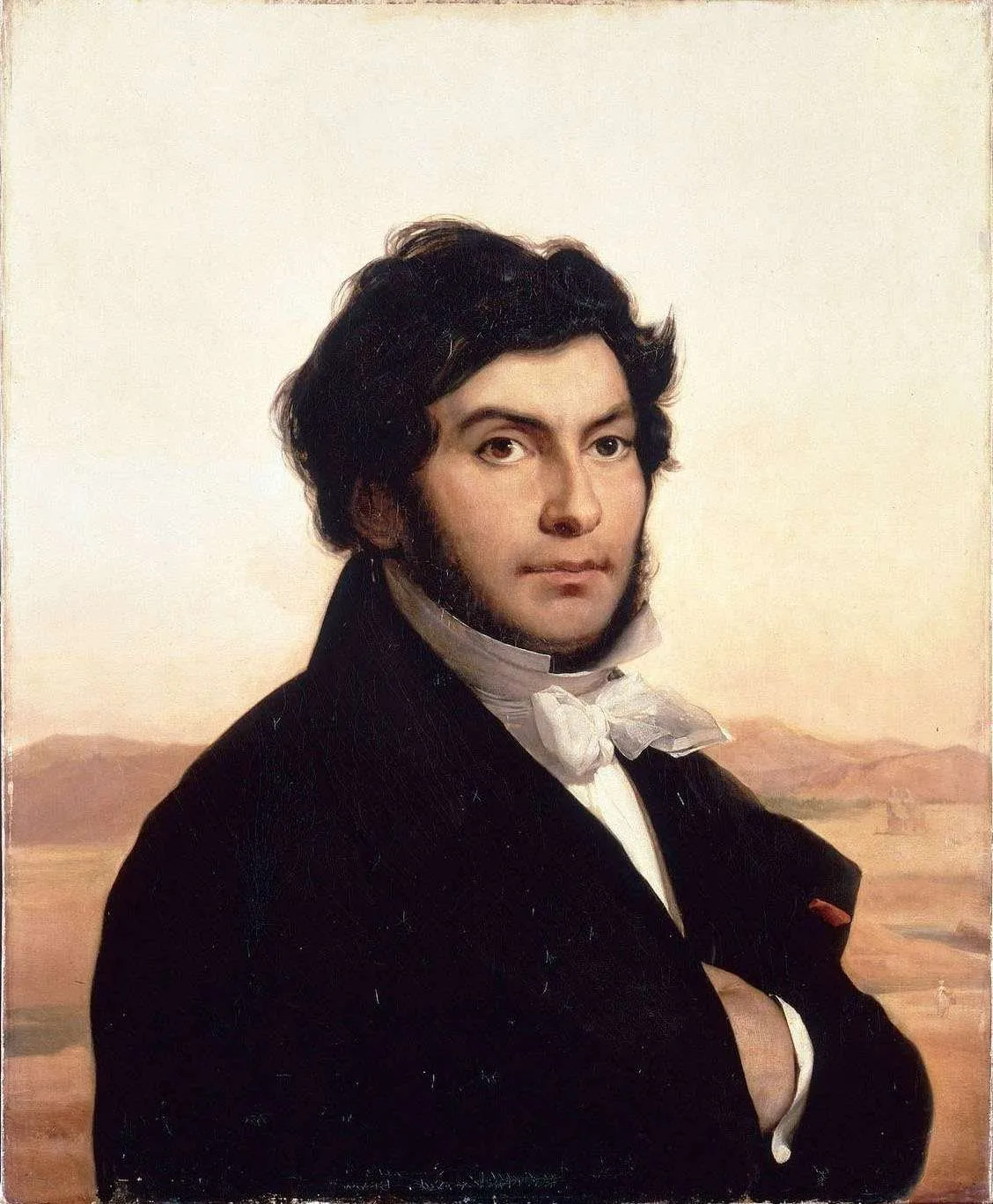
Jean-François Champollion, born in Figeac in southern France in 1790, had been obsessed with Egypt since childhood. His decisive advantage was Coptic, the last stage of the Egyptian language, written in a Greek-based alphabet and still used in the liturgy of the Coptic Church. Champollion had studied it intensively for years, and he suspected it was a direct descendant of the language behind the hieroglyphs.
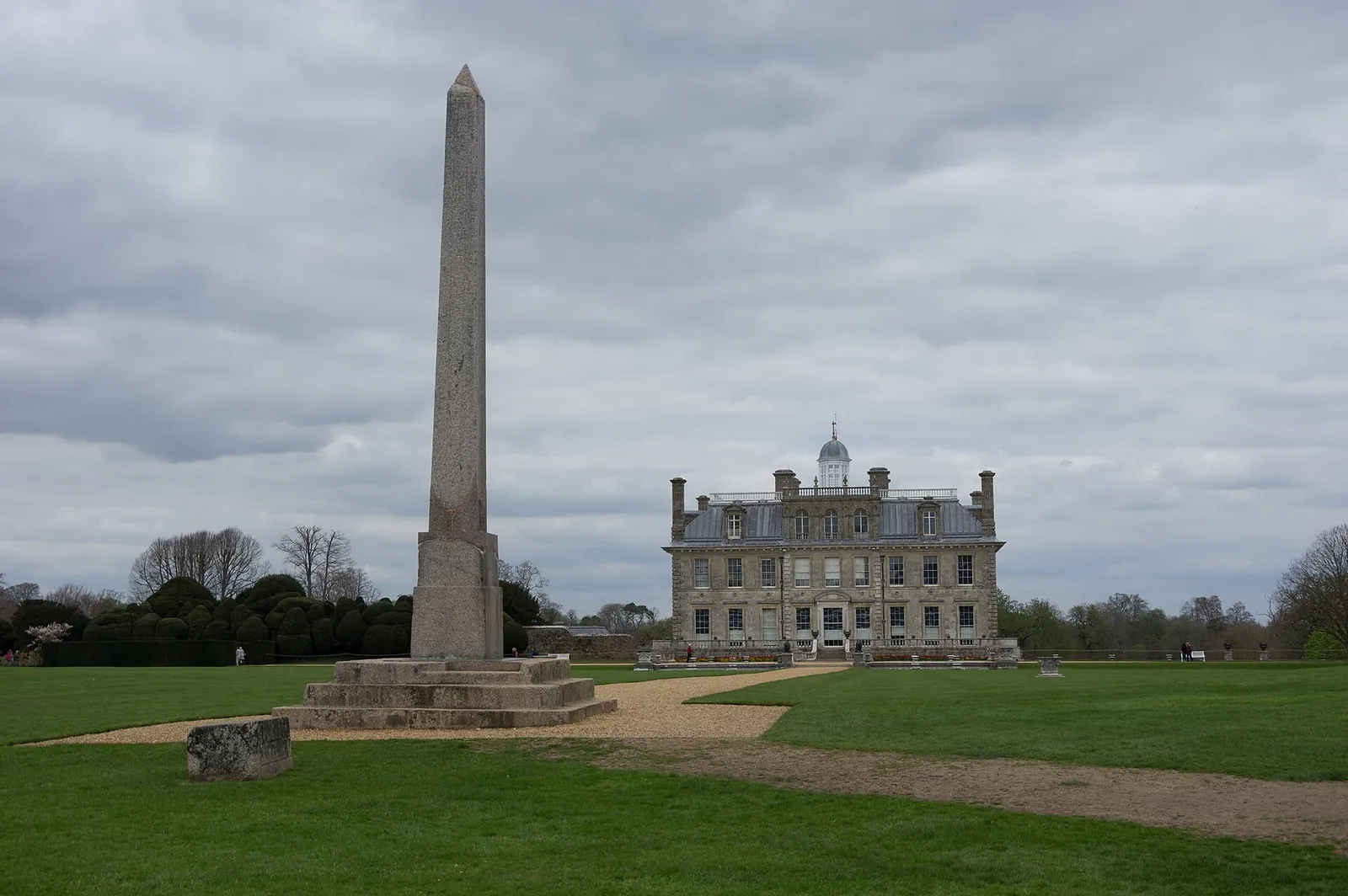
He confirmed the sound values for Ptolemy and then tested them against a second royal name, Cleopatra, which appeared on an obelisk from Philae that the British collector William John Bankes had shipped to England. Its base carried a Greek inscription naming Ptolemy and Cleopatra, and the shared signs lined up.
The real leap came when Champollion studied copies of inscriptions from temples such as Abu Simbel, with names from long before the Greeks arrived. In one cartouche he recognised the sun disc, which in Coptic is re, followed by a sign he linked to the sound ms and a final s: Ra-mes-s, Ramesses. The script had been sounding out native Egyptian names for centuries before any Greek king.
According to a well-known family account, on 14 September 1822 he ran to his brother's office, cried "Je tiens l'affaire!" ("I've got it!") and collapsed. Two weeks later, on 27 September, his findings were presented in the famous Lettre à M. Dacier to the Académie des Inscriptions in Paris. In his 1824 Précis du système hiéroglyphique, he set out the full principle: hieroglyphic writing mixed phonetic signs with ideographic signs and silent "determinatives" that clarified meaning, all within one system.
Why it took so long
Looking back, the 23-year gap between discovery and decipherment comes down to three things:
- The broken hieroglyphic section. With only fragments of 14 lines, there was little continuous text to compare.
- A false theory. Centuries of belief that hieroglyphs were pure symbols made scholars reluctant to treat them as writing that recorded sound.
- The missing language. Matching signs to sounds is useless unless you know the words those sounds spell. Coptic supplied the vocabulary, and Champollion knew it better than almost anyone.
Supporters of Young and Champollion argued for years over credit, sharpened by Anglo-French rivalry. Most historians today credit Young with important early steps and Champollion with the true decipherment.
The stone today
Champollion finally travelled to Egypt in 1828 and 1829, reading temple inscriptions on site. He died in 1832, aged just 41, but Egyptology grew directly out of his work.
It remains one of the British Museum's most visited objects, catalogued as EA 24. A cleaning in 1999 removed old wax and chalk, revealing its true dark grey colour with a pink vein. Its home is also contested: Egyptian archaeologists, including former antiquities minister Zahi Hawass, have repeatedly called for its return to Egypt.
Its real legacy is more than any single object. The decipherment reopened three thousand years of history written by the Egyptians themselves: their laws, letters, prayers, love poems and accounts. A routine priestly decree about tax breaks ended up giving an entire civilisation its voice back.
Writing that outlives its readers is a recurring theme: The Tale of Genji survived a millennium, though its Heian Japanese now needs translation even for Japanese readers. The Stone itself was a product of a connected ancient world, much like the trade routes misnamed the Silk Road.